UN Security Council Condemns Attack on UAE Nuclear Plant
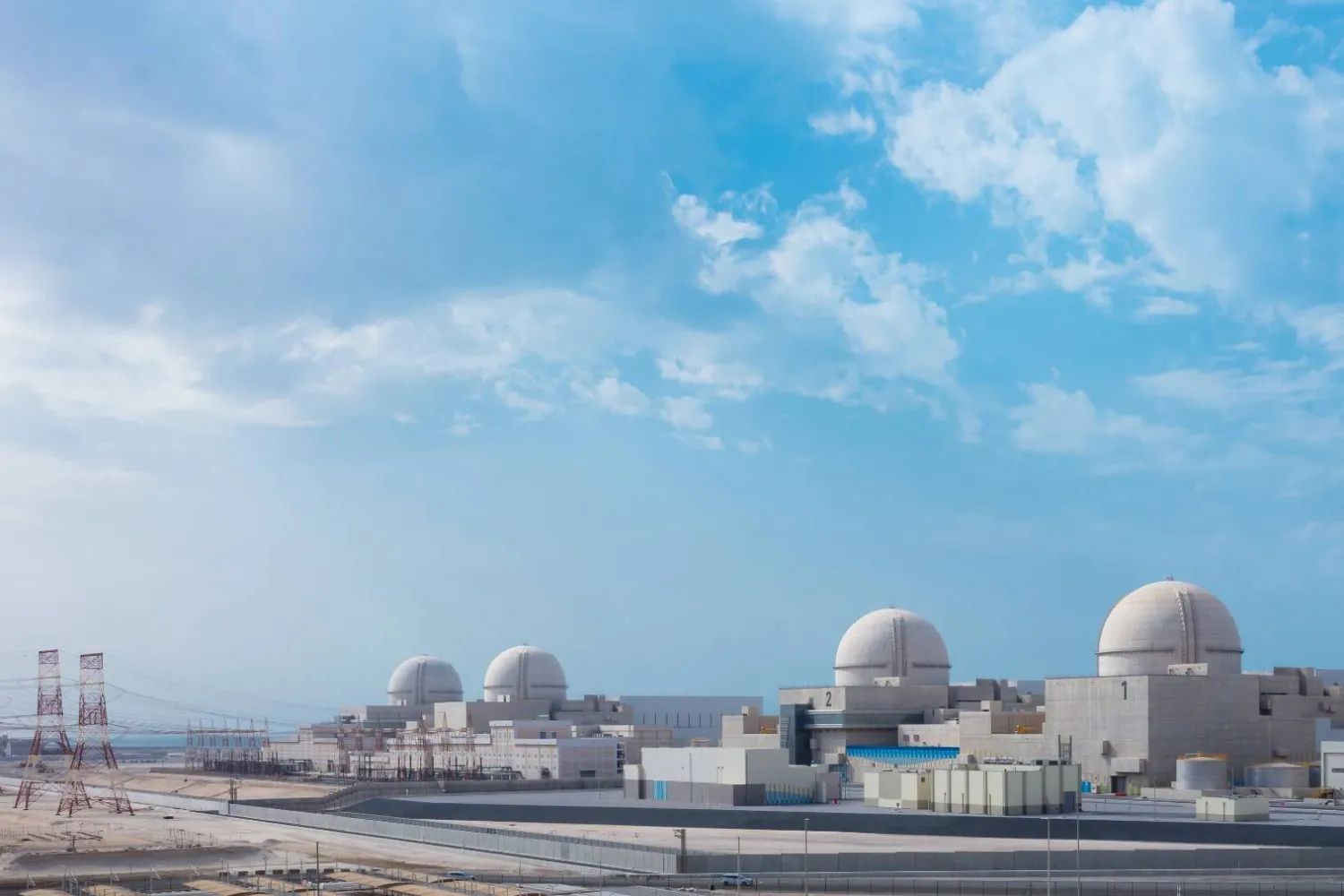
The Barakah nuclear power plant in Abu Dhabi. (WAM)
TT
TT
UN Security Council Condemns Attack on UAE Nuclear Plant
The Barakah nuclear power plant in Abu Dhabi. (WAM)
Russia joined other UN Security Council members on Tuesday to condemn the drone strike on the UAE's Barakah nuclear power plant, which Abu Dhabi said originated from Iraq where pro-Iranian proxies are active.
The unclaimed drone struck an electrical generator on Sunday near the Arab world's first nuclear power plant in Barakah in the emirate of Abu Dhabi, triggering a fire but causing no injuries nor radiation leak.
"Attacks targeting peaceful nuclear facilities in any country of the world...are categorically unacceptable," said Russia's ambassador to the UN Vassily Nebenzya.
"Against this backdrop, our country categorically condemns the actions of those who carried out the strike targeting the plant on the territory of the UAE, thereby generating risks of escalation," he continued without naming any party.
"We trust that all stakeholders will do everything necessary to avoid a recurrence of such a dangerous incident," he added, noting that the strike likely would not have happened without the US-Israeli operation against Iran, Moscow's long-standing ally.
Abu Dhabi said Tuesday that the drones came from Iraq, where Iran-backed groups have been carrying out attacks against Gulf nations since the Middle East war erupted.
From China to the United States, the other members of the Security Council also condemned the strikes, which have not been claimed by any group.
"What sane nation, either directly or indirectly through proxies, sends drone attacks into an active and ongoing nuclear power plant?" asked US ambassador Mike Waltz, denouncing "outrageous and unacceptable attacks."
"What is the world left to believe? That if Iran...can't achieve a nuclear weapon -- and it can't use it as it has threatened over and over again on its neighbors -- that it's now going to find a clever and dangerous way to weaponize a nuclear power plant?
"I struggle to come to any other conclusion," he said.
300 Saudi Projects to Strengthen Essential Services in Yemenhttps://english.aawsat.com/gulf/5332854-300-saudi-projects-strengthen-essential-services-yemen
300 Saudi Projects to Strengthen Essential Services in Yemen
Hundreds of Saudi projects support the education and health sectors in Yemen. (SDRPY)
Saudi Arabia is stepping up development and humanitarian efforts in Yemen, expanding healthcare and education services, improving access to water and delivering food and shelter to displaced families across the country.
The Saudi Development and Reconstruction Program for Yemen (SDRPY) has carried out 300 projects and initiatives across 16 governorates, spanning eight key areas: education, healthcare, energy, water, transportation, agriculture and fisheries, development programs, and support for the Yemeni government's institutional capacity.
In healthcare, the program has delivered more than 40 projects and initiatives and supported 30 medical facilities across 13 governorates, building, equipping and operating hospitals and healthcare centers while training medical personnel and strengthening their specialized skills.
Among its flagship projects is the 270-bed Prince Mohammed bin Salman Hospital in Aden, equipped with 14 specialized clinics, a cardiac center and more than 2,000 medical devices and pieces of equipment.
Since opening in January 2023, the hospital has provided nearly five million medical services through October 2026, including 31,000 surgical procedures and more than 11,000 cardiac surgeries and catheterization procedures, according to published figures.
Other major projects include the King Salman Medical and Educational City in Al-Mahra governorate, home to a 110-bed hospital, and support for the governorate's dialysis center, which has delivered more than 100,000 specialized medical services, including over 22,000 dialysis sessions.
The program has also rehabilitated healthcare centers in Socotra, supplied medical equipment to hospitals in Marib and operated healthcare facilities in Socotra and Shabwa.
Education is another major focus, with around 60 projects and initiatives across 11 governorates. These include building and equipping more than 40 model schools, upgrading university infrastructure and laboratories, expanding technical and vocational education, and improving teacher training and access to schooling in rural areas.
At the University of Aden, projects include equipping 28 laboratories at the Faculty of Pharmacy and establishing a forensic research laboratory at the Faculty of Law.
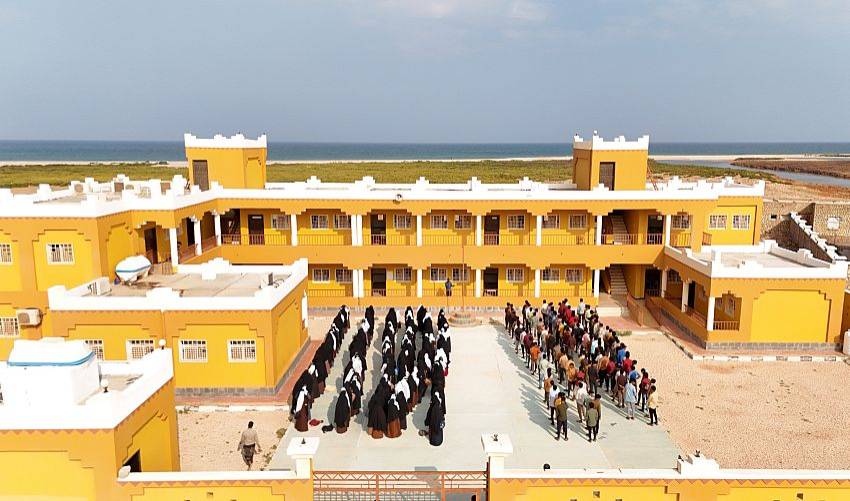
Saudi Arabia has been keen on supporting the education sector in Yemen. (SDRPY)
In Marib, the program has supported the development of the University of Saba Region with two new buildings housing 16 classrooms, an administrative building and university transportation.
Efforts to expand girls' education in rural areas have also gained ground. The first phase of the Rural Education Access Project trained 150 young women for teaching diplomas, while the second aims to train 450 female secondary school graduates across six rural governorates.
Another initiative is training 200 male and female teachers under the International Professional Certifications in Teaching Project.
Humanitarian response
Alongside long-term development efforts, the King Salman Humanitarian Aid and Relief Center (KSrelief) is delivering emergency water, food and shelter assistance to displaced families across several Yemeni governorates.
In Taiz and Lahj, emergency water and sanitation agreements provide for daily water supplies over 90 days, alongside distribution points, storage containers and water quality testing.
The Taiz project is expected to reach 3,500 people directly and another 700 indirectly. In Lahj, the figures stand at 2,163 direct beneficiaries and 1,050 indirect beneficiaries.
Food assistance has also reached displaced communities in Abyan, Aden and Shabwa.
The center distributed 510 food baskets in the Khanfar district in Abyan, 350 in the Mansoura district in Aden and 1,100 in the Nisab district in Shabwa, benefiting 7,700 people.
In the Hajjah governorate, 564 people in the Haradh and Midi districts received shelter assistance, including 94 tents and 94 shelter kits.
Together, the initiatives reflect Saudi Arabia's efforts to combine long-term investment in Yemen's essential services, education and institutional capacity with immediate humanitarian assistance for displaced people and local communities.
GCC Secretary-General Meets with Turkish Foreign Minister in Istanbulhttps://english.aawsat.com/gulf/5332757-gcc-secretary-general-meets-turkish-foreign-minister-istanbul
GCC Secretary-General Meets with Turkish Foreign Minister in Istanbul
Gulf Cooperation Council (GCC) Secretary-General Jasem Albudaiwi met on Friday with Minister of Foreign Affairs of the Republic of Türkiye Hakan Fidan, on the sidelines of the 9th Istanbul Mediation Conference held under the theme "Partnerships and New Perspectives for Peace: Mediation in a Changing World."
The two sides reviewed GCC-Turkish relations and explored avenues to broaden cooperation across various fields, reflecting the growing partnership between the GCC and Türkiye to serve mutual interests, SPA reported.
Both officials expressed their shared anticipation for convening the seventh Joint Ministerial Meeting of the Strategic Dialogue between the GCC and Türkiye in the coming period, emphasizing its role in advancing joint initiatives and opening new horizons for cooperation.
The meeting also addressed the latest regional developments, with both sides exchanging views on efforts to de-escalate tensions and bolster regional security and stability.
UAE: Oil Spill from Tanker Affects Beaches in Umm Al Quwainhttps://english.aawsat.com/gulf/5332574-uae-oil-spill-tanker-affects-beaches-umm-al-quwain
An image published by the UAE Ministry of Climate Change and Environment of one of the country's beaches. (UAE Ministry of Climate Change and Environment)
UAE: Oil Spill from Tanker Affects Beaches in Umm Al Quwain
An image published by the UAE Ministry of Climate Change and Environment of one of the country's beaches. (UAE Ministry of Climate Change and Environment)
The UAE Ministry of Climate Change and Environment said on Friday that its monitoring and environmental assessment systems had detected marine pollution caused by an oil leak from a tanker.
The spill had affected beaches in the emirate of Umm Al Quwain, the ministry said.
It said in a statement that the leak had caused odors reported by residents of Sharjah, Ajman and Umm Al Quwain, adding that it posed no health concerns or risks to residents.
All beaches and coastal areas in Umm Al Quwain had been temporarily closed as a precautionary measure to ensure the safety of the marine environment while survey operations were completed, added the ministry.
Specialist teams had begun coordinating with the relevant authorities to contain the pollution, cordon off affected areas and launch cleanup and remediation operations to limit its environmental impact, the statement added.
لم تشترك بعد
انشئ حساباً خاصاً بك لتحصل على أخبار مخصصة لك ولتتمتع بخاصية حفظ المقالات وتتلقى نشراتنا البريدية المتنوعة