


Masjid al-Namirah: The Mosque Where Only One Prayer is Held Each Year

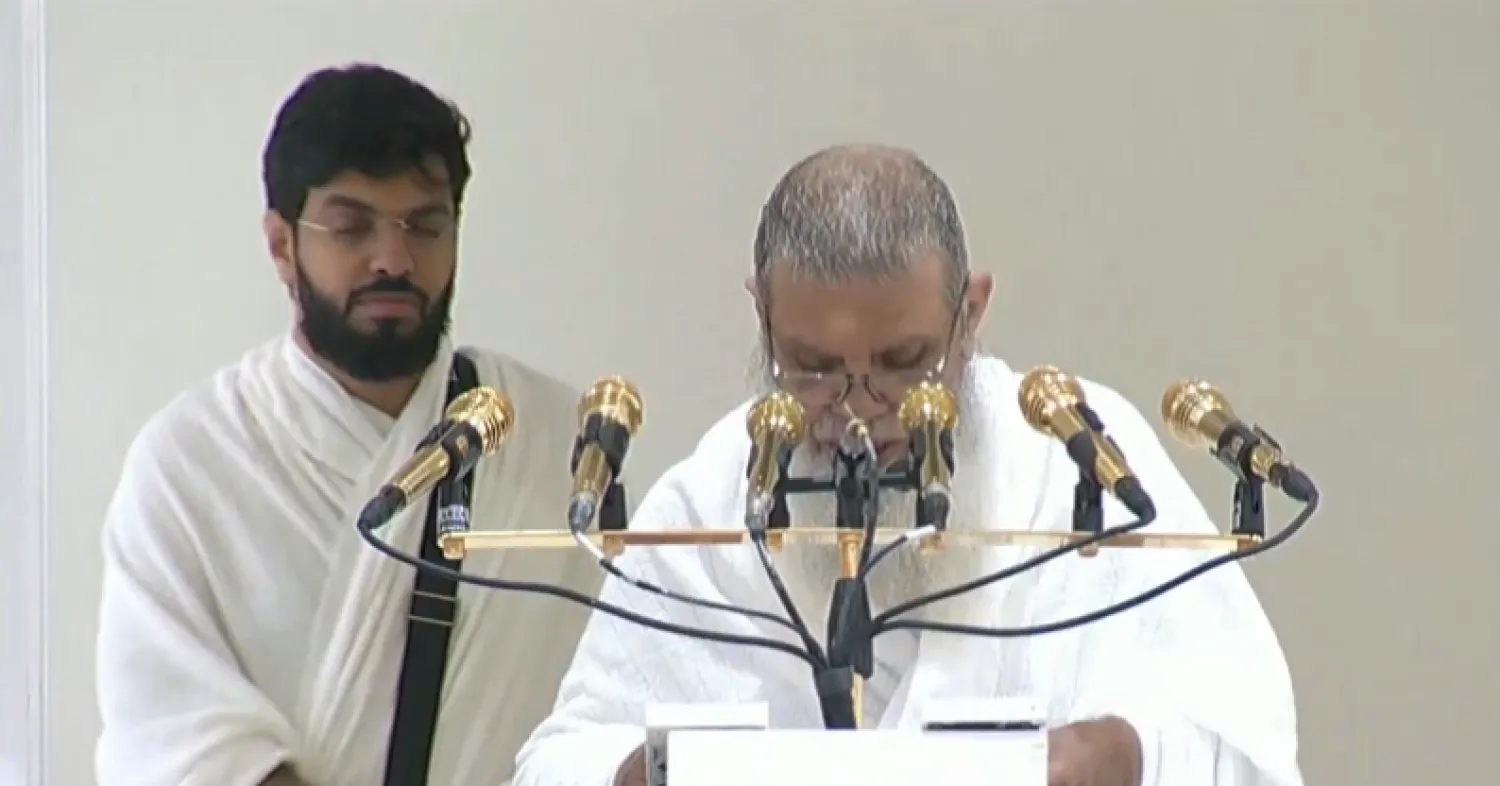
Sheikh Ali bin Abdulrahman Al-Huthaify, in his Day of Arafat sermon, called for the glorification of God's rites, adherence to calmness and order, and avoidance of anything that undermines the spirit of the pilgrimage. (Asharq Al-Awsat)
TT

Masjid al-Namirah: The Mosque Where Only One Prayer is Held Each Year

Sheikh Ali bin Abdulrahman Al-Huthaify, in his Day of Arafat sermon, called for the glorification of God's rites, adherence to calmness and order, and avoidance of anything that undermines the spirit of the pilgrimage. (Asharq Al-Awsat)

Masjid al-Namirah is considered one of the most prominent Islamic landmarks associated with the Hajj season, drawing the attention of millions of Muslims on the ninth day of Dhu al-Hijjah each year to listen to the Arafat Sermon and perform the Dhuhr and Asr prayers combined and shortened behind the imam and khatib of Masjid al-Haram.

The mosque is located in the plain of Arafat, west of Jabal al-Rahmah, and takes its name from the Namirah area where it was built. It has acquired major religious and historical significance because of its connection to the Farewell Sermon delivered by Prophet Muhammad, peace be upon him, during the Farewell Pilgrimage.
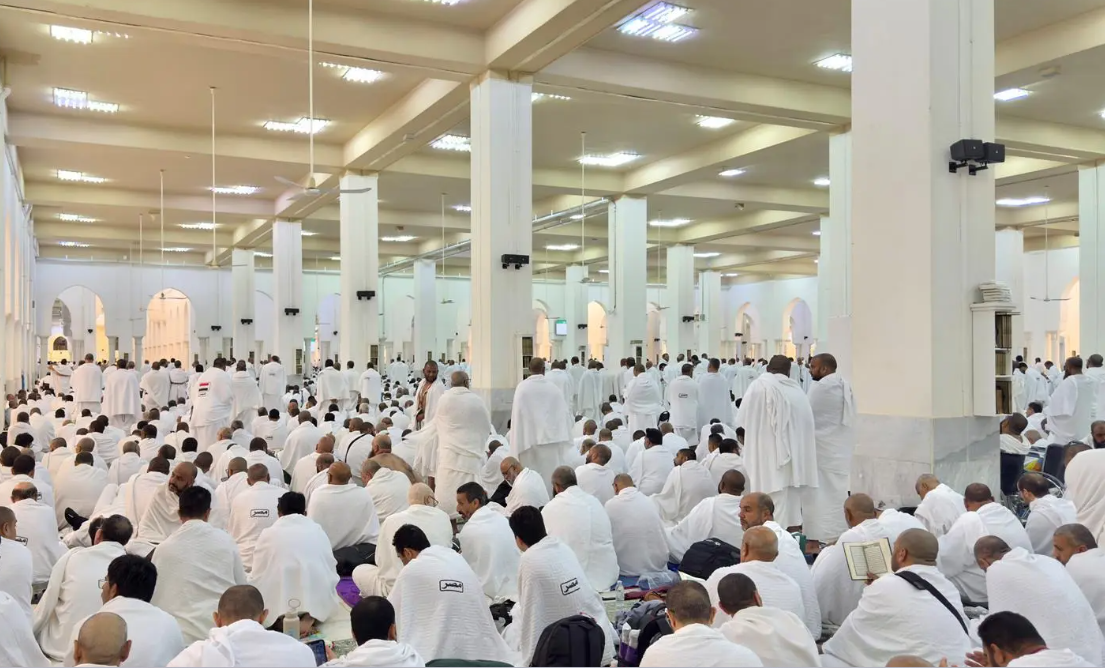
Hundreds of thousands of pilgrims gather at Masjid al-Namirah from the early morning hours to listen to the Arafat Sermon. (SPA)

Masjid al-Namirah is distinguished by a unique characteristic, as only one congregational prayer is held there each year: the prayer on the Day of Arafat. The mosque and its courtyards are filled with hundreds of thousands of pilgrims who arrive from the early morning hours to listen to the Arafat Sermon, regarded as one of the most spiritually significant moments of the Hajj season.

Large numbers of pilgrims arrived to perform the ritual of standing at Arafat amid an integrated system of services and organization, while the Arafat Sermon was broadcast live to countries around the world in multiple languages, reflecting the immense Islamic significance of the occasion.

Masjid al-Namirah hosted the Day of Arafat sermon delivered by Sheikh Ali bin Abdulrahman Al-Huthaify, who spoke about the meanings of piety, preparation for the Day of Judgment, and the importance of attaining salvation through obedience to God and avoidance of sins and wrongdoing, on what is considered one of the greatest days of the year in Islam.
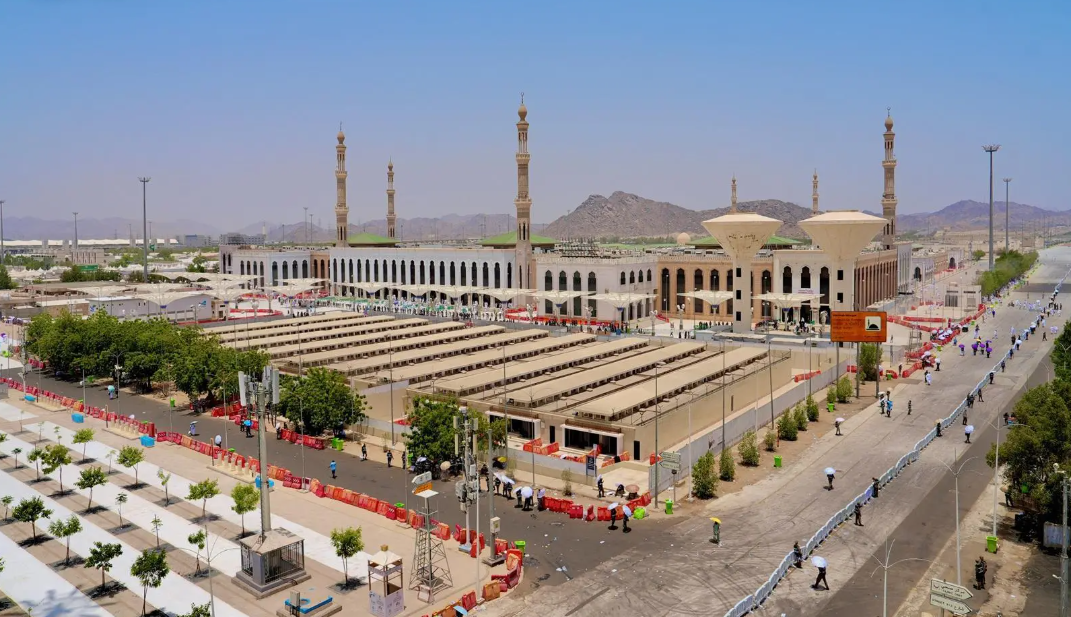
Masjid al-Namirah is one of the most prominent Islamic landmarks associated with the Hajj season. (SPA)

The Arafat preacher stressed that the Hajj season brings Muslims together from every corner of the world in unified worship and shared rituals, calling for the glorification of God's rites, adherence to calmness and order, and avoidance of anything that disrupts the spirit of the pilgrimage.

He also emphasized that the Day of Arafat is among the greatest occasions for prayers to be answered, urging Muslims to increase their remembrance of God and supplication on this blessed day, particularly the phrase: "There is no god but Allah alone, without partner. To Him belongs sovereignty and praise, and He has power over all things."

The Arafat preacher urged pilgrims to maintain calmness, avoid overcrowding, follow the instructions of the organizing authorities, and adhere to crowd movement regulations and grouping schedules in order to serve the public interest, prevent harm and disorder, protect lives, and facilitate the performance of the rituals.

Sheikh Dr. Al-Huthaify noted that Hajj embodies manifestations of acquaintance, harmony, cooperation, and solidarity among Muslims as they perform the rituals together despite differences in language, color, and nationality, united as brothers in faith.

Sheikh Al-Huthaify said that Hajj is free of political slogans and partisan calls, and is instead devoted entirely to submission to God, adherence to the Prophet's teachings, and purity both outwardly and inwardly.

In his sermon, Sheikh Ali bin Abdulrahman Al-Huthaify also reviewed the rites of Hajj, beginning with the standing at Arafat, regarded as the greatest pillar of Hajj, followed by the overnight stay in Muzdalifah, then proceeding to Mina for the stoning of the Jamarat, the sacrificial offering, shaving the head, and Tawaf al-Ifadah.

During the Days of Tashreeq, pilgrims stone the three Jamarat with seven pebbles at each site every day. It is preferable to remain until the 13th day of Dhu al-Hijjah, although pilgrims may depart earlier on the 12th day. Before leaving, pilgrims perform the Farewell Tawaf.

The mosque is considered one of the largest in the world, covering a total area of more than 110,000 square meters. It includes hundreds of entrances, restroom facilities, and modern air-conditioning and audio systems, enabling it to accommodate the massive numbers of pilgrims on the Day of Arafat.
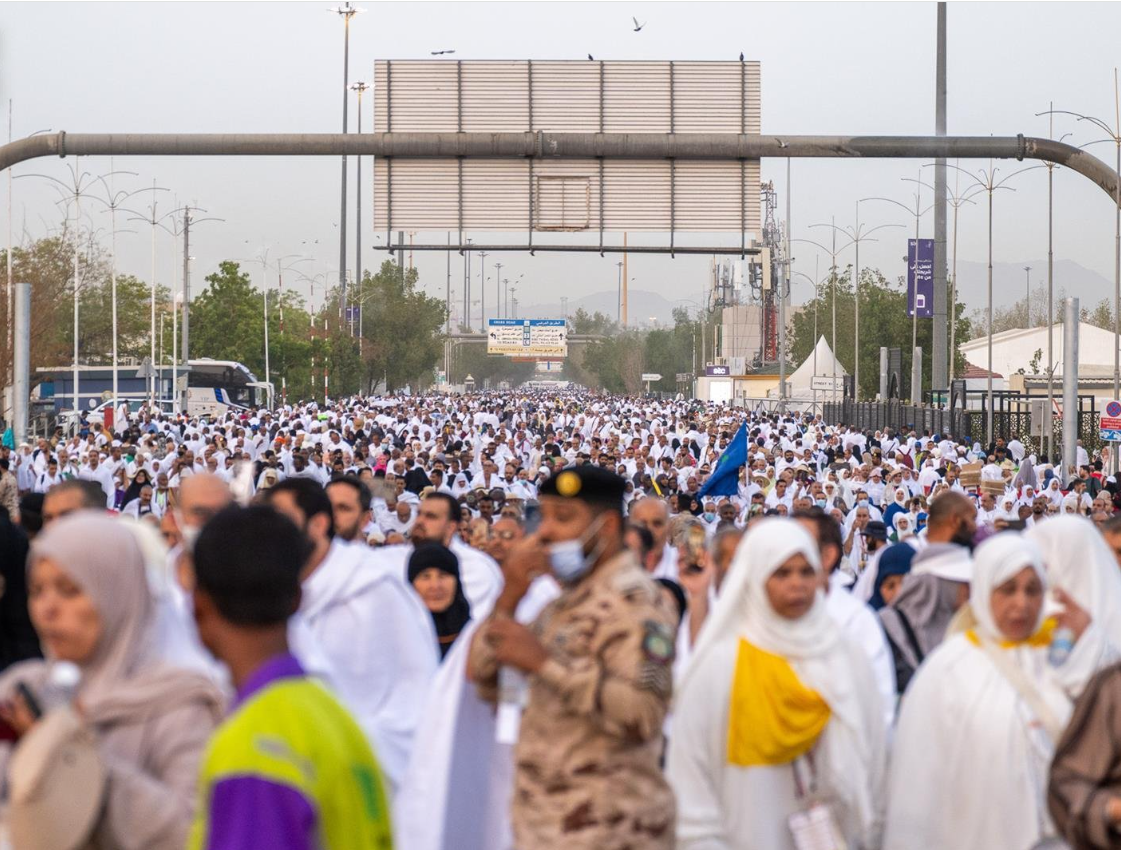
Large numbers of pilgrims arrive to perform the Standing at Arafat ritual amid an integrated system of services. (SPA)

Saudi authorities annually ensure that the mosque is fully prepared with healthcare, organizational, and technical services to guarantee pilgrims' comfort and enable them to perform their rituals with ease and reassurance as part of the Kingdom's extensive efforts to serve pilgrims during the Hajj season.

The mosque features a distinctive Islamic architectural design, extending 340 meters from east to west and 240 meters from north to south. It includes six minarets, each 60 meters high, three domes, ten main entrances, and 64 gates to ensure smooth crowd movement.

The mosque has also been equipped with the latest technological and service systems, including advanced audio and live-broadcast systems to transmit the Arafat Sermon and the Dhuhr and Asr prayers around the world, in addition to air-conditioning and ventilation systems, shaded courtyards, digital screens, and safety and surveillance systems designed to provide a safe and comfortable environment for pilgrims on the greatest day of Hajj.



Qatar Calls for Regional Dialogue to Build Trust with Iran

Qatari Foreign Ministry spokesman Majed al-Ansari. (Asharq Al-Awsat)
TT

Qatar Calls for Regional Dialogue to Build Trust with Iran

Qatari Foreign Ministry spokesman Majed al-Ansari. (Asharq Al-Awsat)

Qatar expressed “cautious optimism” on Tuesday that the agreement between the United States and Iran would bolster security in the Middle East.

It called for “regional dialogue” aimed at building trust with Iran after the signing of the deal.

Foreign Ministry spokesman Majed al-Ansari told a weekly press briefing: “We are cautiously optimistic that the signing of the Memorandum of Understanding will lead to the next phase of regional security through talks over the nuclear file and other issues.”

Qatar played a key meditating role in the negotiations that led to the agreement that ended the war between the US and Iran. Washington and Tehran announced that they have reached a MoU to end the conflict. They are set to sign it in Switzerland on Friday.

Al-Ansari said Qatar will be represented at the Switzerland meeting, stressing that it helped bridge divides between the two sides to reach the settlement.

“We hope that the signing of the MoU will restore navigation in the Strait of Hormuz,” he added.

He said the MoU was the first step towards a broader agreement that would ensure stability in the region.

The spokesman said that communication was ongoing to prevent an escalation and to achieve stability in the region. Qatar is in contact with all parties within Pakistan’s mediation.

“We want to restore peace and security in the region to the way they were before the war and we are working towards that,” he stressed.

Moreover, al-Ansari said that Qatar has not paid any funds. “Global coordination is underway to handle the economic fallout of the crisis,” he went on to say.

Meetings are being held through the Pakistani mediation; none are being held in Doha with Washington and Tehran, he clarified.


Portugal Praises Saudi Arabia’s Support for De-Escalation

The two ministers held talks in Lisbon on developments in the region and the world, including efforts to de-escalate tensions in the region. SPA
TT

Portugal Praises Saudi Arabia’s Support for De-Escalation

The two ministers held talks in Lisbon on developments in the region and the world, including efforts to de-escalate tensions in the region. SPA

Saudi Minister of Foreign Affairs Prince Faisal bin Farhan bin Abdullah has met with Portuguese Minister of State and Foreign Affairs Paulo Rangel, who praised the Kingdom for calling for de-escalation in the region.

The two ministers held talks in Lisbon on developments in the region and the world, including efforts to de-escalate tensions in the region. They welcomed the agreement between Iran and the United States to end military operations and launch detailed negotiations toward a lasting settlement, underscoring the importance of diplomatic solutions in maintaining regional security and stability.

Prince Faisal renewed his congratulations to Portugal on its election as a non-permanent member of the UN Security Council for 2027-2028, wishing it success during its term in a way that supports international peace and security.

The Foreign Minister also expressed appreciation for Portugal’s positions in support of regional issues, including its official recognition of the State of Palestine and its backing for peaceful solutions and initiatives to implement the two-state solution.

He further commended Portugal for hosting the King Abdullah bin Abdulaziz International Centre for Interreligious and Intercultural Dialogue (KAICIID) in Lisbon, praising its role in promoting understanding and coexistence among peoples.

The Portuguese minister expressed his country's appreciation for the Kingdom's positions, calling for de-escalation and supporting diplomatic efforts and peaceful solutions.

He affirmed Portugal’s keenness to continue coordinating and working jointly with the Kingdom to strengthen bilateral cooperation, particularly in trade and investment.

Also Tuesday, Prince Faisal and Rangel signed an agreement on the mutual exemption of entry visas for holders of diplomatic and special passports.

It comes within the framework of strengthening bilateral relations between the Kingdom and the Portugal, and aims to facilitate travel and communication, enhance joint coordination, and expand areas of cooperation between the two countries.


Saudi Arabia Stresses Importance of Restoring Freedom of Navigation in Hormuz Strait

Prince Mohammed bin Salman bin Abdulaziz Al Saud, Crown Prince and Prime Minister, chairs the Cabinet session in Jeddah. (SPA)
TT

Saudi Arabia Stresses Importance of Restoring Freedom of Navigation in Hormuz Strait

Prince Mohammed bin Salman bin Abdulaziz Al Saud, Crown Prince and Prime Minister, chairs the Cabinet session in Jeddah. (SPA)

The Saudi government stressed on Tuesday the importance of restoring freedom of navigation in the Strait of Hormuz to the way it was before the eruption of the US-Israel war on Iran on February 28.

It hoped that peace would be restored to bolster regional and global security and that it would take into account the security interests of countries in the region, including non-interference in their internal affairs.

Prince Mohammed bin Salman bin Abdulaziz Al Saud, Crown Prince and Prime Minister, chaired the Cabinet session that was held in Jeddah.

The Cabinet welcomed the agreement reached between the US and Iran to end military operations and begin negotiations aimed at securing a permanent agreement. It also expressed appreciation for Pakistan and Qatar's mediation efforts in this regard.

Turning to the recent Hajj, the Cabinet expressed praise and thanks to Almighty Allah for bestowing upon Saudi Arabia the honor of serving the Two Holy Mosques and their visitors, and for the remarkable success and meticulous organization achieved during this year’s pilgrimage.

Through integrated efforts, the Kingdom enabled more than 1.7 million pilgrims to perform their rituals in comfort and tranquility, further reinforcing its position as a leading global model in crowd management and the delivery of the highest-quality services to the pilgrims, in accordance with a comprehensive institutional approach founded on planning, data, and advanced technologies.

The Cabinet expressed its appreciation to the Supreme Hajj Committee and all entities involved in the pilgrim service ecosystem for their efforts and dedication in carrying out this great responsibility. Their high levels of coordination, integration, and readiness contributed to achieving the objectives of the security, preventive, organizational, and service plans, while mobilizing all available resources and capabilities to care for pilgrims from their arrival in the Kingdom until their safe return to their home countries.

Prince Mohammed bin Salman bin Abdulaziz Al Saud, Crown Prince and Prime Minister, presides over the Cabinet session in Jeddah. (SPA)

The Cabinet reviewed discussions and consultations held over the past week between Saudi Arabia and a number of brotherly and friendly countries. The engagements aimed to strengthen relations and advance bilateral and multilateral cooperation and coordination across various fields in a manner that serves common interests, while supporting international efforts to reinforce regional and international security and stability.

The Cabinet said that the selection of Riyadh as the headquarters of the first cybersecurity office established by the United Nations Institute for Training and Research (UNITAR) reflects Saudi Arabia’s leadership in cybersecurity. It underscores the Kingdom’s efforts and initiatives to promote stability in cyberspace and support societal prosperity and economic growth.

These efforts have helped position the Kingdom as a leading destination for regional and international organizations operating in this vital sector, said the Cabinet.

It also welcomed the statement by International Monetary Fund (IMF) experts following the conclusion of the 2026 Article IV consultation discussions, which reaffirmed the strength and resilience of the Saudi economy in the face of regional developments.

The statement cited the Kingdom’s strong economic fundamentals, ample reserves, diversified oil and logistics infrastructure, and continued reforms under Saudi Vision 2030.

The Cabinet praised the achievements of the National Transformation Program in 2025, coinciding with the completion of 71% of its implementation initiatives. The initiatives aim to protect the environment, ensure sustainable food and water security, support community development, strengthen the non-profit sector, expand workforce participation among various segments of society, and enhance labor market attractiveness. They also help boost private-sector participation, deepen economic partnerships, and promote excellence in government performance.

The Cabinet highlighted the gains achieved by the Human Capability Development Program in advancing the education and training ecosystem, boosting the competitiveness of Saudi talent locally and globally, fostering a culture of creativity and innovation, expanding the use of modern technologies, and strengthening the Kingdom’s national identity and cultural presence.