


Kuwait Condemns Iranian Attacks on Its Territory; Gulf States Denounce Assaults

Saudi Arabia and Gulf states condemned Iranian attacks on Kuwaiti territory (KUNA)
TT

Kuwait Condemns Iranian Attacks on Its Territory; Gulf States Denounce Assaults

Saudi Arabia and Gulf states condemned Iranian attacks on Kuwaiti territory (KUNA)

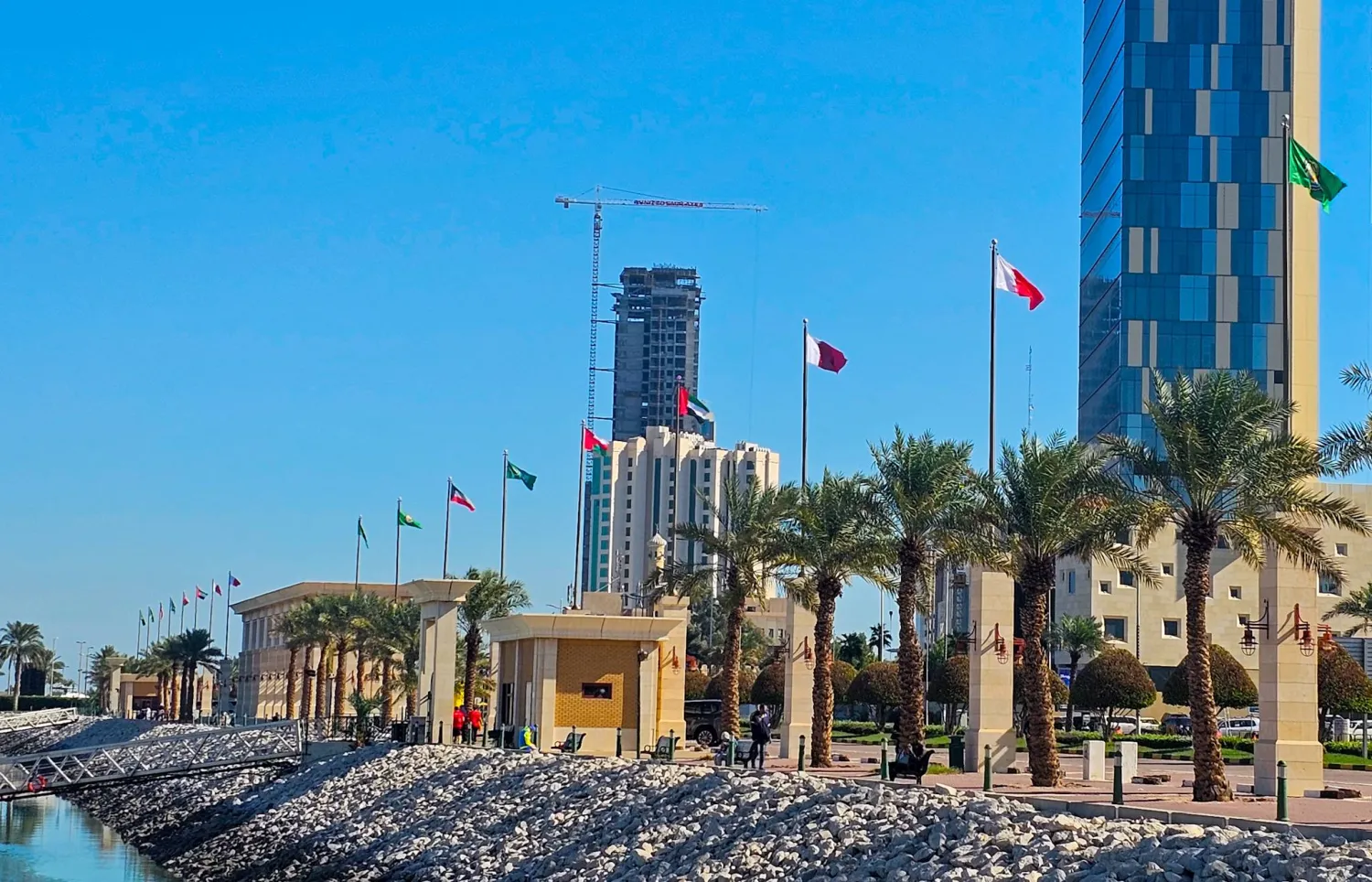
Kuwait strongly condemned what it described as “criminal Iranian attacks” targeting its territory with missiles and drones on Thursday morning. Saudi Arabia and other Gulf states also condemned the Iranian attacks on Kuwaiti territory.

In a statement, Kuwait’s Foreign Ministry expressed the country’s strong condemnation and denunciation of the “criminal Iranian attacks that targeted Kuwaiti territory with missiles and drones in a dangerous escalation and a flagrant violation of Kuwait’s sovereignty, security and territorial integrity, as well as a direct threat to civilians and vital facilities.”

The ministry said the escalation comes at a time when intensive efforts are being made by several brotherly and friendly countries to reduce tensions, de-escalate the situation and spare the region further escalation, adding that the attacks increase the gravity of the situation and undermine diplomatic efforts aimed at preserving regional security and stability.

It called on Iran to immediately and unconditionally halt the attacks and bear full responsibility for them, describing them as blatant aggression against Kuwait’s sovereignty and a serious violation of international law, the UN Charter and UN Security Council Resolution 2817 of 2026.

The ministry stressed that Kuwait reserves its full right to take all necessary measures to preserve its security and defend its territory and vital facilities against any aggression or threat, based on its inherent right to self-defense under Article 51 of the UN Charter and the rules of international law.

Saudi Arabia Condemns the Attacks

Saudi Arabia’s Foreign Ministry expressed the Kingdom’s condemnation and denunciation “in the strongest terms” of the hostile missile and drone attacks against Kuwait.

In a statement, the ministry said: “The Kingdom reiterates its categorical rejection of violations of state sovereignty and attempts to threaten the region’s security and stability.”

Saudi Arabia also expressed solidarity with Kuwait, government and people, renewing its full support for all measures taken by Kuwait to preserve its sovereignty, security, stability and people.

Qatar: Flagrant Violation of International Law

Qatar strongly condemned the targeting of Kuwait with missiles and drones, describing it as a blatant violation of its sovereignty and a flagrant breach of international law.

In a statement, Qatar’s Foreign Ministry reiterated the country’s full solidarity with Kuwait and its support for all measures taken to safeguard its sovereignty and security.

It stressed the need to spare the region the consequences of what it described as unjustified attacks and to work toward de-escalation to restore regional and international security and stability.

UAE: Flagrant Violation

The United Arab Emirates also condemned “in the strongest terms the Iranian terrorist attacks” targeting Kuwait with missiles and drones.

The Emirates News Agency quoted a Foreign Ministry statement saying the “terrorist attacks represent a flagrant violation of Kuwait’s sovereignty and a threat to its security and stability.”

The ministry expressed the UAE’s full solidarity with Kuwait and support for all efforts aimed at preserving its security and stability.

Bahrain Condemns Attacks

Kuwaiti Foreign Minister Sheikh Jarrah Jaber al-Ahmad al-Sabah received a phone call from Bahraini Foreign Minister Abdullatif bin Rashid al-Zayani, during which the two sides condemned the “criminal Iranian attacks targeting Kuwait.”

Both sides affirmed Kuwait’s full right to take all necessary measures to protect its sovereignty, preserve its security and stability, and safeguard its citizens and residents.

GCC: Treacherous Aggression

Jassem Mohamed Albudaiwi, secretary-general of the Gulf Cooperation Council, condemned “in the strongest terms the continued criminal Iranian attacks on Kuwait.”

In a post on X, the GCC General Secretariat quoted Albudaiwi as saying the continued “treacherous attacks” constitute a flagrant violation of international law, the UN Charter and the principles of good neighborliness.

He affirmed the GCC states’ full support for Kuwait in all measures it takes to preserve its security, stability and the safety of its citizens and residents.

Kuwaiti Army: Air Defenses Intercepted Missile Attacks

Earlier Thursday, the Kuwaiti army’s General Staff announced that the country’s air defenses had intercepted hostile missile and drone attacks.

In a press statement, the General Staff said that “any explosion sounds heard were the result of air defense systems intercepting hostile attacks,” calling on the public to comply with security and safety instructions issued by the relevant authorities.



Saudi Arabia, Arab and Islamic States Strongly Condemn the Continued Settler Violence in Occupied West Bank

Saudi Arabia, Arab and Islamic States Strongly Condemn the Continued Settler Violence in Occupied West Bank
TT

Saudi Arabia, Arab and Islamic States Strongly Condemn the Continued Settler Violence in Occupied West Bank

Saudi Arabia, Arab and Islamic States Strongly Condemn the Continued Settler Violence in Occupied West Bank

The foreign ministers of the Kingdom of Saudi Arabia, the Hashemite Kingdom of Jordan, the United Arab Emirates, the State of Qatar, the Republic of Indonesia, the Islamic Republic of Pakistan, the Arab Republic of Egypt, and the Republic of Türkiye issued a statement condemning the continued and escalating settler violence against Palestinians in the occupied West Bank.

The statement carried out by SPA reads as follows:

"The foreign ministers of the Kingdom of Saudi Arabia, the Hashemite Kingdom of Jordan, the United Arab Emirates, the State of Qatar, the Republic of Indonesia, the Islamic Republic of Pakistan, the Arab Republic of Egypt, and the Republic of Türkiye condemn in the strongest terms the continued and escalating settler violence against Palestinians in the occupied West Bank, including recent attacks on the Grand Mosque in the village of Jiljilya and Al-Farouq Mosque in the village of Mazar’a al-Nubani, north of Ramallah. They stress that these attacks constitute a clear violation of the sanctity of places of worship and religious sites, international law, including international humanitarian law, and relevant United Nations resolutions.

The ministers affirm their absolute rejection of these deplorable attacks by Israeli settlers, as well as the continued illegal Israeli measures in the Occupied Palestinian Territory, which fuel instability, violence and extremism and undermine international efforts to achieve peace. They hold Israel, the occupying Power, responsible for these attacks.

The ministers reiterated their call for the international community to uphold its legal and moral responsibilities and compel Israel to halt its dangerous escalation in the occupied West Bank, end its illegal practices, halt settler violence, hold the perpetrators of these crimes accountable, and ensure that they do not enjoy impunity.

The foreign ministers reaffirm their unwavering solidarity with the Palestinian people and their steadfast support for the realization of their legitimate and inalienable national rights, foremost among them their right to self-determination and the realization of an independent and sovereign Palestinian State on the 1967 lines, with East Jerusalem as its capital. They further reaffirm their support for all efforts aimed at ending the Israeli occupation and achieving a just, lasting, and comprehensive peace based on the two-State solution in accordance with international law, the relevant United Nations resolutions, and the Arab Peace Initiative."


Saudi Medical Team Successfully Separates Filipino Conjoined Twins after Six-Hour Surgery

The procedure was carried out with the participation of 22 consultants - SPA
TT

Saudi Medical Team Successfully Separates Filipino Conjoined Twins after Six-Hour Surgery

The procedure was carried out with the participation of 22 consultants - SPA

The specialized medical and surgical team of the Saudi Conjoined Twins Programme (SCTP) achieved a new medical milestone today with the successful separation of Filipino conjoined twins Olivia and Gianna. The operation was performed at King Abdullah Specialized Children’s Hospital (KASCH) at King Abdulaziz Medical City of the Ministry of National Guard in Riyadh.

Advisor to the Royal Court and Supervisor General of King Salman Humanitarian Aid and Relief Centre (KSrelief) and head of the surgical team for the SCTP Dr. Abdullah Al Rabeeah said: "Thanks to Allah Almighty and the efforts of my colleagues on the medical and surgical team, the separation of the Filipino twins Olivia and Gianna was successfully completed six hours after the operation began."

He added that the procedure was carried out with the participation of 22 consultants, specialists, and nursing and technical staff members to ensure the highest levels of precision and safety throughout all stages of the operation, SPA reported.

Dr. Al Rabeeah noted that the twins were joined at the chest and abdomen and shared a liver and possibly part of the intestines, pointing out that one of the twins also suffered from congenital heart defects that posed a significant health risk.

He said that this operation marks the fourth separation of conjoined twins from the Philippines and the 72nd procedure performed under SCTP, which has a 35-year history spanning 28 countries across five continents and has evaluated 158 cases from around the world.

Dr. Al Rabeeah noted that this medical achievement reflects the humanitarian commitment of the Kingdom's leadership and its dedication to providing assistance to people wherever they may be. He added that it also demonstrates Saudi Arabia's medical excellence, in line with the objectives of the Saudi Vision 2030 to develop the Kingdom's healthcare sector and enhance its quality and efficiency.

On behalf of himself and all members of the medical and surgical team, Dr. Al Rabeeah expressed his gratitude to Custodian of the Two Holy Mosques King Salman bin Abdulaziz Al Saud and His Royal Highness Prince Mohammed bin Salman bin Abdulaziz Al Saud, Crown Prince and Prime Minister, for their continued support and patronage of SCTP, which has enabled the Saudi medical team to provide the highest standards of specialized healthcare, improve the quality of life of beneficiary children and their families, and enhance the Kingdom's position in humanitarian and medical work.

The twins' family expressed their gratitude to the Custodian of the Two Holy Mosques and HRH the Crown Prince for the high-quality medical care provided to the twins and praised the extensive efforts made by the medical team to ensure the success of the operation.


UAE Announces Social Media Ban for under-15s

TikTok, Instagram, Facebook, Snapchat, X, Reddit, Twitch, Threads app icons are seen in this illustration taken June 15, 2026. REUTERS/Dado Ruvic/Illustration
TT

UAE Announces Social Media Ban for under-15s

TikTok, Instagram, Facebook, Snapchat, X, Reddit, Twitch, Threads app icons are seen in this illustration taken June 15, 2026. REUTERS/Dado Ruvic/Illustration

The United Arab Emirates announced a social media ban for children under 15 on Thursday, joining a growing group of countries including Australia, Britain and Canada to take similar measures.

Social media platforms will have to monitor and disable accounts created by under-15s or risk being blocked, a cabinet resolution said, giving them a 12-month transition period.

"The resolution sets the minimum age for social media use at 15 years," the official WAM news agency said, citing the cabinet resolution.

"Children below this age are prohibited from creating, using, or operating personal accounts on social media platforms."

After Australia began a world-first social media bar for under-16s in December, a number of countries have followed suit including Britain, which announced its ban this week.

Indonesia, Malaysia, Türkiye and several European countries have also cracked down on teen use of social media, although the UAE is the first in the Arab world.

The bans were inspired by concerns over mental health, cyber-bullying and a lack of physical activity, as well as online predators and addictive behavior.

Critics say they are hard to enforce, deprive kids of social connection and can force undesirable behavior into darker digital spaces where monitoring is difficult.

The UAE's resolution is "closely aligned with leading global trends in digital child protection", WAM said.

It bars children from "accessing the full features of (social media) platforms, including social interaction, publishing, commenting, sharing, joining public groups, open channels, or any large-scale interactive spaces".

Children aged 15-16 are allowed to use social media, but with "enhanced protective measures" such as content restrictions and time limits on usage.

Bodies controlling media and telecommunications have "authority to take all necessary measures (against social media platforms) in the event of non-compliance", WAM said.

These include "warning or partial or full blocking of platforms or the imposition of applicable administrative penalties".

Parents and caregivers are also responsible for stopping children using social media or getting round age checks, the resolution said, adding: "Parental consent shall not constitute a valid exemption."