

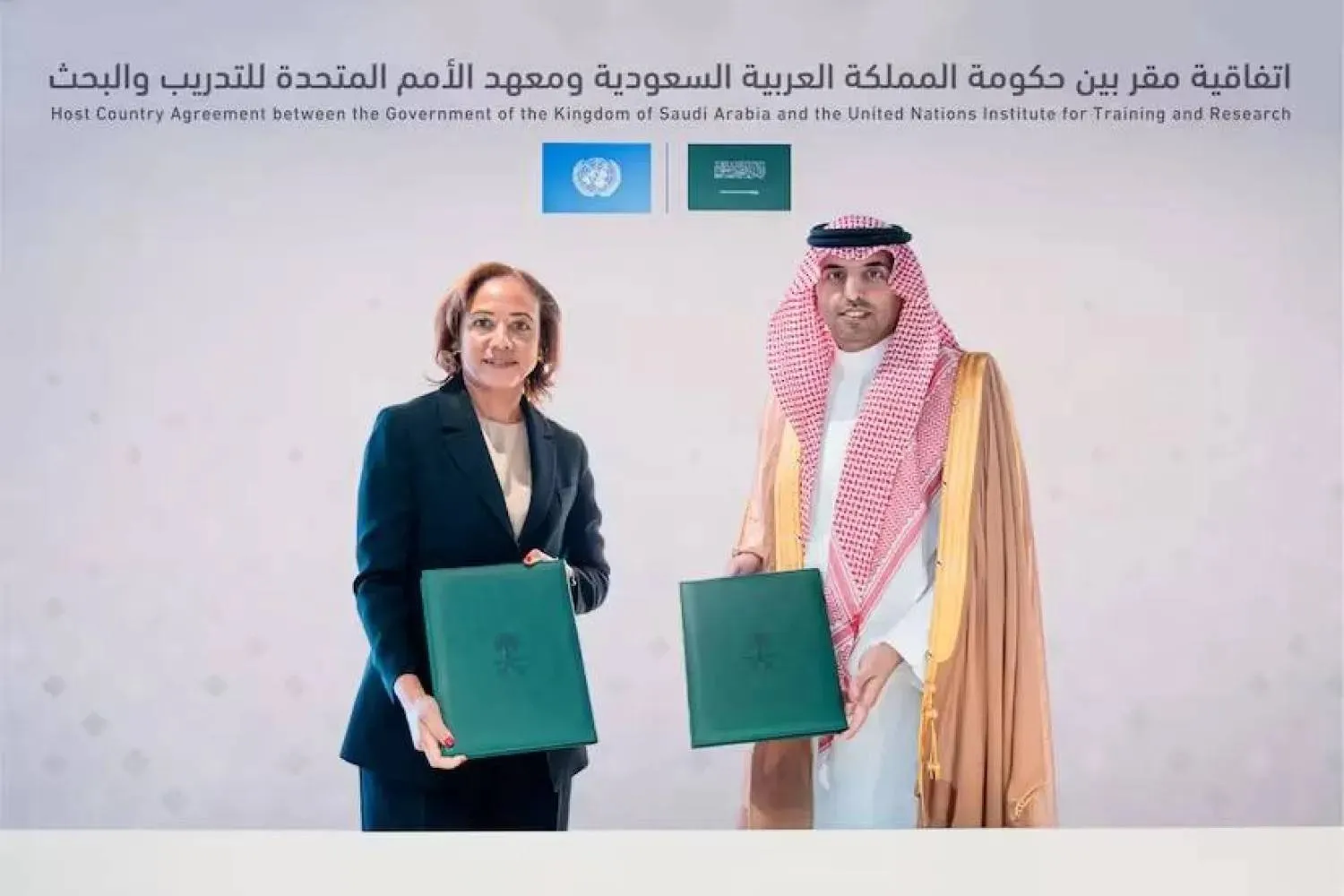

Riyadh to Host UNITAR’s First Cybersecurity Office

The office will help address global cybersecurity capacity gaps. (National Cybersecurity Authority) 
TT

Riyadh to Host UNITAR’s First Cybersecurity Office

The office will help address global cybersecurity capacity gaps. (National Cybersecurity Authority) 

The United Nations has selected Riyadh as the headquarters of the first cybersecurity-focused office of its training and research arm, the United Nations Institute for Training and Research (UNITAR).

The move reflects Saudi Arabia’s global leadership in the sector and the success of its cybersecurity model at the national, regional and international levels.

The office will spearhead initiatives and projects focused on capacity building, policy development, and joint research and development programs, helping to strengthen the skills of a broad range of beneficiaries and specialists while advancing cybersecurity globally.

Its objectives align with the Global Initiative for Building Cyber Capacities, launched by Saudi Arabia in partnership with the United Nations and its specialized agencies, particularly through research and development programs, training courses and workshops aimed at enhancing the capabilities of policymakers, law enforcement officials, diplomats and cybersecurity professionals worldwide.

Musaed Al Aiban, Minister of State, Member of the Council of Ministers, and Chairman of the NCA Board of Directors, praised the support the sector receives from Custodian of the Two Holy Mosques King Salman bin Abdulaziz and Crown Prince and Prime Minister Mohammed bin Salman.

He said the selection reflects the leadership’s continued commitment to promoting international cooperation and joint action in cybersecurity.

Al Aiban added that the decision underscores Saudi Arabia’s leading position in the strategic sector and the achievements of its cybersecurity model since the establishment of the NCA as the country’s competent authority and national reference body for cybersecurity. He also highlighted the creation of the Saudi Information Technology Company (SITE) as the authority’s strategic and technical partner in developing the sector.

Saudi Arabia has established a strong track record in supporting strategic cybersecurity initiatives, further cementing its standing as a preferred destination for international organizations and institutions, Al Aiban underlined. He added that the Kingdom has long championed international initiatives aimed at enhancing the stability of cyberspace, contributing to societal prosperity, economic growth and human well-being worldwide.

For his part, Majed Al Mazyed, Governor of the National Cybersecurity Authority, said the UN’s decision further reflects Saudi Arabia’s internationally recognized leadership in cybersecurity, as evidenced by a range of global benchmarks.

He noted that Saudi Arabia retained its position as the world’s top-ranked country in cybersecurity for a second consecutive year in the IMD World Competitiveness Yearbook 2025. He also pointed to the Kingdom’s designation by the International Telecommunication Union (ITU), the UN agency for information and communication technologies, as a “Role Model” in the highest tier of the Global Cybersecurity Index 2024.

Michelle McDonough, Executive Director of UNITAR, said the launch of the institute’s first cybersecurity office and the choice of Riyadh as its headquarters underscore Saudi Arabia’s leadership and its pivotal role in advancing international cybersecurity efforts.

She added that the office will work with partners to address cybersecurity capacity gaps globally and help transform shared risks into shared resilience by connecting institutions and organizations across regions.

Saudi Arabia already hosts several regional and international cybersecurity bodies, including the Arab Cybersecurity Ministers Council, the Global Cybersecurity Forum Foundation, and the Cyber Economics Center, established through a partnership between the foundation and the World Economic Forum.


Saudi Arabia Welcomes US-Iran Deal to End Military Operations

A view of Riyadh, Saudi Arabia. (SPA)
TT

Saudi Arabia Welcomes US-Iran Deal to End Military Operations

A view of Riyadh, Saudi Arabia. (SPA)

Saudi Arabia welcomed on Monday the agreement reached between the United States and Iran to end their military operations and kick off 60-day negotiations to reach a lasting deal.

A Foreign Ministry statement said the Kingdom hailed the mediation led by Pakistan and Qatar, praising at the same time the US and Iran’s receptiveness to those efforts that helped lead to the agreement.

It stressed the importance of restoring security and freedom of navigation in the Strait of Hormuz to the way they were before February 28 when the war erupted, saying they were essential for regional security and ensuring the movement of global trade and energy.

Saudi Arabia hoped the upcoming negotiations would achieve lasting peace that would consolidate regional and global security through understandings that take into account the region’s security interests and consolidate respect for the sovereignty of nations and non-interference in their internal affairs.


GCC Launches Platform for Unified Review of Gulf Legislation

Secretary General of the Gulf Cooperation Council (GCC) Jasem Albudaiwi (4th from right) and other officials are seen at Sunday's launch. (GCC)
TT

GCC Launches Platform for Unified Review of Gulf Legislation

Secretary General of the Gulf Cooperation Council (GCC) Jasem Albudaiwi (4th from right) and other officials are seen at Sunday's launch. (GCC)

Secretary General of the Gulf Cooperation Council (GCC) Jasem Albudaiwi launched on Sunday the "Gulf Legislation Platform" that allows the review of unified Gulf legislation issued within the framework of joint Gulf action.

It provides a unified electronic reference that helps in supporting legislative and legal work across Gulf countries, said a statement by the GCC General Secretariat.

During the launch at the General Secretariat headquarters, Albudaiwi hailed the efforts of those in charge of the initiative, which came in implementation of the decision of the Standing Committee of Officials of Legislation Departments in the GCC States at its 19th meeting.

The committee had approved the General Secretariat's proposal to establish this specialized platform to streamline access to unified Gulf and national legislation.

The platform provides advanced search services that enable government and legal entities in the member states, alongside specialists, researchers, and those interested in legislative affairs, to access and review unified Gulf legislation and national legislation with efficiency and ease.

This boosts the exchange of legal expertise and supports legislative coordination and integration among the Council states. The platform currently boasts more than 24,700 legal and legislative documents.

The first phase of the project covers Bahrain and Oman, while the relevant authorities at the General Secretariat continue to work on completing the link with the remaining member countries.


KSrelief's Masam Project Clears 2,045 Mines across Yemen in One Week

The Saudi Project for Landmine Clearance (Masam) in Yemen cleared 2,045 mines from various regions of Yemen during the second week of June 2026. (SPA)
TT

KSrelief's Masam Project Clears 2,045 Mines across Yemen in One Week

The Saudi Project for Landmine Clearance (Masam) in Yemen cleared 2,045 mines from various regions of Yemen during the second week of June 2026. (SPA)

The Saudi Project for Landmine Clearance (Masam) in Yemen, implemented by the King Salman Humanitarian Aid and Relief Center (KSrelief), cleared 2,045 mines from various regions of Yemen during the second week of June 2026, the Saudi Press Agency said on Monday.

The clearance operations included 98 anti-tank mines, 18 anti-personnel mines, 1,927 unexploded ordnance items, and two improvised explosive devices (IEDs).

This brings the number of mines cleared since the beginning of June to 2,843, while the total removed since the launch of the Masam project has reached 567,182.

These mines had been indiscriminately planted across various parts of Yemen, posing a threat to civilians, including children, women, and the elderly.

Through KSrelief, Saudi Arabia continues to support mine-clearance operations across Yemen under the Masam project, helping to protect civilians from the dangers posed by landmines and explosive remnants of war
