


Saudi Arabia Stresses It Will Not Be Lenient in Protecting Its Security, Interests, and National Capabilities

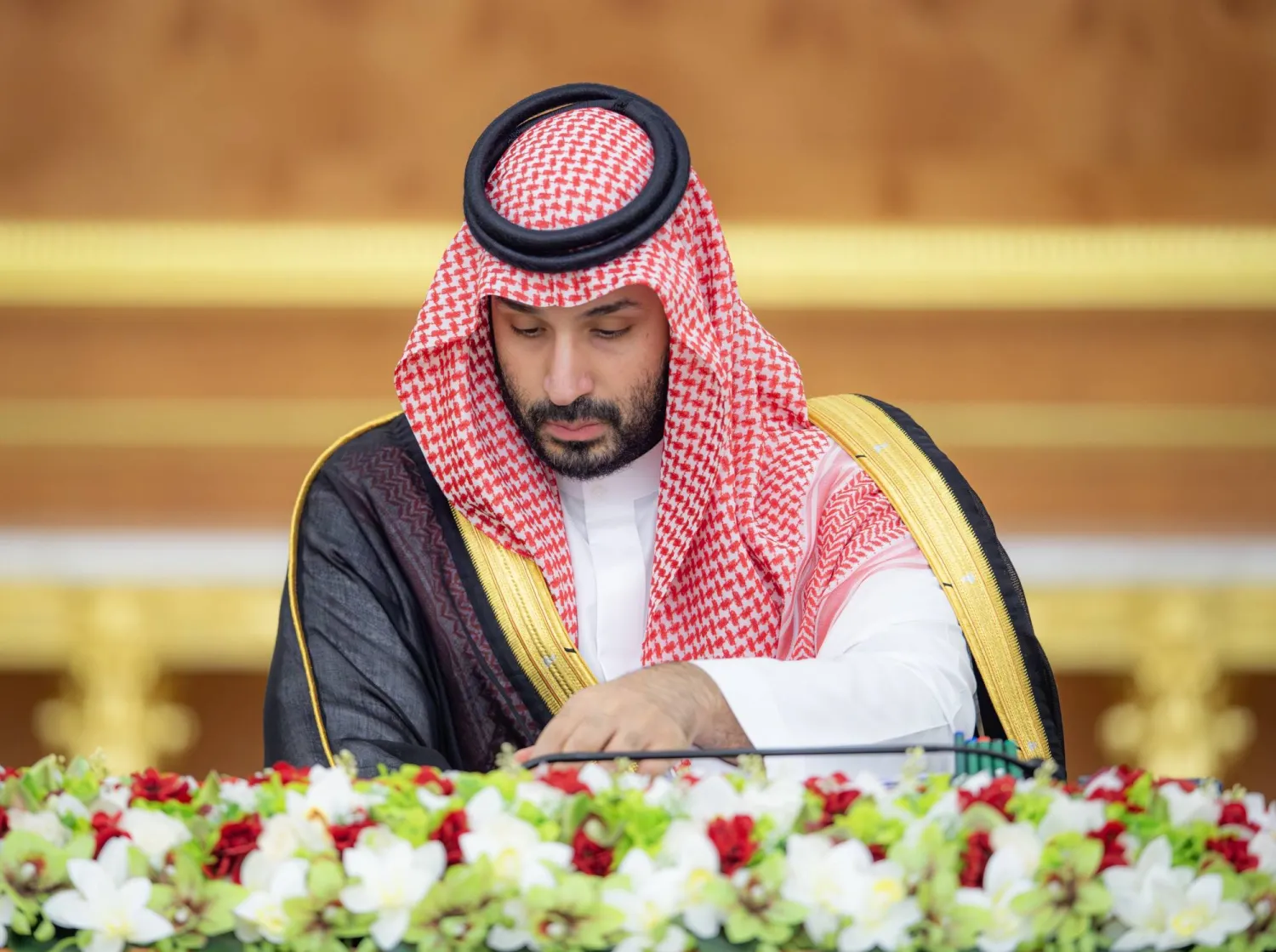
Prince Mohammed bin Salman, Crown Prince and Prime Minister, chairs the Cabinet meeting in Jeddah on Tuesday. (SPA)
TT

Saudi Arabia Stresses It Will Not Be Lenient in Protecting Its Security, Interests, and National Capabilities

Prince Mohammed bin Salman, Crown Prince and Prime Minister, chairs the Cabinet meeting in Jeddah on Tuesday. (SPA)

The Saudi Cabinet stressed on Tuesday that the Kingdom will not tolerate any compromise to its security, interests, and national capabilities. It vowed to respond decisively to any hostile acts in line with international humanitarian law and the principle of proportionality.

The Cabinet also strongly condemned the attacks by Iran-backed terrorist militias in Yemen and Iraq targeting oil facilities in the Riyadh Region and Eastern Province, as well as commercial vessels in the Red Sea.

Prince Mohammed bin Salman, Crown Prince and Prime Minister, chaired the Cabinet meeting in Jeddah.

He briefed the Cabinet on the telephone calls he held with Emir of Kuwait Sheikh Meshal Al-Ahmad Al-Jaber Al-Sabah, Pakistani Prime Minister Muhammad Shehbaz Sharif, and British Prime Minister Andy Burnham. Discussions tackled regional developments, along with the ongoing efforts to boost security and stability in the region.

The Cabinet stressed the need for the Iraqi government to take all necessary measures to ensure its territory is not used as a launchpad for attacks.

It expressed appreciation for the stances of countries and international organizations that condemned the criminal attacks, which the Kingdom's air defenses successfully and competently intercepted.

The Cabinet reviewed the ongoing efforts exerted by Saudi Arabia through communication and consultation with brotherly and friendly nations to de-escalate and contain tensions in the region, ensure the security of waterways in the Arabian Gulf and the Red Sea, and support all measures contributing to regional and international stability.
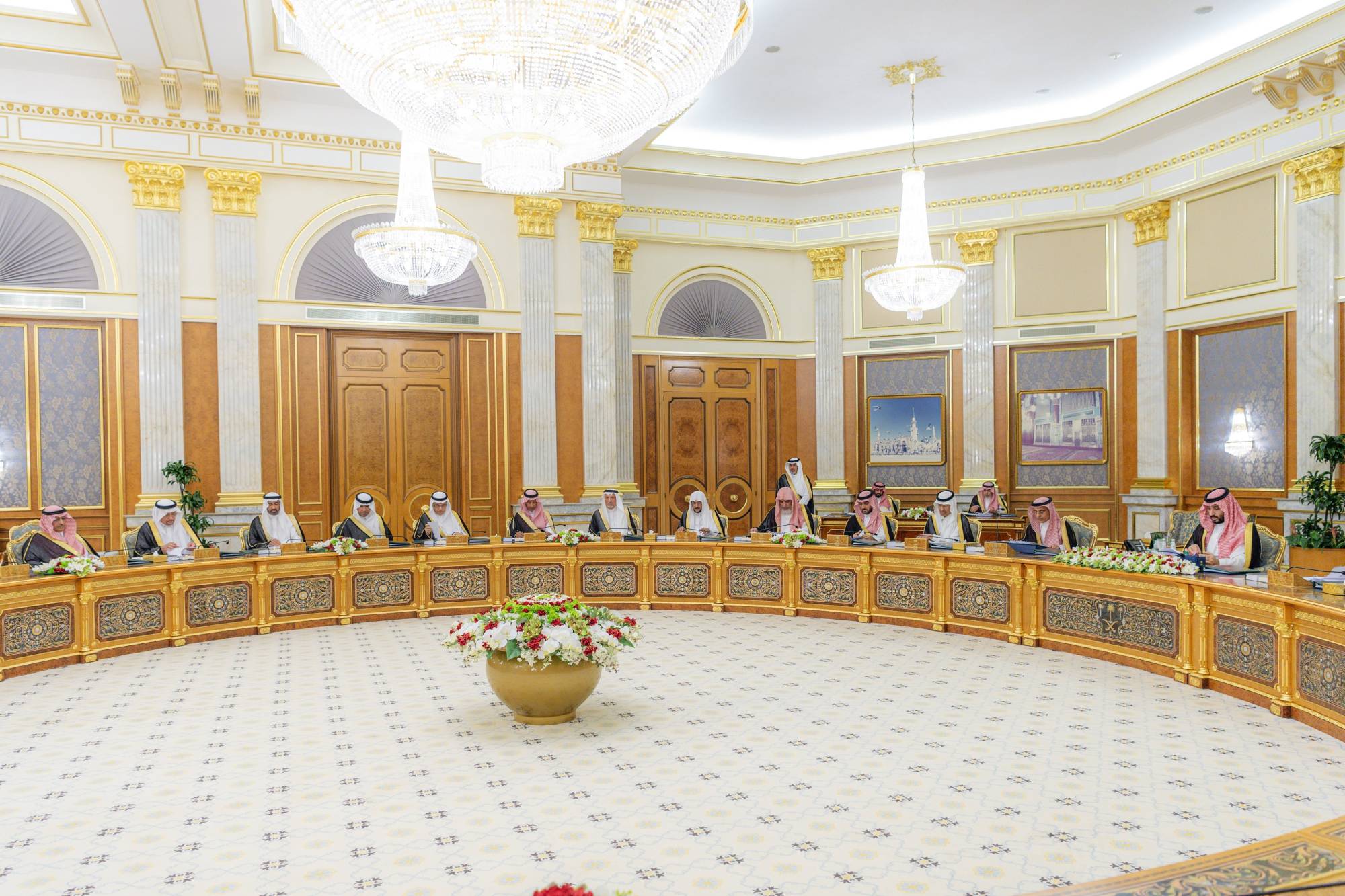
Ministers are seen at the Cabinet session in Jeddah on Tuesday. (SPA)

The Cabinet underlined Saudi Arabia's commitment to consolidating the approach of dialogue and diplomacy and strengthening joint international action, especially as the region undergoes a critical phase.

This phase requires establishing a regional system based on adherence to the fundamental principles enshrined in the United Nations Charter, foremost of which are safeguarding state sovereignty, non-interference in internal affairs, respecting the principles of good neighborliness, ensuring freedom of navigation, and complying with international law.

On domestic affairs, the Cabinet reviewed the state's overall performance, particularly regarding the continuous upgrading of its sectors and agencies, and the improvement of services provided to citizens.

It noted the passage of the General Education Law, which marks a qualitative shift in developing and governing the education sector, providing the necessary enablers to achieve its targets, boosting the quality of both the educational environment, and regulating the roles of the private and non-profit sectors to fulfill the goals of Saudi Vision 2030.

The Cabinet praised the Quality of Life Program for achieving results that exceeded the economic and developmental targets set for its strategic initiatives. It highlighted the program's growing role in contributing to the non-oil GDP, developing services across all cities, and driving the culture, sports, entertainment, and tourism sectors toward new horizons that have elevated the Kingdom's position as an attractive global destination.




Saudi Arabia Strongly Condemns Attacks on Iraq’s Kurdistan Region

Saudi Arabia affirmed its rejection of undermining Iraq's sovereignty and the security of its institutions (SPA)
TT

Saudi Arabia Strongly Condemns Attacks on Iraq’s Kurdistan Region

Saudi Arabia affirmed its rejection of undermining Iraq's sovereignty and the security of its institutions (SPA)

Saudi Arabia strongly condemned on Tuesday the attacks that targeted Kurdistan region in Iraq, including an attack on the office of its Prime Minister Masrour Barzani describing them as a violation of Iraq’s sovereignty and territorial integrity.

The Saudi Foreign Ministry stressed in a statement that the kingdom categorically rejects hostile operations targeting political figures and anything that could undermine the security of Iraqi state institutions or threaten the country's security and stability.

The ministry reiterated the kingdom’s firm opposition to all forms of interference in the internal affairs of states, violations of their sovereignty and breaches of the principles of good neighborliness and international law.

Barzani announced on Monday that two Iranian drones loaded with explosives targeted his private office on Erbil and the residence of the head of the Parastin Agency. Officials described the attack as a serious escalation violating Iraq’s sovereignty.


Saudi Arabia, Sudan Establish Joint Coordination Council

Saudi Foreign Minister Prince Faisal bin Farhan and his Sudanese counterpart, Mohieddin Salem Ahmed Ibrahim, sign the document. (SPA) 
TT

Saudi Arabia, Sudan Establish Joint Coordination Council

Saudi Foreign Minister Prince Faisal bin Farhan and his Sudanese counterpart, Mohieddin Salem Ahmed Ibrahim, sign the document. (SPA) 

Saudi Arabia and Sudan signed an agreement Monday establishing a joint coordination council to deepen bilateral ties and provide an institutional framework for cooperation through clearly defined initiatives, projects and targets.

Saudi Foreign Minister Prince Faisal bin Farhan and his Sudanese counterpart, Mohieddin Salem Ahmed Ibrahim, signed the document establishing the Saudi-Sudanese Coordination Council in Riyadh. The council is intended to serve as an institutional platform for developing relations and advancing cooperation between the two countries.

Following their meeting, the ministers co-chaired a session of the bilateral Political Consultation and Follow-Up Committee, where they reviewed relations, explored ways to expand cooperation across various fields and discussed regional developments.

Speaking to Asharq Al-Awsat, Salem described Saudi-Sudanese relations as “strategic” and said he expected the new council to produce tangible results. He stressed that Red Sea security remained a top priority for both countries.

Salem also praised the Makkah Joint Defense Agreement between Saudi Arabia, Pakistan and Türkiye, expressing optimism about Sudan potentially joining a broader grouping with the Kingdom.

He described Saudi Arabia as more than a major power or international symbol, saying Riyadh had approached the Sudanese crisis with “the sense of a neighbor, supporter and shared destiny.” He added that Khartoum viewed potential integration into the trilateral grouping positively as a means of strengthening regional security and stability.

The Sudanese minister praised Saudi Arabia’s support since the outbreak of the war, which he attributed to the Rapid Support Forces and mercenaries. He pointed to Riyadh’s hosting of the Jeddah talks — the first negotiating platform launched after the conflict erupted — as evidence of the Kingdom’s commitment to Sudan and its people.

Salem also highlighted humanitarian assistance provided by the King Salman Humanitarian Aid and Relief Center, saying the war had prompted Sudan to reassess its relationships with other countries. Khartoum’s foreign policy, he added, would take a different course in the future.

He said the coordination council could usher in comprehensive strategic cooperation spanning political, security, economic and social affairs.

Turning to Sudan’s domestic political dialogue, Salem expressed hope that civilian forces could reach consensus on an overarching vision for resolving the crisis, stressing that political divisions and fragmentation among those groups had contributed to complicating the country’s political landscape.

He urged civilian and political forces to unite around national priorities and engage in dialogue free from agendas that could undermine national unity. He also called for inclusive internal talks representing Sudan’s diverse political currents and fostering greater cooperation between the government and national forces.

Salem further urged Sudanese political groups to forge a unified national position to confront the challenges created by the war, accusing the militia involved in the conflict of seeking demographic change in the country.

At a news conference in Riyadh on Monday evening, Salem and Sudanese Ambassador to Saudi Arabia Dafallah Al-Haj said the council would pave the way for further consultations, initiatives and projects aimed at strengthening bilateral cooperation and integration.


KSrelief's Masam Project Removes 2,157 Mines Across Yemen in One Week

The Masam Project for clearing landmines in Yemen removed 2,157 mines from various areas of Yemen during the second week of August 2026. (SPA)
TT

KSrelief's Masam Project Removes 2,157 Mines Across Yemen in One Week

The Masam Project for clearing landmines in Yemen removed 2,157 mines from various areas of Yemen during the second week of August 2026. (SPA)

The Masam Project for clearing landmines in Yemen, implemented by the King Salman Humanitarian Aid and Relief Center (KSrelief), removed 2,157 mines from various areas of Yemen during the second week of August 2026, the Saudi Press Agency reported on Monday.

The clearance operations included 68 anti-tank mines, 11 anti-personnel mines, 2,075 unexploded ordnance items, and three improvised explosive devices (IEDs), contributing to efforts to make affected areas safer for local communities.

This brings the total number of mines removed since the launch of the Masam Project to 646,550. The mines had been planted indiscriminately across Yemen, posing a threat to the lives of innocent civilians, including children, women, and older people.

The Kingdom of Saudi Arabia, through KSrelief, continues its efforts to clear mines in Yemen, enhancing civilian safety and supporting safe and dignified living conditions for the Yemeni people.