



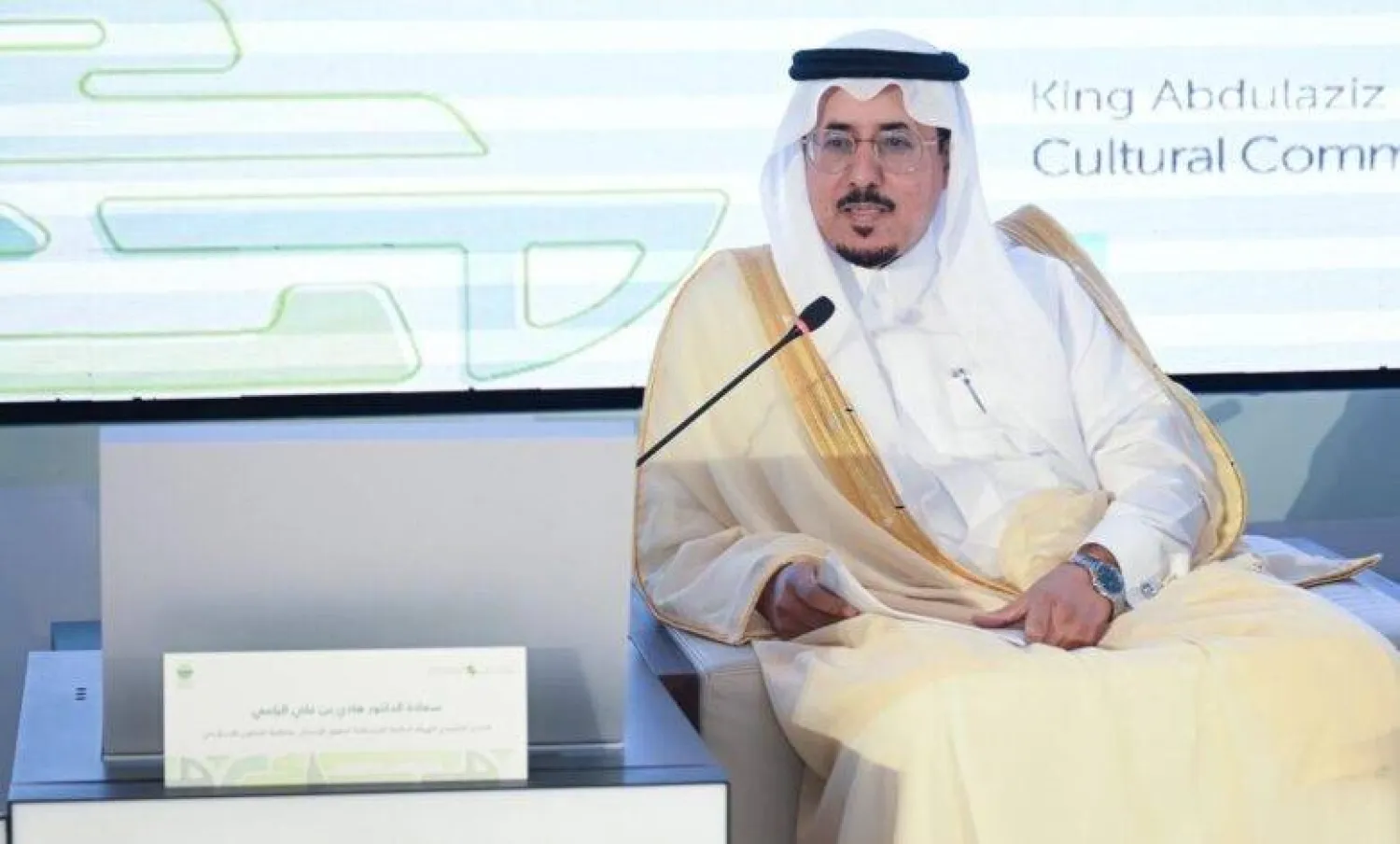

Dr. Hadi Al-Yami, Executive Director of the Independent Permanent Human Rights Commission of the Organization of Islamic Cooperation (OIC), revealed plans to establish the Islamic Human Rights Observatory, an institutional mechanism that will monitor, document, and analyze human rights violations affecting Muslim communities and minorities worldwide while supporting early warning systems and evidence-based policy responses.
In an interview with Asharq Al-Awsat, Al-Yami said the commission is expanding its cooperation with international justice and accountability mechanisms. It supports efforts before the International Criminal Court and UN mechanisms to strengthen documentation of violations in the Palestinian territories, advance accountability and justice, and combat impunity, SPA reported.
He said the commission's engagement on the Palestinian issue extends beyond statements of condemnation to include legal analysis, documentation of alleged crimes, protection of civilians, ensuring the delivery of humanitarian aid, and support for Palestinian rights during recovery and reconstruction efforts.
Al-Yami added that Saudi Arabia's support has strengthened the commission's work, enhanced its institutional stability, and expanded its international presence. He said the Kingdom's voluntary financial contribution as the host country reflected its confidence in the commission's new strategic direction, while Jeddah has hosted major human rights initiatives on artificial intelligence governance and youth empowerment.
Observatory to Monitor Violations
Al-Yami disclosed plans to establish the Islamic Human Rights Observatory as a specialized institutional mechanism to monitor, document, and analyze violations affecting Muslim communities and minorities.
He said the observatory will provide reliable information and real-time analysis, support early warning systems, and help member states formulate evidence-based legal and policy responses, particularly in addressing Islamophobia, hate speech, religious discrimination, media disinformation, and challenges arising in conflict zones.
He added that the commission is working with the OIC's special envoy on combating Islamophobia, the organization's General Secretariat, and UN mechanisms to develop a comprehensive strategy that addresses the root causes of the phenomenon while supporting legislation that prohibits and criminalizes incitement to hatred.
Al-Yami said the commission has, for the first time since its establishment, adopted a comprehensive strategic framework that will serve as its roadmap for 2026-2030, enhancing institutional effectiveness and shifting its work from isolated activities to a systematic, results-based approach.
He added that the new framework places particular emphasis on promoting the rights of families, women, children, older persons, and people with disabilities in line with Islamic values and the international obligations of member states.
Palestine: Advancing Accountability
Al-Yami stressed that the Palestinian issue will remain at the forefront of the commission's priorities and that its role extends beyond issuing statements of condemnation to monitoring, documentation, legal analysis, and cooperation with international justice and accountability mechanisms.
He outlined four priorities: protecting civilians and ensuring humanitarian access; strengthening documentation and accountability in cooperation with Palestinian institutions, the International Criminal Court, and UN mechanisms; ensuring that recovery and reconstruction efforts are grounded in Palestinian rights, property ownership, and the right of displaced people to return; and coordinating diplomatic efforts to support the Palestinians' right to self-determination.
He said the commission supports accountability proceedings before the International Criminal Court and cooperates with the UN Special Rapporteur on the situation of human rights in the Occupied Palestinian Territory and the Office of the UN High Commissioner for Human Rights to combat impunity.
Islamic Human Rights Day
Al-Yami said Islamic Human Rights Day, observed annually on Aug. 5, serves as an opportunity for member states to renew their commitment to protecting human dignity and promoting fundamental rights and freedoms in line with Islamic values and international obligations.
"It should not be limited to messages and events," he said. "It should serve as a catalyst for strengthening legislation, institutions, and practices, expanding education, awareness, and capacity-building, and deepening cooperation to address violations and protect the most vulnerable. The commission is working to translate these principles into practical, measurable, and implementable policies and initiatives."
Continued Saudi Support
Al-Yami expressed his appreciation to Custodian of the Two Holy Mosques King Salman bin Abdulaziz and Crown Prince and Prime Minister Mohammed bin Salman for the confidence placed in him through his nomination as the commission's executive director, saying the trust carries the responsibility of enhancing the institution's performance, credibility, and international standing.
He said Saudi Arabia's voluntary financial contribution, alongside contributions from Türkiye and Azerbaijan, reflected member states' confidence in the commission's new strategic direction. He also highlighted the Kingdom's role as host of the commission's headquarters, saying it has helped ensure the institution's operational stability and ability to carry out its mandate.
According to Al-Yami, Saudi Arabia has also played a leading role in hosting landmark human rights initiatives, including the Jeddah Declaration on Guiding Principles for Artificial Intelligence Governance and Human Rights Protection and the Jeddah Declaration on Youth Empowerment, Development, and Peacebuilding. He said both declarations provide a foundation for the commission's work in addressing emerging challenges while placing young people at the center of human rights and development policies.
Budget Unchanged Since 2018
Al-Yami said limited human and financial resources remain among the commission's biggest challenges. He noted that its small secretariat is responsible for serving all 57 OIC member states while addressing an increasingly complex range of human rights issues.
He said the commission's regular budget has not been revised since 2018 despite the significant expansion of its responsibilities and activities, limiting its ability to carry out technical assistance programs, field visits, and capacity-building initiatives.
He added that the time has come to review the commission's statute and rules of procedure, more than a decade after it began operating, in order to strengthen its operational effectiveness, keep pace with evolving human rights developments, and maximize its impact.
Sovereignty Does Not Preclude Human Rights Protection
On promoting and protecting human rights within member states, Al-Yami said the commission operates independently and provides objective, impartial, evidence-based human rights assessments.
He said the commission's human rights approach is based on dialogue, technical cooperation, and support for national legislation and institutions, helping member states fulfill their international obligations. Sustainable reform, he said, is most effective when it is nationally owned and implemented by states in line with those commitments.
Artificial Intelligence and Children's Rights
Al-Yami said the commission is drafting recommendations on artificial intelligence governance, privacy protection, safeguarding children in a secure digital environment, and addressing disinformation, hate speech, and violence.
The commission is also working with the Islamic Labor Organization to review and update the Covenant on the Rights of the Child in Islam so that it reflects international standards and contemporary challenges.
He added that youth empowerment has become one of the commission's priorities given the demographic profile of OIC member states, where nearly 60 percent of the population is under the age of 30.
Al-Yami concluded by saying that the commission's goal by 2030 is to become a more visible, responsive, and credible institution, evolving from a body that issues statements into a practical partner capable of providing member states with implementable legal and institutional solutions.


