Abul Gheit to Visit Erbil, Convey Calls to Postpone Independence Referendum

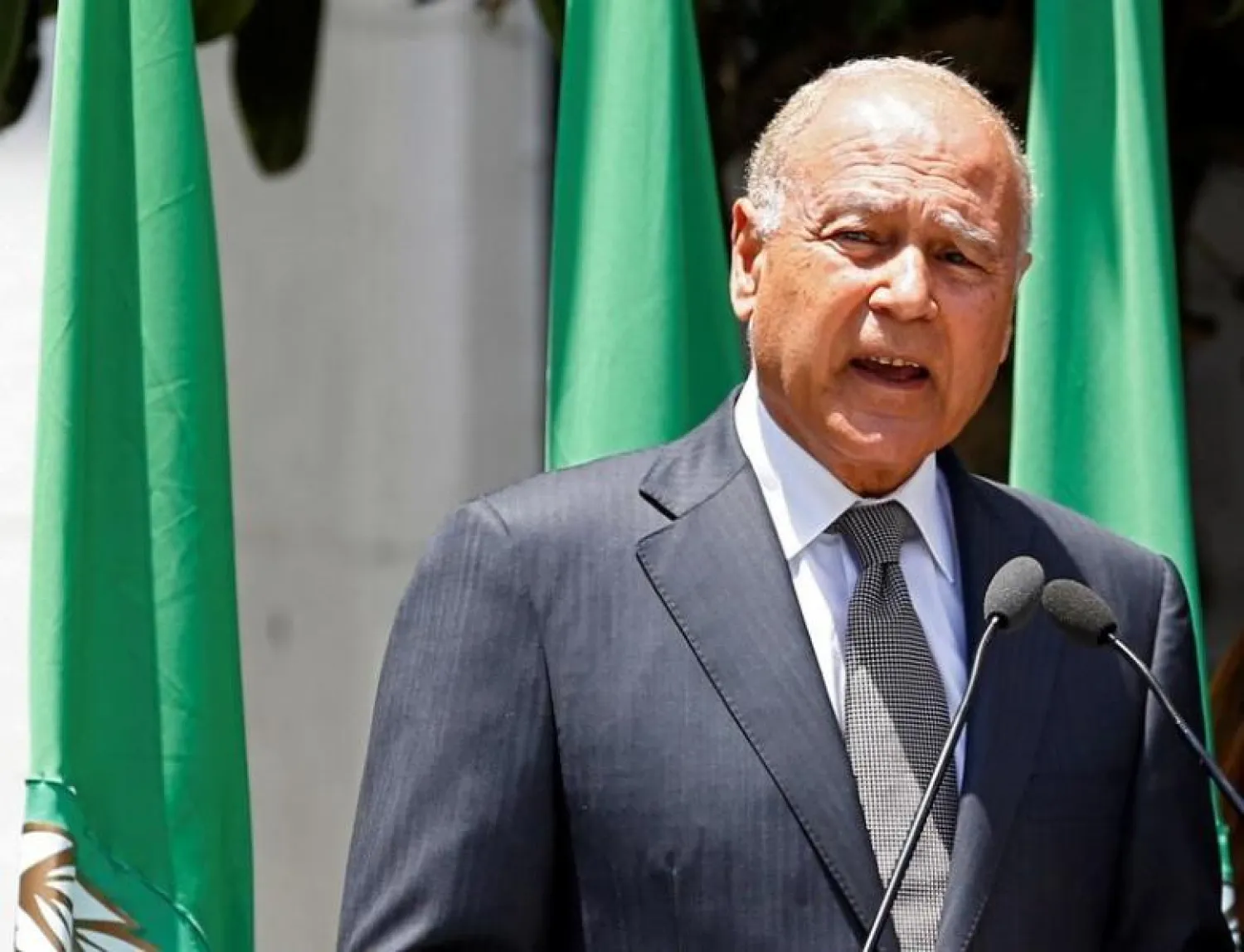
Secretary-General of the Arab League Ahmed Aboul Gheit speaks during a protest held in solidarity with Palestinian prisoners on hunger strike in Israeli jails, at the Arab League headquarters in Cairo, Egypt May 4, 2017. REUTERS/Mohamed Abd El Ghany/Files
TT

Abul Gheit to Visit Erbil, Convey Calls to Postpone Independence Referendum

Secretary-General of the Arab League Ahmed Aboul Gheit speaks during a protest held in solidarity with Palestinian prisoners on hunger strike in Israeli jails, at the Arab League headquarters in Cairo, Egypt May 4, 2017. REUTERS/Mohamed Abd El Ghany/Files

Arab League Secretary General Ahmed Aboul Gheit plans to visit Erbil soon to discuss the referendum to be held in the Kurdistan Region in Iraq on September 25, sources with knowledge of the matter told Asharq al-Awsat.

The Arab diplomatic sources said that the move by Aboul Gheit falls within the framework of what he sees as “a necessary priority that requires every effort and opportunity to encourage and promote dialogue between Baghdad and Erbil.”

They added that the expected meeting between the Arab League chief and the President of Iraq’s Kurdistan Masoud Barzani would witness “an honest discussion about the referendum,” based on Aboul Gheit’s belief of the “importance that the Kurdish leadership assesses the situation and reads it carefully before taking the step of the referendum, considering the negative impact on the unity of the Iraqi state and on the future of the Kurds in Iraq and neighboring countries.”

The Arab League secretary general had exchanged with the Kurdish leader diplomatic messages over the last period.

In a letter to Barzani, Aboul Gheit conveyed the Arab League’s position, which supports the postponement of the planned referendum, calling for dialogue between Baghdad and Erbil and adherence to the Constitution and the federal system approved by all components of the Iraqi political system.

Barzani responded by reiterating the position of the different Kurdish parties and highlighting the “bitterness” felt by the Iraqi Kurds towards the central government in Baghdad.

The sources added that the Arab League chief was convinced that the door of dialogue with the Kurds, “who represent an important dimension in the formation of the Arab world”, should not be closed and that all efforts should be deployed to preserve their presence as an authentic component of Arab society, whether in Iraq or Syria, especially that the situation in the region does not tolerate more divisions.


Lebanon Raises Israel-Hezbollah War Death Toll to 2,454

This picture shows the rubble of buildings destroyed in Israeli strikes in the southern Lebanese coastal city of Tyre on April 21, 2026. (AFP)
TT

Lebanon Raises Israel-Hezbollah War Death Toll to 2,454

This picture shows the rubble of buildings destroyed in Israeli strikes in the southern Lebanese coastal city of Tyre on April 21, 2026. (AFP)

Lebanon on Tuesday raised the toll from six weeks of war between Israel and Hezbollah to 2,454 dead as a fragile 10-day ceasefire holds.

The government's disaster risk management unit in a statement also said 7,658 people had been wounded in the conflict, which began on March 2, days after the broader Middle East war erupted.

Authorities and rescuers in Lebanon have been continuing to recover and identify bodies in areas that were subjected to heavy Israeli strikes.


Macron to Reaffirm Commitment to Lebanese Ceasefire and Sovereignty in Paris Talks

France's President Emmanuel Macron delivers a speech during an award ceremony to honor the police officers who intervened to the Bataclan concert hall during the terrorist attacks on Nov. 13, 2015, at the Elysee Palace in Paris Tuesday, April 21, 2026. (AP)
TT

Macron to Reaffirm Commitment to Lebanese Ceasefire and Sovereignty in Paris Talks

France's President Emmanuel Macron delivers a speech during an award ceremony to honor the police officers who intervened to the Bataclan concert hall during the terrorist attacks on Nov. 13, 2015, at the Elysee Palace in Paris Tuesday, April 21, 2026. (AP)

French President Emmanuel Macron is to reaffirm France’s full commitment to the ceasefire in Lebanon and support for the country’s territorial integrity at a meeting Tuesday in Paris with Lebanon’s Prime Minister Nawaf Salam, Macron’s office said.

Pakistan is preparing for a new round of talks between the US and Iran as the ceasefire is set to expire Wednesday, while Lebanon and Israel are set to hold a new meeting in Washington later this week.

Macron and Salam "will also address humanitarian support for displaced populations and the continuation of the economic and financial reforms essential to strengthening Lebanon’s sovereignty, its reconstruction and the restoration of its prosperity,” Macron's office said.

The meeting at the Elysee presidential palace comes after the UN peacekeeping force in southern Lebanon, known as UNIFIL, came under attack from small arms fire Saturday, leaving one French peacekeeper dead and three others wounded, two of them seriously.

Both Macron and the UNIFIL force blamed Hezbollah, but the Iran-backed group denied involvement.

Macron has called on Lebanese authorities to “shed full light on the incident” and to “identify and prosecute those responsible without delay.” UNIFIL soldiers “must under no circumstances be targeted,” Macron’s office said.

Earlier Tuesday, Salam made a stop in Luxembourg for a meeting of EU foreign ministers that was to address the situation in the Middle East.

On March 2, two days after the US and Israel launched their war on Iran, Hezbollah entered the fray by firing missiles across the border. Israel responded with an intense bombing campaign and ground invasion.

Lebanese President Joseph Aoun offered direct negotiations with Israel — the first in decades — in exchange for a cessation of hostilities, an offer that was initially rebuffed.

That changed after the announcement of a truce between Iran and the United States and talks between the two brokered by Pakistan.

Lebanon and Israel held their first direct diplomatic talks in decades last week in Washington following more than a month of war between Israel and Hezbollah. Meanwhile, Iran continued to insist that its own ceasefire agreement must extend to Lebanon and said it would not reopen the Strait of Hormuz otherwise.

A ceasefire between Israel and Hezbollah in Lebanon was announced by the US on Thursday. The US portrayed the deal as the result of the Israel-Lebanon talks.

Hezbollah, which was opposed to Lebanon holding direct talks with Israel and was not part of those negotiations, insisted that the ceasefire was a result of Iranian pressure and not of the Israel-Lebanon meeting.


Two Palestinians Killed in West Bank Village Attacked by Israeli Settlers, Witnesses Say

A worker walks past a Palestinian flag installed along a street in Turmus Ayya village, north of Ramallah in the Israeli-occupied West Bank on April 19, 2026. (AFP)
TT

Two Palestinians Killed in West Bank Village Attacked by Israeli Settlers, Witnesses Say

A worker walks past a Palestinian flag installed along a street in Turmus Ayya village, north of Ramallah in the Israeli-occupied West Bank on April 19, 2026. (AFP)

Two Palestinians, including a 14-year-old boy, were killed in the Israeli-occupied West Bank on Tuesday after Israeli settlers and soldiers opened fire, witnesses said, while in Gaza health officials said two Palestinians were killed in Israeli strikes. 

The Palestinian Red Crescent Society said two Palestinians were killed and four others were wounded by Israeli settler gunfire in al-Mughayyir village near Ramallah. The Palestinian health ministry said the two killed were aged 14 and 32. 

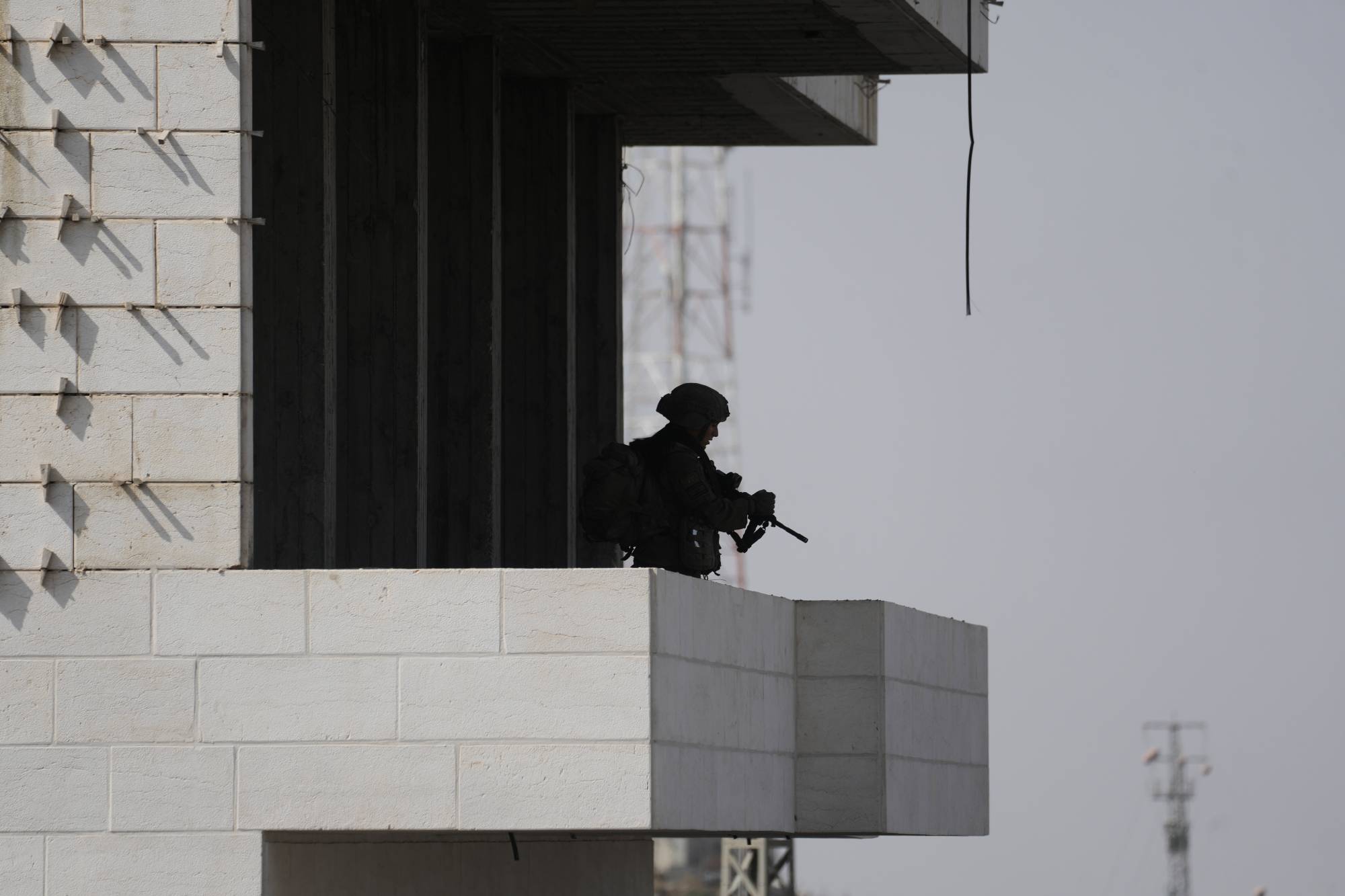
Amin Abu Ulaya, head of the local council, told Reuters that settlers and soldiers had entered the village and opened fire at a school, first against the students and later others who arrived at the scene. 

The Israeli military said forces were deployed to the al-Mughayyir area after reports that stones were thrown at an Israeli vehicle carrying civilians and a reserve soldier, who exited the car and opened fire at "suspects" in ‌the area. 

Upon arrival, ‌soldiers worked to disperse what the military described as a violent confrontation. 

The military said ‌it ⁠was aware of ⁠claims that two Palestinians were killed and others were wounded, adding that the incident was under review. 

"This led to the killing of a student and another person," said Abu Ulaya, describing scenes of panic in the village as parents raced to the school in search of their children. 

The shooting in al-Mughayyir, about 25 kilometers (16 miles) north of Ramallah, is the latest in what human rights groups have described as a surge in violence against Palestinians waged by Israeli settlers and soldiers. 

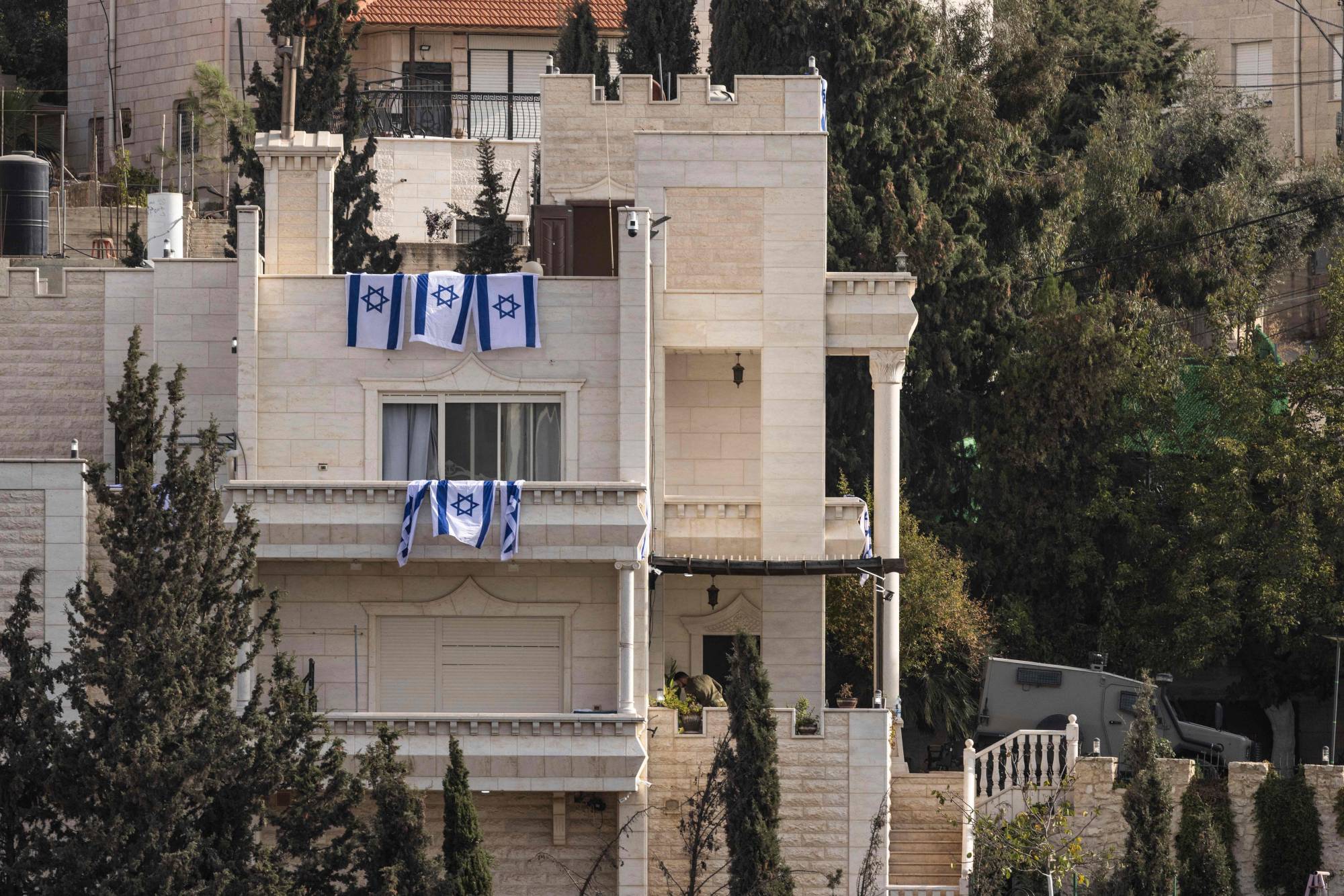
Kathem Al-Haj-Ahmed, 57, an al-Mughayyir resident, said the settlers arrived first, attacking the village school. Palestinians in the West Bank are frequently subjected to unprovoked attacks perpetrated ⁠by Israeli Jewish settlers. 

"This is our reality in al-Mughayyer village; they aim to displace ‌us, and both the army and the settlers are exchanging roles among ‌them," he told Reuters. 

Some Israeli officials have condemned "Jewish rioters" in the West Bank while also saying that a fringe minority was behind ‌the violence. Other officials have backed the settlers and called for expanding the settlements. 

Israeli settlements in the West Bank ‌are deemed illegal by the United Nations and most countries. Palestinians hope the West Bank will be part of a future independent state. 

The expansion of West Bank settlements has surged under the current right-wing Israeli government, with some 700,000 Jewish settlers now living there, among some 2.7 million Palestinians. 

TWO PALESTINIANS KILLED IN GAZA 

Meanwhile, in the Gaza Strip, health officials said on Tuesday that Israeli forces killed at ‌least two Palestinians. 

Medics said a woman in northern Gaza's Beit Lahiya area was killed by gunfire from an Israeli naval boat. The Israeli military said they were ⁠not aware of the incident. 

In ⁠another incident, a man was killed in an Israeli airstrike on the eastern side of Khan Younis in southern Gaza. 

An Israeli military spokesperson said the military had struck "terrorists" in the Khan Younis area and that more information would be released later. Three other Palestinians were also killed in the Khan Younis area overnight. 

On Tuesday, mourners arrived at hospitals in Gaza City and Khan Younis to pay farewell to those killed overnight, whose bodies were wrapped in white shrouds. Women wept and men performed prayers before the burials. 

The deaths were the latest violence to overshadow a US-brokered ceasefire deal signed last October after two years of full-blown war between Israel and the Hamas group. Progress has stalled on parts of the deal, which include the disarmament of Hamas and an Israeli army pullout. 

The ceasefire left Israeli troops in control of more than half of Gaza. Hamas controls a narrow coastal strip. 

More than 750 Palestinians have been killed since the ceasefire deal took effect, according to local medics, while Israel says militants have killed four of its soldiers. Israel and Hamas have traded blame for ceasefire violations. 

Israel says it aims to thwart attacks by Hamas and other armed factions.