


Amnesty International Exposes Illicit $46m South Sudan Arms Deal

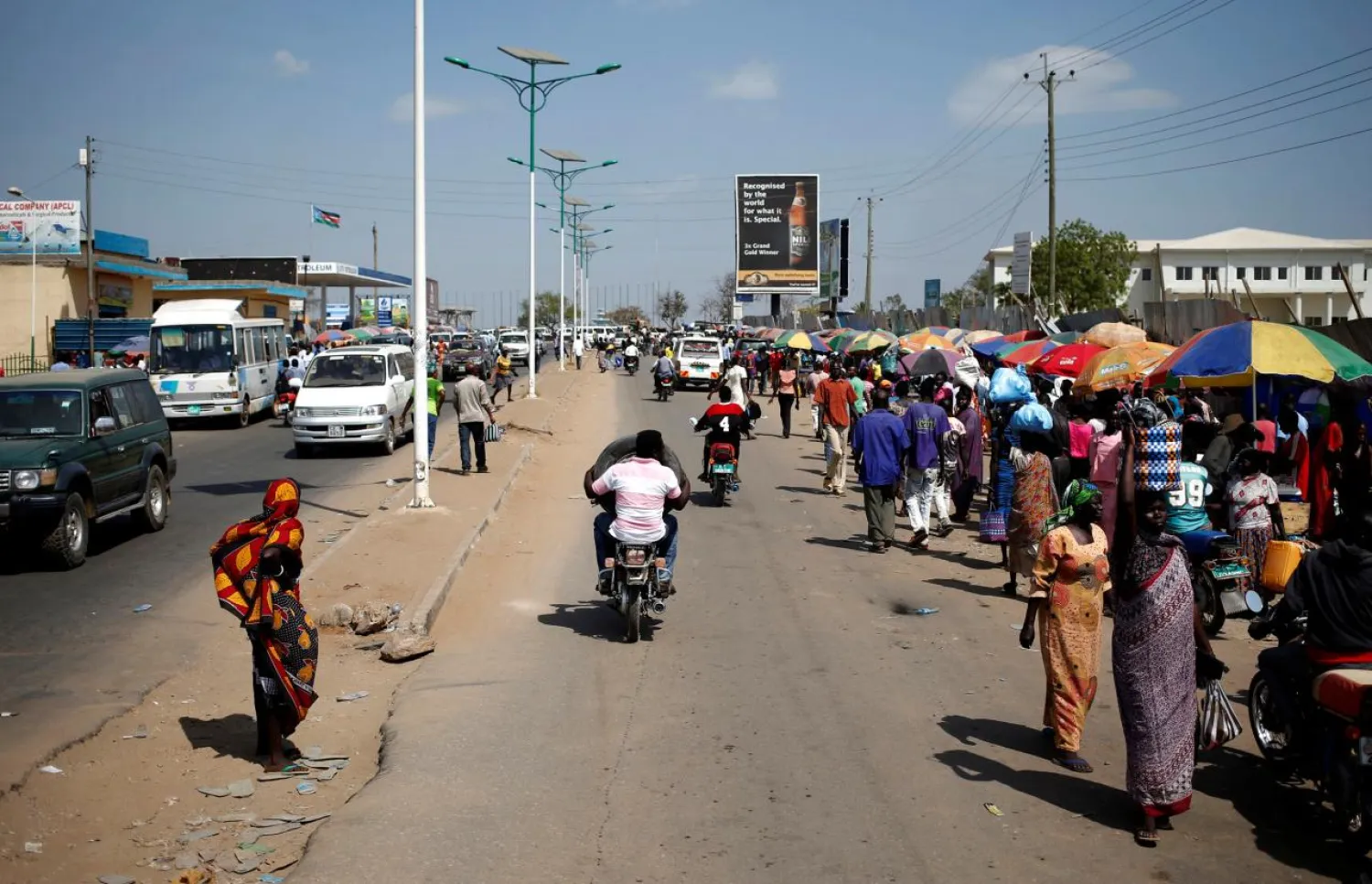
People walk along a street in Juba, South Sudan December 21, 2013. REUTERS/Goran Tomasevic/File Photo
TT

Amnesty International Exposes Illicit $46m South Sudan Arms Deal

People walk along a street in Juba, South Sudan December 21, 2013. REUTERS/Goran Tomasevic/File Photo

Amnesty International exposed in a recent research how a shell company in the heart of London’s West End acted as an intermediary in huge prospective arms deals to war-torn South Sudan and other countries, thanks to regulatory gaps which are making the UK a hotspot for companies involved in illicit arms transfers.

Commercial documents name S-Profit Ltd, a tiny UK-registered company, as the ‘supplier’ in a 2014 deal to provide at least US$46m worth of small arms, light weapons, and ammunition to the South Sudanese government. The report, From London to Juba: a UK-registered company’s role in one of the largest arms deals to South Sudan, also reveals that the UK government has been aware of similar practices taking place on British soil for more than eight years, without taking effective regulatory action.

“South Sudan is awash with weapons that have been used to kill and maim thousands of civilians, causing Africa’s biggest refugee crisis. The UK government has been a vocal proponent of a UN arms embargo on South Sudan, yet is turning a blind eye to illegal deals taking place right under its nose,” said James Lynch, Amnesty International’s Head of Arms Control and Human Rights.

“Glaring gaps in UK company regulation mean a dealer of illicit arms can go online and set up a UK company to front its activities with fewer checks than joining a gym or hiring a car. The UK must urgently review its company registration procedures – right now it provides the perfect conditions to become a hotspot for the kind of irresponsible arms transfers that have devastated South Sudan.”

The weapons in question form part of a previously undisclosed 2014 contract between a Ukrainian state arms company and a UAE-based company to procure US$169m of weapons on behalf of South Sudan. These include thousands of machine guns, mortars, RPGs and millions of rounds of ammunition.

If fulfilled, the total deal would constitute one of the largest publicly disclosed arms transfers to South Sudan since the outbreak of fighting in December 2013.

Amnesty International has not been able to determine whether some or all of the weapons listed in these documents have yet been delivered to South Sudan. However, a UK company may violate UK export control laws even by being involved in the negotiation of an arms deal to South Sudan. The involvement of the Ukrainian state-owned arms company and a UAE private company in weapons supplies to South Sudan also potentially contravenes the Ukraine and UAE’s obligations as signatories to the Arms Trade Treaty.

S-Profit’s director –a Ukrainian national based outside the UK – denied to Amnesty International that the firm had supplied military products to South Sudan, but has not responded to further questions, including whether it played an intermediary role.

Amnesty International affirmed that it has provided UK authorities with the documents and information it has obtained. The report also reveals that the UK government has, for more than eight years, been aware of UK shell companies being used unlawfully as contract vehicles for weapons dealers to supply arms to human rights violators and embargoed destinations including Syria, Eritrea and South Sudan. Yet, the UK has made no regulatory changes to address these gaps.

Meanwhile, South Sudanese President Salva Kiir Mayardit said he was not happy about the ongoing civil war and suffering of citizens in the country.

"I am not really happy. I can be seen to be happy but hurting inside. How can I be happy when I see my people suffering? People are starving and dying in criminal actions and battles.” Kiir said in an interview with SSBC on Friday.

“Being the leader I must put a brave face where I can be seen to be happy but I am not happy,” he added.

Kiir pointed out that the national dialogue is a hope that will reunite the people of South Sudan address grievances which were not tackled by the 2015 peace accord.

The world’s youngest nation has been embroiled in a violent conflict since 2013, when a split between President Salva Kiir and his former vice president, Riek Machar, escalated into outright civil war.

The devastating conflict has killed tens of thousands of people and displaced millions that have sought refuge in neighboring countries.


Saudi Arabia Revives Centuries of Heritage in Founding Day Celebrations

The Riyadh Municipality decorates the capital's roads and squares with more than 5,000 aesthetic illuminations in celebration of Founding Day (SPA)
TT

Saudi Arabia Revives Centuries of Heritage in Founding Day Celebrations

The Riyadh Municipality decorates the capital's roads and squares with more than 5,000 aesthetic illuminations in celebration of Founding Day (SPA)

As streets across Saudi cities were adorned in green and traditional attire, major cultural and entertainment events kicked off on Sunday in all regions of the Kingdom to mark Founding Day. Riyadh and cities nationwide turned into cultural and tourism destinations, attracting thousands of citizens, residents, and visitors who came to explore the legacy and impact of the epic nation-building journey that shaped the history of the Arabian Peninsula.

The city of Jeddah adopts a celebratory program on the occasion of Founding Day (SPA)

This year, Founding Day coincided with the nights of the holy month of Ramadan, giving the celebrations a distinct national and cultural character, with evening events held in a Ramadan atmosphere. Cities across Saudi Arabia commemorated the occasion by expressing pride in the state’s deep-rooted origins, its historical depth, and the enduring bond between citizens and their leaders since the establishment of the First Saudi State three centuries ago.

Scientific sessions on the history of the Saudi state (Diriyah Development Authority)

Diriyah...The Beating Heart of History

Historic Diriyah took center stage in the celebrations, as the At-Turaif district, listed as a UNESCO World Heritage Site, hosted a range of distinctive events organized by the Diriyah Gate Development Authority.

Founding Day activities in At-Turaif brought visitors closer to history through immersive experiences set in the birthplace of the Saudi state. At the At-Turaif Majlis, children were introduced to the stories of Diriyah through dedicated workshops, while storyteller Nawaf Al-Huwaimil captivated audiences with rich historical narratives delivered in a distinctive style.

In the “Misyan Sessions,” Dr. Faisal Al-Amer led in-depth academic discussions on Diriyah’s legacy and the expansion of the Saudi state. The program also included Arabian horse displays and specialized Founding Day guided tours along a historical route highlighting leadership, community partnership, and collective contribution during the founding era.

Saudi regions decorated in celebration of Founding Day (SPA)

The Capital...Where Modernity Meets Heritage

In the heart of Riyadh, the Qasr Al-Hukm district and Al-Adl Square hosted national events under the patronage of the Royal Commission for Riyadh City. Activities included the “Mikhayal Hal Al-Awja” exhibition, which showcased the stages of state formation using contemporary visual techniques.

The Prince of Ha'il sponsors the region's education celebration of the anniversary of Founding Day (SPA)

The Riyadh Municipality decorated streets and major roads to mark Founding Day, installing more than 5,000 decorative light features across key routes, squares, and public spaces. The initiative enhanced the visibility of the occasion across neighborhoods, creating a cohesive visual identity that reflects pride in the Kingdom’s history and underscores the significance of Founding Day.

Street decorations conveyed a deep sense of belonging and pride, as light blended with national identity across the capital. Roads and squares became living canvases of national pride, marking 299 years of building and achievement and expressing loyalty to the leadership and the nation’s enduring journey.

Saudi regions decorated in celebration of Founding Day (SPA)

The municipality also continued its Founding Day activities in parks and public squares, reinforcing the occasion’s presence in communal spaces, strengthening pride in historical roots, and encouraging community engagement across Riyadh

Enriching events in the heart of Diriyah, the cradle of the Saudi state (Diriyah Development Authority)

Celebrations across the Kingdom

Celebrations were not limited to the capital. Festivities took place across 13 regions of Saudi Arabia as the country marked Founding Day for the fifth time since King Salman issued a royal order designating February 22 each year as Founding Day.

In Jeddah, a multi-day program was launched, featuring decorations across main roads, squares, gates, and parks throughout the city. Prince Majed Park hosted on-the-ground events on February 22, including falconry and horse displays, handicrafts, children’s activities, drawing, and henna.

The celebrations reflected the historical depth of Founding Day and reinforced pride in national identity.

In the Tabuk region, Founding Day was marked through 23 national, cultural, and heritage events across cities and governorates, with participation from government and private entities. The activities highlighted the historical significance of the occasion and strengthened values of belonging and pride in Saudi identity.


GCC GDP Jumps to $2.3 Trillion

GCC countries continued to record GDP growth, supported by economic diversification programs and fiscal reforms (Oman News Agency).
TT

GCC GDP Jumps to $2.3 Trillion

GCC countries continued to record GDP growth, supported by economic diversification programs and fiscal reforms (Oman News Agency).

A statistical report published on Sunday showed that the economies of the Gulf Cooperation Council countries recorded growth in gross domestic product, supported by economic diversification programs and fiscal reforms. Combined GDP reached $2.3 trillion, ranking ninth globally, with a growth rate of 2.2 percent.

The report revealed that GCC countries achieved qualitative advances in 2024 across competitiveness, energy, trade, and digitization, driven by growth in non-oil sectors, improved quality of life, the development of digital infrastructure, and a stronger regional and international presence.

In the “GCC in Numbers” report issued by the Statistical Center for the Cooperation Council for the Arab Countries of the Gulf, it was emphasized that GCC states continue to record real GDP growth “thanks to economic diversification programs and fiscal reforms, with GDP reaching $2.3 trillion, ranking ninth globally, and posting growth of 2.2 percent.”

The report also showed improvement in global economic indicators, including competitiveness, resilience, and economic dynamism.

GCC countries ranked first globally in oil reserves at 511.9 billion barrels, third worldwide in natural gas production at 442 billion cubic metres, and second globally in natural gas reserves at 44.3 billion cubic metres.

GCC countries ranked 10th globally in total exports valued at $849.6 billion, 11th in imports at $739.0 billion, 10th in total trade at $1.5895 trillion, and sixth worldwide in trade balance surplus at $109.7 billion.


Algeria Tenders to Buy Nominal 50,000 Metric Tons Soft Milling Wheat

Mature spring wheat awaits harvest on a farm near Beausejour, Manitoba, Canada August 20, 2020. REUTERS/Shannon VanRaes/File Photo
TT

Algeria Tenders to Buy Nominal 50,000 Metric Tons Soft Milling Wheat

Mature spring wheat awaits harvest on a farm near Beausejour, Manitoba, Canada August 20, 2020. REUTERS/Shannon VanRaes/File Photo

Algeria's state grains agency OAIC has issued an international tender to buy soft milling wheat to be sourced from optional origins, European traders said on Sunday.

The tender sought a nominal 50,000 metric tons but Algeria often buys considerably more in its tenders than the nominal volume sought, Reuters reported.

The deadline for submission of price offers in the tender is Tuesday, February 24, with offers having to remain valid until Wednesday, February 25. The wheat is sought for shipment in three periods from the main supply regions including Europe: April 16-30, May 1-15 and May 16-31. If sourced from South America or Australia, shipment is one month earlier.

Algeria is a vital customer for wheat from the European Union, especially France, but Russian and other Black Sea region exporters have been expanding strongly in the Algerian market.
