Bahrainis Stripped of Citizenship over Training with IRGChttps://english.aawsat.com/home/article/1043226/bahrainis-stripped-citizenship-over-training-irgc
Bahrainis Stripped of Citizenship over Training with IRGC
Bahrain's Public Prosecution Building, Bahrain, BNA
Bahrain’s public prosecution on Wednesday sentenced two nationals to jail terms and revoked their citizenship after they were convicted of training in Iran and the "possession of weapons for terrorist purposes".
One of the two accused received special training in weapons and explosives provided by the Revolutionary Guard in Iran, while the second facilitated travel for the first suspect.
The High Criminal Court convicted them of the counts of charges leveled against them and revoked their nationality, the Bahrain News Agency (BNA) cited Terror Crime Prosecution Advocate Esa Al-Ruwaei.
Based on a notification from The General Directorate for Criminal Investigation (CID), an inquiry was launched into the case of one the convicts who received military training in Iran.
The investigation confirmed that the first convict, who was among the most active participants in acts of rioting, rallying, and sabotage, was in contact with terrorists in Bahrain and abroad, BNA reported.
The inquiry also established that he left Bahrain in 2015 and headed to Iran in coordination with terror leaders based abroad, with the help from other elements in the Kingdom.
Iran’s Revolutionary Guard trained him on using, dismantling and assembling all types of military armament as well as shooting so as to prepare him to perpetrate terrorist operations. The second convict, who helped the first travel to Iran, was also involved in recruiting him.
The investigation revealed that terrorists tasked the first convict with monitoring sensitive locations inside the Kingdom of Bahrain.
Based on results of the investigation, the two accused were arrested and referred to the Public Prosecution to face charges, in compliance with constitutional measures.
The public prosecution based its charge on the verbal testimony of a witness, the confessions of the first accused and the monitoring of their movement in and out of Bahrain.
The two accused, who were provided all legal guarantees, stood trial at the Criminal Court in the presence of their defense lawyers.
The convicts have the right to challenge the verdict before the Court of Appeal within the legal deadline. The Bahraini judicial system also stipulates post-appellate guarantees for the case to be reviewed by the Court of Cassation.
Lebanese President Meets Delegation Chief ahead of Direct Israel Talkshttps://english.aawsat.com/arab-world/5271019-lebanese-president-meets-delegation-chief-ahead-direct-israel-talks
Lebanese President Meets Delegation Chief ahead of Direct Israel Talks
A woman walks past a billboard depicting Lebanese President Joseph Aoun and sentence reading in Arabic 'The decision is up to Lebanon' EPA/WAEL HAMZEH
Lebanese President Joseph Aoun on Friday met with veteran diplomat Simon Karam, the head of the delegation headed to Washington for planned talks with Israel next week.
Lebanon and Israel's US ambassadors had previously met twice in Washington over the past weeks, in an attempt to end the war that started when Hezbollah drew Lebanon into the Middle East conflict on March 2.
Foreign Minister Youssef Raggi said in a statement Friday that Lebanon's goals from the negotiations were "consolidating the ceasefire, securing Israel's withdrawal from occupied Lebanese territory, and restoring the state's full sovereignty over its national territory".
Despite a truce that has been in place since April 17, Israel has repeatedly bombed Lebanon, mostly the country's south, and retained control over border areas.
In a statement from the presidency, Aoun said he and Karam discussed "preparations for the meeting scheduled for next Thursday in Washington between the Lebanese, American and Israeli delegations".
Aoun provided Karam with "directives outlining Lebanon's firm positions regarding the negotiations", the statement added.
A Lebanese official who requested anonymity told AFP that Karam "will head to Washington soon" to lead the Lebanese delegation.
The Lebanese ambassador to the US, the deputy chief of mission and a military representative will also be part of the delegation, the official added.
The ambassador-level meeting on April 14 was the first of its kind in decades, as the two countries have officially been at war since 1948.
Following the first round of talks, US President Donald Trump announced a 10-day ceasefire, with a three-week extension announced after the second round.
Trump also said he expected Aoun and Israeli Prime Minister Benjamin Netanyahu to meet jointly with him at the White House "over the next couple of weeks".
But Aoun said on Monday that "we must first reach a security agreement and stop the Israeli attacks on us before we raise the issue of a meeting between us".
US Secretary of State Marco Rubio, at a news conference on Tuesday, said "there's no problem between the Lebanese government and the Israeli government" and that Hezbollah was the issue.
"By and large, I think a peace deal between Lebanon and Israel is eminently achievable and should be," Rubio said.
Hezbollah is strongly opposed to the direct talks, calling them a "sin" and urging Beirut to withdraw from them.
Israeli strikes have killed more than 2,700 in Lebanon since March 2, including dozens since the ceasefire was announced.
Three-Member Committee Negotiates With Washington on Disarming Iraqi Factionshttps://english.aawsat.com/arab-world/5271010-three-member-committee-negotiates-washington-disarming-iraqi-factions
Three-Member Committee Negotiates With Washington on Disarming Iraqi Factions
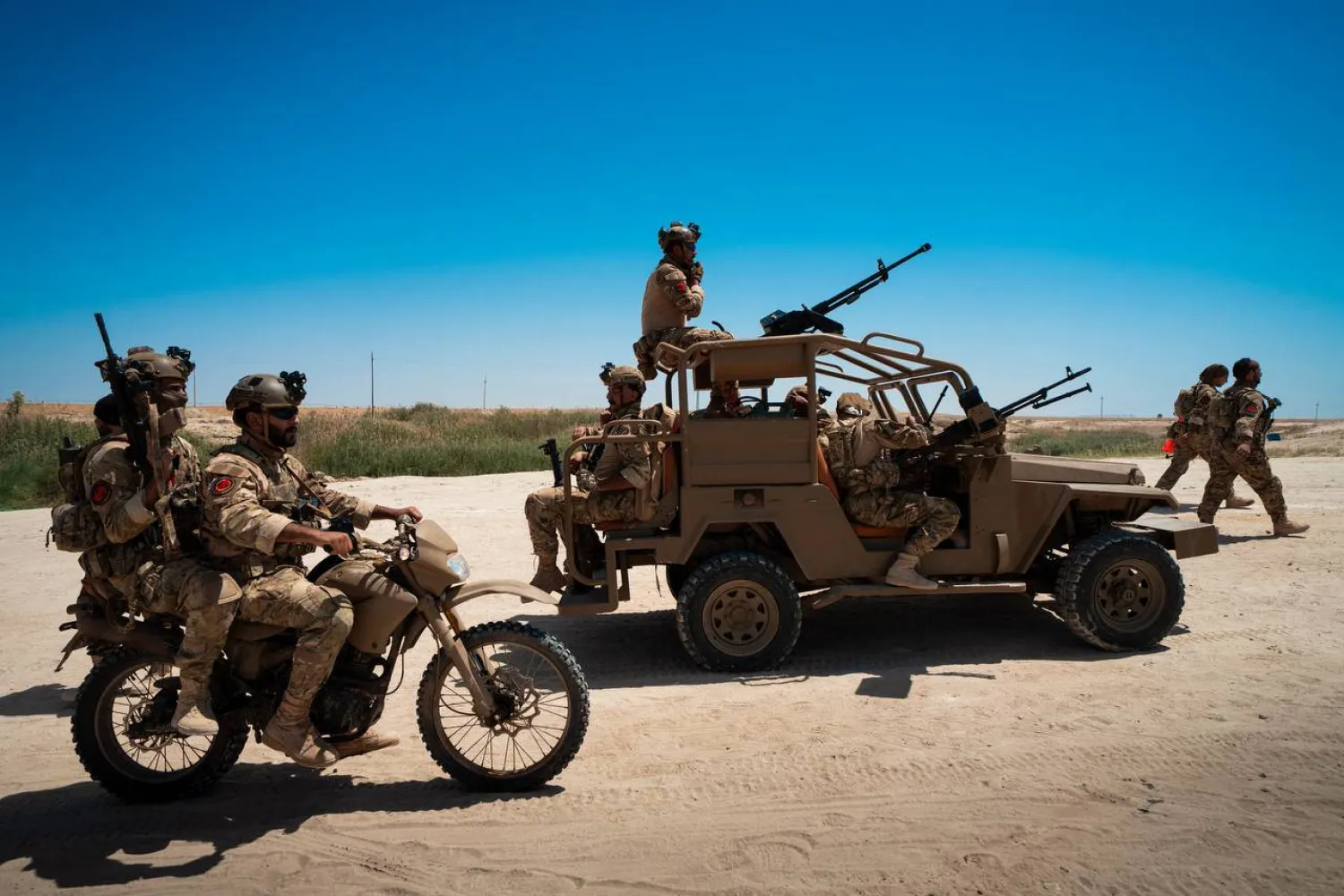
Popular Mobilization Forces brigades patrol. (PMF media office)
Asharq Al-Awsat has learned that an Iraqi committee comprising three senior figures is close to finalizing an “executive plan” to disarm armed factions, ahead of presenting it to US officials in the coming days.
As the process coincides with expected changes in the leadership of key security agencies under the incoming government, political and government officials ruled out the possibility that the plan would go beyond “buying time,” while representatives of three factions insisted they “will not surrender their weapons.”
Washington has intensified pressure on the ruling Shiite parties to disarm armed factions and prevent their representatives from participating in the new government. These pressures are expected to translate into practical measures as the formation of the next government in Baghdad approaches.
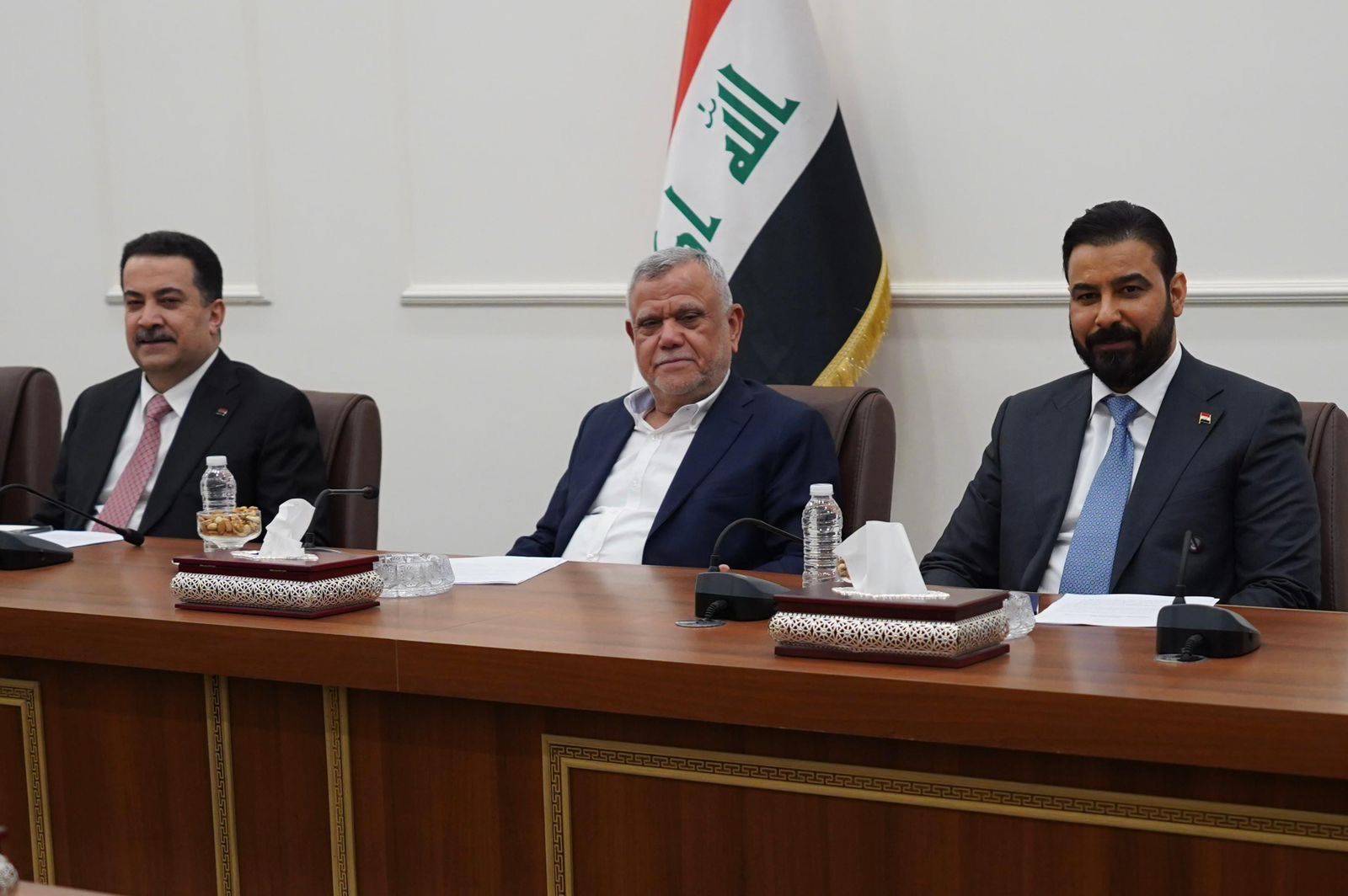
A photo released by the Coordination Framework shows, from left, Prime Minister-designate Ali al-Zaidi, Hadi al-Amiri, and Mohammed Shia al-Sudani.
Negotiations on Disarmament
The committee, whose existence is being disclosed for the first time, includes Prime Minister-designate Ali al-Zaidi, outgoing Prime Minister Mohammed Shia al-Sudani, and Badr Organization leader Hadi al-Amiri. According to sources, the committee has held secret negotiations with militia leaders, presenting them with “ideas on how to disarm and integrate fighters,” although some meetings “did not proceed calmly.”
Sources told Asharq Al-Awsat that al-Amiri’s presence, given his longstanding ties to Iran, “was supposed to help build trust with the factions and persuade them to engage with the state,” adding that the committee had been fully authorized by the Coordination Framework.
A climate of mistrust and mutual accusations prevails between Shiite party leaders and armed factions, the sources said, predicting that Zaidi’s government could face serious obstacles preventing it from implementing fundamental reforms related to weapons and financial resources that Washington says are deliberately being funneled to Iran through various channels.
Zaidi has enjoyed unprecedented support from the US administration since being formally tasked with forming a government. However, many believe the American “honeymoon” could end if no meaningful progress is made in reducing Iranian influence and severing militia ties to the Iraqi state.
A phone call last Wednesday between US Defense Secretary Pete Hegseth and Prime Minister-designate Ali al-Zaidi reportedly signaled that Washington wants militia elements removed not only from senior ministerial posts, but also from positions at the level of director-general.
Sources said people close to Zaidi understood from the call with Hegseth that, from Washington’s perspective, the legitimacy of the new Baghdad government would depend on its ability to distance militias from the machinery of the state.
A senior political official told Asharq Al-Awsat that the committee had accelerated its work under mounting US pressure, noting that security advisers had been working for months on various options for disarmament or integration, but that the pace had intensified in recent weeks.
The official said the executive plan includes disarming factions of heavy and medium weapons and restructuring the Popular Mobilization Forces, without specifying how the process would be carried out.
Uncertainty continues to surround the future of the PMF in Iraq, particularly whether it will ultimately submit to US pressure and become part of the disarmament project.
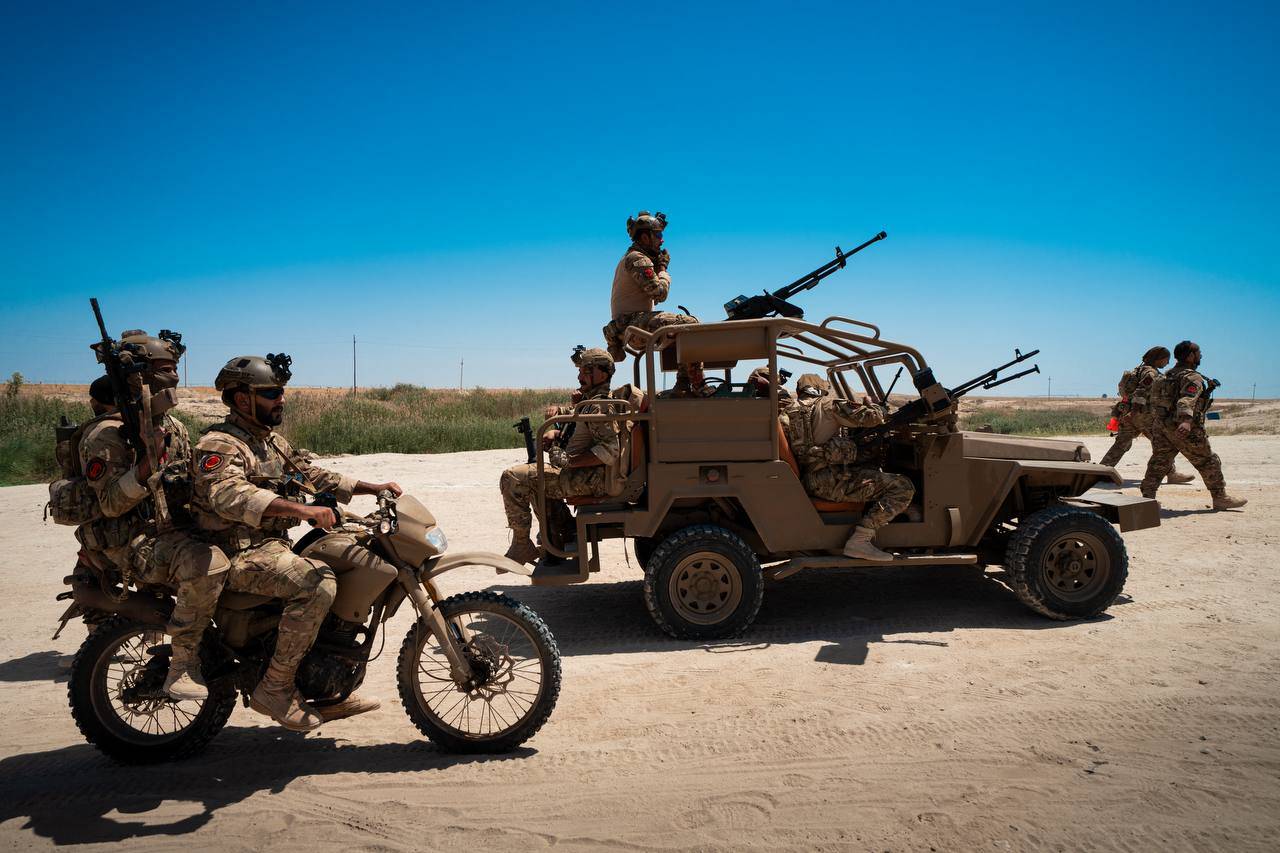
Popular Mobilization Forces brigades patrol. (PMF media office)
A Plan to “Buy Time”
Iraqi politicians say General David Petraeus may visit Baghdad this week to ensure that “the new government fully severs its ties with militias.” It has not been possible to verify the official capacity Petraeus would hold during the expected visit to Baghdad.
Petraeus is considered one of the leading US commanders associated with the Iraq war after 2003. He gained extensive field and strategic experience, most notably as commander of the 101st Airborne Division during the invasion that toppled Saddam Hussein.
His later experience also positions him to play a role in the factions’ weapons matter. In 2004, he was tasked with training local security forces amid escalating sectarian violence and worked closely with political leaders, some of whom headed militias at the time, including Hadi al-Amiri.
Iraqi sources suggested that the “executive plan” being prepared by the committee “may offer promising ideas to convince the Americans of Zaidi’s seriousness regarding disarmament, but there are doubts over whether it will actually be implemented, and it may amount to little more than an attempt to buy time, enough to secure passage of Zaidi’s government while waiting for the Iran-US war to end.”
A prominent Shiite adviser said: “Stalling on the issue of factional weapons will end with the ruling alliance being classified as a political group supporting terrorism. For Iraq, this would mean awaiting severe economic sanctions as a rogue state.”
Zaidi’s government program consists of 14 points, headed by “restricting weapons to the hands of the state and enforcing the rule of law.” However, it also includes a clause on “developing the combat capabilities of the Popular Mobilization Forces and defining its responsibilities and role within the military structure.”
An Iraqi official told Asharq Al-Awsat that “Washington does not want to loosen its grip on Baghdad to prevent armed faction leaders and members from infiltrating the new government.”
‘We Will Not Surrender Our Weapons’
In response to the tougher US position, some armed factions are adopting a more hardline stance. A spokesperson for one faction said that Kataib Hezbollah, Kataib Sayyid al-Shuhada, and Harakat al-Nujaba reject handing over their weapons to any party whatsoever.
The spokesperson, who requested anonymity, said the three factions were “prepared to pay any price resulting from their refusal to disarm.”
Sources said the armed factions do not believe they are compelled to relinquish their weapons. Instead, they view potential US consequences as unlikely to be harsher than what occurred during the previous war, including assassinations and the destruction of infrastructure.
“The war showed us how more power can be gained,” the faction spokesperson said.
Within the Coordination Framework, questions are being raised about whether Washington seeks to isolate all militias from state institutions, including those that have begun adopting rhetoric less centered on weapons and already hold seats in the Iraqi parliament.
These groups, led by Asaib Ahl al-Haq, are exploring alternative formulas for participating in the new government by reviving a model previously used during Mustafa al-Kadhimi’s administration: backing figures described as independent for ministerial positions while maintaining indirect influence over those posts.
US Treasury sanctions announced Thursday targeted figures involved in oil smuggling, including Laith al-Khazali, brother of Asaib Ahl al-Haq leader Qais al-Khazali, who has reportedly at times been considered for the Interior Ministry and at others for a service ministry.
The sanctions also included Ali Muaredh al-Bahadli. Informed sources said “a political faction had nominated him for the position of Iraqi oil minister.”
Politicians from the Coordination Framework said the sanctions may have been intended to “block undesirable nominations and steer the process toward other candidates.”
Although the disarmament negotiations appear in essence to be discussions about repositioning armed groups in a way that does not provoke American anger, according to one Iraqi official, that does not mean changes will not occur.
The official said the new government would witness security appointments aimed at reducing factional influence over sensitive institutions, including the intelligence service, which is likely to be headed by a Sunni figure.
Iraq Denies US Claims Deputy Oil Minister Helped Iran Evade Sanctionshttps://english.aawsat.com/arab-world/5270983-iraq-denies-us-claims-deputy-oil-minister-helped-iran-evade-sanctions
Iraq Denies US Claims Deputy Oil Minister Helped Iran Evade Sanctions
A view of the Shuaiba oil refinery southwest of Basra, Iraq. (Reuters/File Photo)
Iraq's oil ministry has denied US accusations against its deputy minister, who the United States hit with sanctions over alleged support to Iran as Washington escalates pressure on Baghdad to break with Iranian-linked groups.
The US State Department on Thursday announced sanctions on Ali Maarij al-Bahadli, saying he "abused his government position to divert Iraqi oil in support of the Iranian regime and its terrorist proxies."
It accused him of fraudulently mixing Iraqi and Iranian oil as part of a scheme to help Iran avoid sanctions.
His ministry said late Thursday that "it denies the accusations" against Bahadli and stressed "the importance of transparency in addressing all... accusations on the basis of evidence and facts," according to the INA state news agency.
The ministry said it was prepared to investigate the matter, but added that "crude oil export operations, marketing, loading onto tankers, and related procedures" were not part of Bahadli's job.
After entities run by an Iraqi businessman were sanctioned over the same accusations last year, Iraq's state oil marketing company SOMO denied that any oil mixing operations were taking place in the country's ports or territorial waters to help Iran.
The United States has unilateral sanctions against Iranian oil, seeking to punish any country or company that buys it.
لم تشترك بعد
انشئ حساباً خاصاً بك لتحصل على أخبار مخصصة لك ولتتمتع بخاصية حفظ المقالات وتتلقى نشراتنا البريدية المتنوعة