


Food Trends and Your Heart

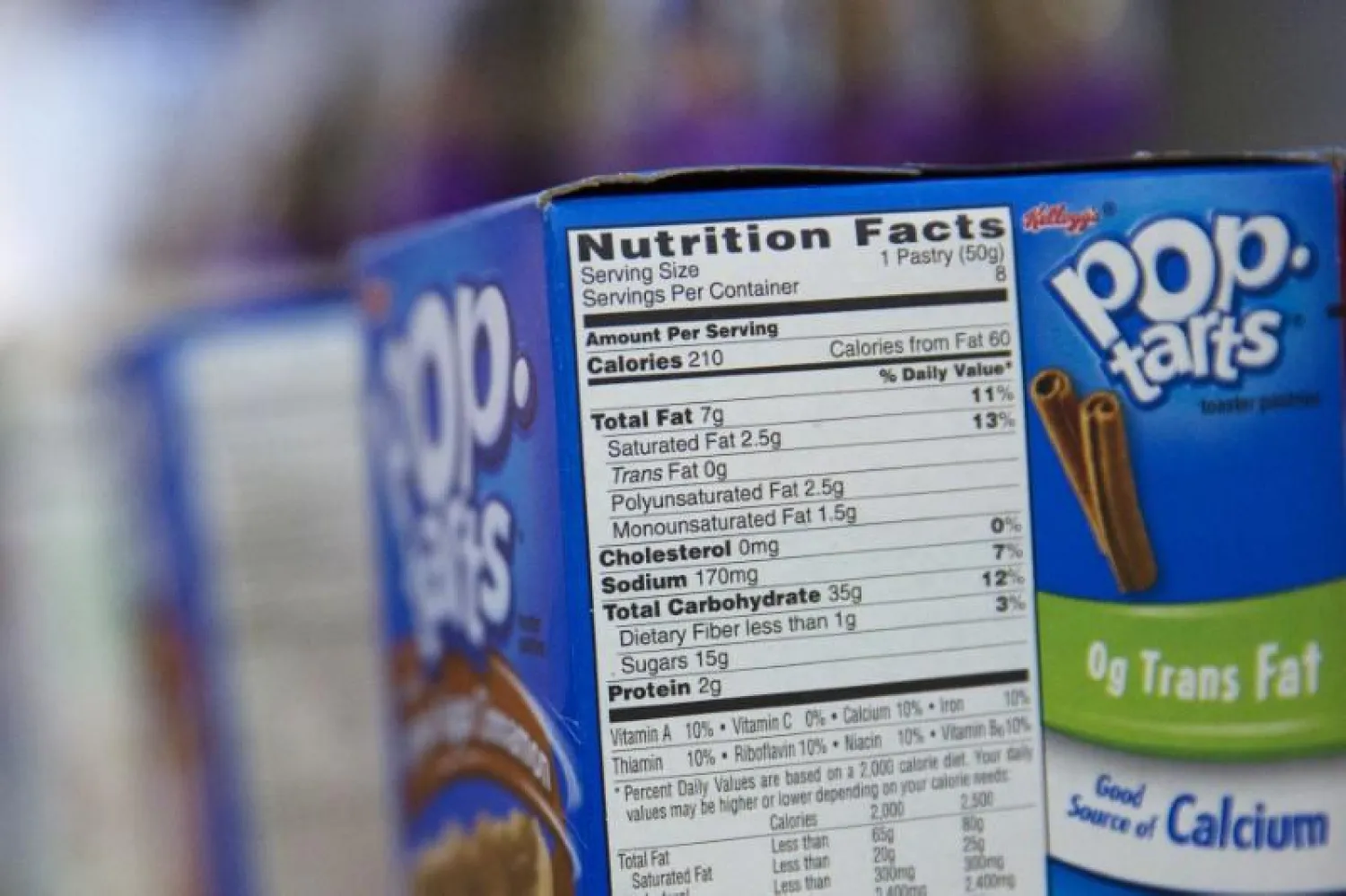
The Nutrition Facts label is seen on a box of Pop Tarts at a store in New York February 27, 2014. REUTERS/Brendan McDermid
TT

Food Trends and Your Heart

The Nutrition Facts label is seen on a box of Pop Tarts at a store in New York February 27, 2014. REUTERS/Brendan McDermid

The type and amount of fat, carbohydrate, sugar, and salt in our food supply has changed over the years — for better and for worse.

Remember when packaged foods emblazoned with the words "fat free" seemed to be everywhere? Then came labels boasting "zero grams of trans fat." "Sugar free" and "low sodium" claims soon joined the chorus. These days, gluten-free foods are all the rage.

For the most part, these food industry trends echoed the nutritional mantras of the time and were designed to improve our health — especially cardiovascular health. Not only is heart disease the nation's leading killer, there's overwhelming evidence that better dietary choices could prevent many heart attacks and strokes. But just how successful have these efforts been?

"It's a mixed picture, but over all, I think we're going in a good direction," says Dr. Walter Willett, professor in nutrition and epidemiology at the Harvard T.H. Chan School of Public Health. The biggest change — and greatest success story — is removal of trans fats from processed foods, he says.

The trouble with trans fats

The main source of these harmful fats is partially hydrogenated oil, a longtime food industry favorite because it's cheap, it's easy to use, and it has a long shelf life. For decades, deep-fried fast foods, baked goods, crackers, chips, and margarine were made with partially hydrogenated oils.

But in the 1990s, researchers at Harvard and elsewhere began sounding the alarm on the adverse health effects of trans fats. Trans fats raise undesirable LDL cholesterol, make blood more likely to clot, and ramp up inflammation in the body — all of which raise heart disease risk. In 2003, the FDA began requiring manufacturers to list trans fat on the Nutrition Facts label to boost consumer awareness. As a result, many companies chose to stop using trans fats in their products.

In 2007, New York City pioneered a ban on trans fat in foods sold in public eateries, and the health benefits were apparent within just a few years. One recent study found lower rates of heart attacks and strokes in the urban counties that implemented the trans fat ban compared with other urban counties in the state that did not ban trans fats.

This healthful trend should be spreading throughout the country, thanks to a long-awaited FDA ruling to ban trans fats entirely from our food supply by June 2018. "At this point, about 85% of the trans fat has been removed from our food supply," says Dr. Willett. For the most part, healthier unsaturated fats (such as those found in olive, corn, canola, sunflower, and safflower oils) have replaced trans fats. Some products now contain small amounts of less-desirable saturated fat from coconut and palm oils. However, many reformulated products cut back on trans fat without increasing saturated fat, according to a survey of 83 major-brand grocery store products and restaurant dishes.

These changes jibe with the overall improvement in fat quality in the United States, Dr. Willett notes. This trend helps explain why people who eat higher-fat diets (especially those that include more unsaturated fats) are better off than those who eat low-fat diets, as a major study by Dr. Willett and colleagues found last year.

The carb calamity

The low-fat craze that took hold in the 1980s turned out to have unintended — and very unhealthy — consequences. Following the nutrition dogma of the day, food manufacturers cut fat from their products. But they often replaced it with refined carbohydrates, such as white flour and sugar. Americans also began eating more carbs (think pasta, white potatoes, white bread, and sugary desserts). Eating less fat, however, doesn't necessarily help you lose weight. And diets high in refined carbohydrates may contribute to weight gain and promote type 2 diabetes and heart disease.

Just as is true for fats, some carbohydrates are far healthier than others. The best choices include unprocessed or minimally processed whole grains, such as whole-wheat or rye bread, brown rice, bulgur wheat, oatmeal, popcorn, and corn tortillas. Recent diet surveys suggest a slow but steady increase in whole grains in American diets. They're great sources of heart-protecting nutrients such as fiber, vitamins, and minerals.

Going against the grain?

But some grains — including wheat, barley, and rye — also contain gluten, a protein that's been getting lots of attention in recent years. "Gluten-free diets have been a big trend lately, but there is no good evidence to support these diets for most people," says Dr. Willett. Exceptions include people with celiac disease, which affects about 1% of the population. In people with the disorder, gluten triggers the body's immune system to attack the small intestine, leading to gut inflammation, pain and other debilitating symptoms. Another small group of people who report feeling better when they eliminate gluten may have "gluten sensitivity," but this condition isn't well documented.

According to a survey by the Consumer Reports National Research Center, 63% of Americans believe that a gluten-free diet could improve their mental or physical health. And up to a third of are cutting back on it in the hope that it will improve their health or prevent disease.

In fact, the opposite might be true. A recent Harvard study found that people who avoid gluten may eat fewer whole-grain foods. Also, gluten-free packaged foods may have more sugar, fat, and salt than their gluten-containing counterparts. Gluten-free diets aren't inherently bad, but the way they've been translated into the average diet isn't necessarily healthy, says Dr. Willett. People who need or want to avoid wheat should be sure to eat gluten-free whole grains such as brown rice, oats, buckwheat, and quinoa.

Sugar: Good news, bad news

The carbohydrates that pose the greatest threat to heart health are the simple, refined ones — especially sugar. High-sugar diets have been linked to a higher risk of heart disease, even in people who aren't overweight. Sugar-sweetened beverages such as sodas, energy drinks, and sports drinks contribute most of the added sugar in the average American's diet. But recent data show that consumption of sugary drinks has dropped by about 25% in the United States over the past decade, thanks in part to education campaigns and bans on soda sales in schools. This encouraging trend also seems to be slowing the growing epidemic of type 2 diabetes, which is closely linked to heart disease, says Dr. Willett.

Unfortunately, other sugar-awareness efforts are on hold. In 2016, the FDA approved a revamp of the Nutrition Facts label that would require food manufacturers to list added sugars in their products, among other changes. The rule was originally slated to take effect in July 2018, but the agency announced earlier this year that it will postpone its implementation indefinitely.

One anticipated benefit of the label change was that companies would scale back the sugar in their products, similar to what happened with trans fats. In fact, some yogurt and beverage companies have already done so. It's too early to know if this strategy will prove successful, however. Some food companies that tried removing some sodium from certain products (such as soups and vegetable juices) have now reintroduced it, says Dr. Willett. "Their competitors didn't make the change, and the low-sodium products tasted different. We really need to create a level playing field," he says.

Salt: Still too high

In 2016, the FDA proposed voluntary guidelines for the food industry to slash the amount of sodium in our food supply. Excess sodium (which pairs with chloride to form salt) is linked to high blood pressure, heart attacks, and stroke. The average American eats about 50% more sodium than nutrition experts recommend, and much of is already in their food before it reaches the table.

Time will tell if the FDA guidelines will make a difference. But a recent study suggests that we've been moving in the right direction: the average amount of sodium that households acquired from packaged foods and beverages decreased by 400 milligrams per capita between 2000 and 2014. In the meantime, see "Choosing the healthiest supermarket products" for tips on reading labels and ingredient lists while you shop.

Choosing the healthiest grocery products

When shopping for processed foods — anything bagged, packaged, canned, or bottled — check the Nutrition Facts label. Note that the Daily Value (DV) is the recommended level of a given nutrient for a person eating 2,000 calories per day.

For saturated fat, look for a % DV of 5% or less.

The same goes for sodium: % DV 5% or less.

For sugar, there is no % DV, but experts recommend that women consume no more than 24 grams daily; men should limit intake to 36 grams per day.

When selecting breads, cereals, and grain-based foods, check the list of ingredients. The first ingredient should be a whole grain, such as whole wheat (not enriched wheat). "Multigrain" just means the product includes more than one grain — and they're not necessarily whole grains.

(Harvard Heart Letter)


17th Century Wreck Reappears from Stockholm Deep

The remains of a 17th century shipwreck is pictured after resurfacing in Stockholm, Sweden, on February 17, 2026. (Photo by Jonathan NACKSTRAND / AFP)
TT

17th Century Wreck Reappears from Stockholm Deep

The remains of a 17th century shipwreck is pictured after resurfacing in Stockholm, Sweden, on February 17, 2026. (Photo by Jonathan NACKSTRAND / AFP)

A 17th century Swedish Navy shipwreck buried underwater in central Stockholm for 400 years has suddenly become visible due to unusually low Baltic Sea levels.

The wooden planks of the ship's well-preserved hull have since early February been peeking out above the surface of the water off the island of Kastellholmen, providing a clear picture of its skeleton.

"We have a shipwreck here, which was sunk on purpose by the Swedish Navy," Jim Hansson, a marine archeologist at Stockholm's Vrak - Museum of Wrecks, told AFP.

Hansson said experts believe that after serving in the navy, the ship was sunk around 1640 to use as a foundation for a new bridge to the island of Kastellholmen.

Archeologists have yet to identify the exact ship, as it is one of five similar wrecks lined up in the same area to form the bridge, all dating from the late 16th and early 17th centuries.

"This is a solution, instead of using new wood you can use the hull itself, which is oak" to build the bridge, Hansson said.

"We don't have shipworm here in the Baltic that eats the wood, so it lasts, as you see, for 400 years," he said, standing in front of the wreck.

Parts of the ship had already broken the surface in 2013, but never before has it been as visible as it is now, as the waters of the Baltic Sea reach their lowest level in about 100 years, according to the archaeologist.

"There has been a really long period of high pressure here around our area in the Nordics. So the water from the Baltic has been pushed out to the North Sea and the Atlantic," Hansson explained.

A research program dubbed "the Lost Navy" is underway to identify and precisely date the large number of Swedish naval shipwrecks lying on the bottom of the Baltic.


China Has Slashed Air Pollution, but the ‘War’ Isn’t Over 

This picture taken on February 11, 2026 shows pedestrians walking along an overpass as traffic snarls in Beijing. (AFP)
TT

China Has Slashed Air Pollution, but the ‘War’ Isn’t Over 

This picture taken on February 11, 2026 shows pedestrians walking along an overpass as traffic snarls in Beijing. (AFP)

Fifteen years ago, Beijing's Liangma riverbanks would have been smog-choked and deserted in winter, but these days they are dotted with families and exercising pensioners most mornings.

The turnaround is the result of a years-long campaign that threw China's state power behind policies like moving factories and electrifying vehicles, to improve some of the world's worst air quality.

Pollution levels in many Chinese cities still top the World Health Organization's (WHO) limits, but they have fallen dramatically since the "airpocalypse" days of the past.

"It used to be really bad," said Zhao, 83, soaking up the sun by the river with friends.

"Back then when there was smog, I wouldn't come out," she told AFP, declining to give her full name.

These days though, the air is "very fresh".

Since 2013, levels of PM2.5 -- small particulate that can enter the lungs and bloodstream -- have fallen 69.8 percent, Beijing municipality said in January.

Particulate pollution fell 41 percent nationwide in the decade from 2014, and average life expectancy has increased 1.8 years, according to the University of Chicago's Air Quality Life Index (AQLI).

China's rapid development and heavy coal use saw air quality decline dramatically by the 2000s, especially when cold winter weather trapped pollutants close to the ground.

There were early attempts to tackle the issue, including installing desulphurization technology at coal power plants, while factory shutdowns and traffic control improved the air quality for events like the 2008 Olympics.

But the impact was short-lived, and the problem worsened.

- Action plan -

Public awareness grew, heightened by factors like the US embassy in Beijing making monitoring data public.

By 2013, several international schools had installed giant inflatable domes around sport facilities to protect students.

That year, multiple episodes of prolonged haze shrouded Chinese cities, with one in October bringing northeastern Harbin to a standstill for days as PM2.5 levels hit 40 times the WHO's then-recommended standard.

The phrase "I'm holding your hand, but I can't see your face" took off online.

Later that year, an eight-year-old became the country's youngest lung cancer patient, with doctors directly blaming pollution.

As concerns mounted, China's ruling Communist Party released a ten-point action plan, declaring "a war against pollution".

It led to expanded monitoring, improved factory technology and the closure or relocation of coal plants and mines.

In big cities, vehicles were restricted and the groundwork was laid for widespread electrification.

For the first time, "quantitative air quality improvement goals for key regions within a clear time limit" were set, a 2016 study noted.

These targets were "the most important measure", said Bluetech Clean Air Alliance director Tonny Xie, whose non-profit worked with the government on the plan.

"At that time, there were a lot of debates about whether we can achieve it, because (they were) very ambitious," he told AFP.

The policy targeted several key regions, where PM2.5 levels fell rapidly between 2013 and 2017, and the approach was expanded nationwide afterwards.

"Everybody, I think, would agree that this is a miracle that was achieved in China," Xie said.

China's success is "entirely" responsible for a decline in global pollution since 2014, AQLI said last summer.

- 'Low-hanging fruits' gone -

Still, in much of China the air remains dangerous to breathe by WHO standards.

This winter, Chinese cities, including financial hub Shanghai, were regularly among the world's twenty most polluted on monitoring site IQAir.

Linda Li, a running coach who has lived in both Beijing and Shanghai, said air quality has improved, but she still loses up to seven running days to pollution in a good month.

A top environment official last year said China aimed to "basically eliminate severe air pollution by 2025", but the government did not respond when AFP asked if that goal had been met.

Official 2025 data found nationwide average PM2.5 concentrations decreased 4.4 percent on-year.

Eighty-eight percent of days featured "good" air quality.

However, China's current definition of "good" is PM2.5 levels of under 35 micrograms per cubic meter, significantly higher than the WHO's recommended five micrograms.

China wants to tighten the standard to 25 by 2035.

The last five years have also seen pollution reduction slow.

The "low-hanging fruits" are gone, said Chengcheng Qiu from the Center for Research on Energy and Clean Air (CREA).

Qiu's research suggests pollution is shifting west as heavy industry relocates to regions like Xinjiang, and that some cities in China have seen double-digit percentage increases in PM2.5 in the last five years.

"They can't just stop all industrial production. They need to find cleaner ways to produce the output," Qiu said.

There is hope for that, given China's status as a renewable energy powerhouse, with coal generation falling in 2025.

"Cleaner air ultimately rests on one clear direction," said Qiu.

"Move beyond fossil fuels and let clean energy power the next stage of development."


Sydney Man Jailed for Mailing Reptiles in Popcorn Bags 

Investigators recovered 101 Australian reptiles from parcels destined for Hong Kong, South Korea, Sri Lanka and Romania. (AFP file)
TT

Sydney Man Jailed for Mailing Reptiles in Popcorn Bags 

Investigators recovered 101 Australian reptiles from parcels destined for Hong Kong, South Korea, Sri Lanka and Romania. (AFP file)

A Sydney man who tried to post native lizards, dragons and other reptiles out of Australia in bags of popcorn and biscuit tins has been sentenced to eight years in jail, authorities said Tuesday.

The eight-year term handed down on Friday was a record for wildlife smuggling, federal environment officials said.

A district court in Sydney gave the man, 61-year-old Neil Simpson, a non-parole period of five years and four months.

Investigators recovered 101 Australian reptiles from seized parcels destined for Hong Kong, South Korea, Sri Lanka and Romania, the officials said in a statement.

The animals -- including shingleback lizards, western blue-tongue lizards, bearded dragons and southern pygmy spiny-tailed skinks -- were posted in 15 packages between 2018 and 2023.

"Lizards, skinks and dragons were secured in calico bags. These bags were concealed in bags of popcorn, biscuit tins and a women's handbag and placed inside cardboard boxes," the statement said.

The smuggler had attempted to get others to post the animals on his behalf but was identified by government investigators and the New South Wales police, it added.

Three other people were convicted for taking part in the crime.

The New South Wales government's environment department said that "the illegal wildlife trade is not a victimless crime", harming conservation and stripping the state "and Australia of its unique biodiversity".
