


Yemeni Militias Resort to Planting Mines Across Villages after Losing in Taiz

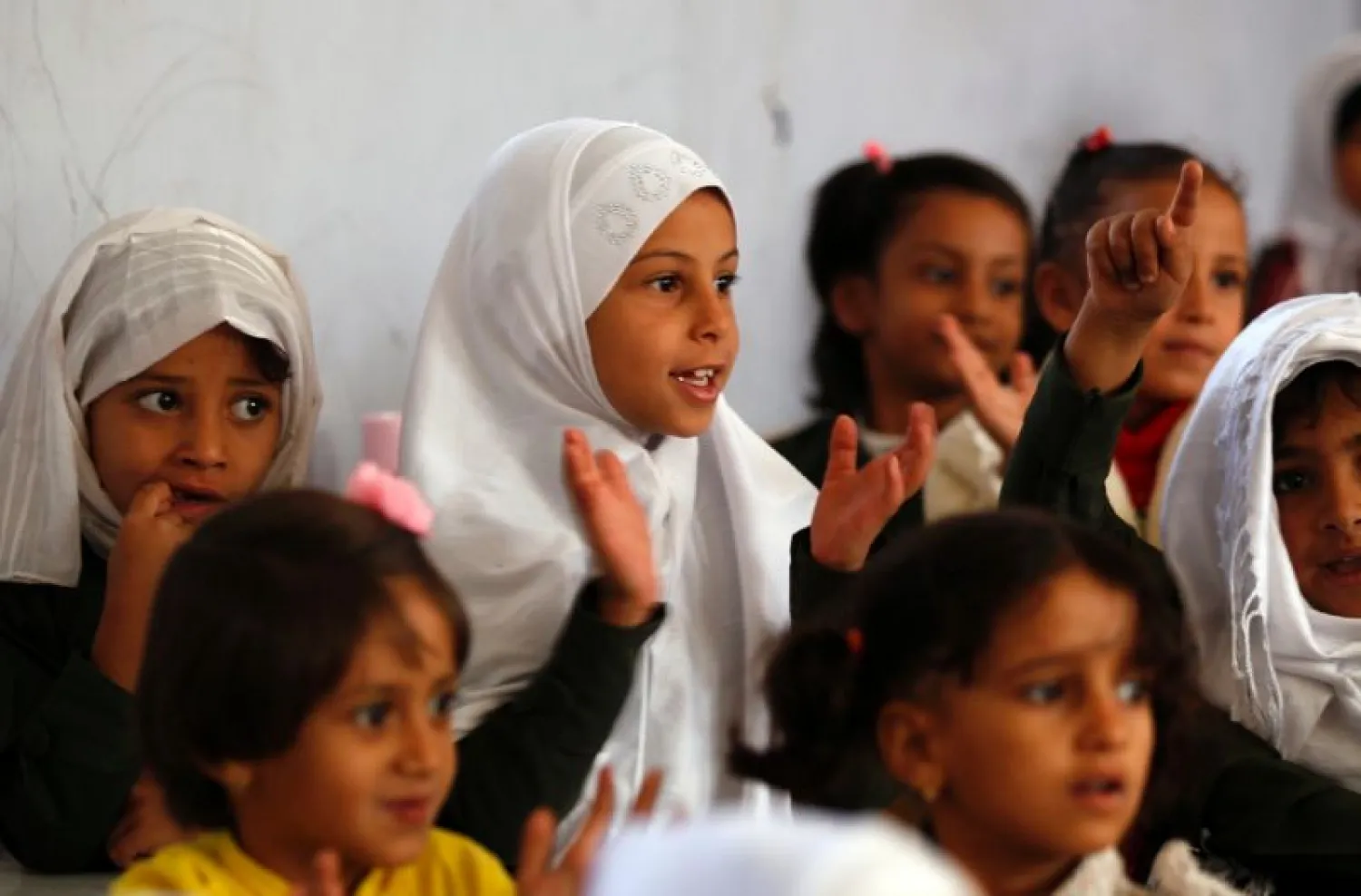
Yemeni students attend a class on the first day of the new school year in the capital Sanaa, on October 15, 2017 (AFP Photo/Mohammed HUWAIS)
TT

Yemeni Militias Resort to Planting Mines Across Villages after Losing in Taiz

Yemeni students attend a class on the first day of the new school year in the capital Sanaa, on October 15, 2017 (AFP Photo/Mohammed HUWAIS)

Militia sources in Yemen said that coup factions have stepped up their weaving of landmines into the southwestern villages near Taiz. The increase in mine-planting activity comes after suffering steep losses in the battlefield.

On the other hand, a pro-government military source belonging to the 35th Armored Brigade said that insurgency militias continued to plant mines across civilian infrastructure, such as farms, residential neighborhoods, and near water wells.

Al-Houd, Al-Sayyar, Al-Sharaf villages and the Othman Bin Affan School in Al-Houd, were among areas targeted.

The source further stressed that national army units pushed against attempts for coup militias to advance into the city of Taiz and the countryside.

Most attempts were staged to progress and restore sites lost east and northwest of the city.

The source added that Houthi-planted mines have killed 9 civilians, including two women and three children, in August alone.

Last Friday, the mines killed a citizen named Saif al-Qamri, and wounded four women in the area of ​​Hamli, west of Taiz.

Planting mines increased fiercely in retaliation to Zaid bin Ali al-Sharfi, a senior Houthi field commander, being killed in the fierce battles between militias and the Yemeni armed forces in the north-western frontier of Harad.

The statement issued by the Media Center of the fifth military region underlined that the leader of the Houthi militia, Zaid bin Ali Sharfi was killed on Friday evening, in the battles between the forces of the National Army on the one hand and Houthi, Saleh militias on the other near the border frontier of Harad.

The center quoted military sources as saying that the corpse of Sharfi is still laying in the Harad desert as the militias were unable to retrieve their dead due to fierce ongoing battles.

The statement said that the arms officer in the warehouse of the Midi Front and the leader of the Houthi militia, Waleed Mohammed Ahmed al-Houthi, was also killed along with four other Houthi leaders in an air raid by the Arab coalition east of Midi.



Lebanon President, PM Discuss Readiness for Israel Talks

Vehicles line up as displaced people make their way to return to their homes after a 10-day ceasefire between Lebanon and Israel went into effect, in Sidon, Lebanon, April 18, 2026. REUTERS/Aziz Taher
TT

Lebanon President, PM Discuss Readiness for Israel Talks

Vehicles line up as displaced people make their way to return to their homes after a 10-day ceasefire between Lebanon and Israel went into effect, in Sidon, Lebanon, April 18, 2026. REUTERS/Aziz Taher

Lebanon's president and prime minister discussed on Saturday preparations for the first direct negotiations with Israel in decades, as southerners headed home after the ceasefire in the Israel-Hezbollah war.

In a statement, the office of President Joseph Aoun said he and Prime Minister Nawaf Salam conducted "an assessment of the post-ceasefire phase and the ongoing efforts to consolidate it", and discussed "Lebanese readiness for the anticipated negotiations" with Israel.

Their meeting came a day after a strongly-worded speech to the nation from Aoun stating that the country was entering a new phase to work on "permanent agreements" with Israel and insisting that direct talks were not a "concession" -- an apparent rebuttal of Hezbollah criticism.

The 10-day ceasefire seeking to end more than six weeks of war between Hezbollah and Israel has been in place since midnight on Thursday (2100 GMT) after being announced by US President Donald Trump.

More than 2,300 people have been killed in Israeli attacks and more than a million displaced since Hezbollah dragged Lebanon into the Middle East conflict last month.

Iran-backed Hezbollah and its supporters strongly oppose the negotiations, and have rejected several government decisions over the past year, including Beirut's commitment to disarming the group in 2025.

As the truce entered its second day, displaced people were still flocking to the south, which saw the brunt of the fighting, with roads packed with cars.

Lebanon's military and other local bodies are working to open roads that were blocked due to Israeli strikes.

In the heavily bombed southern suburbs of Beirut, families came to inspect their homes and grab belongings, though neighborhoods in the area remained largely empty, according to an AFP correspondent, with people hesitant to return.

Among the residents briefly visiting was Samah Hajoul, who is currently staying in a tent on Beirut's seafront.

"We do not feel safe to return, for fear that something might happen at night and I would not be able to carry my children and flee with them," she told AFP.

She only visited her home, which sustained minor damage, to "bathe the children and get summer clothes" as temperatures started to rise.

"We will wait and see what happens during the days of the truce. If the ceasefire is consolidated, we will return to our homes," she added, saying that dozens of families staying in nearby tents were doing the same.

During his meeting with Aoun, Salam expressed hope that "the displaced will be able to return safely to their homes as soon as possible after the ceasefire holds".

He stressed that the government was working to "facilitate this return, especially by repairing the destroyed bridges, opening roads, and providing supplies in the areas where the return will be safe and possible".


Strong Pressure on Hamas to Agree to Gaza Disarmament

Gunmen from Hamas and Islamic Jihad seen deployed in Gaza (file- AFP)
TT

Strong Pressure on Hamas to Agree to Gaza Disarmament

Gunmen from Hamas and Islamic Jihad seen deployed in Gaza (file- AFP)

Hamas is facing its strongest pressure yet from mediators and other parties to agree, even in principle, to the “Peace Council” document before negotiating its terms, particularly the plan to disarm factions operating in the Gaza Strip, especially its armed wing, the Qassam Brigades.

Two Hamas sources outside Gaza told Asharq Al-Awsat that some mediating countries are trying to persuade the movement to provide preliminary written approval of the plan, which was presented about two weeks ago by Peace Council High Commissioner Nikolay Mladenov to the group’s leadership, with detailed negotiations to follow at a later stage.

The sources said there are efforts to secure this approval before obtaining clear guarantees obligating Israel to implement the first phase of the ceasefire agreement. They added that the negotiating team is insisting on maintaining its position to ensure full implementation of the first phase before moving on to talks over the second phase.

Destruction in Gaza - File photo by AFP

They said mediators and other parties are pushing for the full implementation of the first phase without exception, in exchange for immediately beginning work on the second phase in parallel, a move that could lead to an agreement.

One source pointed to real concerns within Hamas leadership that Israel and the United States could use any preliminary approval to the phase-two document to pressure the movement into steps it still rejects under the original plan and for which it has requested clear amendments.

The source added that some mediating countries understand Hamas’ position and concerns and are trying to convey reassurances, while internal discussions within the movement and with other Palestinian factions are ongoing.

Some factions, with mediator backing, have proposed shortening the second phase from eight months to three or four months to capitalize on any positive progress in improving humanitarian and living conditions in Gaza, particularly by launching the reconstruction phase amid the urgent need for progress, as displaced people whose homes were destroyed continue to live in extremely harsh conditions, according to a factional source.

The same source said the aim of shortening the second phase is to move to more advanced stages that serve all parties, especially Palestinians seeking to reorganize their internal situation, address the population’s needs, and work toward building a comprehensive Palestinian national system. The source added that efforts are also underway, with Arab and Islamic support including from Türkiye, to resume Palestinian national dialogue, but so far there has been no progress indicating an imminent meeting, though efforts continue.

The source noted there is consensus among factions on the issue of limiting weapons, but not in the form currently proposed. Factions want to introduce amendments to the original proposal and will wait to see how ongoing contacts develop before submitting their revisions if serious discussions on the second phase begin.

A girl carries a bowl of water in a temporary camp for displaced Palestinians in Khan Yunis, southern Gaza Strip - AFP

This comes as Israeli military escalation continues in the Gaza Strip, leading to a rising number of Palestinian casualties.

Four Palestinians were wounded Saturday morning, one critically, after being shot east of Gaza City and east of Jabalia in the northern part of the territory.

On Friday, three Palestinians were killed in a series of Israeli attacks targeting groups of civilians and tents for displaced people in Khan Younis in the south and in areas in the north. Among the victims were two brothers who were driving a desalinated water truck providing services to displaced people with support from UNICEF, which announced it was suspending its activities in northern Gaza following the incident.

The number of Palestinian casualties in the Gaza Strip since the ceasefire took effect on October 10, 2025 has risen to more than 773, with over 2,015 injured. The cumulative total since October 7, 2023 has exceeded 72,500.


Lebanon President Vows to Prosecute Those Who Attacked French UN Peacekeepers, Hezbollah Denies Responsibility

A UNIFIL convoy rides through the town, as seen through the window of a vehicle, in Tyre, south Lebanon, April 15, 2026. REUTERS/Louisa Gouliamaki
TT

Lebanon President Vows to Prosecute Those Who Attacked French UN Peacekeepers, Hezbollah Denies Responsibility

A UNIFIL convoy rides through the town, as seen through the window of a vehicle, in Tyre, south Lebanon, April 15, 2026. REUTERS/Louisa Gouliamaki

Lebanese President Joseph Aoun vowed on Saturday to prosecute those who targeted French UN peacekeepers, killing one and wounding three.

In a statement shared by the presidency, Aoun expressed his condolences to his French counterpart Emmanuel Macron in a phone call, condemning the incident and vowing that Beirut "will not hesitate to pursue those involved and bring them to justice".

UNIFIL on Saturday also condemned what it described as a "deliberate attack on peacekeepers" after small-arms fire by non-state group actors killed one peacekeeper and injured three others as they were clearing explosive ordnance in southern Lebanon.

"UNIFIL has launched an in investigation to determine the circumstances surrounding this tragic incident. Initial assessment indicates the fire came from non-state actors (allegedly Hezbollah)", UNIFIL said in a statement.

Meanwhile, Hezbollah denied it was involved in the deadly attack. "Hezbollah denies any connection to the incident that occurred with UNIFIL forces in the Ghandouriyeh-Bint Jbeil area, and calls for caution in making judgments and assigning responsibilities regarding the incident pending the Lebanese army's investigations to determine the full circumstances of the incident," the group said in a statement.