Steve Bannon: Turkey is more Dangerous than Iran

File photo of Steve Bannon. Carlo Allegri / Reuters
TT

Steve Bannon: Turkey is more Dangerous than Iran

File photo of Steve Bannon. Carlo Allegri / Reuters

He is the scariest name in the US politics (and overseas) these days...

New political candidates are lining up, trying to land a photo op with him, if not a full endorsement.

Incumbents - on the other hand - are trying not to irritate the man, who has declared WAR on many of them except for Senator Ted Cruz and on the Republican National Committee.

His long title - The Executive Chairman of Breitbart and former Chief Strategist of the Trump Administration - says it all. While other people who were fired from the Trump administration have vanished, Steve Bannon, has a platform! He went directly from his office at the White House, to what he likes to call: "The Breitbart Home". By now - he enjoys both worlds: The "Outsider" with the knowledge (and some contacts) of an "insider".

There are people who hate him or fear him, or follow him blindly.

Nobody is indifferent to THE X FACTOR in US politics today.

Bannon, whom I’ve met a couple of days ago, is charming. He and I have tons of mutual friends: Politicians, big donors, Hollywood figures. Couple of my close friends are famously perceived by him as big enemies! And no, Steve Bannon does not believe in the option of not confusing ideological disputes with personal ones.

But we will get to names later...

He tells us in the exclusive interview that his chief mission is to contest any Republican incumbent, with his hand-picked new candidates, and to shake the establishment as well as its leaders (He is mentioning Mitch McConnell, Majority Leader of the Senate). He continues: "This is like the French Revolution".

And that brings us to another advantage he has: Bannon is smart, quick and educated. When he argues passionately, he is inserting names of books, must read articles (written by both right and leftwing writers), historical events. His knowledge is part of his power!! And I suspect that some people find it hard to rise to the occasion and argue back.They feel, somehow, unequipped to match him.

So here is what Bannon is thinking about the topics which matter;

"THE PAINFUL TRUTH ABOUT N. KOREA"

Bannon shocked many, when he said to a reporter that - despite his then boss, Trump's threats - there is not really a military option about North Korea, without killing, "ten million people in Seoul in the first 30 minutes of any US military attack …"

Many believe that, that was the last straw, which caused him to be ousted from the White House.

Bannon doubles down on his infamous remark by now.

I ask if he stands by, "They got us...?"

He says shortly: "No military solution” for the North Korean crisis.

But he is aiming towards, at least two "more dangerous situations, people should pay attention to..."

"MOST DANGEROUS – TURKEY"

"Turkey is the biggest danger for us (US)!" He tells us with conviction. "No, not even close to (its neighbor) Iran..." He waves his hand in total rejection.

"No! We don't read well what is going on in Turkey right now, under (President Recep Tayyip) Erdogan!! This is an issue I am going to pursue hard."

"THE MUST ISOLATION OF QATAR"

Bannon simply loves to declare a new war. In fact - when he was fired from the White House, it took, a senior editor of Breitbart, seconds to tweet #WAR.

His next global war - he shares with a smile - is against Qatar.

"I credit Donald Trump on the measures taken against Qatar by the UAE, Bahrain, Egypt and Saudi Arabia. The boycott happened shortly after the (Trump) visit to Saudi Arabia, just like that..."

According to Bannon, Trump said that he backed Saudi Arabia’s stance even if he recently said he wanted to mediate this dispute.

Bannon added: “Qatar is as dangerous as North Korea! People should pay attention to this important situation." He was referring to accusations against Qatar of backing extremist and terrorist groups.

"MISUNDERSTANDING ABOUT CHINA"

We are mentioning Trump's upcoming trip to five countries in Asia. China is the first stop.

While Trump says, he has established friendship and mutual understanding with the Chinese leader, Bannon is doubting it!

"Re China: We don't just make a small mistake... It is a big strategic mistake... If you listen to President Xi's (recent) speech, it was not about how China is going to be superpower with the US. No! It was about They, are going to have a hegemony.

This mistake had started with the Bush and Clinton administrations. They thought that if we let China into the World Trade Organization, and treat them favorably, they would become a liberal democracy as they get bigger...Well, the Chinese have already run the tables on us.”

"AMERICA FIRST VS GLOBALISM"

Trump put a budget of 30 billion dollars to update the readiness of the US military. “It was a law, because of the wars we have been fighting for 17 years.”

“This is like the entire defense budget of Germany... Europe does not make any attempt to defend itself. They are protected by the USA,” Bannon said. “The US is committed to protecting Gulf states and the same applies to Japan and South Korea.”

“I don’t suggest it, but we have become ‘Isolationists.’ It is not that we are going to walk away from the world... No! But - we are going to start acting like adults.”

"MY ROLE IN BREXIT"

British politician Nigel Farage has been a friend, says Bannon. “I was proud, that the morning after we won, Nigel announced: "If it had not been for Breitbart London, there would have not been Brexit..."

I tell Steve, that I know Nigel, and recall, how he was having coffee with me, early in the morning, in Washington DC, plotting how to see Trump.

But first - he would, "Stop to see Steve and we will see..."

That meant, that the way to President Trump was with one stop at Bannon...

Steve is smiling, not disputing it.

In fact he was playing a bridge between two surprising victories on both sides of the Atlantic.

Back to internal topics: One of them is of course the mid-term elections (2018) where the Republican establishment will try to maintain their majority in both houses, which will affect Trump's ability to govern, and his next elections on 2020.

Bannon is enjoying the glory of, "Winning Alabama Over!"

His candidate Judge Moore, who is considered by some Republicans, as super-extreme won big time in that state! Trump and VP Mike Pence had campaigned in person for his rival.
Bannon explains: Naturally - after such a victory, more and more candidates want his "Magic Touch.”

"The blessing of a King Maker"? I ask. We laugh.

I then mention my recent conversation with billionaire Mark Cuban. The one-time friend of Trump, has become his big enemy! In fact - he was sitting in the front row, during the first Presidential debate, as a guest of Hillary Clinton.

Like Trump, he is a reality show star ("Shark Tank") and therefore - a household name. They are both wealthy. And yes, Cuban told both Bannon that he is thinking about running, since he is "that concerned" about the Trump Presidency.

Here Bannon surprises me, when he adds: "Yes, he has been asking for my advice... He has been talking with me about running... I guess, he wants me to run his campaign."

Bannon says, casually that he would not run a campaign against Trump.

Yet it is clear, how much he is enjoying being "In demand" only few weeks after he was fired by White House Chief of Staff John Kelly.

I was at the West Wing, for meetings, on the "Monday after Cannon was fired". Some senior advisers and I stared at the Eclipse through these fun glasses. But the conversation was about Bannon. Some seemed so relieved. Others were wondering: "Who is next? "

Bannon repeats his claim that he had planned to leave anyway: "It was a year after I took over the Trump Campaign. I had planned to give it a year. "

However - his emotions about the people he calls "Globalists" are strong! Among them: Jared Kushner, Gary Cohn and mainly - NSA H.R. McMaster.

"MCMASTER IS MY ENEMY!"

"I know, he is your friend. No, no way to repair any relations...There will never be relationship… and we will win."

McMaster had removed Bannon from the National Security Council, after Mike Flynn was fired by Trump. He then - fired some of Bannon's allies, who had reportedly continued to report to Bannon.
So, ideology aside: it has become very personal.

"24/7 SECURITY"

Bannon is surrounded with security people at all time. We were all staying at a secure floor in the hotel. Even then, there were security people outside his suite as well.

His extreme visions as well as his growing power, are reasons for concern for some.

I ask him if he is scared.

He says: "Even if someone kills me, this revolution has already started...Nobody can kill it... Others will carry on..."

Microsoft Saudi Head Affirms Kingdom Entering AI Execution Phase

Saudi Arabia shifts from AI pilots to live deployment in key sectors (Shutterstock)
TT

Microsoft Saudi Head Affirms Kingdom Entering AI Execution Phase

Saudi Arabia shifts from AI pilots to live deployment in key sectors (Shutterstock)

Riyadh’s hosting of the Microsoft AI Tour this week delivered a headline with concrete weight: customers will be able to run cloud workloads from a local Azure data center region starting in the fourth quarter of 2026.

The announcement was more than a technical update. It marked a shift in posture. Saudi Arabia is no longer testing artificial intelligence at the margins. It is moving decisively into execution, where infrastructure, governance, skills development, and enterprise adoption align in a single direction.

For Turki Badhris, president of Microsoft Saudi Arabia, the timing reflects years of groundwork rather than a sudden push.

“Confirming that customers will be able to run cloud workloads from the Azure data center region in the fourth quarter of 2026 gives organizations clarity and confidence as they plan their digital and AI journeys,” Badhris told Asharq Al-Awsat on the sidelines of the event.

“Clarity and confidence” may sound procedural, but they are strategic variables. Government entities and large corporations do not scale AI based solely on pilot projects.

They move when they are assured that local infrastructure is available, regulatory requirements are aligned, and long-term operational continuity is secured. The announcement of the new Azure region signals that the infrastructure layer is no longer a plan, but a scheduled commitment nearing implementation.

From pilots to production

Saudi Arabia’s AI story has unfolded in phases. The first focused on expanding digital infrastructure, developing regulatory frameworks, and strengthening cloud readiness. That phase built capacity. The current phase centers on activation and use.

Badhris said the conversation has already shifted. “We are working closely across the Kingdom with government entities, enterprises, and partners to support readiness, from data modernization and governance to skills development so that customers can move from experimentation to production with confidence.”

The distinction is fundamental. Pilots test potential. Production environments reshape workflows.

Companies such as Qiddiya Investment Company and ACWA Power illustrate that transition. Rather than treating AI as isolated pilot initiatives, these organizations are embedding it into daily operations.

ACWA Power is using Azure AI services and the Intelligent Data Platform to optimize energy and water operations globally, with a strong focus on sustainability and resource efficiency through predictive maintenance and AI-driven optimization.

Qiddiya has expanded its use of Microsoft 365 Copilot to enable employees to summarize communications, analyze data, and interact with dashboards across hundreds of assets and contractors.

AI is no longer operating at the margins of the enterprise. It is becoming part of the operating core, a sign of institutional maturity. The technology is shifting from showcase tool to productivity engine.

Infrastructure as strategic signal

The Azure data center region in eastern Saudi Arabia offers advantages that go beyond lower latency. It strengthens data residency, supports compliance requirements, and reinforces digital sovereignty frameworks.

In highly regulated sectors such as finance, health care, energy, and government services, alignment with regulatory requirements is not optional; it is essential.

Badhris described the milestone as part of a long-term commitment. “This achievement represents an important milestone in our long-term commitment to enable real and scalable impact for the public and private sectors in the Kingdom,” he said.

The emphasis on scalable impact reflects a more profound understanding: infrastructure does not create value on its own, but enables the conditions for value creation. Saudi Arabia is treating AI as core economic infrastructure, comparable to energy or transport networks, and is using it to form the foundation for productivity gains.

Governance as accelerator

Globally, AI regulation is often seen as a constraint. In the Saudi case, governance appears embedded in the acceleration strategy. Adoption in sensitive sectors requires clear trust frameworks. Compliance cannot be an afterthought; it must be built into design.

Aligning cloud services with national digital sovereignty requirements reduces friction at scale. When organizations trust that compliance is integrated into the platform itself, expansion decisions move faster. In that sense, governance becomes an enabler.

The invisible constraint

While generative AI dominates headlines, the larger institutional challenge often lies in data architecture. Fragmented systems, organizational silos, and the absence of unified governance can hinder scaling.

Saudi Arabia's strategy focuses on data modernization as a foundation. A structured and integrated data environment is a prerequisite for effective AI use. Without it, AI remains superficial.

Another global challenge is the skills gap. Saudi Arabia has committed to training three million people by 2030. The focus extends beyond awareness to practical application. Transformation cannot succeed without human capital capable of integrating AI into workflows.

Badhris underscored that skills development is part of a broader readiness ecosystem. Competitiveness in the AI era, he said, is measured not only by model capability but by the workforce’s ability to deploy it.

Sector transformation as economic strategy

The Riyadh AI Tour highlighted sector use cases in energy, giga projects, and government services. These are not peripheral applications but pillars of Vision 2030. AI’s role in optimizing energy management supports sustainability. In major projects, it enhances execution efficiency. In government services, it improves the citizen experience.

AI here is not a standalone industry but a horizontal productivity driver.

Positioning in the global landscape

Global AI leadership is typically measured across four pillars: compute capacity, governance, ecosystem integration, and skills readiness. Saudi Arabia is moving to align these elements simultaneously.

The new Azure region provides computing. Regulatory frameworks strengthen trust. Partnerships support ecosystem integration. Training programs raise skills readiness.

Saudi Arabia is entering a decisive stage in its AI trajectory. Infrastructure is confirmed. Enterprise use cases are expanding. Governance is embedded. Skills are advancing.

Badhris said the announcement gives institutions “clarity and confidence” to plan their journey. That clarity may mark the difference between ambition and execution. In that sense, the Microsoft tour in Riyadh signaled that infrastructure is no longer the objective, but the platform on which transformation is built.


Italian Defense Minister to Asharq Al-Awsat: Relations with Saudi Arabia at an Unprecedented Strategic Strength

Guido Crosetto said Rome and Riyadh are working to support the success of the ongoing negotiations between Washington and Tehran (Italian Ministry of Defense).
TT

Italian Defense Minister to Asharq Al-Awsat: Relations with Saudi Arabia at an Unprecedented Strategic Strength

Guido Crosetto said Rome and Riyadh are working to support the success of the ongoing negotiations between Washington and Tehran (Italian Ministry of Defense).

Italian Defense Minister Guido Crosetto said relations between Rome and Riyadh have reached an unprecedented level of strategic strength, noting that the two countries are working to build genuine partnerships based on joint development, integrated supply chains, skills transfer, and the development of local capabilities.

In an interview with Asharq Al-Awsat, Crosetto stressed that cooperation between Italy and Saudi Arabia has become essential for strengthening peace and stability in the Middle East, adding that both countries are working together to support the ongoing negotiations between the United States and Iran in order to prevent regional escalation.

Speaking on the sidelines of the World Defense Show in Riyadh, the minister described the Saudi economic environment as highly attractive, noting that the event reflects the Kingdom’s growing pivotal role in technological and industrial innovation and provides a platform for discussing future scenarios and emerging technologies.

Strategic Strength

Crosetto said relations between Saudi Arabia and Italy are “excellent” and “at an unprecedented stage of strategic strength.”

He noted: “Political understanding between our leaders has established a framework of trust that translates into tangible and structured cooperation in the defense sector, both militarily and industrially. Our countries share fundamental principles: reliable partnerships, honoring commitments, the importance of diplomacy, and adherence to international law. This makes our cooperation stable, predictable, and oriented toward the long term.”

The Italian minister said the Saudi economic environment is highly attractive (Asharq Al-Awsat)

Dialogue Between the Armed Forces

Crosetto noted that dialogue between the armed forces of the two countries is ongoing and includes the exchange of operational expertise, doctrines, strategic analyses, and regional scenario assessments, adding that this “enhances interoperability and mutual understanding.”

He stressed that the Red Sea and the Arabian Gulf are two closely interconnected strategic regions, and their security represents a shared interest for Italy and Saudi Arabia.

"In this context, cooperation between Rome and Riyadh is essential to strengthening peace and stability in the Middle East, with particular attention to supporting political solutions in Lebanon, Gaza, and Syria, as well as advancing the ongoing negotiations between the United States and Iran, which are a critical element in preventing regional escalation.”

According to the minister, “this political commitment is complemented by a practical commitment,” noting that Italy is among the most active Western countries in providing healthcare to Palestinian civilians through medical evacuations, the transport of humanitarian aid, and the deployment of naval medical capabilities. He described this as “a concrete example of how military tools can serve humanitarian and stabilization objectives.”

Meeting Between the Crown Prince and Meloni

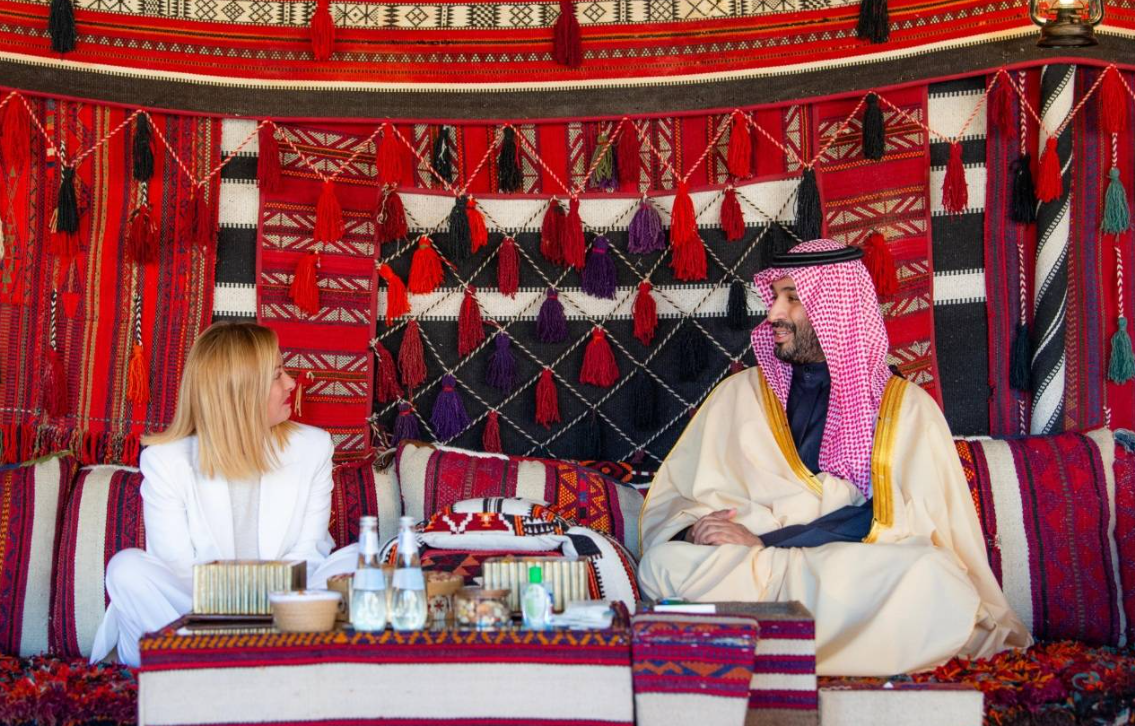
The Italian defense minister said the meeting between Prime Minister Giorgia Meloni and Saudi Crown Prince and Prime Minister Mohammed bin Salman gave strong momentum to bilateral relations.

“At the military level, cooperation is expanding in training, logistics, military doctrine, technological innovation, maritime security, and the protection of critical infrastructure. There is also growing interest in emerging domains, including cyberspace, outer space, and advanced systems.”

Saudi Crown Prince Mohammed bin Salman meets with Italian Prime Minister Giorgia Meloni in AlUla, January 2025 (SPA).

He continued: “At the industrial level, we are moving beyond the traditional client-supplier relationship and seeking to build real partnerships based on joint development, integrated supply chains, skills transfer, and the development of local capabilities.”

Saudi Arabia a Key Partner for Italy’s Energy Security

Crosetto emphasized that cooperation between Italian companies and their Saudi counterparts in defense capabilities, technology transfer, aviation projects, and shipbuilding is fully aligned with Saudi Vision 2030, which aims to strengthen the Kingdom’s industrial, technological, and human capital base.

“Italian companies’ contributions are not limited to providing platforms; they also include expertise, training, and engineering support. This approach extends beyond the defense sector to infrastructure, technology, tourism, and major projects such as NEOM, highlighting the complementarity between our economies.”

He continued: “Cooperation also includes the energy sector and the energy transition, as Saudi Arabia is a key partner for Italy’s energy security, with growing collaboration in hydrogen and renewable energy. In addition, there is an emerging strategic focus on critical and strategic raw materials, a sector in which the Kingdom is investing heavily and which could see significant growth in both industrial and technological cooperation.”

Saudi Economic Environment Highly Attractive

Crosetto said the recent Italian 'Industry Days' forum held in Riyadh, organized in cooperation between the two countries’ defense ministries, sent a very strong signal of expanding bilateral cooperation, attracting both small and medium-sized enterprises and major industrial groups and leading to the creation of tangible operational links.

“The Saudi economic environment is highly attractive, featuring major public investments, a streamlined tax system, incentives for materials and equipment, and double-taxation avoidance agreements, making the Kingdom a strategic industrial partner.”

He added: “Trade exchange is not limited to the defense sector. Italian products are in strong demand in other sectors such as machinery, fashion, design, and pharmaceuticals. Bilateral agreements exceeding €10 billion include major companies such as 'Leonardo' and 'Fincantieri'.”

Visit of Prince Khalid bin Salman

The Italian defense minister said the visit of his Saudi counterpart Prince Khalid bin Salman, to Rome, strengthened dialogue between the two countries, noting that discussions “covered diverse sectors, from space to naval domains, and from aviation to helicopters, with a primary focus on military cooperation, training, and the exchange of joint strategic analyses.”

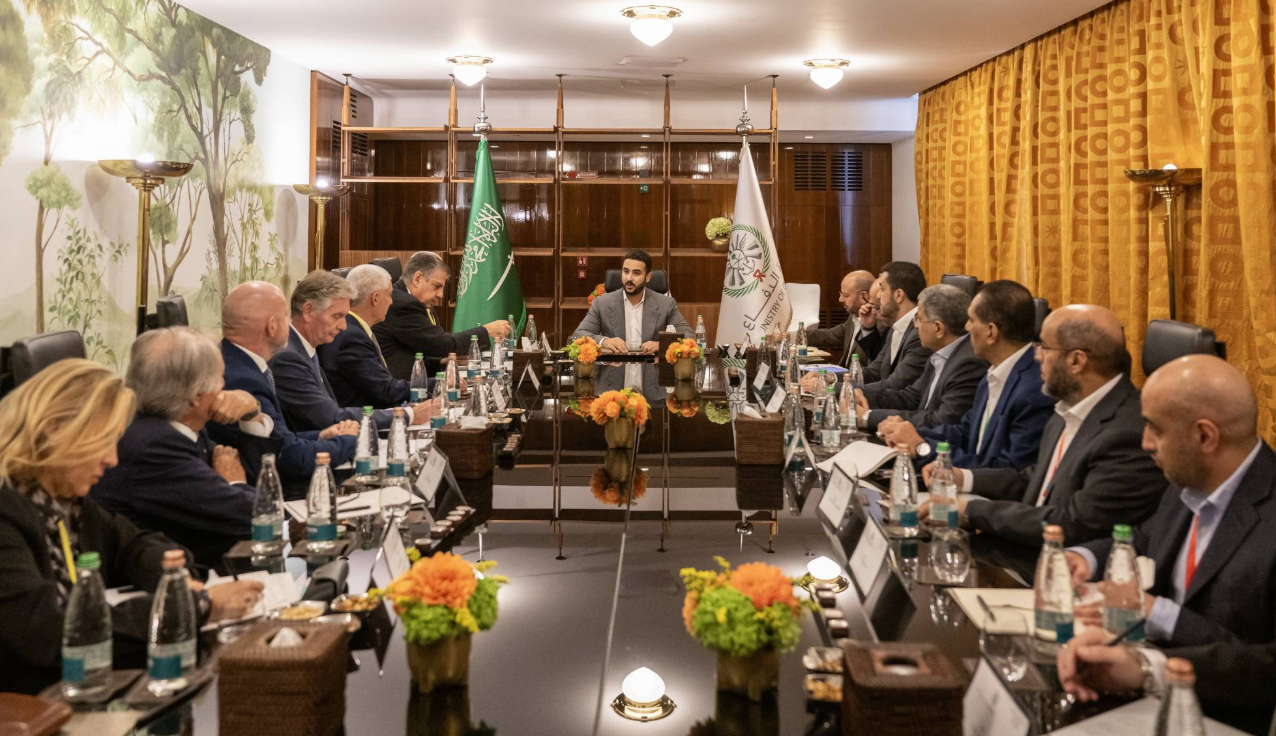
Prince Khalid bin Salman during his meeting with Italian industrial companies in Rome, October 2024 (SPA).

World Defense Show in Riyadh

Crosetto said Saudi Arabia’s hosting of the third edition of the World Defense Show reflects the Kingdom’s growing central role in technological and industrial innovation and provides a platform for discussing future scenarios, emerging technologies, and cooperation models.

“I believe it is important for a country with promising investment prospects such as Saudi Arabia to host an international event that enables direct dialogue with the world’s leading companies in a continuously expanding sector.”

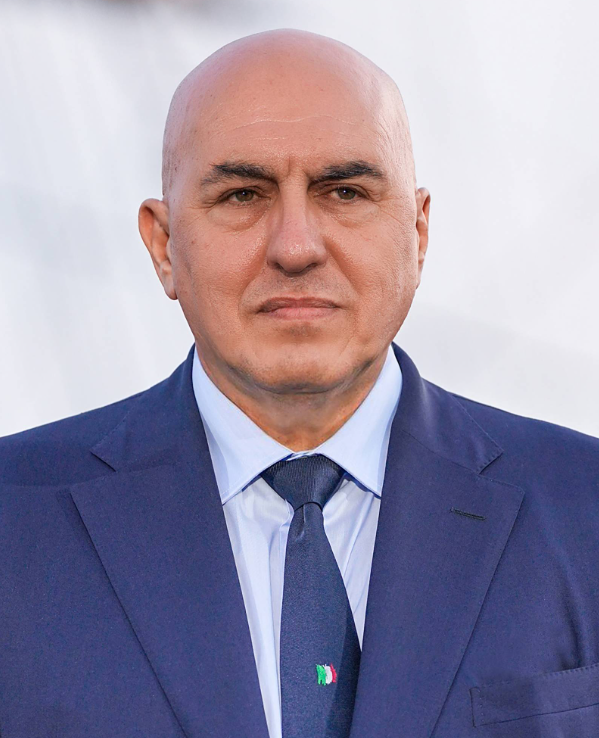
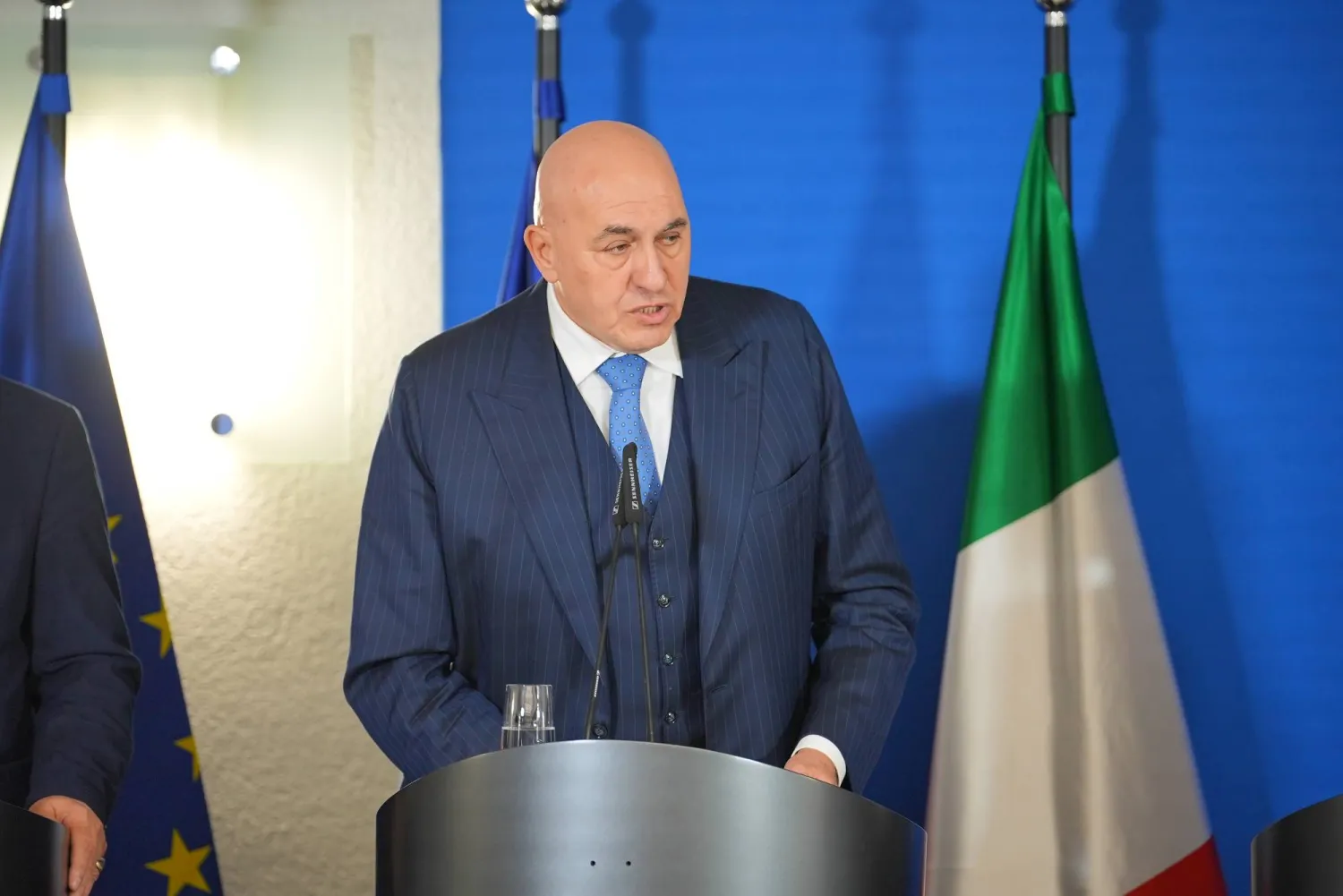
Italian Defense Minister Guido Crosetto (Italian Ministry of Defense).

He concluded: “In this context, I am confident that the model of cooperation between Italy and the Kingdom - based on dialogue, mutual trust, and a long-term vision - represents an example of how to combine strategic interests, innovation, and responsibility.

"On this basis, we will continue working side by side to strengthen a partnership that goes beyond the present, contributes to regional stability, and creates tangible opportunities for our two countries and for the international community as a whole.”


Bin Habrish to Asharq Al-Awsat: Hadhramaut on Threshold of New Era

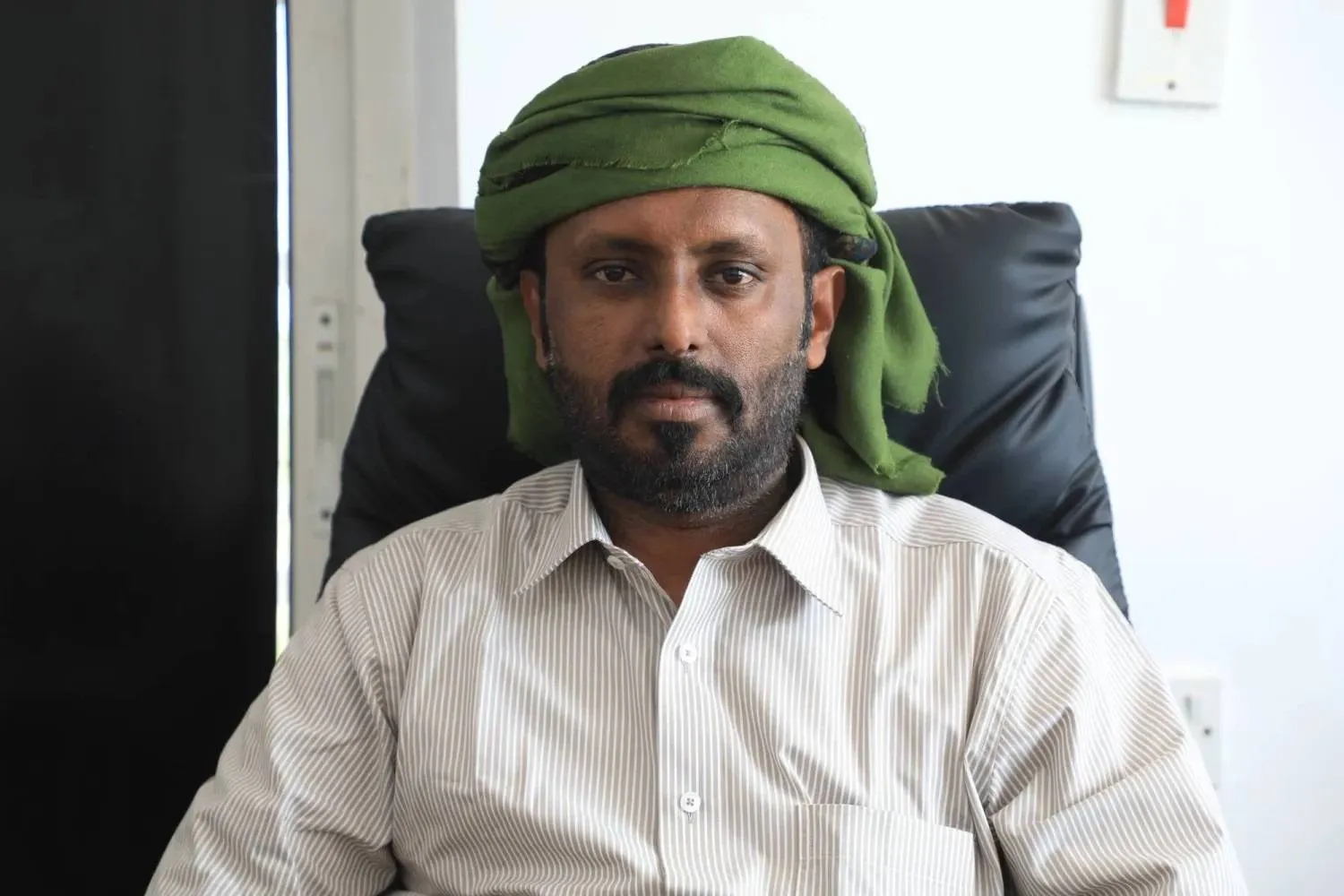
Sheikh Amr bin Habrish, First Deputy Governor of Hadhramaut (Asharq Al-Awsat)
TT

Bin Habrish to Asharq Al-Awsat: Hadhramaut on Threshold of New Era

Sheikh Amr bin Habrish, First Deputy Governor of Hadhramaut (Asharq Al-Awsat)

After nearly 500 days spent in the mountains and highlands, Sheikh Amr bin Habrish, First Deputy Governor of Hadhramaut and commander of the Hadhramaut Protection Forces, has returned to the provincial capital, Mukalla, declaring what he described as the beginning of a “new phase” that will shape a different future for Yemen’s largest eastern governorate.

In an interview with Asharq Al-Awsat from his residence overlooking the Arabian Sea, Bin Habrish said Hadhramaut is currently experiencing “a state of stability and reassurance,” which he attributed to the steadfastness of its people and to Saudi support and intervention that came “at the right time.”

He said the current ambition is to build a state based on institutions under which all citizens are united, while preserving Hadhramaut’s distinct character. Bin Habrish also affirmed his commitment to integrating the Hadhramaut Protection Forces into “fair” state institutions.

Addressing security concerns, he described terrorism as “manufactured” and said it has no social base in Hadhramaut. He accused external powers and local actors of exploiting it for their own agendas, while stressing readiness to confront terrorism in all its forms.

Bin Habrish offered his account of the recent handover of military camps led by the Nation’s Shield Forces, saying the achievements were made possible by the resistance of Hadhramaut’s people on their own land, and by Saudi support and what he called the Kingdom’s “honest and decisive” stance at a critical moment.

He said this outcome would not have been possible without the “genuine bond” between Hadhramaut’s society and Saudi Arabia, adding that this relationship has helped restore security and stability to Mukalla after what he described as unnecessary turmoil.

“We were not satisfied with the arrival of forces and the internal conflict and fighting that followed,” he said, adding that some parties felt emboldened and left no room for dialogue.

He accused the Southern Transitional Council of deploying its forces and “fully occupying the governorate,” stressing that Hadhramaut belongs to its people and that any mistake should have been addressed locally, not imposed by force. “We were compelled to resist,” he said, citing home raids and pursuits as “wrong and unjustified.”

Open Channels with Saudi Arabia

Bin Habrish credited Saudi Arabia’s leadership — King Salman bin Abdulaziz, Crown Prince Mohammed bin Salman, Defense Minister Prince Khalid bin Salman, along with the Special Committee and the Joint Forces Command — for Hadhramaut’s current stability.

He said coordination with the Kingdom takes place “at the highest levels,” with open channels and no barriers, praising Saudi intentions and expressing deep appreciation for its support.

A New Era

Bin Habrish said Hadhramaut is entering a new era rooted in its traditions of peace, wisdom, and culture. He reiterated calls for self-rule based on historical grounds, describing it as the minimum requirement for enabling Hadhramaut to build its institutions and deliver services.

He urged unity, mutual compromise, and prioritizing the governorate’s interests, saying: “We forgive and open a new page. We are not seeking revenge. What matters is that Hadhramaut remains at the center of decision-making. Without it, there can be no development.”