
Tottenham’s Defeat of Real Madrid is a Warning to Europe’s Super-Clubs

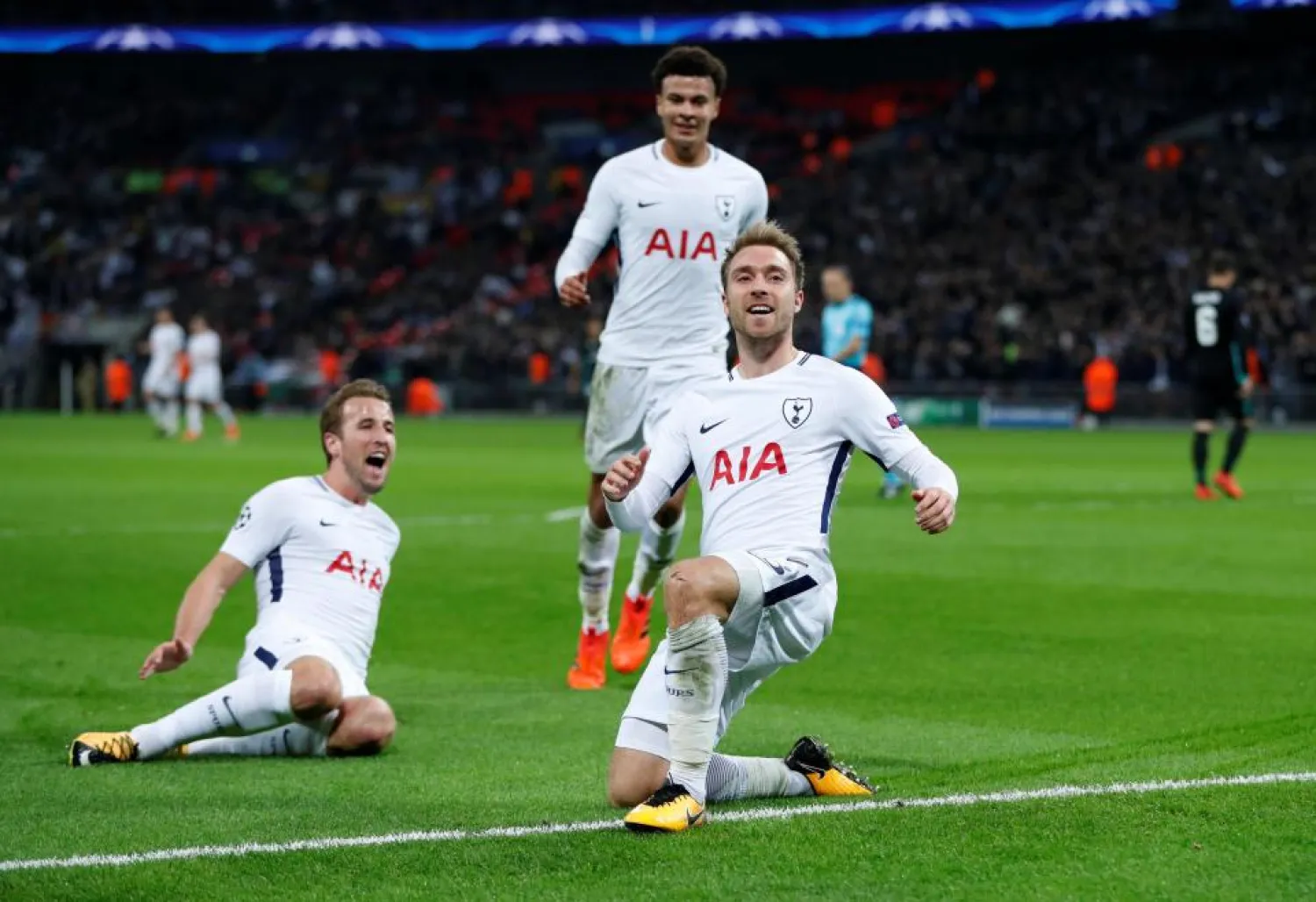
Christian Eriksen celebrates after helping Tottenham produce an historic win over Real Madrid. (Reuters)
TT

Tottenham’s Defeat of Real Madrid is a Warning to Europe’s Super-Clubs

Christian Eriksen celebrates after helping Tottenham produce an historic win over Real Madrid. (Reuters)

It was one of the greatest nights in Tottenham’s history. It was better than beating Internazionale 3-1, probably the equal of those fraught nights in 1983-84 when Bayern Munich, Austria Vienna, Hajduk Split and Anderlecht were overcome on the way to the Uefa Cup. Almost whatever happens over the next three decades, it is safe to assume that in 2050 Christian Eriksen’s goal will still be included in the pre-match White Hart Lane montage as Danny Blanchflower’s voice, the crackle of time even more pronounced, explains once again that the game is about glory.

And this was glorious. The European champions were humbled. As Eriksen pointed out, if Spurs had shown a little more composure, they would have had more. If Harry Kane had been fully fit, perhaps, they would have had more. If Spurs had been able to believe quite what was happening, they would have had more. Dele Alli admitted he was astonished by the amount of space Madrid had allowed them.

That hints at a wider point, which is that Madrid were weirdly terrible. That is not to diminish Tottenham’s performance, and it is hugely to their credit that they have adapted their game this season to such an extent their best three performances – against Borussia Dortmund, Liverpool and Madrid – have come when they had only around a third of possession, but it is to ask questions about Zinedine Zidane and, perhaps, the nature of elite football in general.

Nine years ago the former Liverpool midfielder Igor Biscan spoke about the problem clubs such as Dinamo Zagreb have, explaining how they dominated to such an extent domestically that they wilted as soon as they meet a side of even vaguely comparable quality in Europe. They had forgotten how to defend and they had forgotten how to fight.

Football became for their players an exhibition, the sense that you might have to struggle before you could express yourself was gone.

Since then, the economics of football have meant more and more teams have found themselves succumbing to the Biscan Principle. Bayern are now laughably dominant in the Bundesliga. Juventus may be facing more of a challenge this season than in recent years but they have won Serie A six times in a row. PSG were so upset when their run of four successive French league titles came to an end last season that they went and arranged the two most expensive transfers in history; their only rival, meanwhile, lost four key players. Barcelona and Real Madrid dwarf the rest in Spain.

The result is a decadence among many of the leading sides, a focus on only one part of the game. As Tony Evans pointed out on the Second Captains podcast this week, fans have come to expect and demand entertainment and for some that has become a surrogate for winning. In practical terms, on the pitch, what it means is that elite sides have softer underbellies than they have ever had before. Genuine opposition is such a rarity that when they meet it they have no idea how to react.

That is why so many games between ostensibly well-matched elite sides end up with a surprisingly large margin of victory. The Barcelona-PSG last-16 tie last season – 4-0 to PSG in the first leg; 6-1 to Barça in the second – was the perfect example of that. It was thrilling but it was essentially two big men taking it in turns to hit a blancmange with an ax. Barcelona, it will be remembered, rapidly succumbed to a better-balanced Juventus in the following round.

In the past eight seasons, 21 games at the quarter-final stage or later of the Champions League have been won by a three-goal margin; in the eight seasons before that, there were only eight. Top sides, the elite who reach those stages of the competition, may be better than their forebears at attacking but the art of defending is being forgotten. There is too much attention on the glitter of glory and not enough on the guts.

The one major league that is not – yet – subject to the Biscan Principle, is the Premier League. It is not just that six sides began this season with at least vaguely realistic title ambitions, it is that the bottom sides are still wealthy enough to compete – which is why the attempts of the Big Six to hive off more of the overseas television rights must continue to be resisted.

For the past few years, English under-performance in Europe has been blamed on that competitiveness, on, as Louis van Gaal had it, the “rat race” of the English game. This season, although it is still early, the signs are that Premier League sides may be benefiting. Premier League sides have lost only one of 20 Champions League games this season, have collected 40 percent more coefficient points than any other league and, perhaps most impressively, have shown an intelligence and a tactical flexibility perhaps lacking in the past.

Mauricio Pochettino tweaked again, shifting from the 3-5-2 he had used in the Bernabéu to a 3-4-2-1. Madrid’s 4-3-1-2 shape demands the full-backs get forward to offer attacking width; Tottenham were merciless in exposing that, leading directly to the opening goal.

Madrid were limp, lazy and disorganized, still a threat going forward but a rabble at the back. Perhaps they were infected by the realization they will almost certainly qualify anyway and that they won the competition after going through in second last season. But after their sluggish start to the domestic season there is reason for serious concern.

After successive defeats, Tottenham sides of the past might have wilted but not this one. Mentally they were tougher than Madrid and tactically they were smarter. Wednesday was a night that will live always in Tottenham’s history but it should also be a warning to Madrid and perhaps also the other super-clubs.

The Guardian Sport


Ukraine's Officials to Boycott Paralympics over Russian Flag Decision

Milano Cortina 2026 Winter Olympics - Skeleton - Interview with Ukraine Youth and Sports minister Matvii Bidnyi - N H Hotel, Milan, Italy - February 12, 2026 Ukraine Youth and Sports Minister Matvii Bidnyi speaks after the disqualification of Ukrainian skeleton racer Vladyslav Heraskevych from the Winter Games. REUTERS/Kevin Coombs
TT

Ukraine's Officials to Boycott Paralympics over Russian Flag Decision

Milano Cortina 2026 Winter Olympics - Skeleton - Interview with Ukraine Youth and Sports minister Matvii Bidnyi - N H Hotel, Milan, Italy - February 12, 2026 Ukraine Youth and Sports Minister Matvii Bidnyi speaks after the disqualification of Ukrainian skeleton racer Vladyslav Heraskevych from the Winter Games. REUTERS/Kevin Coombs

Ukrainian officials will boycott the Paralympic Winter Games, Kyiv said Wednesday, after the International Paralympic Committee allowed Russian athletes to compete under their national flag.

Ukraine also urged other countries to shun next month's Opening Ceremony in Verona on March 6, in part of a growing standoff between Kyiv and international sporting federations four years after Russia invaded.

Six Russians and four Belarusians will be allowed to take part under their own flags at the Milan-Cortina Paralympics rather than as neutral athletes, the Games' governing body confirmed to AFP on Tuesday.

Russia has been mostly banned from international sport since Moscow invaded Ukraine. The IPC's decision triggered fury in Ukraine.

Ukraine's sports minister Matviy Bidny called the decision "outrageous", and accused Russia and Belarus of turning "sport into a tool of war, lies, and contempt."

"Ukrainian public officials will not attend the Paralympic Games. We will not be present at the opening ceremony," he said on social media.

"We will not take part in any other official Paralympic events," he added.

Ukrainian Foreign Minister Andriy Sybiga said he had instructed Kyiv's ambassadors to urge other countries to also shun the opening ceremony.

"Allowing the flags of aggressor states to be raised at the Paralympic Games while Russia's war against Ukraine rages on is wrong -- morally and politically," Sybiga said on social media.

The EU's sports commissioner Glenn Micallef said he would also skip the opening ceremony.

- Kyiv demands apology -

The IPC's decision comes amid already heightened tensions between Ukraine and the International Olympic Committee, overseeing the Winter Olympics currently underway.

The IOC banned Ukrainian skeleton racer Vladyslav Heraskevych for refusing to ditch a helmet depicting victims of the war with Russia.

Ukraine was further angered that the woman chosen to carry the "Ukraine" name card and lead its team out during the Opening Ceremony of the Games was revealed to be Russian.

Media reports called the woman an anti-Kremlin Russian woman living in Milan for years.

"Picking a Russian person to carry the nameplate is despicable," Kyiv's foreign ministry spokesman Georgiy Tykhy said at a briefing in response to a question by AFP.

He called it a "severe violation of the Olympic Charter" and demanded an apology.

And Kyiv also riled earlier this month at FIFA boss Gianni Infantino saying he believed it was time to reinstate Russia in international football.

- 'War, lies and contempt' -

Valeriy Sushkevych, president of the Ukrainian Paralympic Committee told AFP on Tuesday that Kyiv's athletes would not boycott the Paralympics.

Ukraine traditionally performs strongly at the Winter Paralympics, coming second in the medals table four years ago in Beijing.

"If we do not go, it would mean allowing Putin to claim a victory over Ukrainian Paralympians and over Ukraine by excluding us from the Games," said the 71-year-old in an interview.

"That will not happen!"

Russia was awarded two slots in alpine skiing, two in cross-country skiing and two in snowboarding. The four Belarusian slots are all in cross-country skiing.

The International Paralympic Committee (IPC) said earlier those athletes would be "treated like (those from) any other country".

The IPC unexpectedly lifted its suspension on Russian and Belarusian athletes at the organisation's general assembly in September.


'Not Here for Medals', Nakai Says after Leading Japanese Charge at Olympics

Ami Nakai of Japan competes during the women's short program figure skating at the 2026 Winter Olympics, in Milan, Italy, Tuesday, Feb. 17, 2026. (AP Photo/Ashley Landis)
TT

'Not Here for Medals', Nakai Says after Leading Japanese Charge at Olympics

Ami Nakai of Japan competes during the women's short program figure skating at the 2026 Winter Olympics, in Milan, Italy, Tuesday, Feb. 17, 2026. (AP Photo/Ashley Landis)

Ami Nakai entered her first Olympics insisting she was not here for medals — but after the short program at the Milano Cortina Games, the 17-year-old figure skater found herself at the top, ahead of national icon Kaori Sakamoto and rising star Mone Chiba.

Japan finished first, second, and fourth on Tuesday, cementing a formidable presence heading into the free skate on Thursday. American Alysa Liu finished third.

Nakai's clean, confident skate was anchored by a soaring triple Axel. She approached the moment with an ease unusual for an Olympic debut.

"I'm not here at this Olympics with the goal of achieving a high result, I'm really looking forward to enjoying this Olympics as much as I can, till the very last moment," she said.

"Since this is my first Olympics, I had nothing to lose, and that mindset definitely translated into my results," she said.

Her carefree confidence has unexpectedly put her in medal contention, though she cannot imagine herself surpassing Sakamoto, the three-time world champion who is skating the final chapter of her competitive career. Nakai scored 78.71 points in the short program, ahead of Sakamoto's 77.23.

"There's no way I stand a chance against Kaori right now," Nakai said. "I'm just enjoying these Olympics and trying my best."

Sakamoto, 25, who has said she will retire after these Games, is chasing the one accolade missing from her resume: Olympic gold.

Having already secured a bronze in Beijing in 2022 and team silvers in both Beijing and Milan, she now aims to cap her career with an individual title.

She delivered a polished short program to "Time to Say Goodbye," earning a standing ovation.

Sakamoto later said she managed her nerves well and felt satisfied, adding that having three Japanese skaters in the top four spots "really proves that Japan is getting stronger". She did not feel unnerved about finishing behind Nakai, who also bested her at the Grand Prix de France in October.

"I expected to be surpassed after she landed a triple Axel ... but the most important thing is how much I can concentrate on my own performance, do my best, stay focused for the free skate," she said.

Chiba placed fourth and said she felt energised heading into the free skate, especially after choosing to perform to music from the soundtrack of "Romeo and Juliet" in Italy.

"The rankings are really decided in the free program, so I'll just try to stay calm and focused in the free program and perform my own style without any mistakes," said the 20-year-old, widely regarded as the rising all-rounder whose steady ascent has made her one of Japan's most promising skaters.

All three skaters mentioned how seeing Japanese pair Riku Miura and Ryuichi Kihara deliver a stunning comeback, storming from fifth place after a shaky short program to capture Japan's first Olympic figure skating pairs gold medal, inspired them.

"I was really moved by Riku and Ryuichi last night," Chiba said. "The three of us girls talked about trying to live up to that standard."


PSG’s Mental Strength Hailed as they Come from Behind to Win at Monaco

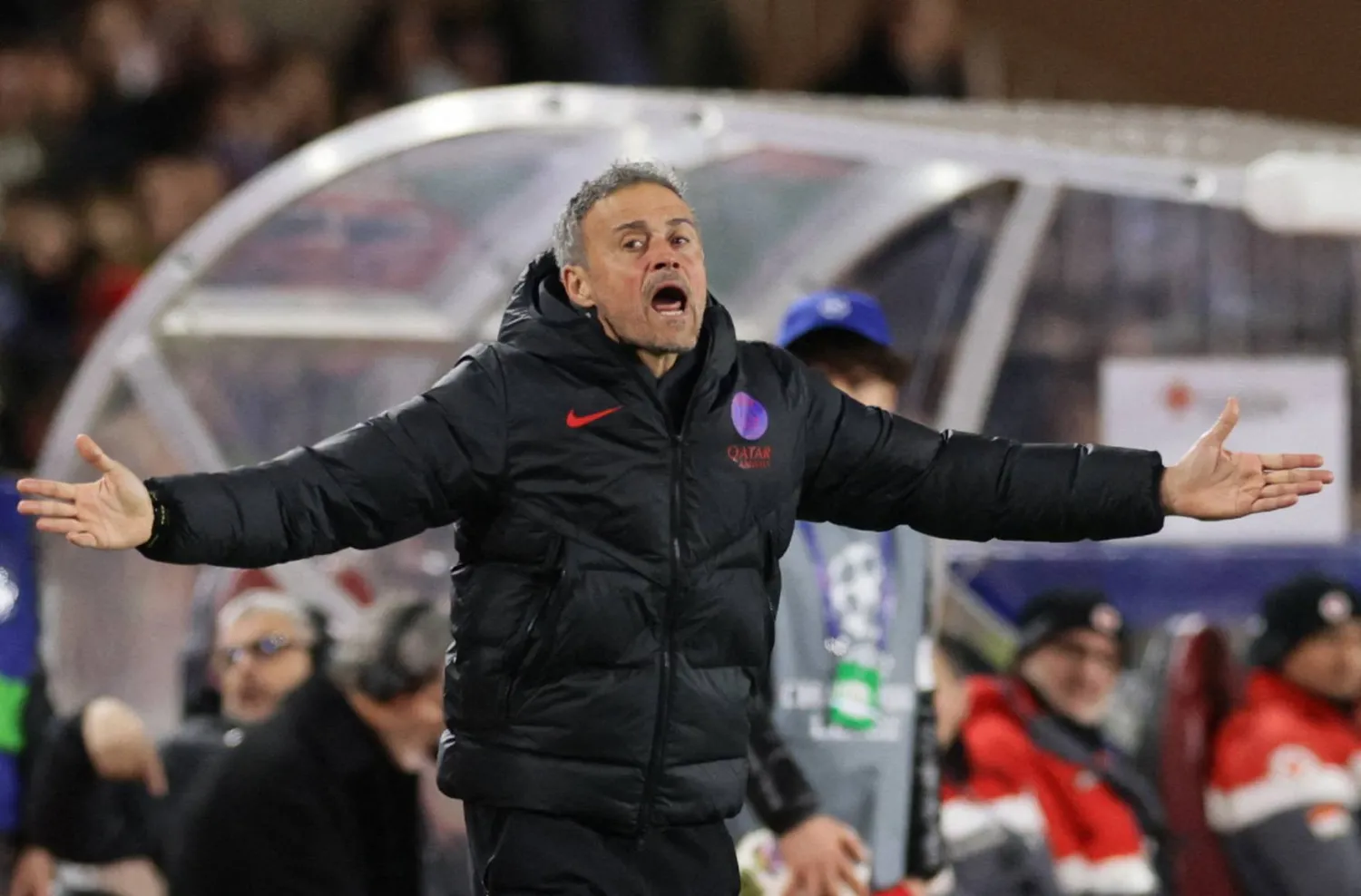
Soccer Football - UEFA Champions League - Play Off - First Leg - AS Monaco v Paris St Germain - Stade Louis II, Monaco - February 17, 2026 Paris St Germain coach Luis Enrique reacts REUTERS/Manon Cruz
TT

PSG’s Mental Strength Hailed as they Come from Behind to Win at Monaco

Soccer Football - UEFA Champions League - Play Off - First Leg - AS Monaco v Paris St Germain - Stade Louis II, Monaco - February 17, 2026 Paris St Germain coach Luis Enrique reacts REUTERS/Manon Cruz

Paris Saint-Germain coach Luis ‌Enrique hailed the mental strength of his side in coming from two goals down to win 3-2 away at Monaco in the Champions League on Tuesday, but warned the knockout round tie was far from finished.

The first leg clash between the two Ligue 1 clubs saw Folarin Balogun score twice for the hosts in the opening 18 minutes before Vitinha had his penalty saved to compound matters.

But after Desire Doue came on for injured Ousmane Dembele, the ‌match turned ‌and defending champions PSG went on to ‌secure ⁠a one-goal advantage ⁠for the return leg.

"Normally, when a team starts a match like that, the most likely outcome is a loss,” Reuters quoted Luis Enrique as saying.

“It was catastrophic. It's impossible to start a match like that. The first two times they overcame our pressure and entered our half, they scored. They ⁠made some very good plays.

“After that, it's difficult ‌to have confidence, but we ‌showed our mental strength. Plus, we missed a penalty, so ‌it was a chance to regain confidence. In the ‌last six times we've played here, this is only the second time we've won, which shows how difficult it is.”

The 20-year-old Doue scored twice and provided a third for Achraf Hakimi, just ‌days after he had turned in a poor performance against Stade Rennais last Friday ⁠and was ⁠dropped for the Monaco clash.

“I'm happy for him because this past week, everyone criticized and tore Doue apart, but he was sensational, he showed his character. He helped the team at the best possible time.”

Dembele’s injury would be assessed, the coach added. “He took a knock in the first 15 minutes, then he couldn't run.”

The return leg at the Parc des Princes will be next Wednesday. “Considering how the match started, I'm happy with the result. But the match in Paris will be difficult, it will be a different story,” Luis Enrique warned.