

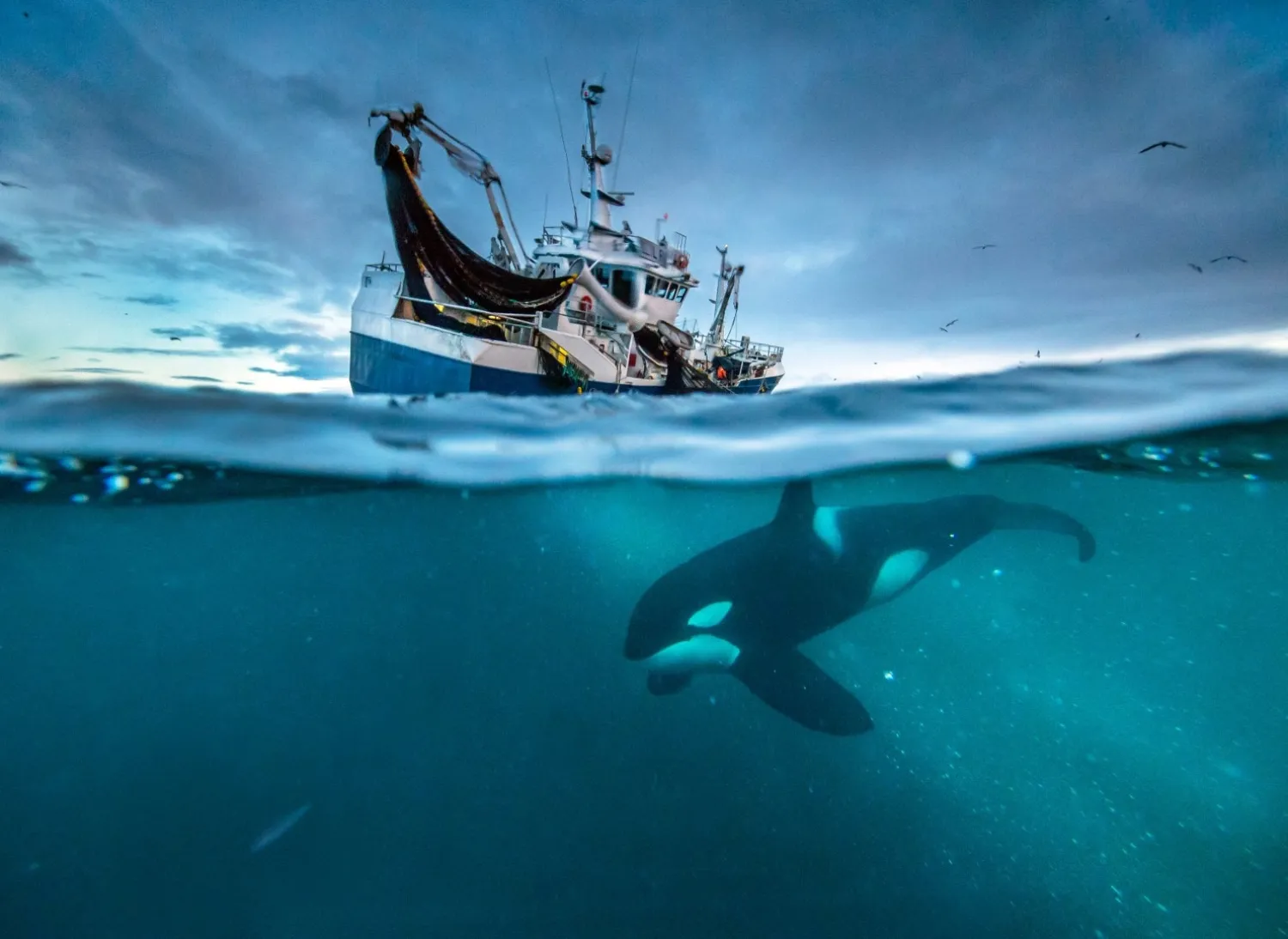

Britain’s David Attenborough Enjoys a Moment as His ‘Blue Planet Ii’ Takes a Hard Look at Ocean Pollution

via The Washington Post
TT

Britain’s David Attenborough Enjoys a Moment as His ‘Blue Planet Ii’ Takes a Hard Look at Ocean Pollution

via The Washington Post

The most-watched television program in Britain last year was not a singing competition, a period costume drama or even a baking show. It was a nature program about gender-bending fish and dolphins that like to surf.

The seven-part BBC documentary, presented by a beloved nonagenarian naturalist, was not unalloyed entertainment, though. It also zeroed in on the disastrous impact of plastic waste in the world’s oceans, spurring government ministers to vow remedial action.

“Blue Planet II” enthralled British viewers, who lit up social media on Sunday nights with their favorite moments from the latest episode. The sumptuously shot series, which begins airing on BBC America on Jan. 20, took four years to make, with filmmakers traveling to every continent and every ocean.

It could be that “the moment is right” for a documentary on the state of the oceans, said Sir David Attenborough, the show’s human star, in a recent interview at the BBC’s gleaming offices in central London. “There are people worldwide talking about what we are doing about the seas.”

It also could be that the grandfatherly Attenborough is just the right man to deliver the message. At 91, he is a British national treasure — something like Jacques Cousteau, Carl Sagan and Jane Goodall rolled into one.

In person, Attenborough, who was knighted in 1985 and is called “Sir David” by BBC colleagues, is a master storyteller. He has a shock of white hair and bright blue eyes, and he speaks with the same distinctive cadence and whispered confidences — whether about leaking submersibles or wondrous salamanders — that have entranced British viewers for decades.

He is also a born broadcaster, his velvety voice propelling footage of tool-using tusk fish and giant trevally fish that catch birds in midair.

Some of Attenborough’s previous programs have drawn criticism for pulling punches about human threats to the environment. Martin Hughes-Games, a fellow BBC producer, has argued that in one series, the footage was so jaw-dropping that it lulled viewers into a “false sense of security.”

“Blue Planet II,” a sequel to a 2001 series about marine life, is different. It features fish with transparent heads and a nail-
biting chase scene involving a crab, eel and octopus that will make you think twice about your next frolic in shallow seas. But it also directly addresses plastic pollution, overfishing and climate change.

Attenborough insists that the BBC did not set out to make an “ax-grinding program.” But, he added, “If you come across the situation that we have come across, you can’t just say, ‘Well, we don’t like that because it’s an uncomfortable or awkward truth.’ ”

That hard-hitting approach appears to have struck a chord in Britain, where several media outlets are running campaigns aimed at reducing marine plastic pollution — an estimated 9 million tons of plastic ends up in the sea each year. The issue also has risen to the top of the global agenda. In December, 193 nations signed a U.N. resolution pledging to stop plastic waste from entering the sea.

Michael Gove, Britain’s environment secretary, said that he was “haunted” by “Blue Planet II” and that his department is looking at the possibilities of “bottle deposit return schemes, greater access to water fountains and incentives to encourage reusable coffee cups.” Britain recycles less plastic than many other European countries, including Norway and Germany.

Attenborough, who says he personally has swapped out plastic water bottles for a Thermos, is optimistic that a solution to the plastics problem can be found. “If we are clever enough to be able to invent it, surely we should be clever enough to be able to think of ways of destroying it,” he said.

If part of the solution, as the series implies, is for a concerted global effort, what does Attenborough make of President Trump’s decision to pull out of the Paris climate agreement?

“It would be absurd to say it didn’t have an impact,” he said. “It’s the most powerful nation on Earth, so of course it matters a lot.”

But at the same time, he said, “it is against the tide of human interests. I mean, China, for heaven’s sake — India is behind it. The world is becoming aware of this.”

“Blue Planet II” was also a hit with critics, who have called it “astonishing,” “awe-inspiring” and “playing a different sport from most of what makes it onto our screens.”

Attenborough has worked at the BBC since 1950, including eight years as controller of BBC Two. Although he brushes off the suggestion that he is a national treasure — “Who says? I mean, it isn’t voted for,” he said — it is a fact that he has played a formidable role in encouraging audiences worldwide to care about the natural world. (It is also a fact that people do vote for Attenborough: When Britons were recently asked which “ethical champion” they would like to see featured on the new 20-pound note, his name came out on top.)

As a young boy, he collected fossils and later studied zoology at Cambridge University. He joined the BBC when he was 24, although his first appearance on television was not an overwhelming success.

In his memoir, “Life on Air,” the veteran broadcaster recalled discovering a note a producer wrote after his debut saying that Attenborough was “intelligent and promising” but not to be used again on air because “his teeth are too big.”

He went on to write and present numerous award-winning natural history documentaries, along the way inspiring generations of science lovers and wildlife filmmakers — including James Honeyborne, executive producer of “Blue Planet II.”

Honeyborne, who has worked with Attenborough for 25 years, describes the latter’s working style as “very exact and very scientifically accurate, but he also wants to tell you a story, so he will put it into words that really help that storytelling experience.

“The audience over here finds it very engaging,” he said.

Attenborough no longer accompanies every shoot in the field. In “Blue Planet II,” he appears on screen in only two episodes, including an introduction shot on the bow of a ship off Florida — he jokingly called it his “Titanic” scene. For the commentary, recorded in studios in Britain, he was given the film and a script, which he then rewrote in his own words.

Attenborough lives in Richmond, a leafy London suburb, with his daughter, Susan; his wife, Jane, died in 1997. He has a slight hobble in his gait but continues to travel the globe for work and says he has no plans to retire.

“Why? I’m having fun; I’m having a great time. It’s a fantastic privilege,” he said.

He also is enjoying something of a moment, being at the crest of a wave.

“Some of us have been going on, saying it’s criminal the way we have been treating the oceans. We have been bleating on about this for a decade with no effect,” he said.

“But it has a cumulative effect,” he said, “and this is the moment that is the payoff.”

The Washington Post


What Is ALS, the Disease That Killed Actor Eric Dane?

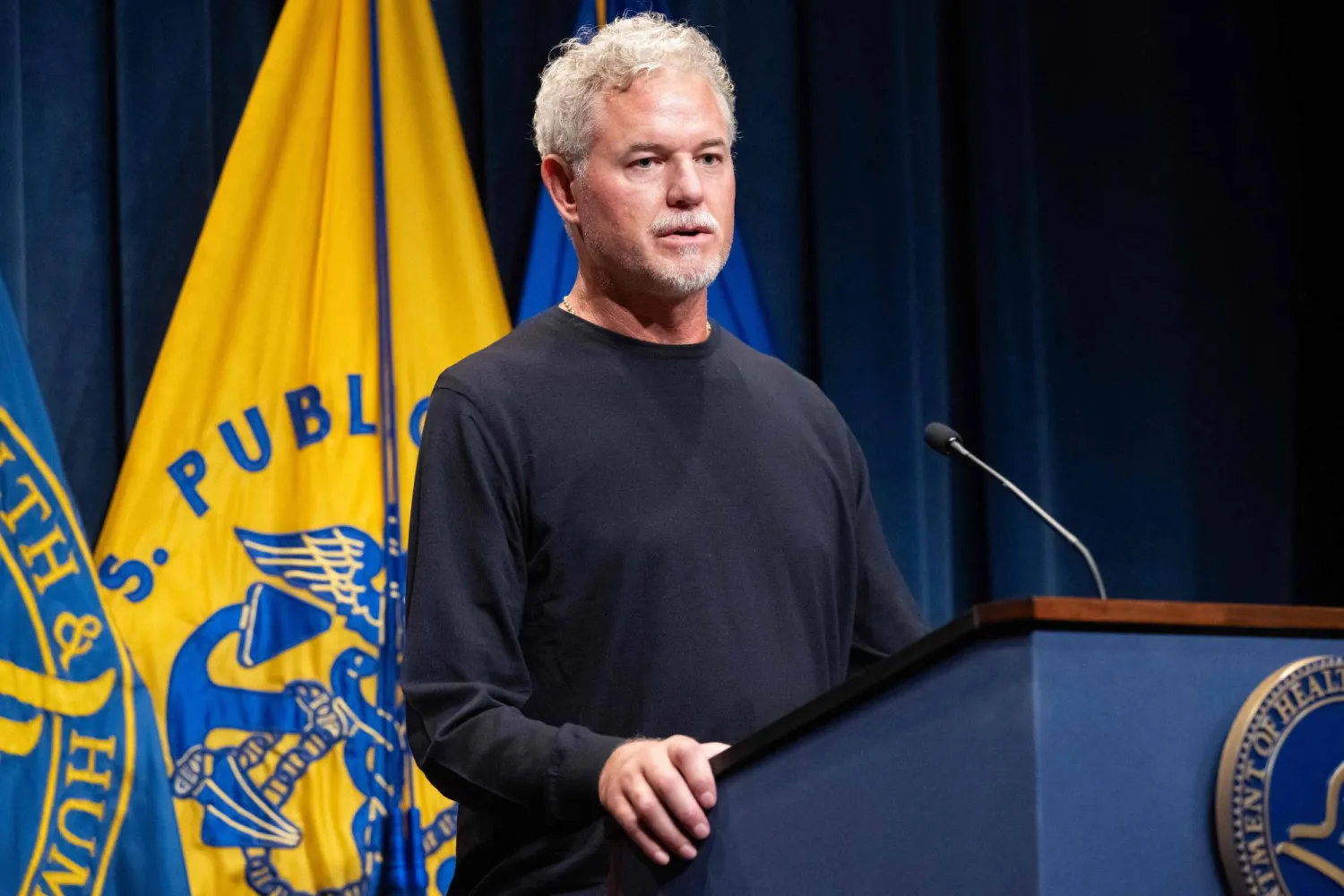
US actor Eric Dane speaks about his ALS diagnosis during a news conference to discuss health insurance at the Department of Health and Human Services Headquarters in Washington, DC, on June 23, 2025. (AFP)
TT

What Is ALS, the Disease That Killed Actor Eric Dane?

US actor Eric Dane speaks about his ALS diagnosis during a news conference to discuss health insurance at the Department of Health and Human Services Headquarters in Washington, DC, on June 23, 2025. (AFP)

Eric Dane, known for his roles on "Grey’s Anatomy" and "Euphoria," died this week from amyotrophic lateral sclerosis at age 53.

The fatal nervous system disease, also known as Lou Gehrig’s disease, killed Dane less than a year after he announced his diagnosis.

According to the Centers for Disease Control and Prevention, ALS is rare. In 2022, there were nearly 33,000 estimated cases, say researchers, who project that cases will rise to more than 36,000 by 2030.

The disease is slightly more common in men than in women and tends to strike in midlife, between the ages of 40 and 60.

Here’s what to know.

What is ALS? It affects nerve cells in the brain and spinal cord, causing loss of muscle control and getting worse over time.

ALS causes nerve cells in the upper and lower parts of the body to stop working and die. Nerves no longer trigger specific muscles, eventually leading to paralysis. People with ALS may develop problems with mobility, speaking, swallowing and breathing.

The exact cause of the disease is unknown, and Mayo Clinic experts said a small number of cases are inherited.

It’s called Lou Gehrig’s disease after the Hall of Fame New York Yankees player. Gehrig was diagnosed with ALS in 1939 on his 36th birthday, died in 1941 and was the face of ALS for decades.

What are some signs of ALS? Experts say the first symptoms are often subtle. The disease may begin with muscle twitching and weakness in an arm or leg.

Over time, muscles stop acting and reacting correctly, said experts at University of California San Francisco Health. People may lose strength and coordination in their arms and legs; feet and ankles may become weak; and muscles in the arms, shoulders and tongue may cramp or twitch. Swallowing and speaking may become difficult and fatigue may set in.

The ability to think, see, hear, smell, taste and touch are usually not affected, UCSF experts said.

Eventually, muscles used for breathing may become paralyzed. Patients may be unable to swallow and inhale food or saliva. Most people with ALS die of respiratory failure.

How is ALS diagnosed and treated? The disease is difficult to diagnose because there’s no test or procedure to confirm it. Generally, doctors will perform a physical exam, lab tests and imaging of the brain and spinal cord.

A doctor may interpret certain things as signs of ALS, including an unusual flexing of the toes, diminished fine motor coordination, painful muscle cramps, twitching and spasticity, a type of stiffness causing jerky movements.

There’s no known cure for ALS, but the drug riluzole has been approved for treatment. According to the Mayo Clinic, it may extend survival in the early stages of the disease or extend the time until a breathing tube is needed.

Another much-debated drug, Relyvrio, was pulled from the US market by Amylyx Pharmaceuticals in 2024. Its development had been financed, in part, by the ALS Association, the major beneficiary of the 2014 " ice bucket challenge " viral phenomenon.

Other medications are sometimes prescribed to help control symptoms.

Choking is common as ALS progresses, so patients may need feeding tubes. People may also use braces, wheelchairs, speech synthesizers or computer-based communication systems.

After the onset of the disease, experts say patients may survive from two years to a decade. Most people live from two to five years after symptoms develop, and about a fifth live more than five years after they are diagnosed.


Snowstorm Paralyzes Vienna Airport

People wait at a tram stop after heavy snowfalls in Vienna, Austria, February 20, 2026. REUTERS/Elisabeth Mandl
TT

Snowstorm Paralyzes Vienna Airport

People wait at a tram stop after heavy snowfalls in Vienna, Austria, February 20, 2026. REUTERS/Elisabeth Mandl

Massive snowstorms caused power outages and transport chaos in Austria on Friday, forcing the Vienna airport to temporarily halt all flights.

Flights departing from the capital, a major European hub, were cancelled or delayed, and more than 230 arrivals were similarly disrupted or rerouted.

"Passengers whose flights have been delayed are asked not to come to the airport," the facility said in a statement.

The area received 20 centimeters (nearly eight inches) of snow, national news agency APA reported.

The main highway south of Vienna was closed for several hours, and other sections of highway were temporarily inaccessible because of snowdrift, stranded lorries or poor visibility, said the national automobile association, OAMTC.

According to AFP, electric companies reported power outages in several regions in the south and east, including Styria, where 30,000 homes lost electricity.

The weather was forecast to improve from around midday, but the risk of avalanches remained high.


NASA Delivers Harsh Assessment of Botched Boeing Starliner Test Flight

NASA duo Butch Wilmore and Suni Williams were stuck on the ISS for nine months. Handout / NASA TV/AFP/File
TT

NASA Delivers Harsh Assessment of Botched Boeing Starliner Test Flight

NASA duo Butch Wilmore and Suni Williams were stuck on the ISS for nine months. Handout / NASA TV/AFP/File

NASA on Thursday blamed what it called engineering vulnerabilities in Boeing's Starliner spacecraft along with internal agency mistakes in a sharply critical report assessing a botched mission that left two astronauts stranded in space.

The US space agency labeled the 2024 test flight of the Starliner capsule a "Type A" mishap -- the same classification as the deadly Challenger and Columbia shuttle disasters -- a category that reflects the "potential for a significant mishap," it said.

The failures left a pair of NASA astronauts stranded aboard the International Space Station for nine months in a mission that captured global attention and became a political flashpoint.

"Starliner has design and engineering deficiencies that must be corrected, but the most troubling failure revealed by this investigation is not hardware. It's decision-making and leadership," said NASA administrator Jared Isaacman in a briefing.

"If left unchecked," he said, this mismanagement "could create a culture incompatible with human spaceflight."

The top space official said the investigation found that a concern for the reputation of Boeing's Starliner clouded an earlier internal probe into the incident.

"Programmatic advocacy exceeded reasonable bounds and place the mission, the crew and America's space program at risk in ways that were not fully understood at the time," Isaacman said.

He said Starliner currently "is less reliable for crew survival than other crewed vehicles" and that "NASA will not fly another crew on Starliner until technical causes are understood and corrected" and a problematic propulsion system is fixed.

But the administrator insisted that "NASA will continue to work with Boeing, as we do all of our partners that are undertaking test flights."

In a statement, Boeing said it has "made substantial progress on corrective actions for technical challenges we encountered and driven significant cultural changes across the team that directly align with the findings in the report."

- 'We failed them' -

Isaacman also had harsh words for internal conduct at NASA.

"We managed the contract. We accepted the vehicle, we launched the crew to space. We made decisions from docking through post-mission actions," he told journalists.

"A considerable portion of the responsibility and accountability rests here."

In June 2024 Butch Wilmore and Suni Williams embarked on what was meant to be an eight-to-14-day mission. But this turned into nine months after propulsion problems emerged in orbit and the Starliner spacecraft was deemed unfit to fly them back.

The ex-Navy pilots were reassigned to the NASA-SpaceX Crew-9 mission. A Dragon spacecraft flew to the ISS that September with a team of two, rather than the usual four, to make room for the stranded pair.

The duo, both now retired, were finally able to arrive home safely in March 2025.

"They have so much grace, and they're so competent, the two of them, and we failed them," NASA associate administrator Amit Kshatriya told Thursday's briefing.

"The agency failed them."

Kshatriya said the details of the report were "hard to hear" but that "transparency" was the only path forward.

"This is not about pointing fingers," he said. "It's about making sure that we are holding each other accountable."

Both Boeing and SpaceX were commissioned to handle missions to the ISS more than a decade ago.
