


Britain’s David Attenborough Enjoys a Moment as His ‘Blue Planet Ii’ Takes a Hard Look at Ocean Pollution

via The Washington Post
TT

Britain’s David Attenborough Enjoys a Moment as His ‘Blue Planet Ii’ Takes a Hard Look at Ocean Pollution

via The Washington Post

The most-watched television program in Britain last year was not a singing competition, a period costume drama or even a baking show. It was a nature program about gender-bending fish and dolphins that like to surf.

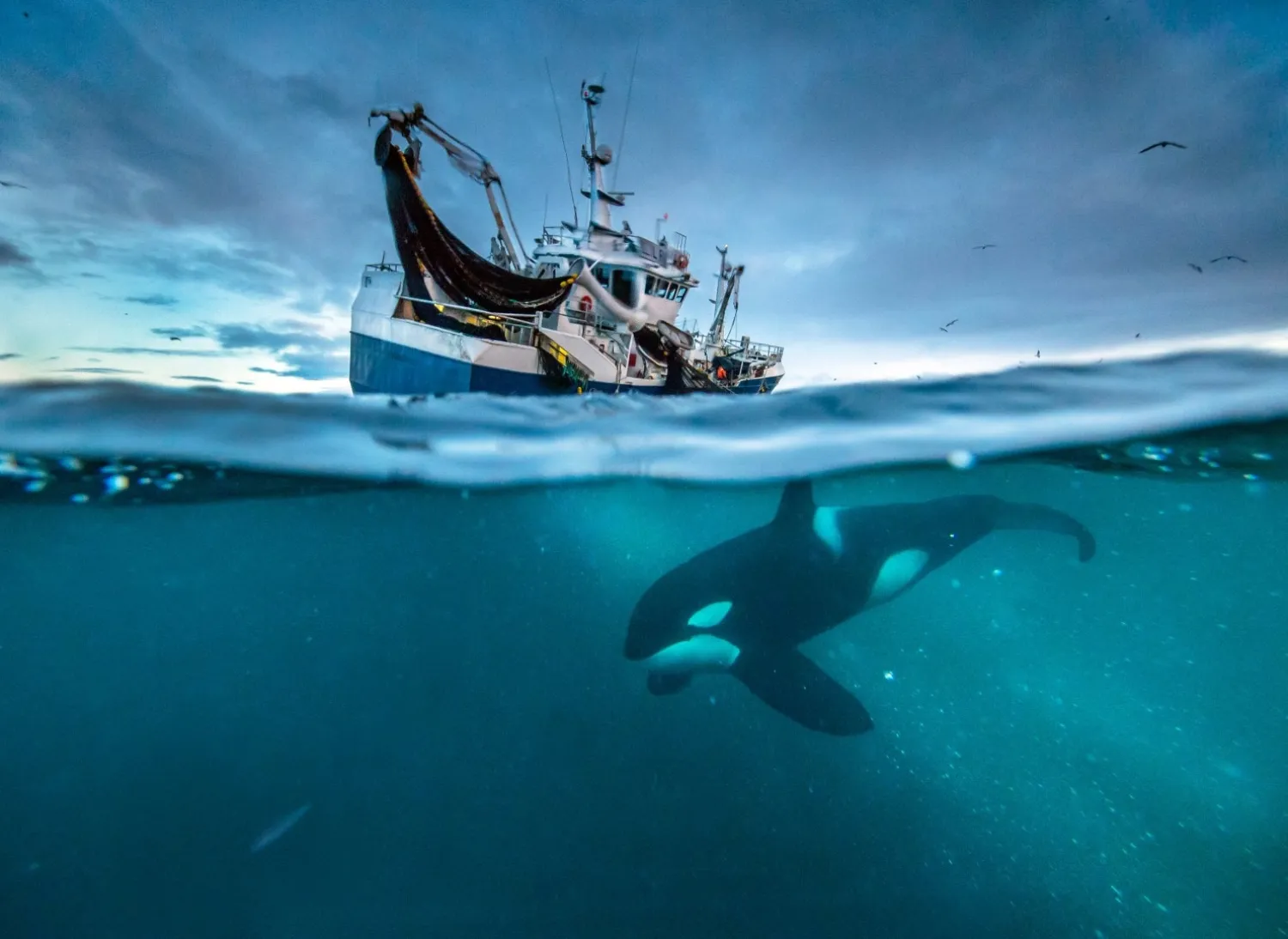
The seven-part BBC documentary, presented by a beloved nonagenarian naturalist, was not unalloyed entertainment, though. It also zeroed in on the disastrous impact of plastic waste in the world’s oceans, spurring government ministers to vow remedial action.

“Blue Planet II” enthralled British viewers, who lit up social media on Sunday nights with their favorite moments from the latest episode. The sumptuously shot series, which begins airing on BBC America on Jan. 20, took four years to make, with filmmakers traveling to every continent and every ocean.

It could be that “the moment is right” for a documentary on the state of the oceans, said Sir David Attenborough, the show’s human star, in a recent interview at the BBC’s gleaming offices in central London. “There are people worldwide talking about what we are doing about the seas.”

It also could be that the grandfatherly Attenborough is just the right man to deliver the message. At 91, he is a British national treasure — something like Jacques Cousteau, Carl Sagan and Jane Goodall rolled into one.

In person, Attenborough, who was knighted in 1985 and is called “Sir David” by BBC colleagues, is a master storyteller. He has a shock of white hair and bright blue eyes, and he speaks with the same distinctive cadence and whispered confidences — whether about leaking submersibles or wondrous salamanders — that have entranced British viewers for decades.

He is also a born broadcaster, his velvety voice propelling footage of tool-using tusk fish and giant trevally fish that catch birds in midair.

Some of Attenborough’s previous programs have drawn criticism for pulling punches about human threats to the environment. Martin Hughes-Games, a fellow BBC producer, has argued that in one series, the footage was so jaw-dropping that it lulled viewers into a “false sense of security.”

“Blue Planet II,” a sequel to a 2001 series about marine life, is different. It features fish with transparent heads and a nail-
biting chase scene involving a crab, eel and octopus that will make you think twice about your next frolic in shallow seas. But it also directly addresses plastic pollution, overfishing and climate change.

Attenborough insists that the BBC did not set out to make an “ax-grinding program.” But, he added, “If you come across the situation that we have come across, you can’t just say, ‘Well, we don’t like that because it’s an uncomfortable or awkward truth.’ ”

That hard-hitting approach appears to have struck a chord in Britain, where several media outlets are running campaigns aimed at reducing marine plastic pollution — an estimated 9 million tons of plastic ends up in the sea each year. The issue also has risen to the top of the global agenda. In December, 193 nations signed a U.N. resolution pledging to stop plastic waste from entering the sea.

Michael Gove, Britain’s environment secretary, said that he was “haunted” by “Blue Planet II” and that his department is looking at the possibilities of “bottle deposit return schemes, greater access to water fountains and incentives to encourage reusable coffee cups.” Britain recycles less plastic than many other European countries, including Norway and Germany.

Attenborough, who says he personally has swapped out plastic water bottles for a Thermos, is optimistic that a solution to the plastics problem can be found. “If we are clever enough to be able to invent it, surely we should be clever enough to be able to think of ways of destroying it,” he said.

If part of the solution, as the series implies, is for a concerted global effort, what does Attenborough make of President Trump’s decision to pull out of the Paris climate agreement?

“It would be absurd to say it didn’t have an impact,” he said. “It’s the most powerful nation on Earth, so of course it matters a lot.”

But at the same time, he said, “it is against the tide of human interests. I mean, China, for heaven’s sake — India is behind it. The world is becoming aware of this.”

“Blue Planet II” was also a hit with critics, who have called it “astonishing,” “awe-inspiring” and “playing a different sport from most of what makes it onto our screens.”

Attenborough has worked at the BBC since 1950, including eight years as controller of BBC Two. Although he brushes off the suggestion that he is a national treasure — “Who says? I mean, it isn’t voted for,” he said — it is a fact that he has played a formidable role in encouraging audiences worldwide to care about the natural world. (It is also a fact that people do vote for Attenborough: When Britons were recently asked which “ethical champion” they would like to see featured on the new 20-pound note, his name came out on top.)

As a young boy, he collected fossils and later studied zoology at Cambridge University. He joined the BBC when he was 24, although his first appearance on television was not an overwhelming success.

In his memoir, “Life on Air,” the veteran broadcaster recalled discovering a note a producer wrote after his debut saying that Attenborough was “intelligent and promising” but not to be used again on air because “his teeth are too big.”

He went on to write and present numerous award-winning natural history documentaries, along the way inspiring generations of science lovers and wildlife filmmakers — including James Honeyborne, executive producer of “Blue Planet II.”

Honeyborne, who has worked with Attenborough for 25 years, describes the latter’s working style as “very exact and very scientifically accurate, but he also wants to tell you a story, so he will put it into words that really help that storytelling experience.

“The audience over here finds it very engaging,” he said.

Attenborough no longer accompanies every shoot in the field. In “Blue Planet II,” he appears on screen in only two episodes, including an introduction shot on the bow of a ship off Florida — he jokingly called it his “Titanic” scene. For the commentary, recorded in studios in Britain, he was given the film and a script, which he then rewrote in his own words.

Attenborough lives in Richmond, a leafy London suburb, with his daughter, Susan; his wife, Jane, died in 1997. He has a slight hobble in his gait but continues to travel the globe for work and says he has no plans to retire.

“Why? I’m having fun; I’m having a great time. It’s a fantastic privilege,” he said.

He also is enjoying something of a moment, being at the crest of a wave.

“Some of us have been going on, saying it’s criminal the way we have been treating the oceans. We have been bleating on about this for a decade with no effect,” he said.

“But it has a cumulative effect,” he said, “and this is the moment that is the payoff.”

The Washington Post


Hong Kongers Bid Farewell to 'King of Umbrellas'

Yau Yiu-wai, 73, one of the few remaining umbrella repairmen in Hong Kong, is closing his 183-year-old family-run business at the end of the year. Tommy WANG / AFP
TT

Hong Kongers Bid Farewell to 'King of Umbrellas'

Yau Yiu-wai, 73, one of the few remaining umbrella repairmen in Hong Kong, is closing his 183-year-old family-run business at the end of the year. Tommy WANG / AFP

Scores of residents flocked to a cramped shop in Hong Kong's old district to bid farewell to the city's "king of umbrellas", who is retiring after spending decades repairing umbrellas at his family business.

Established in 1842 during the Qing Dynasty, the Sun Rise Company was founded by the Yau family in the southern Chinese city of Guangzhou.

Current proprietor Yau Yiu-wai, 73, announced earlier this month that his 183-year-old family business would close its doors at year's end.

The family-run shop has been passed down through five generations, but due to shifting consumer habits towards online shopping and his advancing age, it has to cease operations, Yau told AFP on Friday.

"We've upheld our family's reputation, and this legacy has come down to me... It truly pains me to end it," Yau said. "I'm sorry to my ancestors."

After enduring wartime turmoil, the shop relocated to Hong Kong, eventually finding its place amid the bustling meat and vegetable vendors in Sham Shui Po district.

"(Today's) wheel of time rolled over me and crushed me beneath its weight," Yau said.

News of the closure spread across social media, with one user calling it "another loss of a wonderful community business".

"He genuinely cared about selling customers a good, practical umbrella," student Niki Lum told AFP, referring to Yau.

"I could tell he put his heart into running this shop," said the 20-year-old.

Resident Peter Tam, 60, said witnessing the disappearance of these classic shops felt like the end of an era.

"It's such a pity... These are all pieces of history," he said. "And we ourselves are becoming history too."

While most retailers rely on customers replacing damaged umbrellas with new ones, Yau said he aims for durability.

"This is for environmental protection. It's a social responsibility."

Those who brought umbrellas for repair included couples hoping to mend their relationships and married couples who had used umbrellas as tokens of affection.

Yau said fewer than five repairmen like him remain in Hong Kong practicing this "barely profitable" umbrella trade.

But now, Yau said he has no choice but to end the service he took pride in.

"I'm getting old. You have to forgive me, I just can't carry on any more," he said, adding he had suffered a stroke several years ago.

"The most important thing for you is to stay smart... and learn to be eco-friendly," he added.


Winter Storm Bears Down on US Northeast, Disrupting Airline Travel

 Workers clear snow from the ice rink at Bryant Park during a winter storm in New York City, US, December 26, 2025. (Reuters)
Workers clear snow from the ice rink at Bryant Park during a winter storm in New York City, US, December 26, 2025. (Reuters)
TT

Winter Storm Bears Down on US Northeast, Disrupting Airline Travel

 Workers clear snow from the ice rink at Bryant Park during a winter storm in New York City, US, December 26, 2025. (Reuters)
Workers clear snow from the ice rink at Bryant Park during a winter storm in New York City, US, December 26, 2025. (Reuters)

A winter storm packing a frosty mix of snow and ice bore down on the US Northeast early on Saturday, disrupting post-holiday weekend airline traffic and prompting officials in New York and New Jersey to issue weather emergency declarations.

The National Weather Service posted ice storm and winter storm warnings throughout New York state and Connecticut, forecasting some of the heaviest snowfall totals - up to a foot in localized areas - for Long Island and the Hudson Valley.

New York City could see its highest accumulations since 2022, with peak snowfall ‌rates of 2 ‌or more inches per hour, according to an ‌emergency ⁠declaration on Friday ‌from Governor Kathy Hochul, warning of treacherous road conditions.

In many areas snow was forecast to be mixed or glazed over with sleet and freezing rain.

"The safety of New Yorkers is my top priority, and I continue to urge extreme caution throughout the duration of this storm," Hochul said in a statement, admonishing residents to "avoid unnecessary travel."

Ice storm warnings and winter weather advisories were likewise posted for ⁠most of Pennsylvania, much of Massachusetts, and most of New Jersey, where a state of emergency ‌also was declared. High winds were forecast as part ‍of the storm.

Snow began falling ‍in western New York state and the New York City area on Friday ‍evening and was expected to intensify on Saturday.

More than 1,600 commercial airline flights within the United States and into or out of the country were canceled on Friday, and 7,800-plus were delayed as weather conditions began to worsen, according to the flight-tracking service FlightAware.

The three major airports serving the New York City area - John F. Kennedy, Newark Liberty International and LaGuardia Airport - accounted for ⁠the bulk of Friday's flight cancellations. All three issued alerts on social media platform X warning travelers of potential disruptions.

Another 650 flights that had been scheduled to depart or land in the US on Saturday were canceled, FlightAware reported.

Representatives from American Airlines, United Airlines and JetBlue Airways told Reuters those carriers had waived change fees normally charged to re-book for passengers whose travel plans may be affected by weather-related disruptions.

New Jersey and Pennsylvania issued commercial vehicle restrictions for some roads, including many interstate highways.

"This storm will cause dangerous road conditions and impact holiday travel," New Jersey's acting governor Tahesha Way said in a statement. "We are urging travelers to ‌avoid travel during the storm and allow crews to tend to roads."


Cypriot Fishermen Battle Invasive Lionfish and Turn Them into a Delicacy

 A cat stands next to a table with fried lionfish at Stefanos restaurant in Larnaca, Cyprus, in the eastern Mediterranean, Thursday, Dec. 18, 2025. (AP)
A cat stands next to a table with fried lionfish at Stefanos restaurant in Larnaca, Cyprus, in the eastern Mediterranean, Thursday, Dec. 18, 2025. (AP)
TT

Cypriot Fishermen Battle Invasive Lionfish and Turn Them into a Delicacy

 A cat stands next to a table with fried lionfish at Stefanos restaurant in Larnaca, Cyprus, in the eastern Mediterranean, Thursday, Dec. 18, 2025. (AP)
A cat stands next to a table with fried lionfish at Stefanos restaurant in Larnaca, Cyprus, in the eastern Mediterranean, Thursday, Dec. 18, 2025. (AP)

Photis Gaitanos’ rough fingers adroitly untangle the venomous spikes of a lionfish from a net, throwing the exotic-looking creature into an ice-filled rubber bin along with other fish from the day’s catch.

Unlike a few years ago when he would have mostly caught local staples as sea bream, red mullet or bass, the veteran fisherman now hunts for the invasive species that made its way from the Red Sea to the warming waters of the Mediterranean,

Lionfish, with their red and orange-hued stripes and antennae-like barbs that menacingly ward off enemies, threaten to decimate indigenous fish stocks, wreaking havoc on the livelihoods of the roughly 150 professional fishermen in Cyprus.

The prickly fish has even made its way as far north as the Ionian Sea, where Italian authorities have asked the public to photograph and report sightings.

The East Mediterranean has also seen another invasive Red Sea fish in the last decade: the silver-cheeked toadfish. Known as an eating machine whose powerful jaws cut through fishing nets, decimating fishermen’s catch, it has no natural predators off Cyprus, allowing its population to explode.

That toadfish also produces a lethal toxin, making it inedible.

Warmer waters are the culprit

Gaitanos, the 60-year-old fisherman, has fished for years in an area a few kilometers off the coastal town of Larnaca, once famous for its fishing bounty. Now, he says, it’s been more than two years since he’s caught a red mullet, a consumer favorite.

"I have been practicing this profession for 40 years. Our income, especially since these two foreign species appeared, has become worse every year. It is now a major problem (affecting) the future of fishing," he said. "How can it be dealt with?"

Europe’s General Fisheries Commission for the Mediterranean says with the sea warming some 20% faster than the global average, the presence of invasive species "is progressively increasing in the western basin."

Models show that warmer seas as a result of climate change could see lionfish swarm the entire Mediterranean by the century’s end. Warmer waters and an expanded Suez Canal "have opened the floodgates" to Indo-Pacific species in general, according to Cyprus’ Fisheries Department.

Lionfish, center, are seen at Stefanios restaurant in Larnaca, Cyprus, in the eastern Mediterranean, Thursday, Dec. 18, 2025. (AP)

The European Union’s Fisheries Commissioner Costas Kadis, a Cypriot himself, told The Associated Press that more frequent and intense extreme weather, often linked to climate change, could make the Mediterranean more hospitable to invasive species.

And that’s taking a heavy toll on Europe’s fishing industry as fishermen’s catches diminish while their costs shoot up as a result of repairs to fishing gear damaged by the powerful intruders.

"The native marine biodiversity of a specific region, as in the case of Cyprus, faces heightened competition and pressure, with implications for local ecosystems and industries dependent on them," said Kadis.

Fishermen cry for help

Gaitanos, who inherited his father’s boat in 1986, is not sure the fishermen’s grievances are being handled in a way that can stave off the profession’s decline.

"We want to show the European Union that there’s a big problem with the quantity of the catch as well as the kind of fish caught, affected by the arrival of these invasive species and by climate change," he said.

Some EU-funded compensation programs have been enacted to help fishermen. The latest, enforced last year, pays fishermen about 4.73 euros ($5.5) per kilogram (2.2 pounds) to catch toadfish to control their number. The toadfish are then sent to incinerators.

Another project, RELIONMED, which began in 2017, recruits some 100 scuba divers to cull lionfish around wrecks, reefs and marine protected areas. The Cyprus Fisheries Department says surveys show that frequent culls could buy time for native species to recover, but it’s not a permanent fix.

Some try eating the problem

What local fishermen are hoping will catch on with the fish-loving public is a new campaign to serve lionfish as a delicacy after its poisonous spines are carefully removed.

Kadis, the EU Fisheries commissioner, said a social media campaign that began in 2021, #TasteTheOcean, had top European chefs and influencers plugging invasive species as a tasty alternative to the more commonly consumed fish. Renowned Cypriot chef Stavris Georgiou worked up a lionfish recipe of his own.

For most Cypriots, local taverns with their rich meze menus that feature numerous plates different fish is the way to go. Although eating lionfish has been slow to catch on, many tavernas and fish restaurants have started to introduce it as part of their menu.

The bonus is that lionfish is now priced competitively compared to more popular fish like sea bass. At the Larnaca harbor fish market, lionfish cost less than half as much as more popular fish like sea bass.

"By incorporating invasive species such as lionfish into our diet, we can turn this challenge into an opportunity for the fisheries sector and at the same time help limit the environmental threat caused by these species," Kadis said

Stephanos Mentonis, who runs a popular fish tavern in Larnaca, has included lionfish on his meze menu as a way to introduce the fish to a wider number of patrons.

Mentonis, 54, says most of his customers aren’t familiar with lionfish. But its meat is fluffy and tender, and he says it can hold up against perennial tavern favorites like sea bream.

"When they try it, it’s not any less tasty than any other fish," he said.
