Lebanese Women Show Enthusiasm to Run for Parliamentary Elections

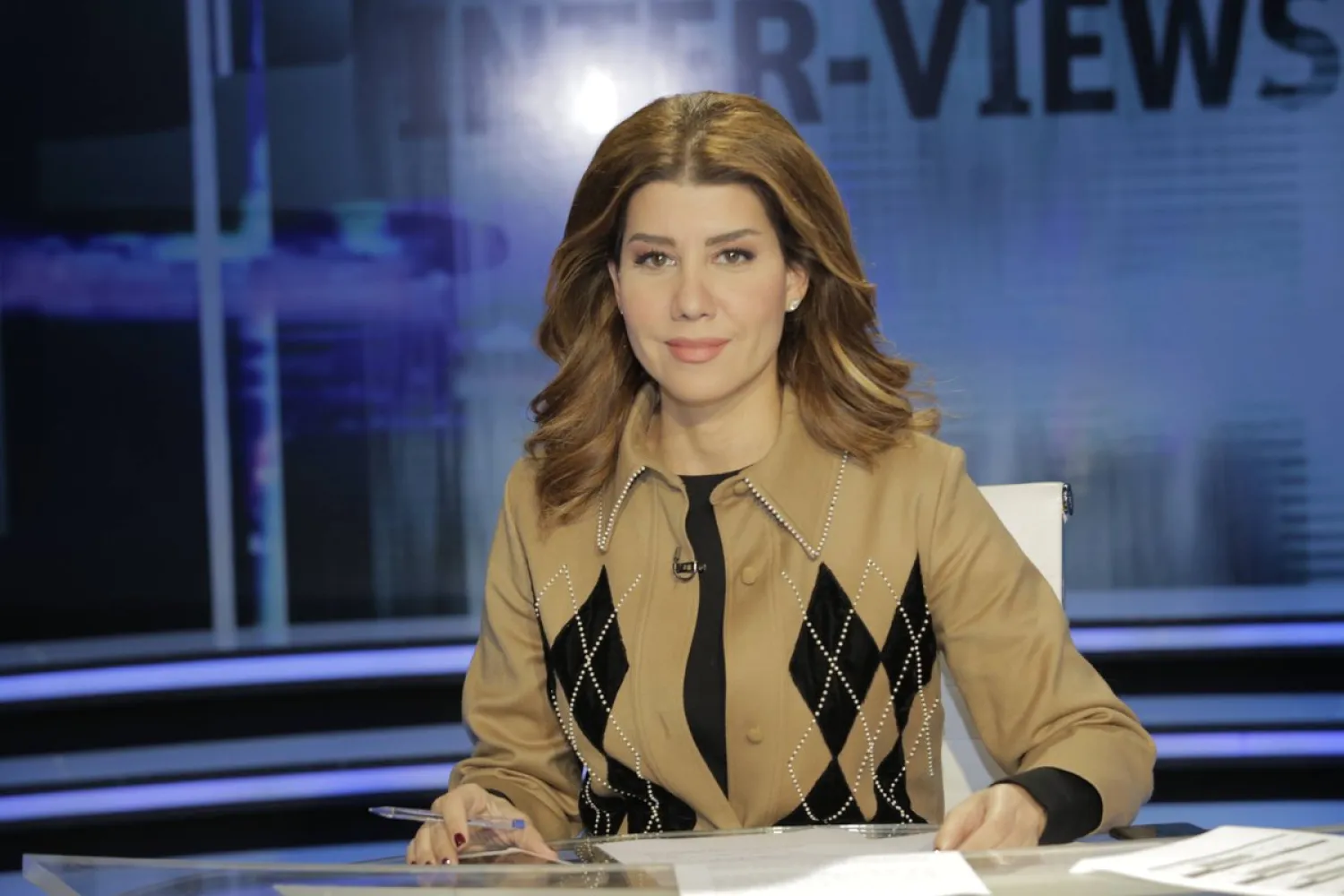
 Lebanon’s TV host and journalist Paula Yaacoubian (Photo taken from Paula Yaacoubian’s Twitter Account)
Lebanon’s TV host and journalist Paula Yaacoubian (Photo taken from Paula Yaacoubian’s Twitter Account)
TT

Lebanese Women Show Enthusiasm to Run for Parliamentary Elections

 Lebanon’s TV host and journalist Paula Yaacoubian (Photo taken from Paula Yaacoubian’s Twitter Account)
Lebanon’s TV host and journalist Paula Yaacoubian (Photo taken from Paula Yaacoubian’s Twitter Account)

Four months before the scheduled date of Lebanon’s parliamentary elections, the country is witnessing an unprecedented movement aimed at increasing the number of female representation in Parliament, which has been very shy since 1953, when women were granted the right to vote and to run for the elections.

Despite the fact that most of the Lebanese political parties have intended to drop the “women quota” from the new electoral law, whether because some considered it to be contrary to the principle of equality or have clearly expressed their rejection of women reaching parliament, the number of women wishing to run for the elections rose significantly this year, especially since the new proportional law, according to electoral experts, increases the chances of women to win parliamentary seats.

Women’s councils and organizations have worked hard to push for the inclusion of a “women's quota” in the new electoral law voted last summer. However, lack of an agreement to pass this quota as the result of some of undeclared “vetoes”, mainly by Hezbollah, have led to the failure of all efforts in this regard.

During a recent conference in Beirut entitled “Enhancing the Role of Political Parties in Promoting Women’s Representation in the 2018 Parliamentary Elections”, Rima Fakhri, a member of the Political Council of Hezbollah, explicitly declared that her party had reservations over a woman’s participation in the elections because “it will be at the expense of her family.”

State Minister for Women’s Affairs Jean Hogassapian said that the adoption of the current law (preferential vote) “has made the parties look for names capable of collecting the largest number of electoral votes, in order to guarantee the victory of the list as a whole.”

He noted, however, that the current law presented a better opportunity for women wishing to run outside the party framework, since it was based on the proportional system.

After announcing her resignation on Wednesday as host of “Inter-views” on Lebanese broadcast channel Future TV, journalist Paula Yacoubian revealed that she would run for the upcoming parliamentary elections in Beirut’s first electoral district, on the “civil society list.”

In remarks to Asharq Al-Awsat, Yaacoubian said: “We are working on a large electoral project and we are waiting to inform people about it before talking about any chances of winning or losing.”

Mirna al-Boustani was the first woman to break the wall of the Lebanese parliament under the term of late President Fouad Shehab in 1963. Since that date, women have remained outside the parliament until the 1992 elections, but their presence was very shy in all successive parliaments and governments.


Death Toll in Attack in Syria's Latakia Rises to 4, 108 Injured

Syrian security forces are deployed in the city of Latakia, Syria, 28 December 2025. (EPA)
TT

Death Toll in Attack in Syria's Latakia Rises to 4, 108 Injured

Syrian security forces are deployed in the city of Latakia, Syria, 28 December 2025. (EPA)

Authorities in Syria's Latakia province announced on Monday that the death toll has risen to four from the armed attack carried out by remnants of the ousted regime on Sunday.

It added that 108 people were injured in the violence.

The Syrian Defense Ministry announced on Sunday the deployment of military forces in the coastal cities of Latakia and Tartus in wake of the attack against security forces and civilians during protests.

State television said a member of the security forces was killed and others were injured while they were protecting protests in Latakia.

Head of the security forces in the Latakia province Abdulaziz al-Ahmed said the attack was carried out by terrorist members of the former regime.

Al-Ahmed added that masked gunmen were spotted at the protests and they were identified as members of Coastal Shield Brigade and Al-Jawad Brigade terrorist groups, reported the official SANA news agency.


Syria Secures Assad-Era Mass Grave Revealed by Reuters and Opens Criminal Investigation

A drone view of the mass grave site in the desert near the eastern Syrian town of Dhumair, February 27, 2025. (Reuters)
TT

Syria Secures Assad-Era Mass Grave Revealed by Reuters and Opens Criminal Investigation

A drone view of the mass grave site in the desert near the eastern Syrian town of Dhumair, February 27, 2025. (Reuters)

Syria’s government has ordered soldiers to guard a mass grave created to conceal atrocities under Bashar al-Assad and has opened a criminal investigation, following a Reuters report that revealed a yearslong conspiracy by the fallen dictatorship to hide thousands of bodies on the remote ​desert site.

The site, in the Dhumair desert east of Damascus, was used during Assad’s rule as a military weapons depot, according to a former Syrian army officer with knowledge of the operation.

It was later emptied of personnel in 2018 to ensure secrecy for a plot that involved unearthing the bodies of thousands of victims of the dictatorship buried in a mass grave on the outskirts of Damascus and trucking them an hour’s drive away to Dhumair.

The plot, orchestrated by the dictator’s inner circle, was called “Operation Move Earth.”

Soldiers are stationed at the Dhumair site again, this time by the government that overthrew Assad.

The Dhumair military installation was also reactivated as a barracks and arms depot in November, after seven years of disuse, according to an army officer posted there in early December, a military official and Sheikh Abu Omar Tawwaq, who is the security chief of Dhumair.

The Dhumair site ‌was completely unprotected over ‌the summer, when Reuters journalists made repeated visits after discovering the existence of a mass grave ‌there.

Within ⁠weeks ​of the ‌report in October, the new government created a checkpoint at the entrance to the military installation where the site lies, according to a soldier stationed there who spoke to Reuters in mid-December. Visitors to the site now need access permits from the Defense Ministry.

Satellite images reviewed by Reuters since late November show new vehicle activity around the main base area.

The military official, who spoke on condition of anonymity, said the reactivation of the base is part of efforts to “secure control over the country and prevent hostile parties from exploiting this open strategic area.” The road through the desert connects one of ISIS’ remaining Syrian strongholds with Damascus.

POLICE INVESTIGATION

In November, police opened an investigation into the grave, photographing it, carrying out land surveys and interviewing witnesses, according to Jalal Tabash, head of the ⁠al-Dhumair police station. Among those interviewed by police was Ahmed Ghazal, a key source for the Reuters investigation that exposed the mass grave.

“I told them all the details I told you about the ‌operation and what I witnessed during those years,” said Ghazal, a mechanic who repaired trucks ‍carrying bodies that broke down at the Dhumair grave site.

Ghazal confirmed ‍that during the time of “Operation Move Earth,” the military installation appeared vacant except for the soldiers involved in accompanying the convoys.

Syria’s Information Ministry ‍did not respond to requests for comment about the re-activation of the base or the investigation into the mass grave.

The National Commission for Missing Persons, which was established after Assad’s ouster to investigate the fate of tens of thousands of Syrians who vanished under his rule, told Reuters it is in the process of training personnel and creating laboratories in order to meet international standards for mass grave exhumations.

Exhumations at Syria’s many Assad-era mass graves, including the site at Dhumair, are scheduled for ​2027, the commission told Reuters.

The police have referred their report on Dhumair to the Adra district attorney, Judge Zaman al-Abdullah.

Al-Abdullah told Reuters that information about Assad-era suspects involved in the Dhumair operation, both inside and outside Syria, is being cross-referenced ⁠with documents obtained by security branches after the dictator’s fall in December 2024. He would not describe the suspects, citing the ongoing investigation.

According to military documents reviewed by Reuters and testimony from civilian and military sources, logistics for “Operation Move Earth” were handled by a key man, Col. Mazen Ismander.

Contacted through an intermediary, Ismander declined to comment on the initial Reuters report or the new investigation into the mass grave.

When the conspiracy was hatched in 2018, Assad was verging on victory in the civil war and hoped to reclaim legitimacy in the international community after years of sanctions and allegations of brutality.

He had been accused of detaining and killing Syrians by the thousands, and the location of a mass grave in the Town of Qutayfah, outside Damascus, had been reported by local human rights activists.

So an order came from the presidential palace: Excavate Qutayfah and hide the bodies on the military installation in the Dhumair desert.

For four nights a week for nearly two years, from 2019 to 2021, Ismander oversaw the operation, Reuters found . Trucks hauled corpses and dirt from the exposed mass grave to the vacated military installation in the desert, where trenches were filled with bodies as the Qutayfah site was excavated.

In revealing the conspiracy, Reuters spoke to 13 people with direct ‌knowledge of the two-year effort and analyzed more than 500 satellite images of both mass graves.

Under the guidance of forensic geologists, Reuters used aerial drone photography to create high-resolution composite images that helped corroborate the transfer of bodies by showing
color changes in the disturbed soil around Dhumair’s burial trenches.


Will STC Keep its Gains in Yemen or Prepare for a Major Confrontation?

A supporter of the Southern Transitional Council (STC) stands in the back of a pickup truck in the Khor Maksar district of the second city of Aden on August 29, 2019. (AFP file)
TT

Will STC Keep its Gains in Yemen or Prepare for a Major Confrontation?

A supporter of the Southern Transitional Council (STC) stands in the back of a pickup truck in the Khor Maksar district of the second city of Aden on August 29, 2019. (AFP file)

Yemen's eastern provinces of Hadhramaut and Al-Mahra are passing through a critical phase amid the unprecedented unilateral military escalation carried out by the Southern Transitional Council (STC) that has been met with widespread regional and international condemnation.

Observers have said the STC cannot be allowed to impose a new status quo through the use of force no matter its justifications or claims.

They said the situation is not a passing development that can be ignored by the Saudi-led Arab coalition to restore legitimacy in Yemen and its supporters. Rather, this is a multifaceted political and security test where southern interests, the war against the Houthis and regional peace collide.

At the moment, the STC is opting to maneuver under pressure instead of leading the challenge head-on. In its recent statements, the council has resorted to political claims to justify its actions on the ground, speaking of "coordination" and "understanding concerns", reflecting a growing realization that its room to maneuver is shrinking and that it must take the right decision.

Saudi Arabia has made clear warnings over the situation, starting with a political warning, followed by an airstrike on Hadhramaut. The stern response means that a firm decision has been taken to prevent Hadhramaut and Al-Mahra from being dragged into an internal conflict or becoming an arena where agendas are imposed by force.

The STC is aware that ignoring the warnings puts it in a direct confrontation with a regional heavyweight - Saudi Arabia. The council does not have the political or military means to come out on top, so it has been advised to seriously deal with the warnings and avoid resorting to stalling tactics if it is considering taking the option of minimal losses to the gains it has amassed over the years.

Failing to heed the warning will mean it will have to come to heel through force, which will end in its major defeat.

The observers said the STC has landed itself in an unprecedented crisis. The council has justified its unilateral military actions as aimed at "protecting the southern cause" and that it was meeting the demands of the people. It also claimed that it sought to block Houthi smuggling routes and fight terrorist groups.

Despite everything, it is not too late for the STC to salvage the situation, as stated by Saudi Defense Minister Prince Khalid bin Salman on Saturday. The STC can still end the crisis while taking minimal losses by immediately withdrawing its forces from Hadhramaut and Al-Mahra.

Should it stand its ground, the STC does not have the means to consolidate its presence in the two provinces, especially amid wide popular opposition, notably in Hadhramaut. Moreover, the STC lacks regional cover and international support that is a main condition for creating any security changes in critical areas.

So, it would seem that the best and easiest scenario would be for the STC to withdraw its forces, under such pretexts of "redeployment" or "security arrangements", to minimize its political losses, said the observers.

Should it ignore the warnings and choose to continue to escalate the situation, then the STC will lose its partnership with the legitimate Yemeni authorities, transforming into an obstacle in efforts to restore stability in the country. International sanctions may even be imposed on its leaders.

On the military level, the Arab coalition was clear in stating that it will not allow a new status quo to be imposed by force in eastern Yemen. Any escalation may be met with direct deterrence, meaning casualties on the ground that the STC cannot justify.

On the ground, the STC does not enjoy the support of the people in Hadhramaut and Al-Mahra and the continued escalation will deepen opposition to it in the south. The southern cause will transform from an issue that enjoys consensus to one that causes division.