
Tesla's CEO Could become One of the Richest People Worldwide

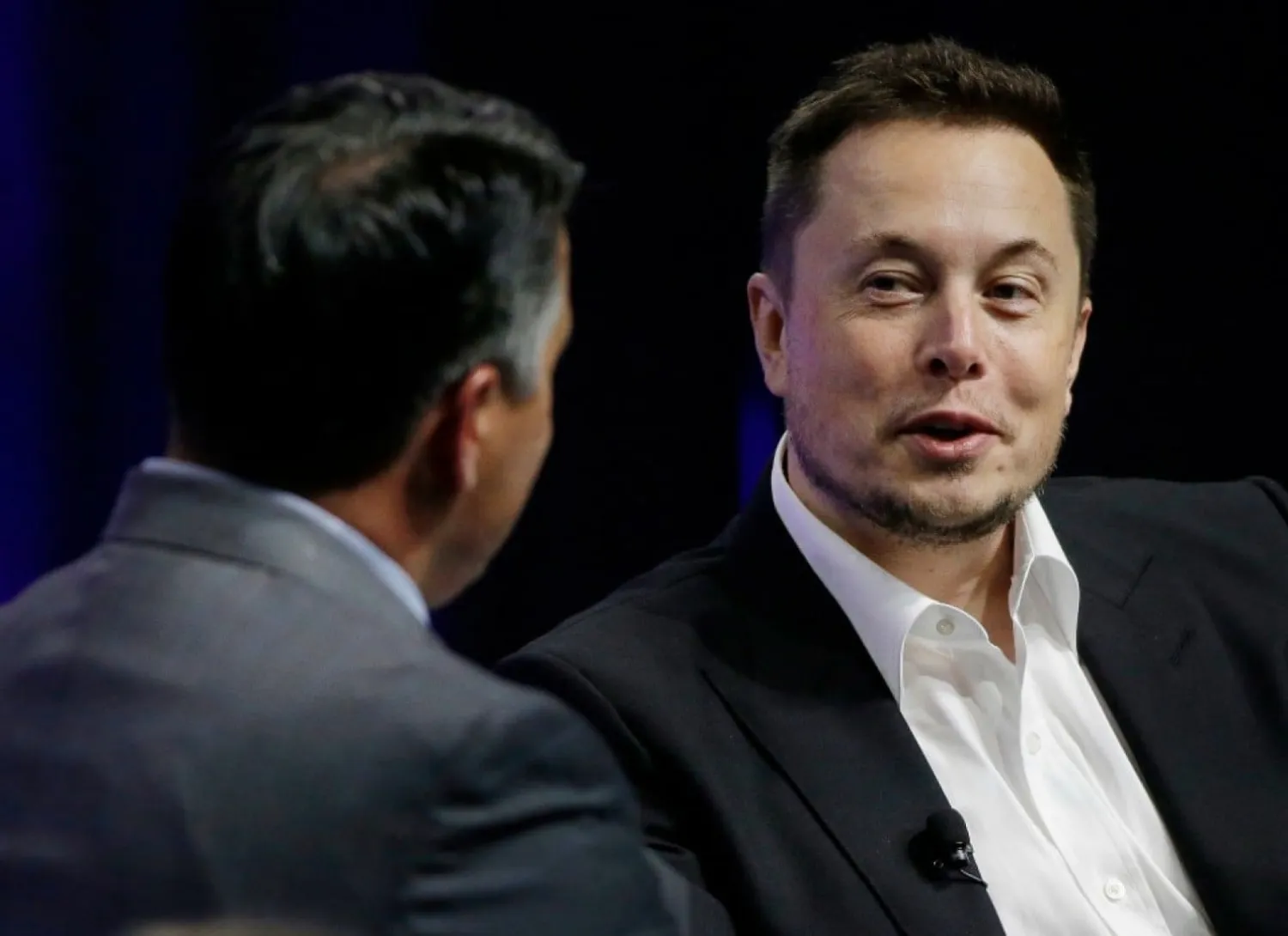
 Tesla CEO Elon Musk's new unconventional 10-year compensation package would pay him based on a market cap target and operational milestones. If he doesn't hit them, he gets nothing. (Stephan Savoia/AP Photo)
Tesla CEO Elon Musk's new unconventional 10-year compensation package would pay him based on a market cap target and operational milestones. If he doesn't hit them, he gets nothing. (Stephan Savoia/AP Photo)
TT

Tesla's CEO Could become One of the Richest People Worldwide

 Tesla CEO Elon Musk's new unconventional 10-year compensation package would pay him based on a market cap target and operational milestones. If he doesn't hit them, he gets nothing. (Stephan Savoia/AP Photo)
Tesla CEO Elon Musk's new unconventional 10-year compensation package would pay him based on a market cap target and operational milestones. If he doesn't hit them, he gets nothing. (Stephan Savoia/AP Photo)

Tesla outlined a potentially massive -- and massively unconventional -- compensation plan for its unorthodox CEO on Tuesday, setting a series of ambitious growth targets that, if various conditions are met, could theoretically net Elon Musk as much as $55.8 billion over the next decade, launching him to the top of rankings of the world's richest people and dwarfing the size of past CEO stock and options grants.

The unusual package is based entirely on performance, guaranteeing no salary and no bonus, and requires Musk to reach aggressive market capitalization and financial goals in order to be paid. He would also have to hold onto his shares for five years after he receives them before selling, a rare stipulation that's viewed as particularly shareholder-friendly.

Yet compensation experts said the biggest message Musk's new pay plan may be designed to send is not just that Tesla intends to take an unusually performance-driven approach to paying its CEO. It's that the company has galaxy-size ambitions for its growth and aims to rival the planet's largest tech companies over the next decade. Musk would only receive the full payout if the company reaches a market capitalization of $650 billion, a more than ten-fold increase over its current $59 billion market cap, a future valuation that clocks in just under the size of Microsoft's value today.

Dan Marcec, director of content for the executive compensation and governance research firm Equilar, said the primary purpose of the plan's design may not be solely to tell investors how Tesla plans to pay its CEO.

"The message is we're really aggressive with our goals and we want to make it to the level of Facebook and Microsoft and Google and Apple with our market size," he said.

Alan Johnson, an executive pay consultant based in New York, also said the plan's design -- and Musks's continued involvement -- could be a message to those concerned the electric car maker has set "audacious" production goals it doesn't meet.

"Maybe the main purpose, or a big purpose, is to say 'we're going to grow into an adult company that makes a lot of money and [Musk] is going to be here," Johnson said. "He's not going to be off doing five other things.' "

Tesla, which declined to comment beyond its news release and regulatory documents, said in a filing that "our aspirations may appear ambitious to some, and impossible to others, and that is by design. We like setting challenging, hard-to-achieve goals for ourselves, and then focusing our efforts to make them happen. This is why we based this new award on stretch goals and why we gave Elon the ability to share in the upside in a way that is commensurate with the difficulty of achieving them."

The news arrives while Tesla remains in the throes of "production hell," a phrase Musk used last summer to describe the months-long manufacturing crucible that would result in the creation of hundreds of thousands of Model 3s — the company's first mass-market vehicle.

Nearly six months later, the company has yet to emerge at the other end, the result of "robot calibration issues" at the Fremont, Calif., auto assembly plant and other challenges at Tesla's "Gigafactory" battery plant in Nevada.

Those issues have dramatically delayed the Model 3 rollout, so much so that even ardent fans of the company have begun to wonder about Tesla's long-term viability and Musk's ability to set realistic goals. For months last year, Musk said he expected Tesla to produce 5,000 Model 3s a week by the end of 2017, a deadline he later pushed back to March. The company has now pushed that number back to June.

In the filing, board members also acknowledged that it is their "strong belief that the best outcome for our stockholders is for Elon to continue leading the company over the long-term," addressing open speculation from some investors that Musk, who also runs Space Exploration Technologies Corp. and is known for his eclectic endeavors, might not lead Tesla for the long haul. To remain eligible for the pay plan, the filing states, Musk must continue as Tesla’s CEO or serve as both executive chairman and chief product officer "with all leadership ultimately reporting to him," the filing says, though it offers the option of bringing in a CEO who would report to Musk.

Musk has vast personal wealth. Last year, according to Forbes, Musks's net worth passed $20 billion for the first time, helped by the rising value of SpaceX, of which he owns more than half.

Musk would also need to meet a series of revenue and earnings goals, as well as a staggering growth in market capitalization, in order to get paid. The plan offers no guaranteed cash or equity payouts just by staying in the job; instead, he will receive a 10-year grant of stock options that vests in 12 installments. (A Tesla filing says Musk is subject to minimum wage requirements under California law but has never and does not accepted his salary.) To receive the first one, he will have to increase the company's market cap to $100 billion and meet one of the operational goals; for each additional "tranche" of options, Tesla's market cap must increase by an additional $50 billion increment and he must meet another of the financial targets.

If Musk meets all of the goals, doesn't sell any of his shares and Tesla does not issue any more shares that would dilute the share price -- something Johnson called "impossible" -- Musk's total haul could be worth $55.8 billion, according to a company filing. Yet Tesla called that figure "theoretical," as future dilution over time is a "certainty," whether because it issues more shares or due to mergers or acquisitions.

Still, meeting even some of the goals could mean a massive payout for Musk. And even at the amount Tesla valued its options grant today -- $2.6 billion -- other large recent CEO awards look diminutive in comparison. Musk's grant is far larger than the $376 million long-term equity grant awarded to Apple CEO Tim Cook in 2011, or the $91 million options grant that former Expedia (and current Uber) CEO Dara Khosrowshahi received in 2015.

A notable difference, however, is that those stock or options grants were not all tied to meeting performance targets, as is the case with Musk's.

"We rarely, if ever, see 100 percent performance-based compensation," Equilar's Marcec said. While companies have been linking more and more of executives' pay to how well they perform, just under 54 percent of the average compensation package is tied to performance, well under the 100 percent in Musk's new plan.

The new plan mirrors a grant Tesla gave Musk in 2012, albeit at a much larger scale, which also put 100 percent of his pay at risk. One key difference, however, is that Musk won't immediately be able to sell his shares once he vests in them. Rather, he'll have to wait five years, which should help prevent any efforts to make short-term boosts to the stock price.

"His holding period clearly links his personal wealth to the company's long-term success, which is what shareholders want to see," said Rosanna Landis Weaver, an executive compensation expert for the nonprofit As You Sow.

Though she questions the massive size of the grant, the way it's designed is a good sign, she says: "I wish more executives were paid in this fashion."

The Washington Post


Abu Dhabi Ports Signs MoU to Develop, Operate Shuaiba Container Terminal in Kuwait

Containers are seen at Abu Dhabi's Khalifa Port, UAE, December 11, 2019. REUTERS/Satish Kumar
TT

Abu Dhabi Ports Signs MoU to Develop, Operate Shuaiba Container Terminal in Kuwait

Containers are seen at Abu Dhabi's Khalifa Port, UAE, December 11, 2019. REUTERS/Satish Kumar

Kuwait Ports Authority (KPA) said on Monday it had signed a memorandum of understanding with Abu Dhabi Ports Group to develop and operate the container terminal at Kuwait’s Shuaiba port under a concession agreement.

Shuaiba port, established in the 1960s, is Kuwait’s oldest port. It covers a total area of 2.2 million square metres (543.63 acres) and has 20 berths, while the container terminal has a storage area of 318,000 sqare metres, according to KPA’s website.

The port, located about 60 km (37.3 miles) south of the capital, handles commercial cargo, heavy equipment, raw materials and chemicals essential to various industries.

The MoU represents “the first preliminary step” toward concluding a concession contract, subject to the completion of required studies, KPA said in a statement without disclosing the value of the deal, Reuters reported.

Under the agreement, Abu Dhabi Ports Group will prepare the technical, environmental and financial studies needed for the project, including infrastructure requirements.


Iran’s Rial Currency Plummets to New Low, Sparking Fears of Higher Food Prices

An Iranian trader counts money in Tehran's Grand Bazaar. (Reuters)
TT

Iran’s Rial Currency Plummets to New Low, Sparking Fears of Higher Food Prices

An Iranian trader counts money in Tehran's Grand Bazaar. (Reuters)

Iran’s rial slid further Monday to a new record low of more than 1.3 million to the US dollar, deepening the currency’s collapse less than two weeks after it first breached the 1.2-million mark amid sanctions pressure and regional tensions.

Currency traders in Tehran quoted the dollar above 1.3 million rials, underscoring the speed of the decline since Dec. 3, when the rial hit what was then a historic low.

The rapid depreciation is compounding inflationary pressures, pushing up prices for food and other daily necessities and further straining household budgets, a trend that could be intensified by a gasoline price change introduced in recent days.

Iran on Saturday added a third gasoline price tier, raising the cost of full bought beyond monthly quotes at 50,000 rials (4 US cents). It is the first major adjustment to fuel pricing since a price hike in 2019 that sparked nationwide protests and a crackdown that reportedly killed over 300 people.

Under the revised system, motorists continue to receive 60 liters a month at the subsidized rate of 15,000 rials per liter and another 100 liters at 30,000 rials, but any additional purchases now cost more than three times the original subsidized price. While gasoline in Iran remains among the cheapest in the world, economists warn the change could feed inflation at a time when the rapidly weakening rial is already pushing up the cost of food and other basic goods.

The fall comes as efforts to revive negotiations between Washington and Tehran over Iran’s nuclear program appear stalled, while uncertainty persists over the risk of renewed conflict following June’s 12-day war involving Iran and Israel. Many Iranians also fear the possibility of a broader confrontation that could draw in the United States, adding to market anxiety.

Iran’s economy has been battered for years by international sanctions, particularly after Donald Trump unilaterally withdrew the United States from Tehran’s nuclear deal with world powers in 2018. At the time the 2015 accord was implemented — which sharply curtailed Iran’s uranium enrichment and stockpiles in exchange for sanctions relief — the rial traded at about 32,000 to the dollar.

After Trump returned to the White House for a second term in January, his administration revived a “maximum pressure” campaign, expanding sanctions that target Iran’s financial sector and energy exports. Washington has again pursued firms involved in trading Iranian crude oil, including discounted sales to buyers in China, according to US statements.

Further pressure followed in late September, when the United Nations reimposed nuclear-related sanctions on Iran through what diplomats described as the “snapback” mechanism. Those measures once again froze Iranian assets abroad, halted arms transactions with Tehran and imposed penalties tied to Iran’s ballistic missile program.

Economists warn that the rial’s accelerating decline risks feeding a vicious cycle of higher prices and reduced purchasing power, particularly for staples such as meat and rice that are central to Iranian diets. For many Iranians, the latest record low reinforces concerns that relief remains distant as diplomacy falters and sanctions tighten.


Industry Minister Inaugurates Made in Saudi Expo 2025

Industry Minister Inaugurates Made in Saudi Expo 2025
TT

Industry Minister Inaugurates Made in Saudi Expo 2025

Industry Minister Inaugurates Made in Saudi Expo 2025

Saudi Minister of Industry and Mineral Resources Bandar Alkhorayef inaugurated the third Made in Saudi Expo 2025 at the Riyadh International Convention and Exhibition Center in Malham, organized by the Saudi Export Development Authority through the Made in Saudi Program, with Syria’s Minister of Economy and Industry Dr. Mohammad Nidal al-Shaar in attendance.

The Syrian Arab Republic has been invited as the Guest of Honor at the exhibition, which has attracted strong participation from public and private sector organizations, as well as leading national manufacturers and industry leaders, SPA reported.

In his opening remarks, Alkhorayef emphasized that the exhibition serves as a key platform for showcasing advancements in Saudi industry, the quality of its products, and their competitiveness in local and international markets. He added that it is also an important venue for establishing strategic partnerships that support the growth of national industries.

He pointed out that the Made in Saudi Program, launched in 2021 under the esteemed patronage of HRH the Crown Prince, reflects the Kingdom's ambition to become a leading industrial power. Achieving this goal involves building consumer trust in its products and services in both domestic and global markets by nurturing local talent and innovation, promoting national products, and strengthening companies’ capabilities to expand internationally.

He also highlighted that Saudi non-oil exports have achieved remarkable success, reaching SAR515 billion in 2024, with historic results in the first half of 2025, demonstrating the highest half-year value of SAR307 billion. These figures underscore the industry’s vital role in diversifying the national economy in line with the objectives of Saudi Vision 2030.

The opening ceremony also welcomed the Syrian Arab Republic as this year’s Guest of Honor, highlighting the participation of more than 25 Syrian companies to present opportunities for industrial cooperation and integration, reflecting the strong fraternal ties between the two nations.

Alongside the exhibition, over 25 workshops are being conducted, while more than 50 memoranda of understanding are set to be signed.