Nuri Sahin: ‘I Want to Give Back After Football and My Children to Be Proud’

Nuri Sahin (left) in action against Wolfsburg in the recent Bundesliga match. Dortmund are currently 17 points behind leaders Bayern in the Bundesliga. Photograph: Friedemann Vogel/EPA
TT

Nuri Sahin: ‘I Want to Give Back After Football and My Children to Be Proud’

Nuri Sahin (left) in action against Wolfsburg in the recent Bundesliga match. Dortmund are currently 17 points behind leaders Bayern in the Bundesliga. Photograph: Friedemann Vogel/EPA

We are back to where it started for Nuri Sahin – spiritually at least. As we settle into the common room at the top of the youth scholars’ boarding house at Borussia Dortmund’s training ground, on Big Brother-style soft furnishings between table football and a games console, the club’s press officer points out this sort of dedicated facility did not exist when the midfielder was a teenage aspirant. Sahin, from the age of 12, and the other scholars lived in a boarding house in the city center.

It was there he met and lived with Marcel Schmelzer, the club’s long‑serving left-back, “one of the best friends I ever had or ever will have.” For the first six months they did not get on. “I was already a professional and everybody’s darling,” says Sahin, smiling. “I didn’t go to school that much and he had to bring my homework home. The teachers asked him where I was and he always had to lie for me. He’d tell them I was at football when I was actually in bed resting for training.”

Last May Schmelzer caused a stir after Dortmund’s DfB Pokal final win over Eintracht Frankfurt, publicly rebuking the team’s then-coach for leaving Sahin out. “I never had a problem with Thomas Tuchel,” Sahin underlines, making clear he did not agitate for the departure of a man who ruffled feathers throughout the club in his two years at the helm.

The removal of Tuchel was just the tip of the iceberg in a turbulent 2017 for Dortmund, which incorporated the shocking attack on the team bus in April – which he understandably feels he is done with talking about – and ended with Peter Bosz’s short and ill-fated spell in charge. The Dutchman’s tenure had its silver lining for Sahin on a personal level – their paths had crossed when Bosz was the Feyenoord technical director and Sahin was on loan there as a teenager, and the Turkey midfielder was successfully restored to the BVB lineup – though he emphasises the end of a miserable spell of injuries has been key. “In the last eight months,” he says, “I’m the boss of my own body again.”

Despite this Sahin’s frustration that the club are not quite hitting the heights of his first spell, or indeed the run to the Champions League final in 2013, shortly after he returned from Real Madrid, is palpable. Things did not work out for Sahin in Spain: after one season on the bench under José Mourinho he left to join Liverpool for a season on loan, which lasted only five months before he was back at Dortmund in January 2013.

“The club grew up too much in the last 10 years to accept anything else,” he says, speaking with the insistence of a fan – because that is what he is. “There was no other choice,” he says. “It was always Dortmund.”

It was a commitment cemented when he impressed the club on trial as a seven-year-old, in the midst of Ottmar Hitzfeld’s glory era. On the night of the Champions League final in 1997 Sahin’s parents went out for his mother’s birthday dinner. Nuri and his brother Ufuk stayed at home and watched the game, transfixed.

Sixteen years later, the newly returned Sahin was on the bench at Wembley as BVB faced Bayern Munich. “I was sure we were going to win,” he says. “The only problem was that Bayern already lost two finals [recently] so, if there’s a football god, he was with Bayern.”

When the final whistle went, it all started to flood back. “I started to cry,” he says. “I don’t cry that much because of football but the movie of ’97 – me in the living room, with my brother, with our own Champions League trophy that we were holding in our hands – went through my mind. When we went up, I wondered if I should touch it but I thought no. Maybe God will give me another chance one day.”

The Europa League, with a tie against Atalanta on the horizon, remains a target under Peter Stöger but the aspirations from Jürgen Klopp’s era remain with Sahin. “He gave us the philosophy that we can beat anyone,” Sahin says. “I remember when we played at Bayern Munich [in February 2011] in the season we became champions. We were seven points in front of them and we were in the hotel saying: ‘OK, when we get a draw here, there are only a few more games to go.’ I don’t know how but he heard from someone that we were talking [like] this. He’s very smart, as you know … and then we had the most amazing meeting before the game. By the time we got on the bus I knew we’d win the game [Dortmund won 3-1].”

The pair remain close – as Klopp promised they would when he accepted Sahin’s decision to go to the Bernabéu after the 2011 Bundesliga win – and discuss a range of subjects beyond football, including Brexit. “I spoke with Jürgen about it,” he confides. “On the night [of the referendum] we were having dinner at his house in Dortmund. We spoke about how it will influence football, and transfers, and what it’ll do to the pound and the euro. I don’t know everything but I want to learn and to speak to experts to know more.”

That desire to see life in widescreen extends to thinking post-career, with Sahin booked on a sports management course at Harvard this summer. “I have big plans after football, to give back and to give my children something to be proud of. Not just to talk about how I used to be a football player.”

For now, at 29, he has plenty of that left, and recognizes his role in guiding the club’s younger talent, though he has no desire to lecture them. The burgeoning quality at the club excites him. “I wouldn’t buy a ticket to watch a player like me. I would always buy a ticket to watch Jadon Sancho beating two players.”

Whatever is next, Dortmund will remain his constant. “It’s a story I hope will never end, even after my career has finished,” he says. “Whether it’s as a player, coach, board member or even as a fan, I want to bring the Champions League back to this place. I just want to see what will happen on the streets because I saw it when we won the German Cup, and the Bundesliga, and it was crazy. It would be the last chapter I’m missing to write a book.”

(The Guardian)


Sinner’s Mastery Mindset Makes Him Man to Beat as Clay Swing Intensifies

Laureus World Sports Awards - Palacio de Cibeles, Madrid, Spain - April 20, 2026 Italy's Jannik Sinner poses on the red carpet ahead of the awards ceremony. (Reuters)
TT

Sinner’s Mastery Mindset Makes Him Man to Beat as Clay Swing Intensifies

Laureus World Sports Awards - Palacio de Cibeles, Madrid, Spain - April 20, 2026 Italy's Jannik Sinner poses on the red carpet ahead of the awards ceremony. (Reuters)

Jannik Sinner was once viewed as an explosive talent custom-built for hardcourt tennis but the four-times Grand Slam champion's assiduous work on his patience and control has made him the man to beat on clay heading into the French Open.

It had long been assumed that in his era-defining rivalry with Carlos Alcaraz, Sinner would scoop up more Grand Slam titles on faster surfaces while the Spaniard would have the edge on red dirt.

Alcaraz, who has won seven majors, remains a formidable claycourt player and is the reigning Roland Garros champion but lost to Sinner in the Monte Carlo final earlier this month. He then suffered a wrist injury in Barcelona that has disrupted his preparations for Paris.

Sinner's progression will continue this week ‌in Madrid, which ‌is at a higher altitude than the other European clay venues ‌and ⁠quickens the pace ⁠of the surface, offering another opportunity for the 24-year-old to showcase his adaptability.

"Here it's a very unique playing style," Sinner said.

"It's a very high altitude and it can be windy at times, so it's very difficult to play. But I think every different kind of claycourt can help me as I'm trying to improve as a player."

Results at the big tournaments seemingly offer little to choose between Sinner and Alcaraz over the last couple of years but former player and sports psychologist Jeff Greenwald believes he has identified some ⁠subtle differences emerging.

"Sinner, even more than Alcaraz, has this unflappable demeanor that ‌is built from this deep love and appreciation of the process," ‌Greenwald told Reuters.

"He's the poster child for mastery, a desire to be as good as he can be, ‌which overrides the ever fluctuating, short-term obsession with this point, this win, that is almost always ‌trading the short-term result for longer-term success."

DECISIVE ADVANTAGES

That focus on mastery over moments has steadily reshaped Sinner's approach on clay, where his tactical discipline and ability to handle uncertainty are standing out as decisive advantages ahead of the French Open, which begins on May 24.

Sinner's mental strength could be tested in a different way as he confronts ‌the weight of expectation that comes with being seen by many as the favorite rather than the challenger over the next few weeks.

Greenwald said ⁠expectations were the most ⁠natural, yet potentially damaging, distractions for even great players.

"They try to not get preoccupied by them with the 'process mindset' as best they can but most of the players are vulnerable to this reality, given that their livelihoods are on the line," he added.

"This is where Sinner has an advantage ... he didn't develop this (mindset) after becoming successful. It was baked into his training and development. So whether he's labelled a favorite by the media and other players, this will not affect him.

"More than anything, it'll only solidify the confidence, remarkable resilience and joy he brings to every match."

If Alcaraz is fit to play, the French Open could prove a major mental test for Sinner after he lost to his great rival in last year's epic title clash.

However, with the career Grand Slam on the line for the Italian, he wants Alcaraz to be on the other side of the net at Roland Garros.

"When you want to win, you want to do it by beating the best and he's among them," Sinner said.


Mexico to Beef Up Security at Tourist Sites after Shooting at Pyramids in Lead Up to World Cup

National Guard troops patrol the Teotihuacan pyramids, which remained closed a day after a gunman opened fire on tourists at the archaeological site outside Mexico City, Tuesday, April 21, 2026. (AP Photo/Marco Ugarte)
TT

Mexico to Beef Up Security at Tourist Sites after Shooting at Pyramids in Lead Up to World Cup

National Guard troops patrol the Teotihuacan pyramids, which remained closed a day after a gunman opened fire on tourists at the archaeological site outside Mexico City, Tuesday, April 21, 2026. (AP Photo/Marco Ugarte)

Mexico’s government said it was beefing up security at tourist sites after a man opened fire on tourists at pyramids outside of Mexico City less than two months before the FIFA World Cup.

The Monday shooting, carried out by a lone gunman on top of one of the Teotihuacan pyramids — a UNESCO Heritage Site and one of Mexico's most frequented tourist attractions — killed one Canadian tourist and injured a dozen more.

It also set off a flurry of questions the next morning by reporters to Mexican President Claudia Sheinbaum about what security protocols her government was taking ahead of the sports competition, which Mexico will jointly host with the United States and Canada over the summer.

About an hour from Mexico City, Teotihuacan was slated to be a key site for visitors during the festivities. Just days before the shooting, local lawmakers even pushed forward an initiative to revive a nighttime interactive light show projected on the pyramids for World Cup visitors, which was previous suspended at the beginning of the COVID-19 pandemic.

The unexpected act of violence comes as Sheinbaum's government has gone to great lengths to project an image of safety ahead of the soccer competition, following a surge of cartel violence February in the World Cup host city of Guadalajara.

"Events like this only further magnify the negative images that Mexico has on security issues, undermining the narrative that President Sheinbaum is trying to build that Mexico is a safe country," The Associated Press quoted Mexican security analyst David Saucedo as saying.

On Tuesday, Sheinbaum acknowledged that the archaeological site lacked security filters to prevent the attack in part, she said, because the shooting “was an isolated incident" that hasn't occurred before in such a public space.

While Mexico suffers from cartel violence, especially in strategic and rural areas, mass shootings in public spaces are rare in Mexico compared to the US, where it is much easier to legally obtain a gun.

She noted that the shooter appeared to be motivated by “outside influences," particularly the 1999 Columbine massacre in Colorado.

“Our obligation as a government is to take the appropriate measures to ensure that a situation like this does not happen again. But clearly, we all know — Mexicans know — that this is something that had not previously taken place,” Sheinbaum said Tuesday morning.

Mexican Security Secretary Omar García Harfuch, the face of the government's crackdown on cartels, said on Tuesday that security forces had been ordered to “immediately strengthen security" at archaeological sites and major tourist destinations across the country.

He said the government will increase the presence of Mexican National Guard, boost security checks at key sites and fortify surveillance systems to “identify and prevent any threats” against citizens and visitors.

The announcement was an effort by Mexican authorities to assuage ongoing concerns about violence in Mexico ahead of the tournament.

Sheinbaum's government has touted security successes under her leadership. Homicides have dipped sharply since she taken office to the lowest levels in a decade, government figures show. The government has also taken out a number of top capos and highlighted a dip in fentanyl seizures at the US-Mexico border.

But they have hit hurdles in recent months, namely a burst a violence in Guadalajara in February, triggered by the killing of Mexico’s most powerful cartel boss. The bloodshed was met with a wave of concern by people in and outside of Mexico.

Sheinbaum vowed there would be “no risk” for fans coming to the tournament and FIFA president Gianni Infantino said he had “full confidence” in Mexico as a host country.

Sheinbaum later met with FIFA representatives to assess security for the World Cup matches to be played in Mexico.

Mexico’s government doubled down on security measures, which include deploying 100,000 security forces across the country, particularly concentrated in the country’s three host cities, Mexico City, Guadalajara and Monterrey.

Officials said it would deploy more than 2,000 military vehicles, as well as dozens of air crafts and drones, and establish security perimeters around areas like stadiums and airports in key cities.

"As you can see, we are very prepared for the World Cup," Sheinbaum said in early March.

Despite the rare nature of the Monday shooting at the pyramids, the extreme act of violence reignited scrutiny by some about the government's capacity to prevent violence during the soccer tournament, and once again boosted pressures on the government.

FIFA was approached for comment about the pyramid shooting, but the soccer body typically does not address security issues and incidents that happen away from tournament venues.

Saucedo, the security analyst, said that pressures to concentrate security in host cities and tourist areas like Teotihuacan may come at the expense of other more crime-torn areas in greater need of police and military.

"Events like the one that took place yesterday in Teotihuacan clearly show that public safety agencies are overwhelmed," he said.


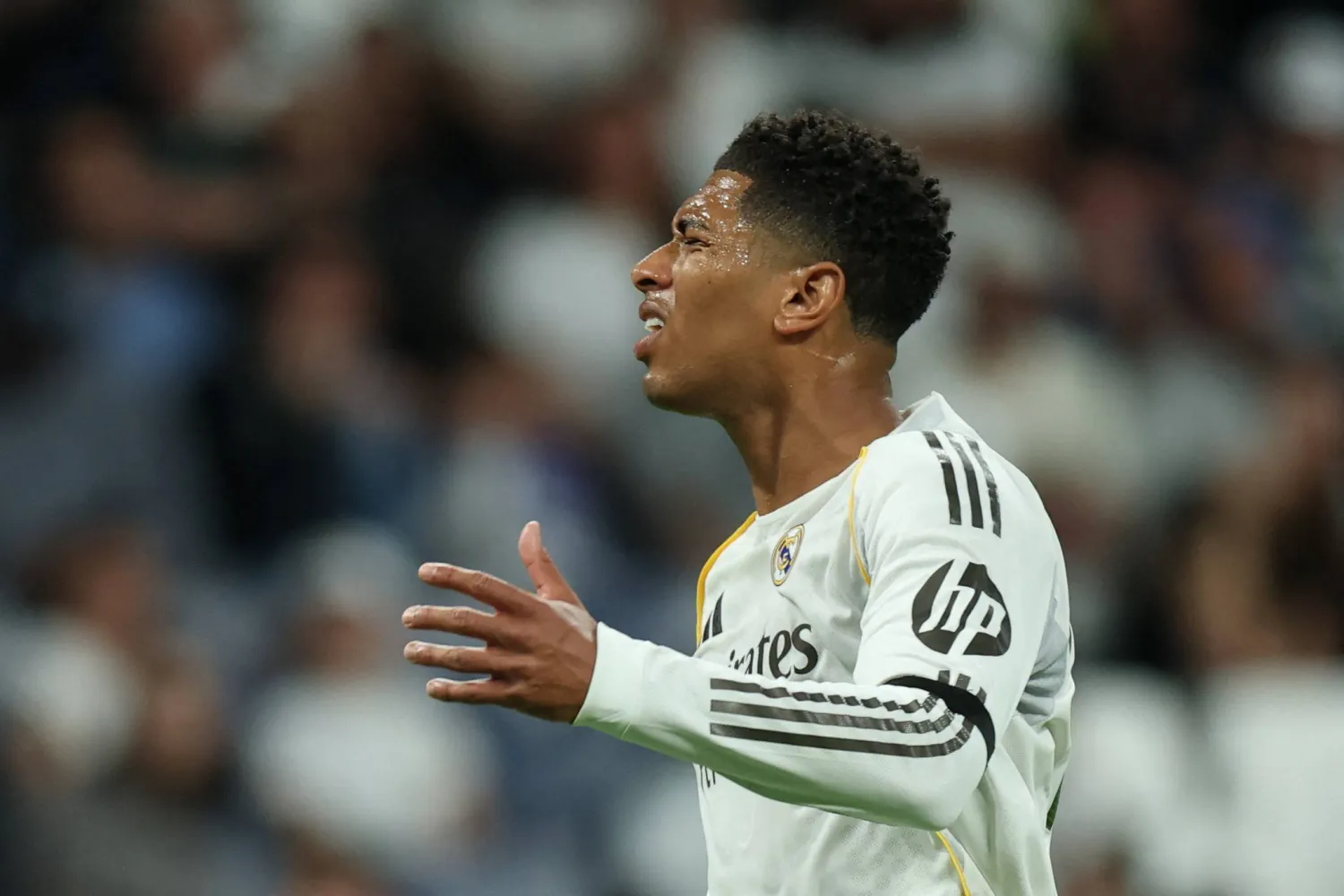
Bellingham Buys Minority Stakes in the Hundred Franchise Birmingham Phoenix

Soccer Football - LaLiga - Real Madrid v Deportivo Alaves - Santiago Bernabeu, Madrid, Spain - April 21, 2026 Real Madrid's Jude Bellingham reacts. (Reuters)
TT

Bellingham Buys Minority Stakes in the Hundred Franchise Birmingham Phoenix

Soccer Football - LaLiga - Real Madrid v Deportivo Alaves - Santiago Bernabeu, Madrid, Spain - April 21, 2026 Real Madrid's Jude Bellingham reacts. (Reuters)

England ‌international Jude Bellingham has acquired a minority stake in The Hundred franchise Birmingham Phoenix, co-owners Warwickshire County Cricket Club said on Wednesday.

The Real Madrid midfielder will take a 1.2% holding and will focus ‌mainly on ‌community engagement and ‌social ⁠projects. Warwickshire will ⁠remain the majority stakeholder with 50.4% shares, and Knighthead Capital Management will hold 48.4%.

"I feel like I owe the ⁠city something," the 22-year-old ‌said ‌in a statement.

"I was fortunate ‌growing up I had ‌the option of playing cricket and playing football, but some kids don’t have that ‌opportunity. It’s important that if I can get ⁠involved ⁠in something like this to shine a light on an opportunity for kids, then even better."

The sixth season of the tournament, which uses a 100-ball format, runs from July 21 to August 16.