


Prosecution Demands Maximum Penalty for Saudi Supporting Terrorist Group

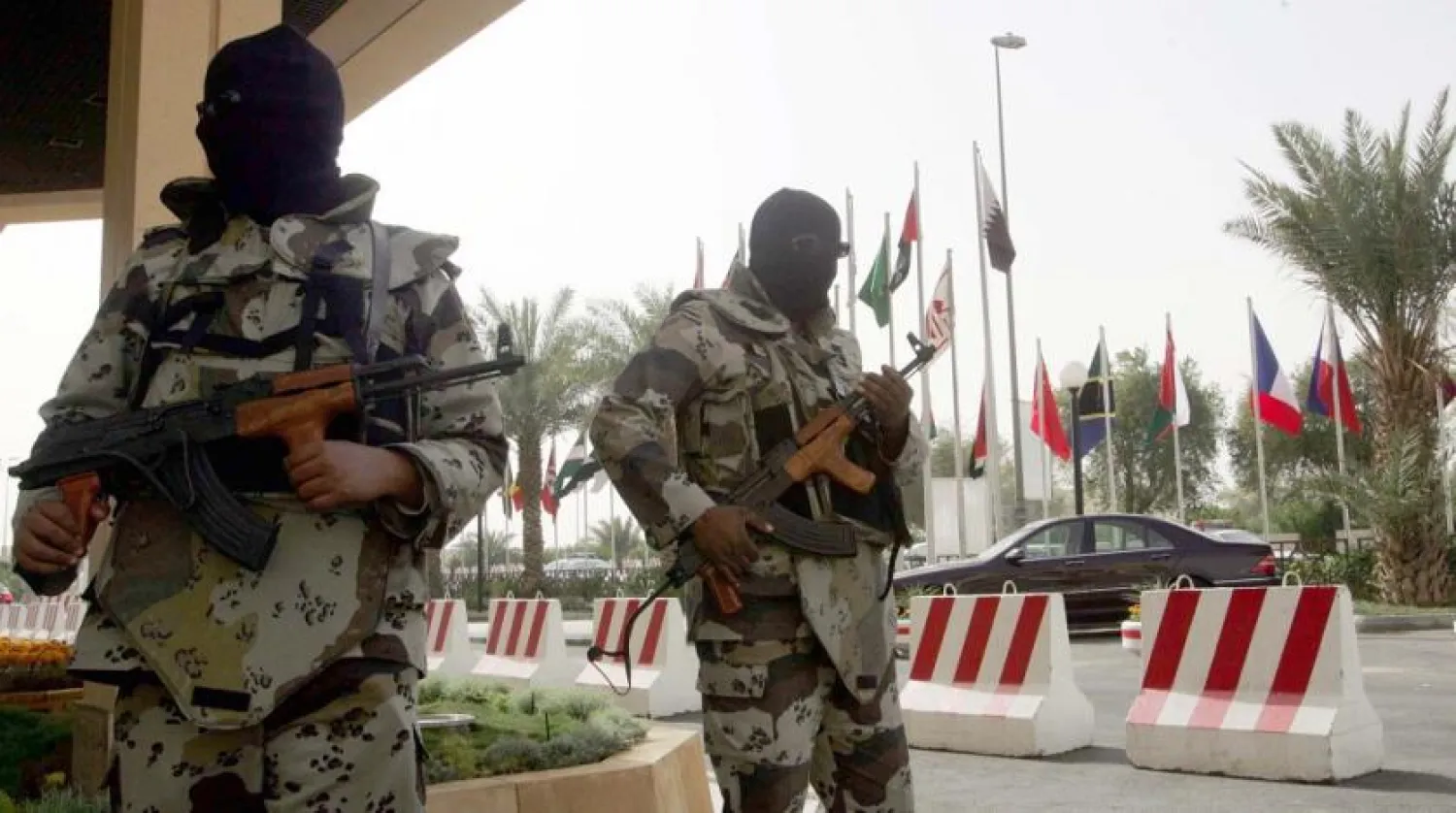
Saudi security forces in Riyadh. (Reuters)
TT

Prosecution Demands Maximum Penalty for Saudi Supporting Terrorist Group

Saudi security forces in Riyadh. (Reuters)

Specialized Criminal Court in Saudi Arabia began its first session of the trial of a Saudi citizen accused of allegiance to a hostile foreign state and speaking offensively about the Kingdom.

Saudi Public Prosecution accused him of belonging to the Lebanese Hezbollah, supporting the party and showing his affection for its leader, Hassan Nasrallah. This act is considered criminal and punishable by Saudi law under a royal order issued five years ago.

The Saudi citizen is accused of financing terrorism, as the Public Prosecutor proved that he donated over $50,000 to support Lebanese Hezbollah, as well as $13,000 to support the suspended Bahraini al-Wefaq association. He also handed a similar amount to support the office of Khomeini, founder of Iranian Revolution, at the request of a person.

The indictment also revealed that he participated in raising funds and distributing them in Saudi Arabia and sending most of them abroad to members who show hostility to the country, in violation of Saudi regulations and laws.

The prosecution also accused the Saudi of threatening an official in the city of Tarot in al-Qatif province, east Saudi Arabia, with messages sent via WhatsApp application. He also threatened the same official once.

The convict was also charged with having a collection of pictures and video clips of Hezbollah's leader on his cellphone. His mobile also contained an image of a wanted convict who was later killed during a clash with the security forces.

In addition, he was accused of participating in marches and banned demonstrations demanding the release of prisoners in security cases, demanding what the demonstrators claim to be their rights and repeating slogans against the state.

The Public Prosecutor's Office demanded maximum penalty for the defendant, in accordance with the royal order issued in 2014, which criminalizes “participating in hostilities outside the kingdom” with prison sentences of between three and 20 years.

The royal decree also criminalizes anyone who aids "terrorist organizations, groups, currents [of thought], associations, or parties, or demonstrates affiliation with them, or sympathy with them, or promotes them, or holds meetings under their umbrella, either inside or outside the kingdom; this includes participation in audio, written, or visual media; social media in its audio, written, or visual forms; internet websites; or circulating their contents in any form, or using slogans of these groups and currents [of thought], or any symbols which point to support or sympathy with them."

The prosecution also demanded that he be sentenced in accordance with the information crimes system, which includes imprisonment and a fine, as well as banning him from traveling outside the country.



Saudi Crown Prince Receives Message on Bilateral Ties from President of Kazakhstan

Prince Mohammed bin Salman bin Abdulaziz Al Saud, Saudi Crown Prince and Prime Minister. (SPA file)
TT

Saudi Crown Prince Receives Message on Bilateral Ties from President of Kazakhstan

Prince Mohammed bin Salman bin Abdulaziz Al Saud, Saudi Crown Prince and Prime Minister. (SPA file)

Prince Mohammed bin Salman bin Abdulaziz Al Saud, Saudi Crown Prince and Prime Minister, received on Tuesday a written message from President of Kazakhstan Kassym-Jomart Tokayev on bilateral relations between their two countries.

The message was received by Minister of Foreign Affairs Prince Faisal bin Farhan bin Abdullah during a meeting with his Kazakh counterpart Yermek Kosherbayev in Riyadh.


Princes and Officials Take Oath Before Custodian of the Two Holy Mosques

Custodian of the Two Holy Mosques King Salman bin Abdulaziz Al Saud and other officials are seen during the ceremony in Riyadh on Tuesday. (SPA)
TT

Princes and Officials Take Oath Before Custodian of the Two Holy Mosques

Custodian of the Two Holy Mosques King Salman bin Abdulaziz Al Saud and other officials are seen during the ceremony in Riyadh on Tuesday. (SPA)

Princes and officials appointed by royal orders to their new positions took the oath of office before Custodian of the Two Holy Mosques King Salman bin Abdulaziz Al Saud in Riyadh on Tuesday.

They included Deputy Governor of Al-Baha Region Prince Fahd bin Saad bin Abdullah bin Abdulaziz bin Turki; Member of the Shura Council Prince Dr. Saad bin Saud bin Mohammed bin Abdulaziz; Deputy Governor of Madinah Region Prince Saud bin Nahar bin Saud; Deputy Governor of Northern Borders Region Prince Mohammed bin Abdullah bin Abdulaziz; and Minister of Investment Fahd Al-Saif.

They swore to be faithful to their religion, then their King and country, not to reveal any of the state’s secrets, to preserve its interests and regulations, and to perform their duties with honesty, trustworthiness, and sincerity.


Saudi Arabia Reiterates Its Categorical Rejection of Israel’s ‘State Land’ Decision in West Bank

Custodian of the Two Holy Mosques King Salman bin Abdulaziz Al Saud chairs the Cabinet meeting in Riyadh. (SPA)
TT

Saudi Arabia Reiterates Its Categorical Rejection of Israel’s ‘State Land’ Decision in West Bank

Custodian of the Two Holy Mosques King Salman bin Abdulaziz Al Saud chairs the Cabinet meeting in Riyadh. (SPA)

The Saudi government condemned on Tuesday Israel’s decision to West Bank lands as "state lands."

Reiterating its absolute rejection of these illegal measures, the Cabinet warned that they undermine peace efforts and violate the Palestinian people's inherent right to establish an independent, sovereign state within the 1967 borders, with East Jerusalem as its capital.

Custodian of the Two Holy Mosques King Salman bin Abdulaziz Al Saud chaired the Cabinet session that was held in Riyadh.

The Cabinet congratulated citizens and Muslims on the advent of the holy month of Ramadan, expressing gratitude for the Kingdom's honor in caring for the two holy mosques and their visitors.

The Cabinet highlighted the success of the Hajj and Umrah seasons, noting that the Kingdom welcomed 19.5 million international pilgrims and Umrah performers in 2025, setting new records that reflect rapid progress toward the goals of Vision 2030 and the Pilgrim Experience Program.

The Cabinet described the Kingdom's Founding Day celebration on February 22 as an expression of pride in the Saudi state's nearly three-century history, underscoring the foundations of justice, unity, and development established by leaders and citizens throughout history to ensure the nation remains a global leader in all fields.

The Cabinet was briefed on recent talks between Saudi Arabia and various nations, which focused on strengthening bilateral and multilateral cooperation and boosting coordination to foster regional and international security, stability, and prosperity.

The session further reviewed the Kingdom's economic, cultural, and social activities, stressing the state's commitment to social solidarity and giving. This includes continued support for the sixth National Campaign for Charitable Work, set to begin on Friday.

The Cabinet commended the success of the third World Defense Show held in Riyadh under the Custodian of the Two Holy Mosques' patronage, during which strategic partnerships, agreements, and memoranda of understanding were signed to localize military technologies and strengthen local supply chains in alignment with Vision 2030 objectives.