


Exclusive - UN Documents Reveal 'Chemical' Cooperation between Syria, North Korea

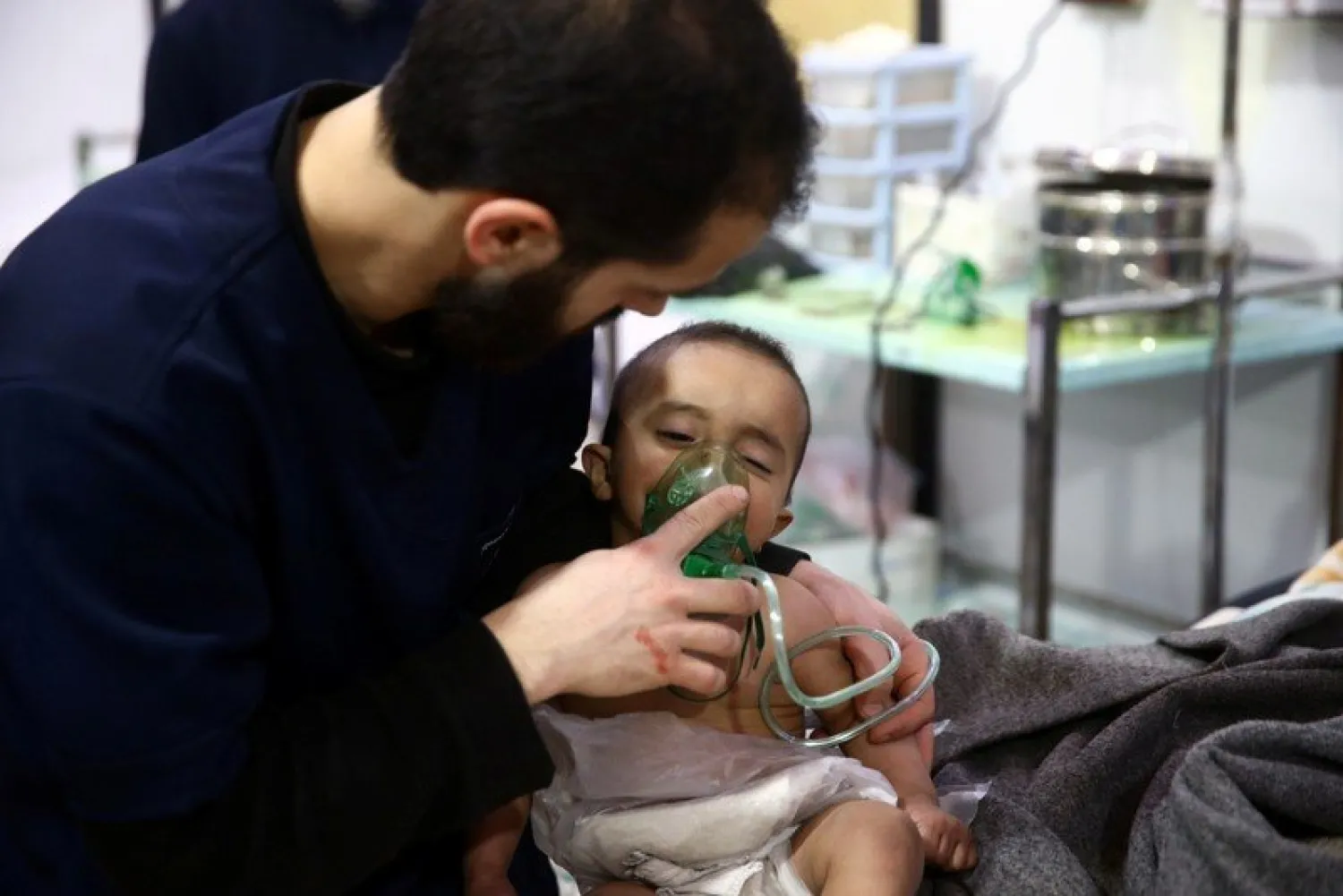
Man with a child are seen in hospital in the besieged town of Douma, Eastern Ghouta, Damascus. Thomson Reuters
TT

Exclusive - UN Documents Reveal 'Chemical' Cooperation between Syria, North Korea

Man with a child are seen in hospital in the besieged town of Douma, Eastern Ghouta, Damascus. Thomson Reuters

North Korean authorities provided the Syrian regime with equipment that could be used to manufacture chemical weapons, according to secret UN documents obtained by Asharq Al-Awsat.

The report, prepared by UN experts and consisting of hundreds of pages, dedicated more than 15 paragraphs to transactions prohibited by international resolutions between Pyongyang and Damascus.

It noted that the United Nations Panel of Experts, which is working under Security Council Resolution 1718, has conducted numerous investigations into North Korean transfers to Syria of ballistic missiles, materials related to conventional weapons and dual-use goods.

The report pointed to the activities of several groups of North Korean ballistic missile technicians, as well as entities that are subject to sanctions in Syria.

It also said that there were more than 40 North Korea unreported shipments between 2012 and 2017 to the Council of Scientific Research in Syria, in the region of Jamraya.

The report revealed that some member-states seized goods that are believed to be part of a contract between the North Korean company KOMID and the interfaces of the Syrian Scientific Research Council.

These investigations highlighted important new evidence on North Korea’s ongoing sanctioned activities, as well as innovative evasion techniques, through the use of a dual system to validate the documents of the shipments and mask illegal activities.

The report details “substantial new evidence” about North Korea’s dealings with Syria, dating back to 2008. That year, North Korea’s Ryonhap-2 corporation was reportedly in a Syrian ballistic missile program.

Moreover, the over-200-page document recounted a visit to Syria by a technical delegation from North Korea in August 2016 “involved the transfer to Syria of special resistance valves and thermometers known for use in chemical weapons programs.”

Another visit by North Korean ballistic missile experts was conducted in November 2016. The delegation passed through Beijing and Dubai airports on its way to Damascus on a Syrian Arab Airlines flight, according to the report.

A member state was quoted in the UN report as saying that North Korean technicians “continue to operate at chemical weapons and missile facilities at Barzeh, Adra and Hama”.

The report included Syria’s reply to the panel about the information: “There are no [North Korean] technical companies in Syria and the only presence of some [North Korean] individuals are confined in the field of sports under private individual contracts for training athletics and gymnastics.”

Investigations by the UN panel showed that in many cases of unreported arms shipments and cooperation with front companies of entities placed under sanctions between 2010 and 2017, there is further evidence of violations of the arms embargo and other breaches, through the transfer of products used in the manufacture of ballistic missiles and weapons and in chemical programs.

The eight experts forming the UN panel come from different countries and have specific expertise in areas such as weapons of mass destruction, maritime transport and customs controls.

The report includes copies of contracts between North Korean and Syrian companies as well as bills of lading indicating the types of materials shipped.

Although experts, who read the report, said that the evidence it cited did not prove conclusively that there was ongoing and continuous cooperation between North Korea and Syria on chemical weapons, they said it did deliver the most detailed account to date of the two countries’ efforts to evade sanctions intended to restrain their military expansion.



Palestinians Say Israeli Forces Kill Man in Jenin Refugee Camp

 Israeli soldiers keep watch during a weekly settlers' tour in Hebron, in the Israeli-occupied West Bank, May 23, 2026. (Reuters)
Israeli soldiers keep watch during a weekly settlers' tour in Hebron, in the Israeli-occupied West Bank, May 23, 2026. (Reuters)
TT

Palestinians Say Israeli Forces Kill Man in Jenin Refugee Camp

 Israeli soldiers keep watch during a weekly settlers' tour in Hebron, in the Israeli-occupied West Bank, May 23, 2026. (Reuters)
Israeli soldiers keep watch during a weekly settlers' tour in Hebron, in the Israeli-occupied West Bank, May 23, 2026. (Reuters)

Israeli forces killed a Palestinian man inside the Jenin refugee camp in the northern West Bank, the Palestinian health ministry said on Tuesday.

"A citizen... was killed by Israeli fire in the Jenin camp, and ambulance crews transported his body to Jenin Government Hospital," the Ramallah-based ministry said in a statement, without specifying when he was killed.

Contacted by AFP, Israel's military said it was "checking" reports of the man's killing.

The director of Jenin's Government Hospital, Wissam Baker, identified the victim as Nasser al-Saadi, noting that "he arrived dead at the hospital after being shot in the thigh".

"It appears he bled heavily after being injured before an ambulance was called to transport him to the hospital," Baker told AFP.

The Palestinian Red Crescent had earlier announced that Israeli forces handed over the body of a 30-year-old from inside the Jenin refugee camp, which is adjacent to the city of Jenin.

Israeli forces have occupied and barred access to the Jenin refugee camp since January 2025, when they launched a wide-ranging operation aimed at uprooting Palestinian armed groups from the West Bank's densely populated refugee camps.

The operation has caused the displacement of nearly 40,000 people from the camps, according to the UN agency for Palestinian refugees, UNRWA.

At least 1,073 Palestinians, including several armed fighters, have been killed by Israeli soldiers or settlers since the outbreak of the Gaza war following Hamas's attack on 7 October 2023, according to an AFP tally based on Palestinian Authority data.

On the other hand, official Israeli data shows at least 46 Israelis -- civilians and soldiers -- have been killed in Palestinian attacks or during Israeli military operations in the same period.


Israel Issues Expropriation Order for West Bank Religious Site

 Israeli soldiers keep watch during a weekly settlers' tour in Hebron, in the Israeli-occupied West Bank, May 23, 2026. (Reuters)
Israeli soldiers keep watch during a weekly settlers' tour in Hebron, in the Israeli-occupied West Bank, May 23, 2026. (Reuters)
TT

Israel Issues Expropriation Order for West Bank Religious Site

 Israeli soldiers keep watch during a weekly settlers' tour in Hebron, in the Israeli-occupied West Bank, May 23, 2026. (Reuters)
Israeli soldiers keep watch during a weekly settlers' tour in Hebron, in the Israeli-occupied West Bank, May 23, 2026. (Reuters)

Israel has issued an expropriation order for land in the occupied West Bank near the site of a Biblical prophet's grave north of Jerusalem, an Israeli NGO reported Tuesday.

The site, known as Nabi Samuel, is believed in Christian, Jewish, and Muslim tradition to include the grave of the Biblical figure of prophet Samuel, and includes a mosque owned by Palestinian religious authorities, the Waqf.

"This marks the first time that the (Israeli) Civil Administration has expropriated a holy site owned by the Muslim Waqf in the occupied West Bank," Israeli settlement watchdog Peace Now said in a statement.

According to the Israeli order, dated May 9 but published this week, the area for expropriation will include 109.79 dunams (roughly 11 hectares), including access roads, agricultural land, and a mosque.

The order says the decision was made "for the development and preservation of the archaeological site of the Tomb of the Prophet Samuel".

A source in COGAT, the Israel defense ministry body in charge of civilian matters in the Palestinian territories, said the decision was made "following the refusal of Waqf officials to cooperate with the procedures required for the renovation of the tomb compound".

The Palestinian Authority's Ministry of Waqf and Religious Affairs issued a "strong condemnation" of the expropriation order for Nabi Samuel.

"This confiscation is part of a policy aimed at suffocating the mosque and completely isolating it from its Palestinian surroundings, turning it into a Jewish archaeological site by force of arms," the ministry said in a statement.

Peace Now's Yonatan Mizrahi pointed out that Israeli authorities had already taken over administration of much of the land by converting it into an Israeli national park in the 1990s, decades after demolishing a Palestinian village on the site.

"There was no need to decide about the expropriation of the land," Mizrahi told AFP, while Peace Now denounced "the messianic agenda of the Israeli government".

Israel has occupied the West Bank since 1967.

In 2025, Israel expropriated an area in the center of the Tomb of the Patriarchs in the southern West Bank city of Hebron, arguing the order concerned an open area intended for roofing works and not a religious structure.


Remnants of Assad's Chemical Weapons Program Recovered, Syrian Official Says

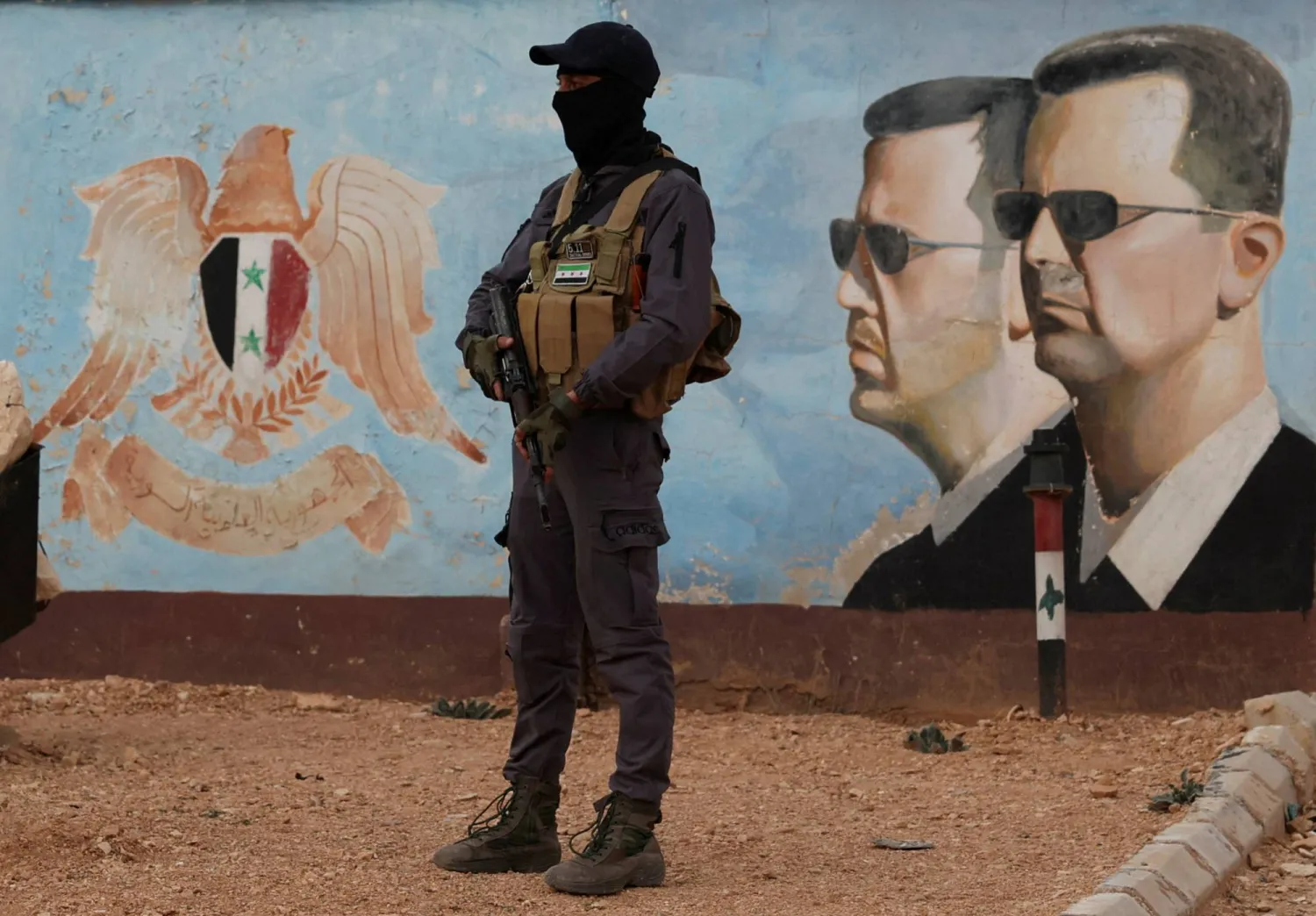
FILE PHOTO: A member of the former rebel group Hayat Tahrir al-Sham stands guard near an image of Syria's Bashar al-Assad at the fourth division headquarters in Damascus, Syria, January 23, 2025 REUTERS/Yamam Al Shaar/File Photo
TT

Remnants of Assad's Chemical Weapons Program Recovered, Syrian Official Says

FILE PHOTO: A member of the former rebel group Hayat Tahrir al-Sham stands guard near an image of Syria's Bashar al-Assad at the fourth division headquarters in Damascus, Syria, January 23, 2025 REUTERS/Yamam Al Shaar/File Photo

Syria's transitional leadership has located remnants of former Syrian president Bashar al-Assad's clandestine chemical weapons program, including raw materials and munitions similar to those used to carry out deadly gas attacks during the country's long-running civil war, a Syrian official told Reuters on Tuesday.

Syrian authorities have also taken into custody 18 suspects for alleged involvement in Assad's chemical weapons program, including high-level military, political and technical officials, said Mohamad Katoub, Syria's permanent representative to the Organization for the Prohibition of Chemical Weapons (OPCW) in The Hague, in an interview.