


Farhad Moshiri’s Cash Fails to Revive Everton

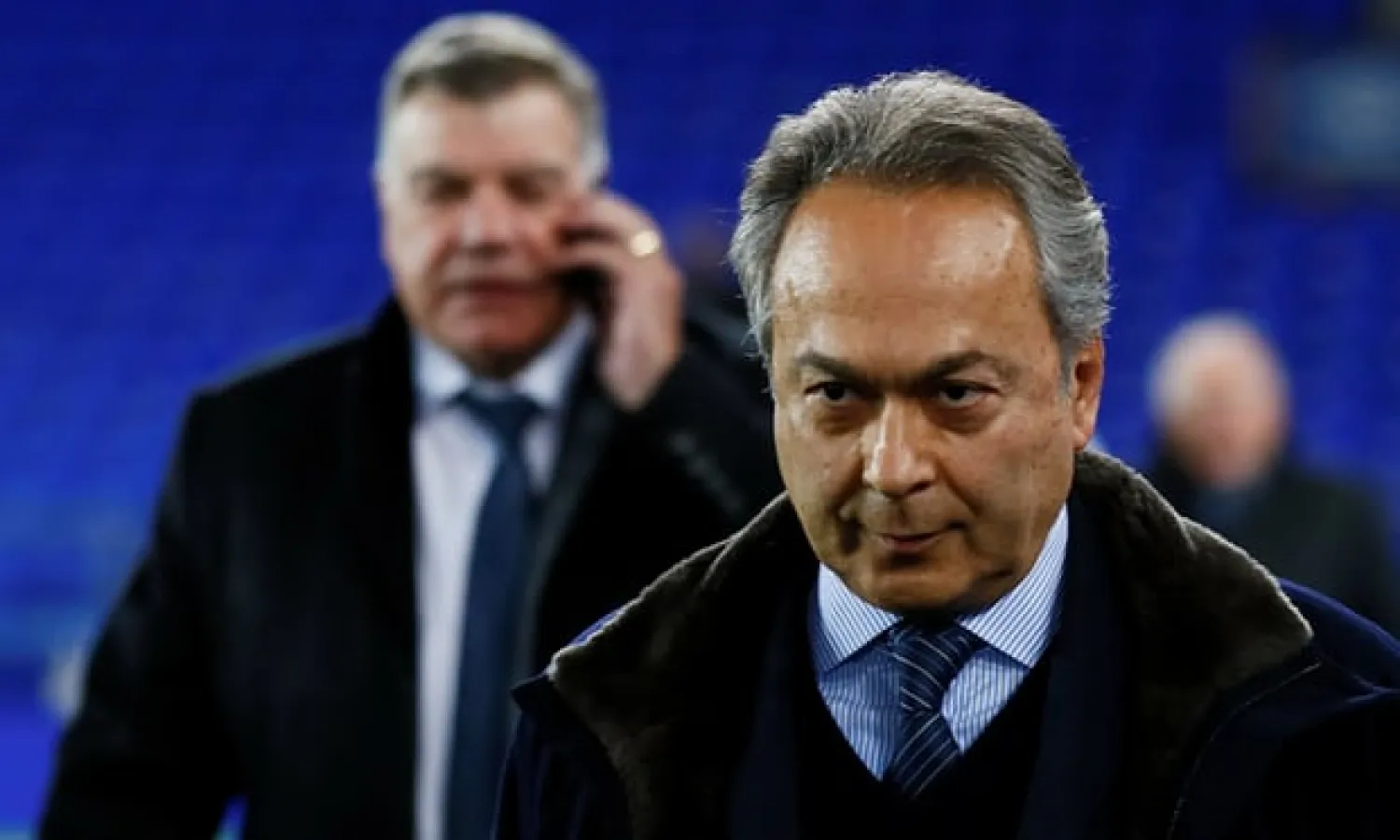
 The enthusiasm and ambition of the Everton owner, Farhad Moshiri, is not in question but there are doubts about his football knowledge. Photograph: Jason Cairnduff/Action Images via Reuters
The enthusiasm and ambition of the Everton owner, Farhad Moshiri, is not in question but there are doubts about his football knowledge. Photograph: Jason Cairnduff/Action Images via Reuters
TT

Farhad Moshiri’s Cash Fails to Revive Everton

 The enthusiasm and ambition of the Everton owner, Farhad Moshiri, is not in question but there are doubts about his football knowledge. Photograph: Jason Cairnduff/Action Images via Reuters
The enthusiasm and ambition of the Everton owner, Farhad Moshiri, is not in question but there are doubts about his football knowledge. Photograph: Jason Cairnduff/Action Images via Reuters

As a football fan and chartered certified accountant Farhad Moshiri is unlikely to find cause to celebrate his two‑year anniversary as Everton’s major shareholder on Tuesday. The 62‑year‑old has invested almost a quarter of a billion pounds into Goodison Park since ending Bill Kenwright’s long-running search for a financial saviour. Tentative progress on a new stadium, deeply disillusioned fans and what in many respects is the worst Everton team this century represents a meagre return for his money.

Kenwright, the Everton chairman, cited “football knowledge, financial wherewithal and true blue spirit” as principal reasons for embracing the British-Iranian billionaire when his arrival was announced on 27 February 2016. Having paid around £87.5m for a 49.9% shareholding, one that is expected to increase over time, Moshiri has loaned Everton £150m with no fixed repayment date. The loan has enabled Everton to spend significantly on players, clear £28.4m of debt, reduce annual interest charges, fund improvements to the Finch Farm training ground and their old stadium, while preparing for the new with £9.1m spent on securing the site and initial planning works at Bramley Moore dock.

The financial wherewithal of Everton’s major shareholder is not in question. Nor is the enthusiasm and ambition he has brought to the club since selling his Arsenal shares to his business partner Alisher Usmanov. However, his football knowledge, or at least the advice given to Moshiri in his first leading role at a Premier League club, has yet to vindicate Kenwright’s reasoning for bringing him on board.

Under Moshiri Everton have finally accessed the finances that had eluded them throughout the Premier League era and were regarded as key to ending the club’s 23-year-old trophy drought. Financial wealth has instead ushered in an era of woeful mis-spending and recruitment at various levels. Far from following the Tottenham Hotspur model and challenging the established elite for Champions League qualification, Everton have slipped into reverse. The disconnect between team and supporters is glaring and encapsulated by the boos that greeted Morgan Schneiderlin’s introduction against Crystal Palace recently. He was singled out for a perceived lack of commitment, passion and effort by many Everton fans but is not the only expensive, well-paid signing consistently to underachieve.

Since Moshiri’s arrival Everton have spent almost £277m on 18 players. They were the fifth-highest spending club in Europe last summer at £149.1m and, according to CIES Football Observatory, the sixth highest spenders across the continent over the past two transfer windows. The disastrous results explain why Steve Walsh, appointed by Moshiri as Everton’s first director of football, finds himself under pressure.

Of those 18 recruits Idrissa Gana Gueye stands out as a successful purchase – plus a rare example of Walsh replicating his scouting of potential bargains at Leicester City – after triggering the £7.1m release clause in his Aston Villa contract. The £30m spent making Jordan Pickford the most expensive British goalkeeper looks a sound investment, even though at 23 he is understandably a work in progress, while Wayne Rooney has contributed with 11 goals and Theo Walcott has made an encouraging start to his post‑Arsenal career. That is a positive case presented for four of the 18. It is difficult to go any further.

Everton have international talent throughout the ranks and, thanks to their prodigious academy system, a batch of young players who can benefit from this season’s hard experiences and provide the team with an identity they lack. But in terms of utilising that talent, justifying the investment, style of play and character, the team have consistently earned the damning description at the start of this article. This season commenced with the biggest spending spree in Everton’s history, designed to push the club into European contention for the long term. It has petered out amid acrimony and with the clamour growing for another expensive clear-out.

Moshiri has made only modest change at executive level, appointing Sasha Ryazantsev and Keith Harris to the board, and sacked two struggling managers at significant cost, Roberto Martínez and Ronald Koeman. The decision to dispense with the Dutchman without a replacement in the bag ranks among the more damaging calls.

Appointing Sam Allardyce despite opposition at boardroom and supporter level allayed the threat of relegation at a crucial time with Everton seeking funding for a new stadium. After two wins in 11 matches, disenchantment with Allardyce and his approach has taken root. His talk of improving Everton’s away form before they slipped to a fifth consecutive defeat on the road at Watford on Saturday, and of wanting to be the man who builds the team to play at Bramley Moore in four years’ time, left many fans aghast.

Allardyce is fond of favourable statistics but the Watford defeat left him with an average return of 1.37 points from his 16 matches in charge. Koeman averaged 1.48 points per game and Martínez 1.56 points, although both had more time to construct a team in their image. With that in mind the Everton manager admitted it was “absolutely critical” his first signing was a success. Cenk Tosun, signed for a fee that could rise to £27m from Besiktas, has started two games (being subbed in both) and made two substitute appearances since arriving in early January.

It is the new stadium proposed for the banks of the river Mersey that will define Moshiri’s legacy. The club have agreed a £280m loan from Liverpool council towards the projected £500m costs – “ although the council have not signed off an arrangement that will see them receive £6m-£7m a year in interest repayments – and hope to secure the remaining funds and planning permission this year. Building on Bramley Moore is complex and expensive. Progress has been slow and the stadium constitutes Everton’s strongest grounds for optimism in the two years since Moshiri arrived. He must hope for far greater success on the Liverpool waterfront than he has witnessed so far on the pitch.

The Guardian Sport


Sinner Sees off Popyrin to Reach Doha Quarters

 Italy's Jannik Sinner greets the fans after defeating Australia's Alexei Popyrin in their men's singles match at the Qatar Open tennis tournament in Doha on February 18, 2026. (AFP)
Italy's Jannik Sinner greets the fans after defeating Australia's Alexei Popyrin in their men's singles match at the Qatar Open tennis tournament in Doha on February 18, 2026. (AFP)
TT

Sinner Sees off Popyrin to Reach Doha Quarters

 Italy's Jannik Sinner greets the fans after defeating Australia's Alexei Popyrin in their men's singles match at the Qatar Open tennis tournament in Doha on February 18, 2026. (AFP)
Italy's Jannik Sinner greets the fans after defeating Australia's Alexei Popyrin in their men's singles match at the Qatar Open tennis tournament in Doha on February 18, 2026. (AFP)

Jannik Sinner powered past Alexei Popyrin in straight sets on Wednesday to reach the last eight of the Qatar Open and edge closer to a possible final meeting with Carlos Alcaraz.

The Italian, playing his first tournament since losing to Novak Djokovic in the Australian Open semi-finals last month, eased to a 6-3, 7-5 second-round win in Doha.

Sinner will play Jakub Mensik in Thursday's quarter-finals.

Australian world number 53 Popyrin battled gamely but failed to create a break-point opportunity against his clinical opponent.

Sinner dropped just three points on serve in an excellent first set which he took courtesy of a break in the sixth game.

Popyrin fought hard in the second but could not force a tie-break as Sinner broke to grab a 6-5 lead before confidently serving it out.

World number one Alcaraz takes on Frenchman Valentin Royer in his second-round match later.


Ukraine's Officials to Boycott Paralympics over Russian Flag Decision

Milano Cortina 2026 Winter Olympics - Skeleton - Interview with Ukraine Youth and Sports minister Matvii Bidnyi - N H Hotel, Milan, Italy - February 12, 2026 Ukraine Youth and Sports Minister Matvii Bidnyi speaks after the disqualification of Ukrainian skeleton racer Vladyslav Heraskevych from the Winter Games. REUTERS/Kevin Coombs
TT

Ukraine's Officials to Boycott Paralympics over Russian Flag Decision

Milano Cortina 2026 Winter Olympics - Skeleton - Interview with Ukraine Youth and Sports minister Matvii Bidnyi - N H Hotel, Milan, Italy - February 12, 2026 Ukraine Youth and Sports Minister Matvii Bidnyi speaks after the disqualification of Ukrainian skeleton racer Vladyslav Heraskevych from the Winter Games. REUTERS/Kevin Coombs

Ukrainian officials will boycott the Paralympic Winter Games, Kyiv said Wednesday, after the International Paralympic Committee allowed Russian athletes to compete under their national flag.

Ukraine also urged other countries to shun next month's Opening Ceremony in Verona on March 6, in part of a growing standoff between Kyiv and international sporting federations four years after Russia invaded.

Six Russians and four Belarusians will be allowed to take part under their own flags at the Milan-Cortina Paralympics rather than as neutral athletes, the Games' governing body confirmed to AFP on Tuesday.

Russia has been mostly banned from international sport since Moscow invaded Ukraine. The IPC's decision triggered fury in Ukraine.

Ukraine's sports minister Matviy Bidny called the decision "outrageous", and accused Russia and Belarus of turning "sport into a tool of war, lies, and contempt."

"Ukrainian public officials will not attend the Paralympic Games. We will not be present at the opening ceremony," he said on social media.

"We will not take part in any other official Paralympic events," he added.

Ukrainian Foreign Minister Andriy Sybiga said he had instructed Kyiv's ambassadors to urge other countries to also shun the opening ceremony.

"Allowing the flags of aggressor states to be raised at the Paralympic Games while Russia's war against Ukraine rages on is wrong -- morally and politically," Sybiga said on social media.

The EU's sports commissioner Glenn Micallef said he would also skip the opening ceremony.

- Kyiv demands apology -

The IPC's decision comes amid already heightened tensions between Ukraine and the International Olympic Committee, overseeing the Winter Olympics currently underway.

The IOC banned Ukrainian skeleton racer Vladyslav Heraskevych for refusing to ditch a helmet depicting victims of the war with Russia.

Ukraine was further angered that the woman chosen to carry the "Ukraine" name card and lead its team out during the Opening Ceremony of the Games was revealed to be Russian.

Media reports called the woman an anti-Kremlin Russian woman living in Milan for years.

"Picking a Russian person to carry the nameplate is despicable," Kyiv's foreign ministry spokesman Georgiy Tykhy said at a briefing in response to a question by AFP.

He called it a "severe violation of the Olympic Charter" and demanded an apology.

And Kyiv also riled earlier this month at FIFA boss Gianni Infantino saying he believed it was time to reinstate Russia in international football.

- 'War, lies and contempt' -

Valeriy Sushkevych, president of the Ukrainian Paralympic Committee told AFP on Tuesday that Kyiv's athletes would not boycott the Paralympics.

Ukraine traditionally performs strongly at the Winter Paralympics, coming second in the medals table four years ago in Beijing.

"If we do not go, it would mean allowing Putin to claim a victory over Ukrainian Paralympians and over Ukraine by excluding us from the Games," said the 71-year-old in an interview.

"That will not happen!"

Russia was awarded two slots in alpine skiing, two in cross-country skiing and two in snowboarding. The four Belarusian slots are all in cross-country skiing.

The International Paralympic Committee (IPC) said earlier those athletes would be "treated like (those from) any other country".

The IPC unexpectedly lifted its suspension on Russian and Belarusian athletes at the organisation's general assembly in September.


'Not Here for Medals', Nakai Says after Leading Japanese Charge at Olympics

Ami Nakai of Japan competes during the women's short program figure skating at the 2026 Winter Olympics, in Milan, Italy, Tuesday, Feb. 17, 2026. (AP Photo/Ashley Landis)
TT

'Not Here for Medals', Nakai Says after Leading Japanese Charge at Olympics

Ami Nakai of Japan competes during the women's short program figure skating at the 2026 Winter Olympics, in Milan, Italy, Tuesday, Feb. 17, 2026. (AP Photo/Ashley Landis)

Ami Nakai entered her first Olympics insisting she was not here for medals — but after the short program at the Milano Cortina Games, the 17-year-old figure skater found herself at the top, ahead of national icon Kaori Sakamoto and rising star Mone Chiba.

Japan finished first, second, and fourth on Tuesday, cementing a formidable presence heading into the free skate on Thursday. American Alysa Liu finished third.

Nakai's clean, confident skate was anchored by a soaring triple Axel. She approached the moment with an ease unusual for an Olympic debut.

"I'm not here at this Olympics with the goal of achieving a high result, I'm really looking forward to enjoying this Olympics as much as I can, till the very last moment," she said.

"Since this is my first Olympics, I had nothing to lose, and that mindset definitely translated into my results," she said.

Her carefree confidence has unexpectedly put her in medal contention, though she cannot imagine herself surpassing Sakamoto, the three-time world champion who is skating the final chapter of her competitive career. Nakai scored 78.71 points in the short program, ahead of Sakamoto's 77.23.

"There's no way I stand a chance against Kaori right now," Nakai said. "I'm just enjoying these Olympics and trying my best."

Sakamoto, 25, who has said she will retire after these Games, is chasing the one accolade missing from her resume: Olympic gold.

Having already secured a bronze in Beijing in 2022 and team silvers in both Beijing and Milan, she now aims to cap her career with an individual title.

She delivered a polished short program to "Time to Say Goodbye," earning a standing ovation.

Sakamoto later said she managed her nerves well and felt satisfied, adding that having three Japanese skaters in the top four spots "really proves that Japan is getting stronger". She did not feel unnerved about finishing behind Nakai, who also bested her at the Grand Prix de France in October.

"I expected to be surpassed after she landed a triple Axel ... but the most important thing is how much I can concentrate on my own performance, do my best, stay focused for the free skate," she said.

Chiba placed fourth and said she felt energised heading into the free skate, especially after choosing to perform to music from the soundtrack of "Romeo and Juliet" in Italy.

"The rankings are really decided in the free program, so I'll just try to stay calm and focused in the free program and perform my own style without any mistakes," said the 20-year-old, widely regarded as the rising all-rounder whose steady ascent has made her one of Japan's most promising skaters.

All three skaters mentioned how seeing Japanese pair Riku Miura and Ryuichi Kihara deliver a stunning comeback, storming from fifth place after a shaky short program to capture Japan's first Olympic figure skating pairs gold medal, inspired them.

"I was really moved by Riku and Ryuichi last night," Chiba said. "The three of us girls talked about trying to live up to that standard."
