


The Last Days of Toys `R' Us

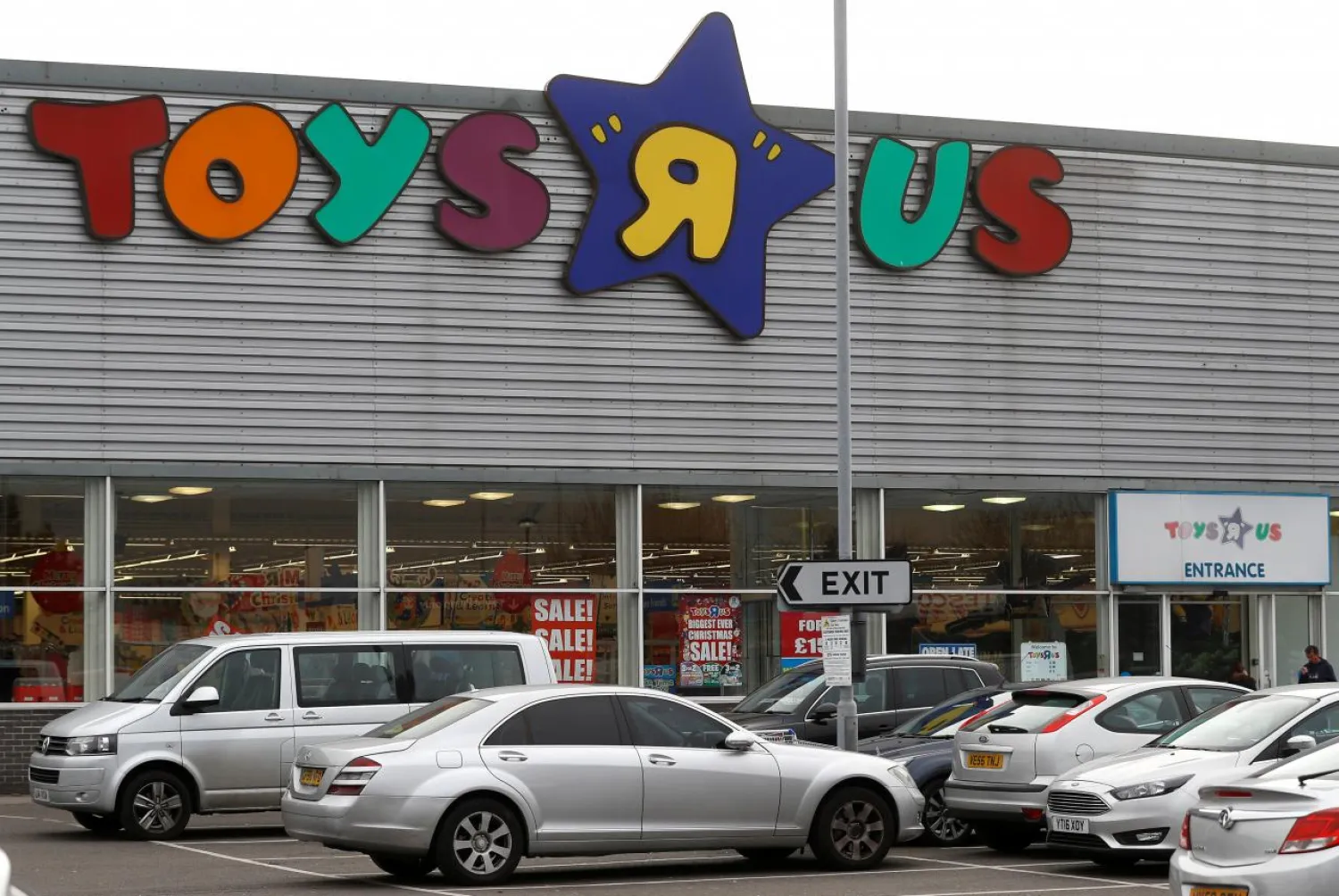
FILE PHOTO: A Toys 'R' Us store is seen, in Hayes, Britain, December 2, 2017. REUTERS/Peter Nicholls/File Photo
TT

The Last Days of Toys `R' Us

FILE PHOTO: A Toys 'R' Us store is seen, in Hayes, Britain, December 2, 2017. REUTERS/Peter Nicholls/File Photo

You want a trip to Toys "R" Us, head office of Geoffrey the Giraffe, to feel like a visit to a sugarplum Toyland.

But the mood is black these days inside One Geoffrey Way in Wayne, New Jersey, spiritual home of the cartoon mascot who's been beckoning to kids for generations.

Shortly after 3 p.m. on Wednesday, Dave Brandon, chief executive officer of the iconic toy chain, delivered the news that his more than 30,000 US workers had been dreading: We're finished. After 70 years, Toys "R" Us would close shop -- a casualty of Amazon-era retailing and debt-fueled, private-equity deal-making.

"I am devastated that we have reached this point," Brandon told a group of about 600 employees. "I truly believe we did our best, under what turned out to be nearly impossible circumstances." He choked up as he spoke.

How did it come to this? The answer, as with most bankruptcies, is slowly, and then all at once. In the pre-internet dark age, the company was the unrivaled supermarket of toys, the arbiter of fads and tastes that shaped the entire industry. Its advertising jingle -- "I don't want to grow up, I'm a Toys 'R' Us kid" -- is lodged in the brains of millions.

But by last September, just months before the crucial holiday season, relentless competition from Amazon.com and Walmart -- combined with more than $5 billion in debt from a 2005 leveraged buyout -- had finally overwhelmed the chain. With little warning, it filed for bankruptcy under Chapter 11, in the hope, Brandon said at the time, of emerging better than ever.

"It's the dawn of a new day for the company," he proclaimed at the Toys "R" Us in New York's Times Square.

Instead, his hopeful plans unraveled at a startling clip. Battles quickly broke out between management and long-time creditors, who were owed about $5 billion at the time of the filing. Lenders soon were urging Brandon to shut hundreds of the 800 US stores fast to contain the damage. Before long, vendors were growing wary about shipping toys to the chain, fearing they might not get paid.

The financial powers behind Toys "R" Us -- among them KKR & Co., Bain Capital and Vornado Realty Trust -- had all but given up by then. After earning more than $470 million in fees and interest payments while taking no dividends, according to regulatory filings, they'd abandoned hopes of flipping Toys "R" Us back onto the stock market in 2013 for the ultimate payoff. The only thing to do, it seemed, was to keep cutting costs and, hopefully, negotiate easier terms on all that debt.

On one level, the announced liquidation (at least in the US) is yet another familiar story about the sorry state of old-school retailing. On another, it's a tale of how private equity has, in many cases, worsened the industry's upheavals. Sports Authority, Gymboree, Payless Shoesource, Claire's, J. Crew: All these chains, and more, have struggled to adapt to the fast-changing landscape after being taken private.

With Toys "R" Us in Chapter 11, the company declined to comment. Representatives of the owners also declined to comment or didn't respond to requests for comment.

Bondholders have seen the value of their investment plummet. The company's senior unsecured bonds due in 2018 last traded Thursday at 5.25 cents on the dollar, down from 72 cents the week before the bankruptcy filing, according to Trace bond-price data.

Almost from the start, sharp lines were drawn, according to people involved in the bankruptcy process. After the September filing, creditors -- including holders of some $3 billion in bankruptcy financing -- complained that Toys "R" Us was being less than forthcoming about its financials, as well as its turnaround strategy. Six months after the filing, the company had no bankruptcy-exit plan in place, and lenders were losing faith.

The lenders, including JPMorgan Chase and Goldman Sachs, jockeyed to provide debtor-in-possession loans, which are first in line to get repaid. Then a group of hedge funds threatened in October to trigger a default on these loans until they got a $30 million piece of them. Others argued over the valuations of various international subsidiaries and assets, such as intellectual property and the growing Asian business.

Then came Black Friday, the crucial kickoff to the US holiday shopping season. The Christmas run-up turned into a disaster for Toys "R" Us. Brandon later complained that the September bankruptcy had shaken customers' confidence. But there were other problems: The slow pace of negotiations was unnerving vendors and prompting creditors to urge more store closings.

Amid the disputes, suppliers grew increasingly anxious. Would Toys "R" Us really emerge from bankruptcy? Firms that insure vendor shipments and provide short-term financing began to back away. As of early February, most had bolted.

By then, vendors had learned what Brandon already knew: The holiday season had delivered a blow, with sales plunging about 15 percent from the previous year.

Brandon's initial optimism was fading. In a Jan. 23 letter to employees, he blamed the holiday showing on the bankruptcy, as well as some operational missteps. Formerly athletic director at the University of Michigan (he resigned amid disapproval from the Board of Regents and student anger over his profit-driven approach to the job), he'd had a successful stint at Domino's Pizza and was recruited by Bain in 2015. Now, he desperately needed another win.

But beyond picking executives, the private-equity owners generally took a hands-off approach, people familiar with the matter say. Toys "R" Us, meantime, was left to pay more than $400 million a year in interest alone on its debts.

By February, some senior-most lenders began to push for an outright liquidation. And, with that, 70 years of retail history slid toward an ignominious end.

Prospects could be buoyed by a group of toymakers who said Wednesday they're looking to make a bid for the company's Canadian business, through which they would buy some US locations in the liquidation to operate as a subsidiary. Other potential liquidation bidders have begun to crop up as well.

On Thursday, at the Toys "R" Us Express on 33rd Street in Midtown Manhattan, Angela Milligan, 28, and Chace Douglas, 25, were looking for bankruptcy bargains (no liquidation markdowns yet). Other customers waxed nostalgic.

"We grew up with it," said John Park, 39. "My kids aren't going to experience a place where there's just shelves of toys."

The Washington Post


Saudi Arabia, Kazakhstan Agree to Establish Coordination Council

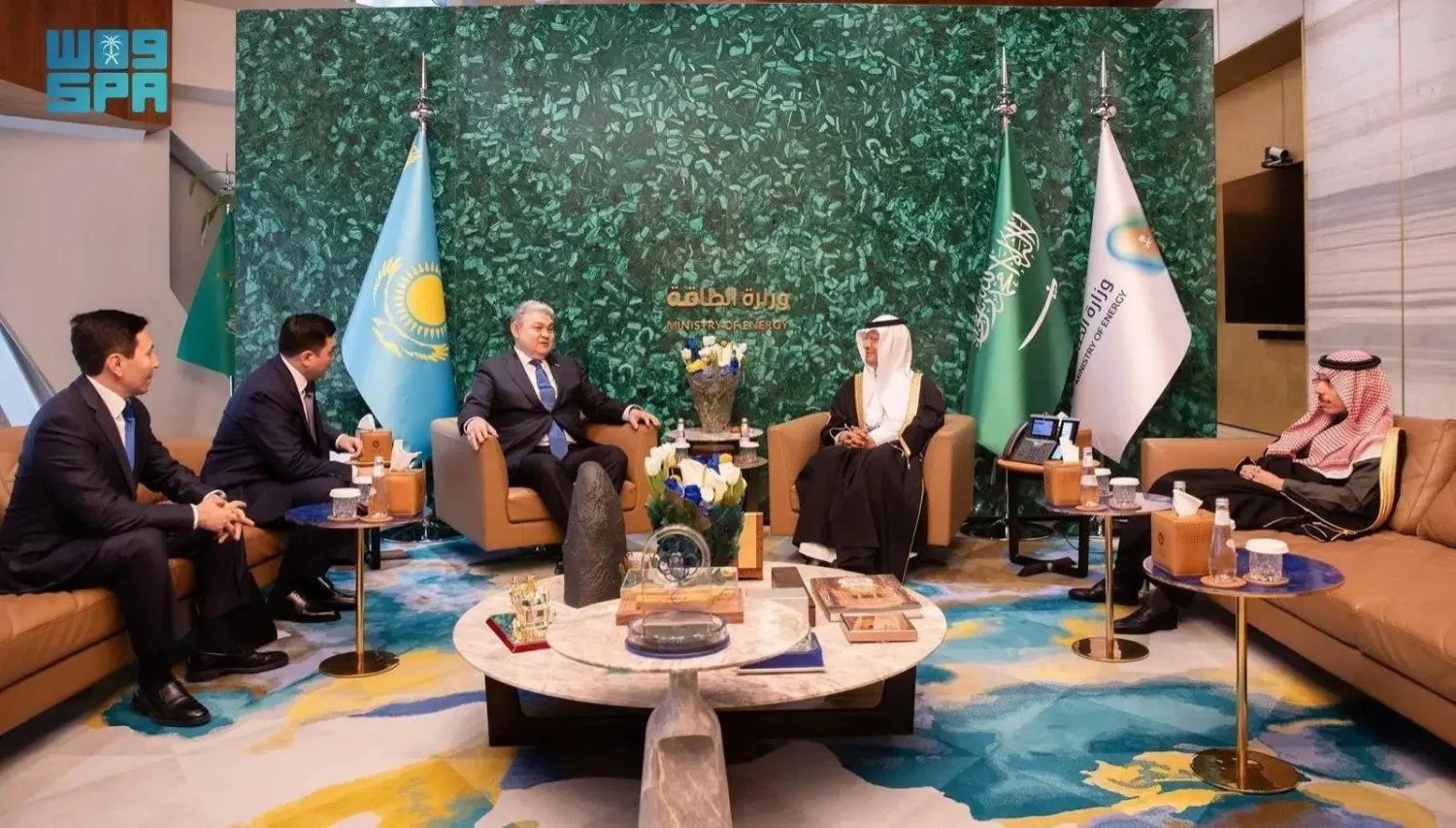
Saudi Minister of Energy Prince Abdulaziz bin Salman bin Abdulaziz receives Kazakhstan’s Foreign Minister Yermek Kosherbayev in Riyadh. (SPA)
TT

Saudi Arabia, Kazakhstan Agree to Establish Coordination Council

Saudi Minister of Energy Prince Abdulaziz bin Salman bin Abdulaziz receives Kazakhstan’s Foreign Minister Yermek Kosherbayev in Riyadh. (SPA)

Saudi Arabia and Kazakhstan agreed to establish a Saudi-Kazakh Coordination Council, reported the Saudi Press Agency on Tuesday.

Saudi Minister of Energy Prince Abdulaziz bin Salman bin Abdulaziz received in Riyadh Kazakhstan’s Foreign Minister Yermek Kosherbayev. Saudi FM Prince Faisal bin Farhan bin Abdullah and Minister of Energy of Kazakhstan Yerlan Akkenzhenov also attended the meeting.

The talks tackled the establishment of the coordination council, which will be chaired by the Saudi minister of energy and Kazakhstan’s foreign minister. The council reflects the two countries’ commitment to strengthening cooperation and expanding their bilateral partnership.

Prince Abdulaziz and Kosherbayev signed an agreement on the establishment of the council, which aims to boost coordination and consultation between the two countries and develop frameworks for cooperation across various sectors of mutual interest, elevating bilateral relations to broader levels.

Prince Abdulaziz and Kosherbayev discussed relations between their countries and ways to develop them further, especially in the energy field. They tackled opportunities for cooperation and investment in renewable energy and energy storage systems and discussed oil market developments.


Saudi-Qatari Partnership Paves Way for Logistics Corridors to Boost Regional Trade Efficiency 

The MoU was signed by Mawani President Eng. Suliman Almazroua and CEO of Qatar Ports Management Company Captain Abdullah Mohammed Al-Khanji. (QNA)
TT

Saudi-Qatari Partnership Paves Way for Logistics Corridors to Boost Regional Trade Efficiency 

The MoU was signed by Mawani President Eng. Suliman Almazroua and CEO of Qatar Ports Management Company Captain Abdullah Mohammed Al-Khanji. (QNA)

The Saudi Ports Authority (Mawani) and Qatar Ports Management Company signed on Tuesday a memorandum of understanding (MoU) aimed at boosting maritime and logistics cooperation between the two sides.

The agreement will contribute to the development of the ports sector, raising operational efficiency, and supporting regional and international trade flows.

The MoU was signed by Mawani President Eng. Suliman Almazroua and CEO of Qatar Ports Management Company Captain Abdullah Mohammed Al-Khanji. Qatari Ambassador to Saudi Arabia Bandar bin Mohammed Al Attiyah attended the signing ceremony.

The agreement reflects Saudi Arabia and Qatar’s commitment to building effective partnerships, exchanging expertise, establishing an organized framework for cooperation management, and developing joint investment opportunities in line with Saudi Vision 2030 and Qatar National Vision 2030.

The MoU outlines eight key areas of cooperation, including the exchange of best practices in port management and operations, and the study of opportunities for direct maritime and land connectivity between the ports of both countries to enhance trade flow efficiency.

It includes collaboration in logistics services, exploring the establishment of joint maritime corridors serving bilateral and regional trade, and assessing the feasibility of creating shared regional distribution centers.

In the fields of digital transformation and artificial intelligence, the two sides agreed to deepen cooperation on developing smart systems, data governance, and the unified maritime window, thereby boosting operational efficiency and keeping pace with technological advancements in the maritime sector.

The MoU places strong emphasis on maritime safety and environmental protection, including exchanging expertise in combating marine pollution and emergency response; developing joint maritime emergency plans; establishing an emergency communication line between the two countries; and cooperating to ensure compliance with international conventions, conduct joint exercises, and develop risk monitoring systems.

The cooperation also covers human capital development through joint training programs and field-exchange of expertise, as well as academic and research collaboration in maritime transport and logistics.

In terms of joint investment, both sides will study local and global investment opportunities in ports and related services and coordinate with the private sector to support these initiatives.

The MoU further includes cooperation in cruise tourism through enhanced maritime connectivity and joint promotion of Gulf cruise routes, as well as international and regional representation by coordinating positions in international maritime organizations and supporting joint initiatives, notably “Green Ports” and “Safe Sea Corridors.”

The agreement reflects the commitment of Mawani and Qatar Ports Management Company to advancing the ports sector and boosting its role as a key driver of trade and economic growth, contributing to Gulf integration and enhancing regional competitiveness in maritime and marine services.


Golden Halal Logo Launched at Makkah Halal Forum  

The Makkah Halal Forum 2026 was held from February 14 to 16. (SPA)
TT

Golden Halal Logo Launched at Makkah Halal Forum  

The Makkah Halal Forum 2026 was held from February 14 to 16. (SPA)

The Makkah Halal Forum 2026, which concluded on Monday, marked a pivotal milestone in the development of Saudi Arabia's halal industry, ushering in a new phase of structured institutional action.

This shift moves the sector beyond theoretical discourse toward a fully integrated implementation framework. It cements the Kingdom’s global leadership in halal and boosts the credibility of Saudi products in international markets.

The forum that began on February 14 witnessed the launch of a package of strategic enablers reflecting the maturity of the Saudi experience in the sector. Chief among them was the introduction of the Halal Academy as a specialized knowledge and training arm dedicated to building professional expertise and raising standards across the entire value chain.

The event also saw the unveiling of the Golden Halal logo, a high-level accreditation mark designed to provide global markets with a unified benchmark of trust, underscoring the Kingdom’s commitment to the highest standards of quality and compliance.

These initiatives signal a strategic shift that goes beyond the traditional concept of religious oversight. Instead, they frame halal as a comprehensive industrial and economic system that integrates Sharia compliance with high quality standards, advanced governance, and digital traceability. The approach is expected to boost the competitiveness of Saudi exports and facilitate their entry into global markets.

National success stories highlight the tangible impact of this transformation. CEO and founder of Roya Factory for Food Products Rasha Al Sanea noted that Saudi accreditation has evolved into a comprehensive quality certification that provides companies with a clear competitive edge abroad.

She noted that obtaining certification involves a rigorous process, including assessments of facility safety, manufacturing quality, and compliance with global standards ahead of final audits. These measures strengthen product reliability and boost readiness for international expansion.

The presence of international delegations and trade missions in Makkah on the sidelines of the forum helped accelerate expansion opportunities and open direct export channels to several markets, she added.

Pairing the Saudi Made logo with accredited halal marks, foremost among them the Golden Halal logo, enhances global consumer confidence and gives Saudi products a strong presence across diverse cultures and markets, she stressed.
