Abbas Insists on Holding National Council in Ramallah Despite Pressure

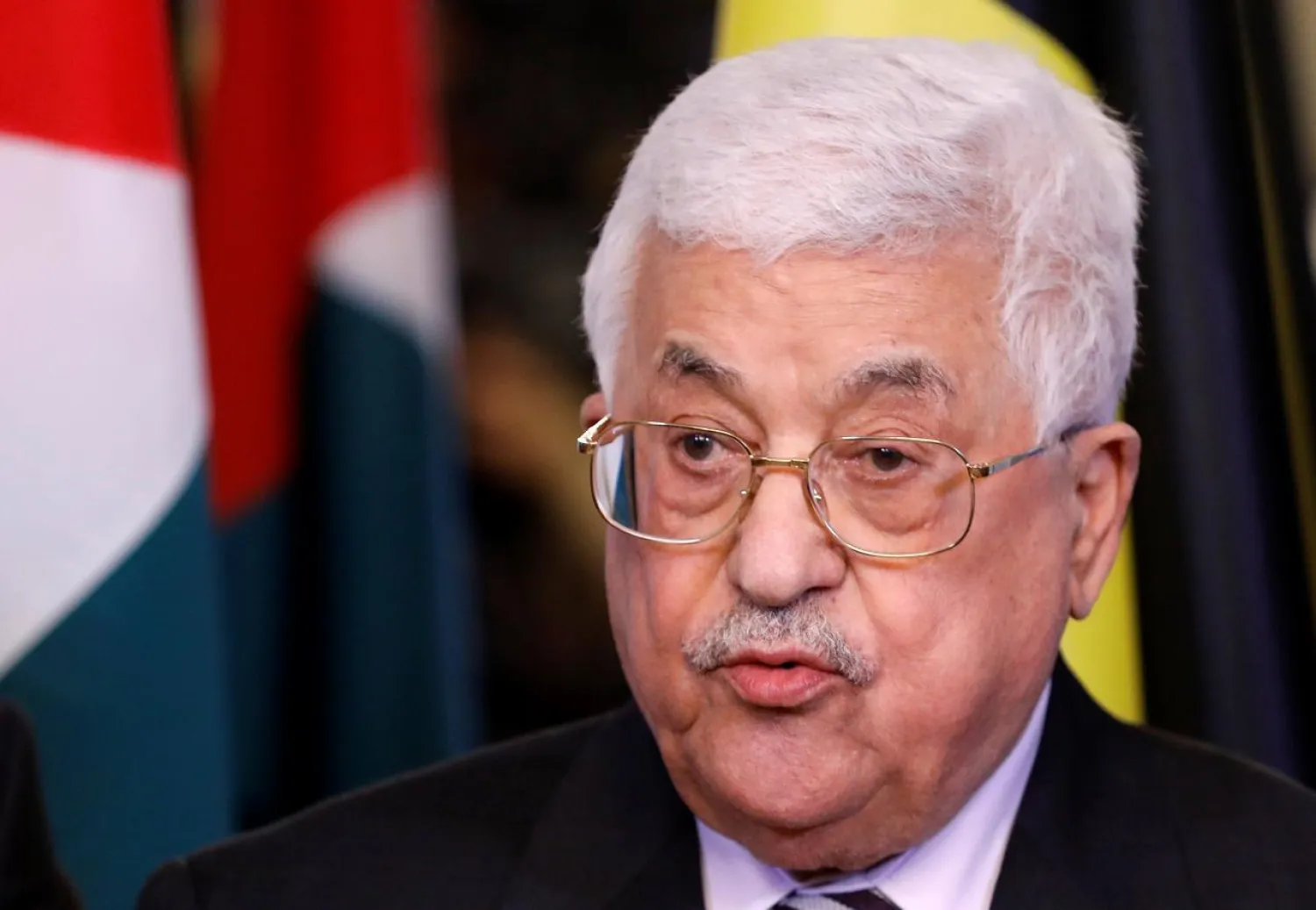
Palestinian President Mahmoud Abbas addresses reporters after a meeting with Belgian Prime Minister Charles Michel in Brussels, Belgium, February 9, 2017. REUTERS/Yves Herman
TT

Abbas Insists on Holding National Council in Ramallah Despite Pressure

Palestinian President Mahmoud Abbas addresses reporters after a meeting with Belgian Prime Minister Charles Michel in Brussels, Belgium, February 9, 2017. REUTERS/Yves Herman

The Palestinian National Council will convene at the end of April in Ramallah to elect a new executive committee for the PLO, regardless of continued boycott by some factions, well-informed sources told Asharq Al-Awsat.
 
The sources stressed that Palestinian President Mahmoud Abbas wanted to finalize “the most important step in the process of the renewal of legitimacy” in order to fortify the PLO in the face of external challenges.
 
They expressed high hopes that the Fatah leadership would reach an agreement with the factions opposing the convening of the National Council in Ramallah, adding that the president was insisting on holding the event in light of the current difficult situation.
 
Hamas said it was against the holding of the council without national consensus, calling instead for a “national rescue conference”. The Popular Front – the second largest faction in the PLO – and the Islamic Jihad, have also rejected to participate in what was described as the “Ramallah council.”
 
Fatah is seeking to hold the National Council in Ramallah to elect a new executive committee for the PLO, as the last step in the renewal of authorities, which is aimed at securing a smooth transition of power in the event of any forced absence of Abbas.
 
The meeting, which is expected to take place on April 30, comes a year after the elections within the Fatah Movement, which brought about a new Central Committee and a Revolutionary Council.
 
Fatah and Popular Front officials are expected to meet in Egypt for several consecutive days to come up with a consensual formula on the National Council. PFLP officials announced that they would propose the postponement of the normal session until a consensus was reached on the convening of a national reconciliation council based on the Cairo 2011 agreements and the outputs of the preparatory committee in Beirut in order to ensure the participation of both Hamas and Islamic Jihad.
 
The National Council serves as the Parliament of the PLO, representing all Palestinians at home and abroad. It currently has around 650 members, who represent Palestinian factions, forces and unions everywhere.
 
The Council has convened 22 times since it was founded, the most recent of which was a special session in Ramallah in 2009, which ended with the appointment and election of six new members to the Organization.



Houthis Threaten ‘Gradual Escalation’ after Fourth Attack on Israel

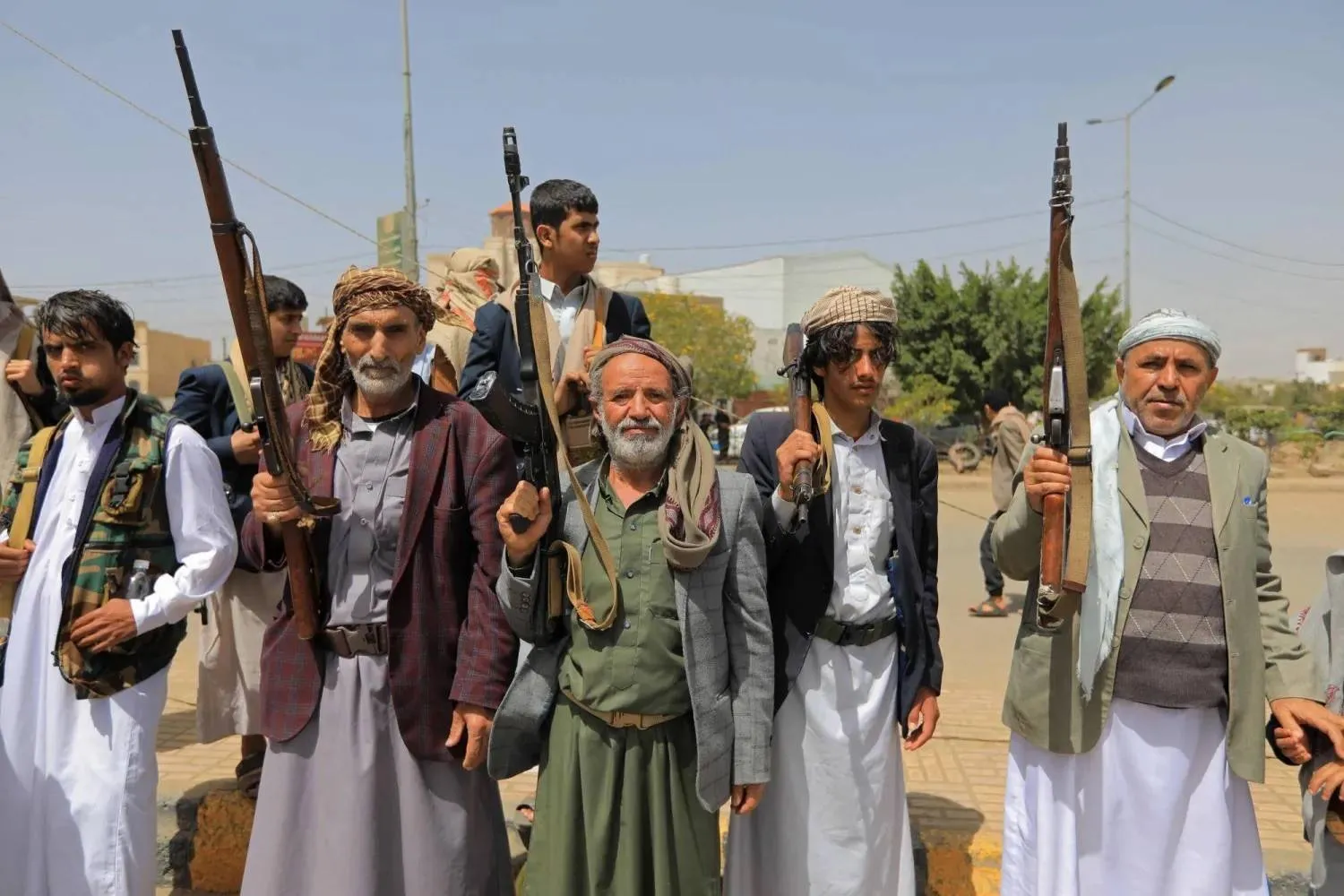
Houthi gunmen during a rally in Sanaa called by their leader (AFP) 
TT

Houthis Threaten ‘Gradual Escalation’ after Fourth Attack on Israel

Houthi gunmen during a rally in Sanaa called by their leader (AFP) 

Yemen’s Houthi group has threatened “gradual escalation” after claiming a fourth attack on Israel, about a week after entering the war alongside Iran as part of the Tehran-led “axis of resistance.”

The move comes as Yemen’s internationally recognized government steps up rhetoric, saying a decisive battle to retake the state from Houthi control is nearing. Israel, for its part, said it is consulting Washington on how to respond to the Houthi attacks, despite their limited impact compared with sustained fire from Iran and Hezbollah.

In a televised statement late Thursday, Houthi military spokesman Yahya Saree said the group launched “a salvo of ballistic missiles” at “vital Israeli targets in the occupied Jaffa area.” He claimed the operation was carried out in coordination with Iran and Hezbollah and had “successfully achieved its objectives.”

The Houthis said their intervention in what they described as a “major and exceptional battle” would be incremental, adding they would adjust their actions depending on “the enemy’s escalation or de-escalation.”

The latest strike marks the fourth since the group announced direct involvement in the regional confrontation, underscoring growing coordination among Iran-backed actors, including Hezbollah and armed Iraqi factions.

Limited effect

The Houthis had claimed a third attack a day earlier. The Israeli military said it intercepted a missile launched from Yemen “without casualties or damage,” adding early detection allowed it to neutralize the threat.

Analysts say such attacks are unlikely to do more than stretch Israel’s air defenses, already under pressure from multiple fronts, including Iran and Hezbollah.

In his first appearance since announcing the escalation, Houthi leader Abdul Malik al-Houthi said the group had shifted from political and media backing of Iran to “direct operational engagement.”

He framed the attacks as part of “joint operations of the axis of resistance,” describing the confrontation as “a duty that transcends geographical borders.” He also defended joining the war, saying neutrality “is not an option,” despite growing concern inside Yemen over the economic and security risks.

Al-Houthi urged supporters to maintain weekly pro-Iran rallies and step up mobilization, including sending school students to summer camps—long used by the group for recruitment.

Government signals offensive

Tareq Saleh, a member of Yemen’s Presidential Leadership Council, said “the battle to end the Houthi coup is approaching,” adding national forces would act “as one team.”

State media reported his remarks during a visit to forces on Yemen’s west coast, where he praised troops as “a safety valve for the republic,” signaling confidence in their ability to regain the initiative.

Saleh also pointed to the regional dimension, saying Iranian actions against Gulf states and Jordan show Tehran’s project is “destructive” and “has never truly been directed at Israel.”

Rejecting Houthi claims, he said the group “pretends to confront Israel” while using that narrative to justify violence against Yemenis, noting the conflict with the Houthis dates back to 2004, well before current regional tensions.


Fire Reported at Foreign Oil Companies' Storage Facilities in Iraq after Drone Strike

Members of Iraq's Hashed al-Shaabi forces stand guard during a pro-Iran rally in Tahrir Square in Baghdad on April 2, 2026.  (Photo by AHMAD AL-RUBAYE / AFP)
Members of Iraq's Hashed al-Shaabi forces stand guard during a pro-Iran rally in Tahrir Square in Baghdad on April 2, 2026. (Photo by AHMAD AL-RUBAYE / AFP)
TT

Fire Reported at Foreign Oil Companies' Storage Facilities in Iraq after Drone Strike

Members of Iraq's Hashed al-Shaabi forces stand guard during a pro-Iran rally in Tahrir Square in Baghdad on April 2, 2026.  (Photo by AHMAD AL-RUBAYE / AFP)
Members of Iraq's Hashed al-Shaabi forces stand guard during a pro-Iran rally in Tahrir Square in Baghdad on April 2, 2026. (Photo by AHMAD AL-RUBAYE / AFP)

A fire broke out ‌early ‌on Saturday at ‌storage ⁠facilities belonging to ⁠foreign ⁠oil ‌companies ‌west of Iraq's ‌Basra after ‌a ‌drone strike, security ⁠sources told Reuters.


Israeli Forces Encircle Bint Jbeil in South Lebanon

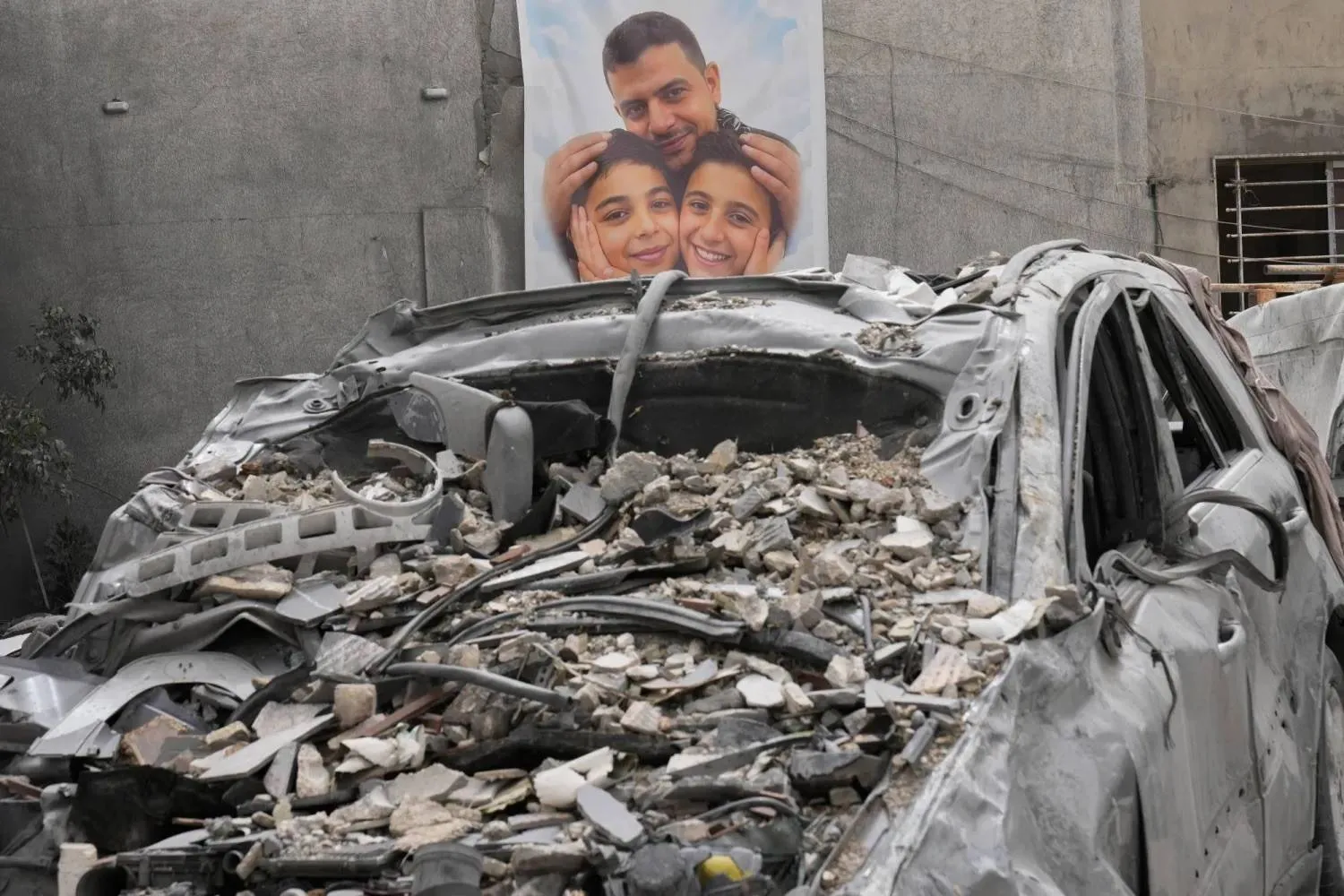
A poster of a man and two children killed in an Israeli air strike that targeted their home in south Lebanon (AP) 
TT

Israeli Forces Encircle Bint Jbeil in South Lebanon

A poster of a man and two children killed in an Israeli air strike that targeted their home in south Lebanon (AP) 

Military developments are accelerating in south Lebanon as Israel steps up pressure through a mix of strikes, evacuation warnings and what analysts describe as a strategy of isolating border towns, with Bint Jbeil emerging as a primary focus.

The Israeli army on Friday warned residents on the northern outskirts of the nearby town of Ain Ebel to move further inside, in what appeared to be an effort to regroup civilians within designated areas.

Attention has centered on Bint Jbeil, where Israel appears to be avoiding a direct ground assault.

Retired Brigadier General Said Kozah told Asharq Al-Awsat that Israeli forces were “relying on a tactic of full encirclement rather than advancing directly into the town”.

He said troops were tightening a cordon along several axes — from Aitaroun and Aainata to the east and south, from Aita al-Shaab toward the outskirts of Haddatha in the north, and potentially from Ain Ebel in the west — effectively isolating Bint Jbeil on all sides.

Kozah noted that the evacuation of Salah Ghandour Hospital in the Saf al-Hawa area, a key junction linking the town to surrounding areas, pointed to an Israeli push to control supply and movement routes.

He added that Israel typically avoids combat in densely built areas due to the high cost, suggesting it may instead rely on heavy bombardment before any ground incursion.

“Bint Jbeil, with its prepared defenses, could become a costly war of attrition,” he stated, adding that a large-scale assault appeared unlikely in the immediate term.

Instead, he said, the likely scenario was continued encirclement, disruption of supply lines and clashes on the outskirts unless battlefield conditions shift.

Alongside developments in the south, Israel expanded pressure to Beirut’s southern suburbs.

Israeli army spokesman Avichay Adraee renewed warnings Friday, urging residents of Haret Hreik, Ghobeiry, Laylaki, Hadath, Burj al-Barajneh, Tahwitat al-Ghadir and Shiyah to evacuate immediately.

In the western Bekaa, Israel struck a bridge linking Sohmor and Mashghara over the Litani River after issuing prior warnings and calling on residents to move north of the Zahrani River.

An Israeli drone later struck worshippers leaving a mosque in Sohmor, killing two people and wounding 11 others, in a sign that strikes were extending to civilian gatherings.

Air strikes resumed on Beirut’s southern suburbs after two days of relative calm, while heavy bombardment continued across the south.

A house between Kafra and Srifa near a center run by the Islamic Health Authority was hit, burning an ambulance without causing injuries.

Strikes also hit Srifa, Braachit, Jouaiya, Borj Qalaouiyeh, Debaal, Ramadiyeh, Bustan, Yohmor al-Shaqif and Shaaitiyeh, with casualties reported, including among Syrians.

Additional strikes targeted Debbine and Srifa in the Tyre district, while intermittent artillery fire hit the outskirts of Haris and Kafra.

Drones were reported flying intensively over Hermel, the northern Bekaa, Beirut, Mount Lebanon and the southern suburbs as part of broad surveillance operations.

At dawn, Apache helicopters fired on the coastline from Bayyada to Mansouri, coinciding with clashes on the ground. Hezbollah fighters were reported to have attacked Israeli forces advancing toward the coastal road near Bayyada.

Overnight strikes hit Bint Jbeil, Hanine, Kounine and Tayri, while eastern Brachit came under artillery fire. Israeli forces also blew up remaining houses in Aita al-Shaab, with explosions heard as far as Tyre.

Separately, Lebanon’s National News Agency said three Indonesian soldiers serving with a UN peacekeeping unit were wounded at their base in Adaisseh by a shell, with the source under investigation.

Hezbollah said it fired rockets toward northern Israel, targeting Kiryat Shmona, troop positions at Honin barracks and military sites in Safed, as well as Metula and Kfar Yuval.

The group also said it detonated an explosive device against Israeli forces in Bayyada, causing casualties that required helicopter evacuation before the area was later shelled.