


Iraq: Shi’ite Attempt to Seize PM Post from Dawa Party

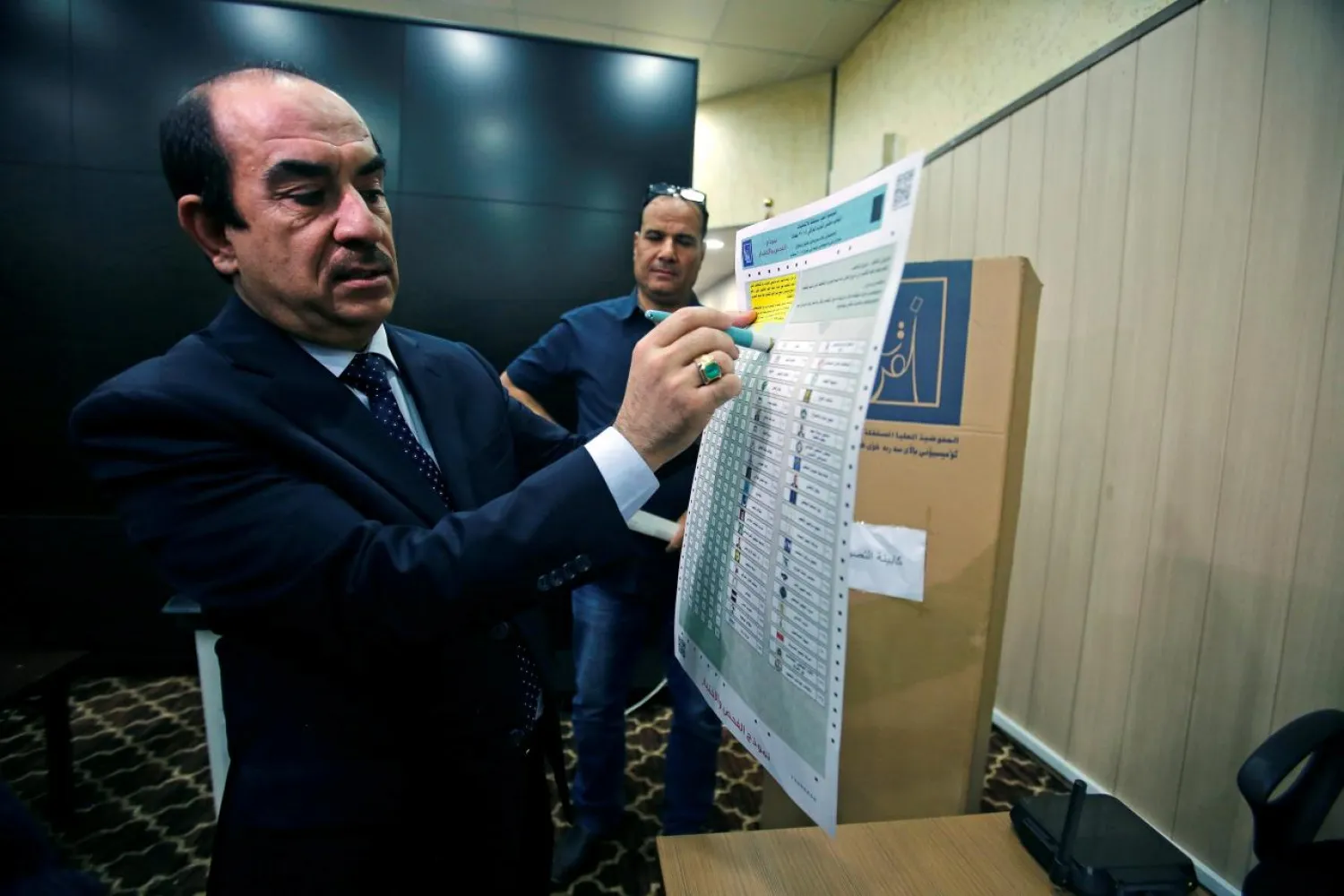
The head of Iraq's Independent Higher Election Commission Dr. Riyhad Al-Badran speaks during an interview with Reuters in Baghdad, Iraq April 21, 2018. Reuters photo
TT

Iraq: Shi’ite Attempt to Seize PM Post from Dawa Party

The head of Iraq's Independent Higher Election Commission Dr. Riyhad Al-Badran speaks during an interview with Reuters in Baghdad, Iraq April 21, 2018. Reuters photo

The past 13 years have proven that the premiership is the prime leadership post in Iraq although the constitution is based on the rotation of power in the executive, legislative and judicial branches.

A senior judge, who asked to remain anonymous, told Asharq Al-Awsat that “the prime minister is the top ruler in Iraq and has a decisive influence on all branches, including the judiciary.”

As a result, the Iraqi political blocs, especially Shi’ites, have been competing to reach the post, which traditionally (and not constitutionally) is reserved to a Shi’ite figure from the political Islam movement.

Therefore, most local observers believe that the biggest challenge facing Shi’ite factions – not affiliated with Dawa - is to seize the post of the prime minister from the party, which will retain the position for a fifth term if it wins the parliamentary elections in May.

Leader of Hikma or National Wisdom Movement Ammar al-Hakim has announced that his party will play a major role in selecting the prime minister, implying that it is eyeing the post.

There are also leaks that Saairun Alliance, which is backed by Muqtada al-Sadr, is looking forward to winning this post to stop the Dawa Party from retaining it.

Some leaders from the Popular Mobilization Forces (PMF) have also hinted their desire to reach the premiership.

Dawa’s rule began in 2005 when Ibrahim al-Jaafari became prime minister for one year.

Then, the party’s current leader, Nuri al-Maliki, won for two consecutive terms (2006 – 2014). In the current round that started in 2014 and ends this year, the post went to incumbent PM Haider al-Abadi.

Dean of the Faculty of Political Science at the University of Nahrain Amer Hassan Fayyad says it is difficult to predict whether Dawa could win a fifth term.

"The alliances that will be formed following the announcement of (election) results are set to determine who the next prime minister will be,” Fayyad told Asharq Al-Awsat.



Over 100 Children Killed in Gaza Since Ceasefire, UNICEF Says

Palestinians walk past tents used by displaced people, during a windy winter day, in Gaza City, January 13, 2026. (Reuters)
TT

Over 100 Children Killed in Gaza Since Ceasefire, UNICEF Says

Palestinians walk past tents used by displaced people, during a windy winter day, in Gaza City, January 13, 2026. (Reuters)

The UN children's agency said on Tuesday that over ​100 children have been killed in Gaza since the October ceasefire, including victims of drone and quadcopter attacks.

“More than 100 children have ‌been killed ‌in Gaza ‌since ⁠the ceasefire ​of ‌early October," UNICEF spokesperson James Elder told reporters at a UN briefing by video link from Gaza.

"Survival remains conditional, whilst ⁠the bombings and the shootings ‌have slowed, have ‍reduced during ‍the ceasefire, they have not ‍stopped."

He said that nearly all the deaths of the 60 boys and ​40 girls were from military attacks including air ⁠strikes, drone strikes, tank shelling, gunfire and quadcopters and a few were from war remnants that exploded.

The tally is likely an underestimate since it is only based on deaths for which sufficient ‌information was available, he said.


Syrian Army Tells Kurdish Forces to Withdraw from Area East of Aleppo City

Buses carrying displaced residents drive past a building in ruins as they return to the Achrafieh neighborhood after days of fighting between government forces and Kurdish fighters in the northern city of Aleppo, Syria, Monday, Jan. 12, 2026. (AP)
TT

Syrian Army Tells Kurdish Forces to Withdraw from Area East of Aleppo City

Buses carrying displaced residents drive past a building in ruins as they return to the Achrafieh neighborhood after days of fighting between government forces and Kurdish fighters in the northern city of Aleppo, Syria, Monday, Jan. 12, 2026. (AP)

Syria's army told Kurdish forces on Tuesday to withdraw from an area they control east of Aleppo after dislodging fighters from two neighborhoods in the city in deadly clashes last week.

State television published an army statement with a map declaring a large area a "closed military zone" and said "all armed groups in this area must withdraw to east of the Euphrates" River.

The area begins near Deir Hafer, around 50 kilometers (30 miles) east of Aleppo city and extends to the Euphrates further east, as well as towards the south.

On Monday, Syria accused the US-backed, Kurdish-led Syrian Democratic Forces of sending reinforcements to Deir Hafer and said it sent its own personnel there in response.

The SDF denied any build-up of its forces in the region.

An AFP correspondent saw government forces bringing military reinforcements including artillery to the Deir Hafer area on Tuesday.

On the weekend, Syria's government took full control of Aleppo city after taking over its Kurdish neighborhoods and evacuating fighters there to Kurdish-controlled areas in the country's northeast following days of clashes.

The violence started last Tuesday after negotiations stalled on integrating the Kurds' de facto autonomous administration and forces into the country's new government.

The SDF controls swathes of the country's oil-rich north and northeast, much of which they captured during Syria's civil war and the fight against the ISIS group.


Syrian Interior Ministry Details Results of Security Campaigns in Latakia, Damascus Countrysides

Security personnel inside the Imam Ali bin Abi Talib Mosque in the Wadi al-Dhahab neighborhood of Homs following a bombing . (AFP)
TT

Syrian Interior Ministry Details Results of Security Campaigns in Latakia, Damascus Countrysides

Security personnel inside the Imam Ali bin Abi Talib Mosque in the Wadi al-Dhahab neighborhood of Homs following a bombing . (AFP)

Syria’s Interior Ministry has announced the results of a series of security operations carried out in recent days in Homs, Latakia, and the Damascus countryside, including the arrest of two alleged ISIS members accused of involvement in the bombing of the Imam Ali bin Abi Talib Mosque in Homs last month.

The ministry said the operations led to the arrest of three senior figures in a cell known as “Lieutenant Abbas,” affiliated with the “Coastal Shield Brigade” led by Miqdad Fteiha, a prominent figure loyal to the former regime.

Security forces also detained an armed group in the al-Wuroud neighborhood of Damascus that was allegedly planning “acts of sabotage.”

The operations form part of broader efforts to dismantle armed groups and restore the state’s exclusive authority over weapons.

Interior Minister Anas Khattab vowed to continue pursuing ISIS operatives and bringing them to justice.

In a post on X, he said security and intelligence services had conducted a “highly precise operation” resulting in the arrest of those involved in the December 26 attack on the Imam Ali bin Abi Talib Mosque in the Wadi al-Dhahab district of Homs, which killed eight people and wounded 18 others.

According to the Interior Ministry, security units in Homs, in coordination with the General Intelligence Service, arrested two persons identified as ISIS members. Authorities said explosive devices, various weapons, ammunition, documents, and digital evidence allegedly linking the suspects to terrorist activities were seized.

The two were referred to the Counterterrorism Directorate to complete investigations ahead of prosecution.

In a separate statement earlier Monday, the Interior Ministry said a “valuable catch” was detained by security and intelligence forces in Latakia. It said he was a key figures in the “Lieutenant Abbas” cell. Initial investigations indicated the cell had targeted internal security and army positions in the province.

Meanwhile, in the Damascus countryside, the ministry said security forces carried out a “preemptive operation” in the al-Wuroud neighborhood of Qudsaya city, arresting three individuals accused of planning armed attacks.

The ministry said security services would continue pursuing remaining members of the groups, pledging to “eradicate them completely” to ensure security and stability.