
Negotiations to Restore Yemen’s Political Process

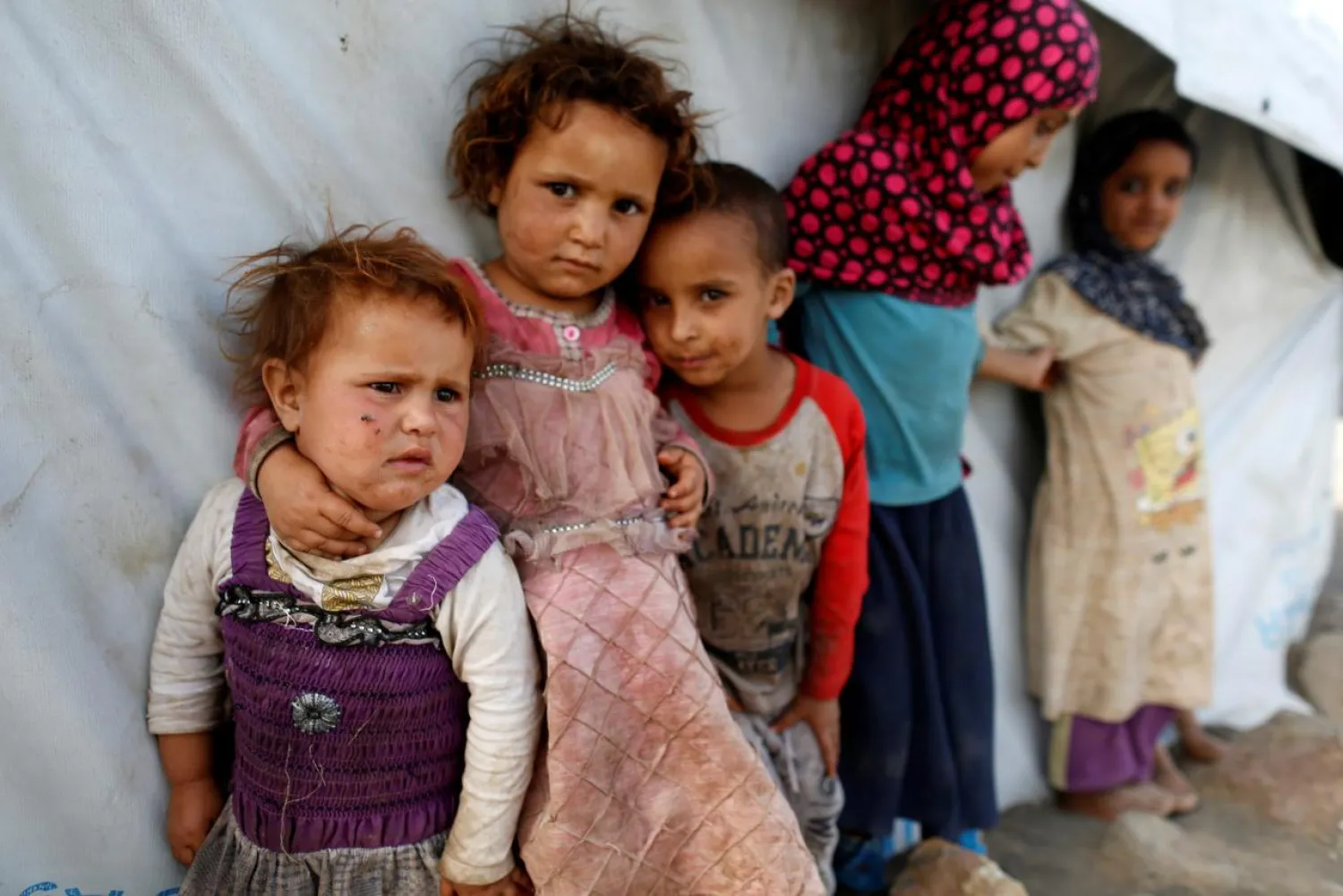
Children stand next to a tent at a camp for people displaced by the war near Sanaa, Yemen April 24, 2017. Reuters/Khaled Abdullah
TT

Negotiations to Restore Yemen’s Political Process

Children stand next to a tent at a camp for people displaced by the war near Sanaa, Yemen April 24, 2017. Reuters/Khaled Abdullah

UN Secretary General Antonio Guterres has revealed "intensive negotiations" to restore dialogue and the political process led by the UN envoy, Martin Griffiths, in hopes of alleviating the suffering of millions of Yemenis.

US Secretary of State Mike Pompeo also said on Monday that Washington was closely monitoring the situation in Yemen, indicating that he had discussed the issue with Emirati leaders and “made clear our desire to address their security concerns while preserving the free flow of humanitarian aid and life-saving commercial imports."

He added that all parties must “fulfill their commitments to work with the Office of the Special Envoy of the Secretary-General of the United Nations to Yemen in order to support the political process to resolve this conflict, ensure humanitarian access to the Yemeni people and map out a stable political future for Yemen."

His comments came as the UN chief said there are "intense negotiations" on Yemen and his envoy is involved in shuttle diplomacy between Sanaa, UAE, and Saudi Arabia hoping it will be possible to avoid the battle in Hodeidah.

"We are, at the present moment in intense consultation … I hope that it will be possible to avoid a battle for Hodeida," Guterres said.

At the request of Britain, the UN Security Council held consultations on Yemen, focusing on the possibility of an impending attack on Hodeidah, a diplomat told Asharq Al-Awsat.

The diplomat reported that the attendees heard a televised statement by Griffiths from Jordan and a statement from Under-Secretary-General for Humanitarian Affairs and Emergency Relief Coordinator Mark Lowcock.

Lowcock told reporters that he and Griffiths briefed the Council on the current situation in Yemen, especially around Hodeidah.

“The focus of the discussion has essentially been about how we prevent a battle for Hodeidah. We explained why Hodeidah matters for the whole of the humanitarian operation,” he added.

Lowcock informed the reporters that dozens of UN staff are still in Hodeidah.

"We are working with very large numbers of Yemeni organizations and individuals through whom we are reaching 7 million people a month, still, with food assistance - and a larger number than that with other forms of assistance," he indicated.

Lowcock explained that he asked the Council’s help in three things.

The first is to ensure that all stakeholders work together to ensure that Hodeida and Saleef ports remain open and operational without interruption so that continued humanitarian relief and adequate levels of essential commercial imports can be ensured.

"Secondly, we would like the Council's help to ensure that all parties to the conflict, including all affiliated forces, meet their obligations to protect civilians and civilian infrastructure, taking active steps to respect the fundamental rules of distinction, proportionality and precautions," he went on to say.

“Thirdly, we would like the Council's help in ensuring that not just Martin Griffiths' current efforts, but also that everybody engages in a positive, productive and serious way with his wider plan, which he will be briefing the Council on next week to move forward with the peace process in Yemen.”

According to a diplomat, Griffiths urged the Council to issue a statement on the situation. He expressed concern that the attack on Hodeidah would disrupt his mediation efforts.

Griffiths visited Sanaa last week where he discussed with a number of Houthi leaders the resumption of negotiations and ways to avoid the attack on Hodeidah.

In his briefing at the meeting, Lowcock warned that the attack on the city, which has a population of 600,000, could lead to heavy civilian casualties.

He stressed that Hodeidah is the single most important entry point for food and basic resources necessary to prevent famine and the recurrence of cholera.

A diplomat stated that some members discussed about Hodeidah as the biggest port in Yemen, adding that even before the war, Yemen imported 90 percent of its basic food needs, almost all medicines and fuel through this port.

"No alternative routes, whether through Aden or other ports or land crossings, can compensate for the loss of access through Hodeidah. It is estimated that more than 22 million people, or three quarters of Yemen's population, need humanitarian assistance," he concluded.

Griffiths is scheduled to brief members of the Council on June 18 on a political framework for the resumption of negotiations.


EU Urged to 'Act Now' on West Bank Settlement Project

The Palestinian village of Turmus Ayya (foreground) and the Israeli settlement of Shilo (background), north of Ramallah in the Israeli-occupied West Bank, are pictured on May 6, 2026. (Photo by Zain JAAFAR / AFP)
TT

EU Urged to 'Act Now' on West Bank Settlement Project

The Palestinian village of Turmus Ayya (foreground) and the Israeli settlement of Shilo (background), north of Ramallah in the Israeli-occupied West Bank, are pictured on May 6, 2026. (Photo by Zain JAAFAR / AFP)

More than 400 former diplomats, ministers, and senior officials on Wednesday urged the European Union to "act now" against Israel's "illegal" settlements in the occupied West Bank.

The open letter comes as Israel intends to move forward with E1, a new construction project covering around 12 square kilometers (4.6 square miles) with some 3,400 housing units in the occupied West Bank.

The move would further separate east Jerusalem, occupied and annexed by Israel and predominantly inhabited by Palestinians, from the West Bank.

"The EU and its member states, together with partners, must take immediate action to deter Israel from further advancing its illegal annexation of Palestinian land in the West Bank," said the letter signed by more than 440 figures, including former EU foreign policy chief Josep Borrell and former Belgian prime minister Guy Verhofstadt.

The signatories called for targeted sanctions, such as visa bans and business restrictions, on "all those engaged in illegal settlement activity", calling for measures against those promoting or implementing the E1 scheme.

The Israeli government plans to publish an initial tender on June 1 for the construction of housing for up to 15,000 "illegal settlers", AFP quoted the letter as saying, urging the EU and its member states to "act now".

The plan has been condemned by international leaders, with UN Secretary General Antonio Guterres's spokesman saying it would pose an "existential threat" to a contiguous Palestinian state.

Excluding east Jerusalem, more than 500,000 Israelis live in the occupied West Bank in settlements that are illegal under international law, among some three million Palestinians.

In 2025, the expansion of Israeli settlements reached its highest level since at least 2017, when the United Nations began tracking data, according to a UN report.

There has been a spike in deadly attacks by Israeli settlers in the occupied West Bank since the start of the Iran war on February 28, Palestinian officials and the United Nations have said.

Israel has occupied the West Bank since 1967.


Israel Army Says Striking Hezbollah Targets across Lebanon

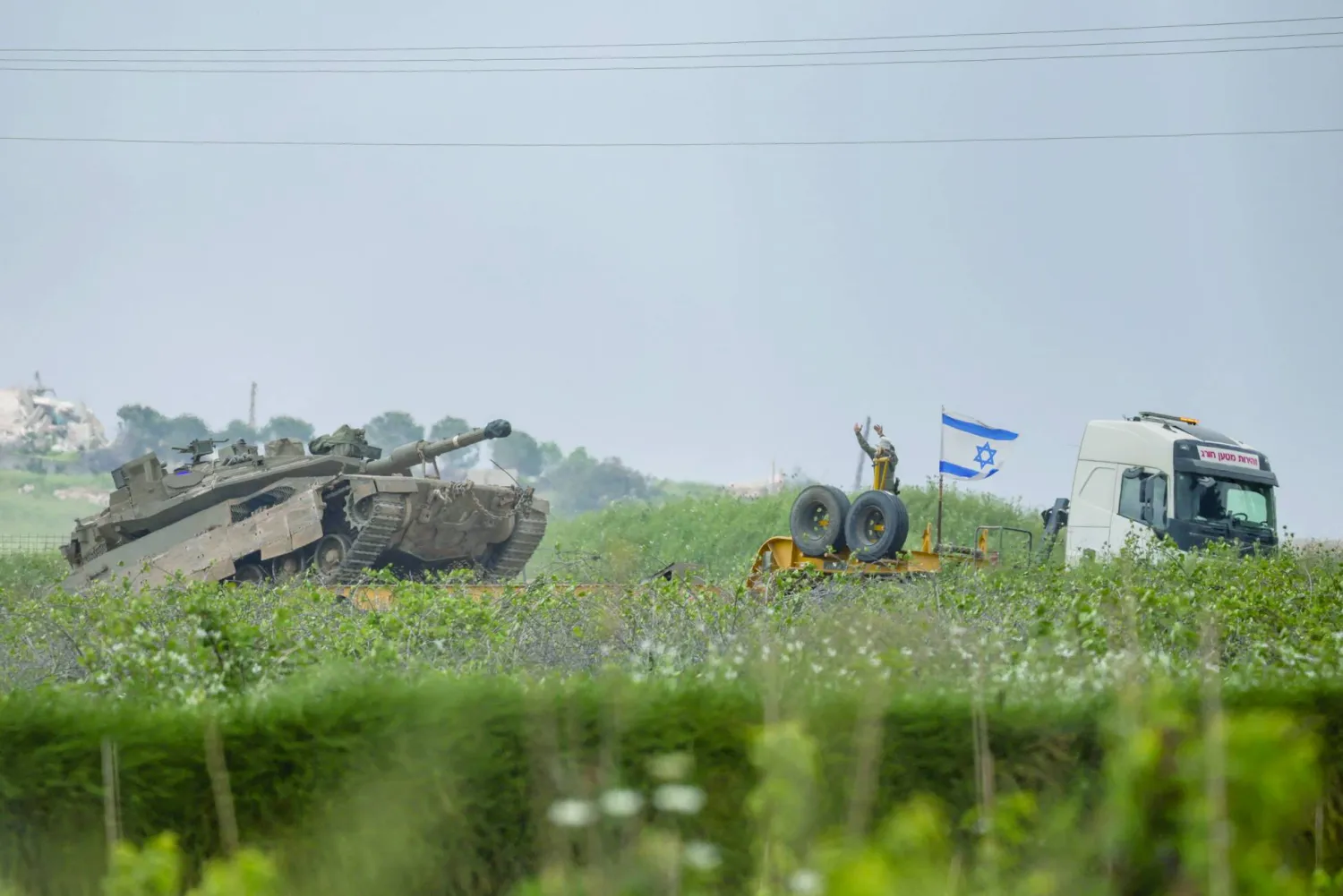
An Israeli soldier gestures next to a tank, on the Israeli side of the border with Lebanon, May 3, 2026. REUTERS/Shir Torem
TT

Israel Army Says Striking Hezbollah Targets across Lebanon

An Israeli soldier gestures next to a tank, on the Israeli side of the border with Lebanon, May 3, 2026. REUTERS/Shir Torem

Israel's army said Wednesday it had begun striking Hezbollah infrastructure in several areas of Lebanon, despite a truce with the neighboring country intended to halt fighting with the Iran-backed militant group. 

"The IDF has begun striking Hezbollah terror infrastructure sites in several areas in Lebanon," a military statement said. 

It came shortly after the army reported "several incidents" during which drones exploded near Israeli soldiers operating in Lebanon's south.  

Lebanon's health ministry said an Israeli strike in Lebanon's eastern Bekaa valley killed four people, with local media reporting the attack took place before the Israeli army issued a warning to evacuate the area along with 11 other towns. 

"An Israeli enemy raid on the town of Zellaya in West Bekaa resulted in four martyrs, including two women and an elderly man," the ministry said. 

Lebanese state media said the attack struck the house of the town's mayor, killing him and three members of his family. 


US Wants 'Concrete Actions' on Iran from Next Iraqi PM

Members of Iraq's pro-Iran paramilitary group Kataeb Hezbollah mourn a comrade who was killed in a strike in Basra, during the funeral in Baghdad on April 8, 2026. AHMAD AL-RUBAYE / AFP/File
TT

US Wants 'Concrete Actions' on Iran from Next Iraqi PM

Members of Iraq's pro-Iran paramilitary group Kataeb Hezbollah mourn a comrade who was killed in a strike in Basra, during the funeral in Baghdad on April 8, 2026. AHMAD AL-RUBAYE / AFP/File

The United States is looking for "concrete actions" by Iraq's next prime minister to distance the state from pro-Iran armed groups before resuming financial shipments and security aid, a senior official said Tuesday.

Iraq's ruling coalition has put forward Ali al-Zaidi as the next leader and he quickly received a congratulatory call from President Donald Trump, who had threatened to end all US support if former frontrunner Nouri al-Maliki took office.

But a senior US State Department official, speaking on condition of anonymity, said Zaidi must address the "blurry line" between pro-Iran armed groups in the Shia-majority country and the state, AFP said.

Washington suspended cash payments for oil revenue, which have been handled from the Federal Reserve Bank of New York in an arrangement dating to the aftermath of the 2003 US invasion of Iraq, as well as security assistance over a spate of attacks on US interests.

Resuming full support "would start with expelling terrorist militias from any state institution, cutting off their support from the Iraqi budget (and) denying salary payments to these militia fighters," the official said.

"Those are the type of concrete actions that would give us confidence and say that there's a new mindset."

The official said US facilities in Iraq suffered more than 600 attacks after February 28, when the United States and Israel launched their war on Iran.

The attacks have come to a standstill since a shaky April 8 ceasefire between the United States and Iran, with the exception of Iranian strikes in Iraqi Kurdistan.

"I'm not underestimating the severity of the challenge or what it would take to disentangle these relationships. It could start with a clear and unambiguous statement of policy that the terrorist militias are not part of the Iraqi state," the official said.

"Certain elements of the Iraqi state have continued to provide political, financial and operational cover for these very terrorist militias," he added.

The United States piled pressure on Iraq after it appeared that Maliki would be the next prime minister. During his previous stint in office, relations deteriorated with Washington over accusations of being too close to Iran's Shia clerical government and fanning sectarian flames.

Attacks by armed groups in Iraq have struck the US embassy in Baghdad, its diplomatic and logistics facility at the capital's airport and oil fields operated by foreign companies.