How Russia 2018 Saw Claustrophobic Football Crowd Tiki-Taka Off World Stage

Andrés Iniesta struggled for influence off the bench against Russia as his side, champions in 2010, departed at the last-16 stage. Photograph: Victor R Caivano/AP
TT

How Russia 2018 Saw Claustrophobic Football Crowd Tiki-Taka Off World Stage

Andrés Iniesta struggled for influence off the bench against Russia as his side, champions in 2010, departed at the last-16 stage. Photograph: Victor R Caivano/AP

The last time France won the World Cup, in 1998, they brought cross-culturalism – which in football is an augmented reality – into the media spotlight. Winners again, they were one of three semi-finalists who had significant numbers of players with a mixed heritage, sons or grandsons of immigrants. That mix, that blend, is to football what poverty always was too: proof that the game itself discriminates according to a player’s worth on the pitch, not his social status – a true meritocracy. The fact that the marginalized continue to find paradise in a game that’s ever more conditioned by money is not insignificant.

It is a relative conquest because the perspectives on this phenomenon continue to carry the same prejudices as ever. When Brazil failed to win the tournament in 1950, the narrative that won out was one that attributed that to the supposed impurity of their race. Eight years later, Didi, Garrincha, Pelé and company brilliantly won the World Cup in Sweden – in what was, you can only assume, proof that race could be purified in record time. Nowadays, depending on the score and depending too on who is talking, much the same things are said (or thought).

There is another, more telling message contained within the current sociological and cultural composition of national teams. This is a more purely footballing one. There was a time in which the way football was played was similar in some way to the place it was played. The theory held that we played as we were, and it found literary expression in Pasolini to whom we turned to hear him talk about the poetic football of South America and the prosaic football of Europe.

As globalization imposes itself, in football too people and ideas are ever more mixed, identities fragmented. And yet within that, identities survive and shift: to take just the famous example, no one can deny that Pep Guardiola’s teams play in verse, Diego Simeone’s in prose. I have no objection to that. I seek only to underline that football continues to reflect social pulses, heartbeats: there are tendencies here too. There are changes and challenges upon ideas and ideals. Nothing is inalterable.

Let’s take that idea on to the field of play, because there the pitches of Russia showed no respect for even the slightest glimmer of greatness, whether that’s national teams, players or dominant ideas. It didn’t care that Germany, Argentina, Portugal and Spain departed to the thunderous noise that surprises always provoke, opening up furious, bloody debate upon their return home.

On the same day, the two Napoleonic leaders of world football were eliminated at a stroke – goodbye to Messi and Ronaldo – and the World Cup didn’t care that their departure left a sense of emptiness among football lovers. The greatest act of disdain for the established order, though, was the merciless way Russia 2018 swept aside Germany and Spain, the previous two winners of the World Cup and also, more even than that, representatives of a way of being, an identity, that revolutionised the game, imposing an abusive domination of the ball over the last decade.

We came to the World Cup to enjoy it, to feel the excitement and embrace the emotion, to analyse the tendencies too, but the abrupt end that befell Germany and Spain left us disconcerted because it endangers something seemingly so significant as the tiki-taka style that conquered the last two World Cups and became a footballing yardstick by which the game was measured. This beautiful, winning style left mediocrity exposed but it always had its detractors and now they are dancing upon its grave. They would be mistaken to believe it is definitively buried, but those of us who adhered to an ideal which made the ball the heart of the game, the focal point of everything, would be even more mistaken to overlook its excesses and flaws.

Talent serves to make a virtue of vice. Players with natural deficiencies, those who lack the qualities others boast, find original means to hide their defects and thus, through embracing those deficiencies, they dazzle and often dominate. Players such as Xavi, Andrés Iniesta, Philipp Lahm and Toni Kroos escaped from the obsession with physique and tactics, from the place where football was heading, to where – judging by what we have seen in Russia – it seeks to return. Instead, through exquisite technique in control and passing, an unusual intelligence and understanding of the game, they came to dominate – to impose their superiority and even, eventually, to abuse it. It is true that they did so with more possession than goals but their opponents regretted becoming footballers when they spent the entire game running after the ball. And at the end of it, it was the owners of the ball who lifted the trophy.

In Russia that virtue became a vice and tiki-taka became a caricature of itself. The objective became to pass the ball, ignoring the existence of the goalposts. Like a writer with a perfect command of language who forgets what it is he wants to say. The ball, used with creativity, guile and ingenuity, serves to distract and to clear the path towards the opposition’s goal. That requires criteria – an understanding of what it is you are trying to achieve – and it requires the ball to circulate quickly, in order to be able to reach the final 30 meters of the pitch with some advantage. From there, to unbalance and overcome the opposition, you need the same tools as ever: dribbling, a one-two, imagination, precision to deliver a pass inside and aggression in all its manifestations – speed, ambition, determination.

None of that happened in Russia, where tiki-taka became “tiki-tiki”, turning Spain (71.3% of the ball) and Germany (67.3%) into the victims of teams that accepted they were far smaller and played to resist, waiting with 10 men inside their own half. This World Cup showed that for domination to be victorious, it requires bravery and confidence – precisely what Germany lacked, and Spain even more so. They were more concerned with not losing the ball – playing tedious passes to feet in an attempt to avoid their opponents’ counterattacks – than with making their moves dangerous, accepting and embracing risk, giving their moves the daring football has always had.

I despise the notion of winning at all costs and any way you can, so let’s not even get on to the notion of not losing at all costs and any way you can. And yet even with those reservations over the ugliness and mean-spiritedness that always threatens football, it is to their great honor that national teams who are manifestly inferior rebel against the great powers with heroic effort and endeavor. We should appreciate that. That’s football too. And yet ultimately Russia 2018 did not rescue from defeat those who – like Sweden, Iceland, and Russia themselves – sought an antidote to tiki-taka in a defensive, reactive way of playing that offered little real joy.

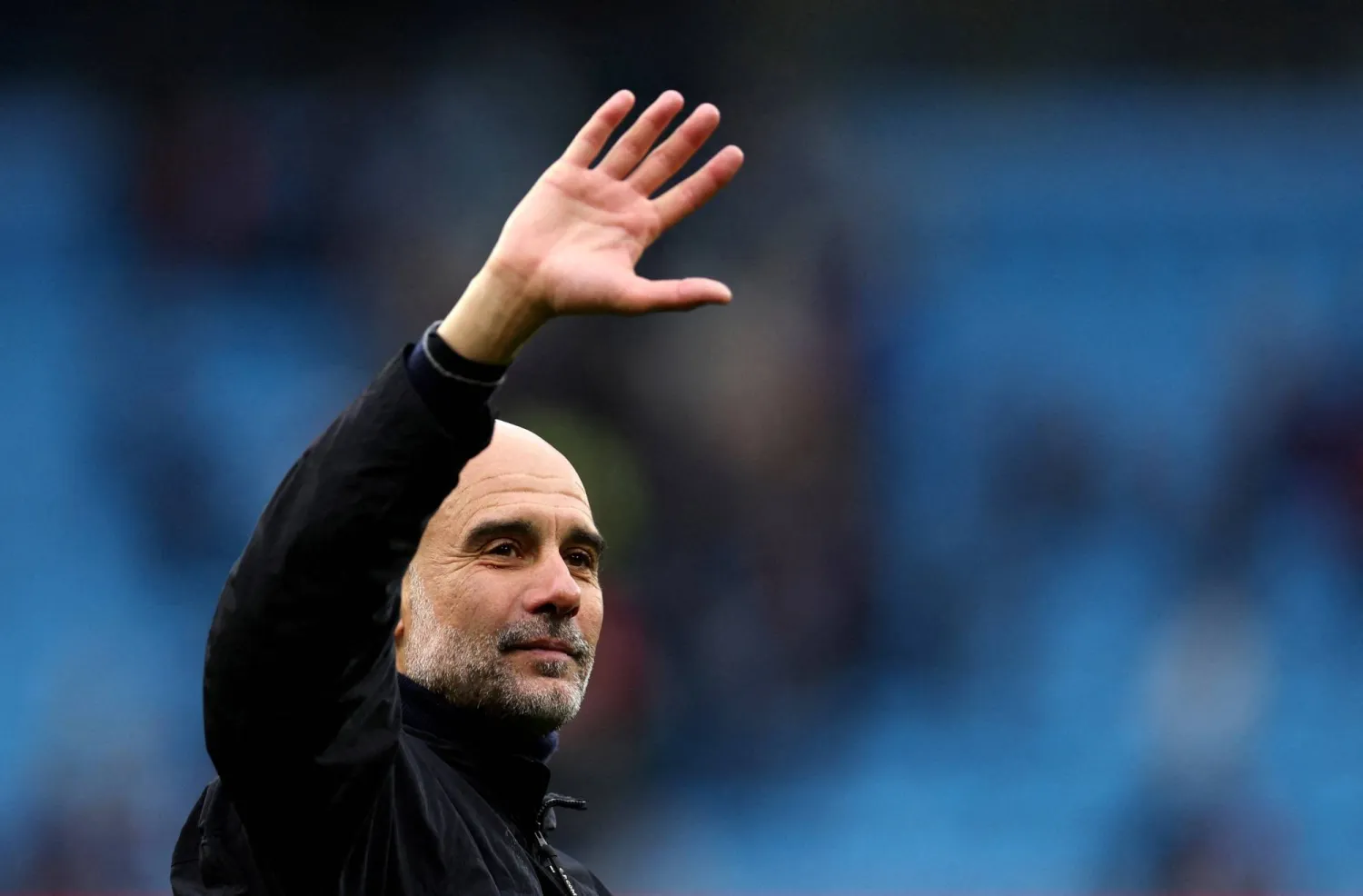
Tiki-taka needs to be taken to the workshop and checked for malfunctions in order to prevent it becoming an act of impotence and pointlessness that commits the worst sin of all: to bore. The best mechanic to fine-tune the engine and tighten the screws had a significant influence on Spain winning the World Cup in South Africa from Barcelona and had an influence too on Germany winning the last World Cup from Munich. He lives in Manchester, he’s a little bit mad and his name is Pep Guardiola. If we are awaiting a way of revitalizing this style with a creative energy that can see that football reborn, that’s where it will come from. It would suit England too, as they begin to walk a path that is promising. To reach its end, you need an almost fanatical faith in possession as a dogma. That’s why a madman matters.

What the World Cup in Russia did was consecrate the middle way. Teams that do not seek to dominate for 90 minutes, nor dig in and wait deep – the tactic we came to know as “the bat”, everyone hanging from their own crossbar. That particularly miserable approach seems to have disappeared but so too does a sense of grandiosity – a determination to pursue values, a vision, to the last.

Pragmatic, eclectic teams won, teams that opened and closed like an accordion, driven by the effort of everyone. Teams that felt more comfortable counterattacking and that made set plays – as exciting as dancing with your sibling – a critical element of their game. Teams so pragmatic as to take off an attacker to put on a midfielder (or a defender) as soon as they led, and to do the opposite as soon as they trailed. Colombia were the best example against England. They started with three defensive midfielders and one striker and finished, better, with three strikers and one defensive midfielder.

Much of the football was somewhat claustrophobic, and very physical. The lack of space obliges teams to play faster than many players are capable of doing. But that isn’t something you fix by running more; rather, you fix it by improving your technique. From now on, anyone who does not have technique at speed will struggle to survive at the highest level. The majority of games were close, exhibiting a tremendous tactical awareness – the collective way ahead of the individual. They also showed levels of effort that was genuinely moving (even the stars were generous with their sweat), and, let’s be honest, a considerable dose of cunning and sneakiness. Pragmatism must take advantage of everything it finds in its path in order to prosper.

It is worth analyzing a coming problem here: as the penalty areas become patrolled, and controlled, by the VAR – and in the area, the sentences are practically jail terms – fouls will become preventative instead. They will be committed in the demilitarised zones of the pitch unwatched by the cameras, that territory where VAR does not patrol and referees are more permissive. There will be more of those fouls that tend to get called “tactical” or, with even greater cynicism, “intelligent”. As football is continuous, a game that flows, it is worth asking how many goals are lost somewhere in the middle of the pitch as a result of these absolutely unsporting interruptions.

As the World Cup brought us this refereeing revolution, it is worth reminding the judicial police who manage the VAR and the referees who abdicate responsibility, handing it instead to the men sitting before video screens, that their job remains the same as it always was: to protect the game and not become accomplices of the cheats and cynics who think they’re smart. It is a reminder, a warning, that it may be worth extending even more forcefully to the players and coaches so that they care for this wonderful game, playing it without cheating and, where possible, honoring it with beauty.

Honor, then, to France who raised the trophy and in doing so, like every winner, laid a path that sets a trend that will last until the next World Cup.

(The Gurdian)


Sports Investment Forum Allocates Third Day to Women's Empowerment to Promote Sustainable Investment in Women’s Sports

Sports Investment Forum Allocates Third Day to Women's Empowerment to Promote Sustainable Investment in Women’s Sports
TT

Sports Investment Forum Allocates Third Day to Women's Empowerment to Promote Sustainable Investment in Women’s Sports

Sports Investment Forum Allocates Third Day to Women's Empowerment to Promote Sustainable Investment in Women’s Sports

The Sports Investment Forum announced that the third day of its 2026 edition will be dedicated to empowering women in the sports sector, in partnership with Princess Nourah bint Abdulrahman University. The move reflects the forum’s commitment to supporting the objectives of Saudi Vision 2030 and enhancing the role of women in the sports industry and sports investment.

This allocation comes as part of the forum’s program, scheduled to take place from April 20 to 22, at The Ritz-Carlton, Riyadh. The third day will feature a series of strategic sessions and specialized workshops focused on sustainable investment in women’s sports, the empowerment of female leadership, the development of inclusive sports cities, and support for research and studies in women’s sports, SPA reported.

Forum organizers emphasized that the partnership with Princess Nourah bint Abdulrahman University, recognized as the largest women’s university in the world, represents a model of integration between the academic and investment sectors. The partnership contributes to building a sustainable knowledge base that supports the growth of women’s sports and enhances investment opportunities at both local and international levels.

The dedicated day will address several strategic themes, including sustainable investment in women’s leagues and events, boosting scalable business models, empowering female leaders within federations, clubs, and sports institutions, and developing inclusive sports cities that ensure women’s participation in line with the highest international standards. It will also include the launch of research initiatives and academic partnerships to support future policies and strategies for the sector.

This approach aims to transform women’s empowerment in sports from a social framework into a sustainable investment and development pathway that enhances women’s contributions to the sports economy and reinforces Saudi Arabia’s position as a leading regional hub for advancing women’s sports.

The day is expected to attract prominent female leaders, decision-makers, investors, and local and international experts, in addition to the signing of several memoranda of understanding and joint initiatives supporting women’s empowerment in the sports sector.

The Sports Investment Forum reiterated that empowering women is a strategic pillar in developing the national sports ecosystem, contributing to economic growth objectives, enhancing quality of life, and building a more inclusive and sustainable sports community.


Liverpool Boss Slot Says Isak in 'Final Stages of Rehab'

Soccer Football -  FA Cup - Fourth Round - Liverpool v Brighton & Hove Albion - Anfield, Liverpool, Britain - February 14, 2026 Liverpool manager Arne Slot celebrates after the match REUTERS/Phil Noble
Soccer Football - FA Cup - Fourth Round - Liverpool v Brighton & Hove Albion - Anfield, Liverpool, Britain - February 14, 2026 Liverpool manager Arne Slot celebrates after the match REUTERS/Phil Noble
TT

Liverpool Boss Slot Says Isak in 'Final Stages of Rehab'

Soccer Football -  FA Cup - Fourth Round - Liverpool v Brighton & Hove Albion - Anfield, Liverpool, Britain - February 14, 2026 Liverpool manager Arne Slot celebrates after the match REUTERS/Phil Noble
Soccer Football - FA Cup - Fourth Round - Liverpool v Brighton & Hove Albion - Anfield, Liverpool, Britain - February 14, 2026 Liverpool manager Arne Slot celebrates after the match REUTERS/Phil Noble

Liverpool manager Arne Slot said on Thursday he believes striker Alexander Isak is in the "final stages of rehab" and could return by the end of next month to bolster the Reds' push for Champions League qualification.

The British record signing has been sidelined since mid-December when he fractured a bone in his lower leg and needed ankle surgery following a sliding tackle from Tottenham's Micky van de Ven.

His injury came just as 26-year-old Sweden international Isak, who joined Premier League champions Liverpool for £125 million ($169 million) from top-flight rivals Newcastle in September, was finding his form at Anfield with two goals in six matches.

"Alex has been on the pitch, not with his football boots but with his running shoes for the first time this week," Slot told reporters, according to AFP.

"The next step is doing work with the ball, which every player likes most, then the next step is to come into the group and then it takes a while before you're ready to play.

"It will be some time around there, end of March, start of April, where he is hopefully back with the group. That is not to say you are ready to play, let alone start a game.

"But it's nice that rehab goes well; that's a compliment to him and our medical staff.

"I think we all know the moment you go on the pitch it doesn't take three months but these final stages of rehab can also make it change."

Isak is one of five Liverpool first-team players currently sidelined, with only Jeremie Frimpong close to a return.

The right-back has been out since the end of last month with a hamstring injury but is expected to be available for next weekend's visit of West Ham.

Liverpool have had a rare week without a match ahead of Sunday's trip to Nottingham Forest.

"It is nice and useful as the players we are having, nine out of 10 go to the national team so for seven, eight, nine months they hardly have a time off," said Dutch boss Slot, who insisted he had no need of a rest himself.

"It was nice but I did not really need it. Last season I felt I needed it more in this period of time. I am enjoying the work I do here."

Liverpool, after a slow start to their title defense -- are now sixth and within three points of the top four with 12 games to go.

They next play three of the bottom four clubs as they look to get themselves into a Champions League position.

Premier League leaders Arsenal were left just five points clear of second-placed Manchester City after blowing a two-goal lead in a shock 2-2 draw away to rock-bottom Wolves on Wednesday.

Slot, however, said: "We didn't need yesterday to know how difficult it is to win a Premier League game. What has made the Premier League nicer this season than three, four, five, six years ago is it's more competitive."


Familiar Face Returns to Marseille where Habib Beye Takes Charge

(FILES) Rennes' French-Senegalese head coach Habib Beye looks on before the French L1 football match between Le Havre AC (HAC) and Rennes at the Oceane Stadium in Le Havre, Northwestern France, on April 13, 2025. (Photo by Lou BENOIST / AFP)
TT

Familiar Face Returns to Marseille where Habib Beye Takes Charge

(FILES) Rennes' French-Senegalese head coach Habib Beye looks on before the French L1 football match between Le Havre AC (HAC) and Rennes at the Oceane Stadium in Le Havre, Northwestern France, on April 13, 2025. (Photo by Lou BENOIST / AFP)

Marseille is looking to reignite its season with a new coach on board.

The nine-time French champion appointed Habib Beye to replace Roberto De Zerbi following a bad patch of form that saw the club exit the Champions League and drop 12 points behind Ligue 1 leader Lens.

Beye, a former Senegal international who played for Marseille, will be in charge of Friday's trip to Brest.

After leading Red Star to promotion to Ligue 2, Beye spent the last year and a half as the Rennes coach. The club sacked Beye this month.

Key matchups Marseille has failed to win its past three league games, badly damaging its title hopes. The results including a 5-0 mauling at PSG have left fans fuming. The club hopes Beye, a disciplinarian advocating ball possession and a strong attacking identity, will produce a jolt.

Beye's hiring "refocuses us on the challenges we still need to tackle between now and the end of the season,” The Associated Press quoted Marseille owner Frank McCourt as saying.

Since McCourt bought Marseille in 2016, the former powerhouse has failed to find any form of stability in a succession of coaches and crises. It hasn’t won the league title since 2010.

PSG abandoned the top spot to Lens after losing to Rennes 3-1 last week. Luis Enrique's team bounced back with a 3-2 win at Monaco in the first leg of their Champions League playoff and hosts last-placed Metz on Saturday. Lens welcomes Monaco the same day.

Third-placed Lyon, on a stunning 13-match winning run, plays at Strasbourg on Sunday.
Players to watch With the World Cup in his country looming, former Arsenal striker Folarin Balogun is hitting form at the right time. The American forward scored twice inside 18 minutes against PSG and has 10 goals and four assists this season.

At PSG, the man in form is Désiré Doué.

After his team quickly fell behind by two goals against Monaco midweek, Doué came to the rescue to turn things around. The France international was relentless and left his mark on the match after coming on as a replacement for Ousmane Dembélé. He first reduced the deficit, played a role in Achraf Hakimi’s equalizer then netted the winner.
Out of action Dembélé is expected to miss PSG's match against Metz because of an injured left calf.

Off the field PSG was sanctioned with the partial closure of the Auteuil stand for two matches and a 10,000 euros ($11,800) fine by the disciplinary committee of the French league following banners displayed and insults directed by supporters during the match against Marseille on Feb. 8. at the Parc des Princes. There were brief discriminatory chants about Marseille at the start of the game and the referee stopped play for about one minute around the 70th.