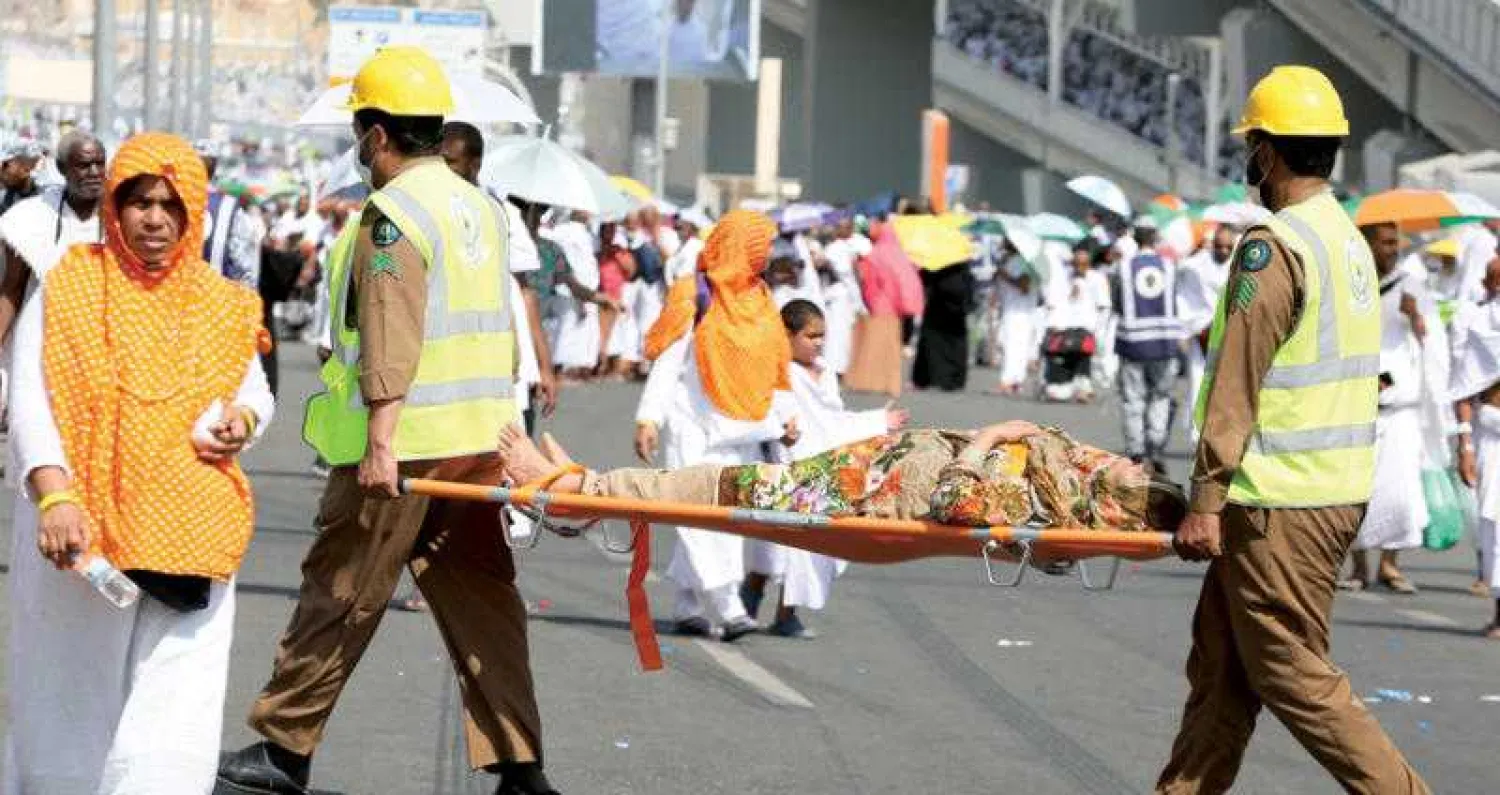

Security operations taking place in Saudi holy sites during this year’s Hajj season took into account several criteria, involved rapid and selective deployment based on human concentration distribution, Makkah Civil Defense Director Maj. Gen. Salem Al-Matrafi told Asharq Al-Awsat.
Civil defense teams are efficiently deployed for securing pilgrims during the stoning of the devil ritual. More so, a number of personnel specialized in rescue, firefighting and evacuation, and supported by motor crews, are on alert and ready to intervene in Hajj-affiliated areas.
Matrafi said civil defense taskforces are carrying out a mapped out security plan which includes 18,000 civil defense servicemen and more than 3,000 mechanisms to match possible risks scenarios.
The task of the Civil Defense Force at the Jamarat facility, the zone where Hajj pilgrims perform the stoning of the devil ritual, is to deal with any rising emergency and provide urgent services, Matrafi said.
On Eid al-Adha (the 10th day of the month of Dhu al-Hijjah), pilgrims must strike one of three jamarat-- three walls (formerly pillars) said to represent evil -- with seven pebbles.
Civil Defense has been keen to be present at train stations and the Jamarat area in order to monitor the safety controllers.
In the case of rising risks pilgrims could be facing, a comprehensive rapid intervention is initiated.
Plans for the evacuation of patients, especially the elderly, who may be exposed to any health complications as a result of stress or crowding and stampede during rituals are up and running.
Matrafi pointed out that “the plan of civil defense in general aims to provide safety and protection for pilgrims.”
Security forces will continue to be stationed throughout the whole devil stoning ritual, and carry out evacuation plans for cases that may be exposed to injury or exhaustion to nearby health centers.
The number of volunteers aiding civil defense taskforces is 1,485, nearly double last year’s count.