


Iran's Oil Exports Drop Ahead of US Sanctions

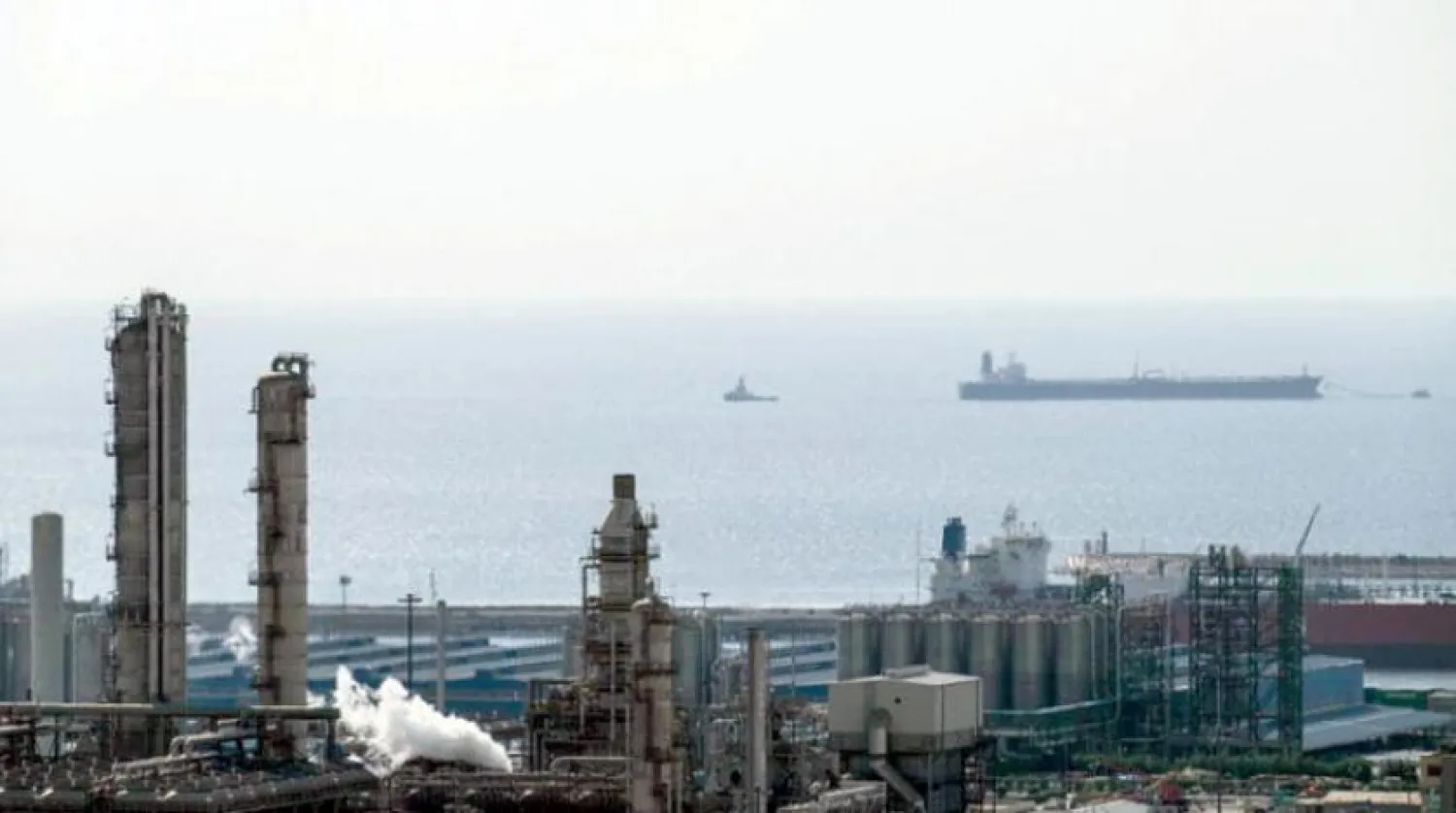
 An oil tanker passes by a gas facility in Iran's southern Pars field (Reuters)
An oil tanker passes by a gas facility in Iran's southern Pars field (Reuters)
TT

Iran's Oil Exports Drop Ahead of US Sanctions

 An oil tanker passes by a gas facility in Iran's southern Pars field (Reuters)
An oil tanker passes by a gas facility in Iran's southern Pars field (Reuters)

Iran’s crude oil and condensate exports in August are set to drop below 70 million barrels for the first time since April 2017 ahead of the November 4 start date for a second round of US economic sanctions.

The United States has asked buyers of Iranian oil to cut imports to zero starting in November to force Tehran to negotiate a new nuclear agreement and to curb its influence in the Middle East.

The total volume of crude and condensate, an ultra-light oil produced from natural gas fields, to load in Iran this month is estimated at 64 million barrels, or 2.06 million barrels per day (bpd), versus a peak of 92.8 million barrels, or 3.09 million bpd, in April, preliminary trade flows data on Thomson Reuters Eikon showed.

The National Iranian Oil Co has slashed its crude prices to keep buyer interest amid the August export drop. It has set the official selling price (OSP) for Iranian Heavy crude for September loading at the biggest discount since 2004, according to Reuters and trade data.

Iran is currently the third-largest producer among the members of the Organization of the Petroleum Exporting Countries (OPEC) and benchmark oil futures traded in London have surged to their highest since June in anticipation of the loss of Iranian supply.

Imports by its key customers have all dropped in August as some buyers, banks and insurance companies have already suspended dealings in Iranian oil.

Loadings bound for top customer China are set to fall to 18.4 million barrels in August, from 24 million barrels in July which was its highest monthly volume this year, the data showed.

China has switched to using Iranian tankers to deliver the country’s crude since July to side-step the sanctions and sustain Iranian oil imports until at least October.

The volume of oil heading to India is 8.2 million barrels, down from more than 20 million barrels in each month since April.

Exports to India could still rise as the destination for about 11 million barrels of Iranian oil loading this month are yet to be identified.

Iran has not loaded any oil bound for South Korea since July.

Cargoes loading for Europe have been falling from a peak of 22.2 million barrels in March down to about 12 million barrels in August, the data showed.

Japan-bound loadings have been scaled back to 3.4 million barrels in August, down for a second straight month. Japanese refiners are expected to load their last Iranian oil by mid-September so they will arrive in Japan before November.



Gold Steady ahead of Key US Inflation Data; Silver near Record Highs

FILE PHOTO: UK gold bullion bars and coins are displayed at Baird & Co in Hatton Garden in London, Britain, October 8, 2025. REUTERS/Hiba Kola/File Photo
TT

Gold Steady ahead of Key US Inflation Data; Silver near Record Highs

FILE PHOTO: UK gold bullion bars and coins are displayed at Baird & Co in Hatton Garden in London, Britain, October 8, 2025. REUTERS/Hiba Kola/File Photo

Gold prices were broadly steady on Thursday, supported by dovish Federal Reserve signals but restrained by a resilient dollar ahead of key US inflation data this week, while silver hovered near record highs.

Spot gold fell 0.2% to $4,333.12 an ounce as of 0652 GMT, after rising more than 1% late on Wednesday. US gold futures also eased 0.2% to $4,363.60.

The dollar index held on to earlier gains after touching a nearly one-week high on Wednesday, limiting upside in greenback-priced bullion.

Spot silver rose 0.1% to $66.36 an ounce after hitting a record high of $66.88 in the last session, and is up 130% year-to-date, outpacing gold's 65% gain on firm industrial demand, steady investment interest and tightening inventories.

Some analysts expect silver to test the $70-per-ounce level next year, particularly if US interest rate cuts continue to underpin appetite for precious metals, Reuters reported.

"Remarks by Waller indicate that the Fed could maintain its ongoing rate cut cycle... so that's supporting both gold and silver right now," said Kelvin Wong, senior market analyst at OANDA, adding that some profit-taking could emerge at current levels.

Fed Governor Christopher Waller said the central bank can still cut rates amid a cooling labor market and would "absolutely" defend its independence if challenged, as he awaited an interview with US President Donald Trump for Powell's succession.

Earlier this week, data showed the US unemployment rate rose to 4.6% in November, above a Reuters poll forecast of 4.4% and the highest since September 2021.

The Fed delivered its third and final quarter-point rate cut of the year last week, with markets now pricing in two additional 25-basis-point cuts in 2026.

Non-yielding assets such as gold typically benefit in a lower-interest-rate environment.

Investors are now awaiting November's US Consumer Price Index due later in the day, followed by the Personal Consumption Expenditures price index on Friday.

Platinum rose 4% to $1,973.91, a more than 17-year high, while palladium added 2.4% to a nearly three-year high of $1,687.39.


Saudi Interior Ministry Signs Agreement with HUMAIN to Advance AI Localization

Agreement with HUMAIN to adopt advanced technology, localize AI solutions. (SPA)
TT

Saudi Interior Ministry Signs Agreement with HUMAIN to Advance AI Localization

Agreement with HUMAIN to adopt advanced technology, localize AI solutions. (SPA)

Assistant Minister of Interior for Technology Affairs Prince Dr. Bandar bin Abdullah bin Mishari affirmed that the strategic agreement signed by the Ministry of Interior with HUMAIN falls within the ministry’s commitment to adopting advanced technologies and localizing artificial intelligence (AI) solutions.

HUMAIN is a Public Investment Fund (PIF) company specialized in delivering full-stack AI capabilities at a global level, the Saudi Press Agency reported on Thursday.

The assistant minister explained that the agreement, signed during the opening ceremony of the Absher Conference 2025, held under the patronage of Minister of Interior Prince Abdulaziz bin Saud bin Naif bin Abdulaziz, constitutes a key component of the ministry’s efforts to develop high-performance computing infrastructure.

This contributes to the modernization of the technological environment and the enhancement of the efficiency of operational and administrative functions.

The assistant minister further clarified that the agreement aims to strengthen the ministry’s digital capabilities across its internal functions and to adopt advanced domestic technologies in large language models, high-performance computing, and intelligent solutions.

This, he said, enhances operational efficiency, improves service quality, supports data analysis and enables informed decision-making.

HUMAIN CEO Tareq Amin explained that the strategic agreement reflects the company’s focus on developing secure, high-performance AI solutions, including leveraging advanced Arabic language models and intelligent analytics tools, to meet the operational requirements of government entities.

He further added that the agreement will support future initiatives aligned with AI adoption strategies, as well as the approved technical and governance standards.

In this regard, the Ministry of Interior also announced the launch of the Artificial Intelligence Channel (HUMAIN Chat) through the Absher–Interior Platform to enable its personnel to access advanced AI tools.

These tools support rapid information retrieval, the performance of administrative and knowledge-based tasks supporting institutional operations, and the enhancement of performance efficiency. They also support increased productivity, improved output quality, and the provision of interactive analytical capabilities that contribute to facilitating the execution of daily work.


Saudi Cabinet Approves Cancellation of Expat Levy on Foreign Workers in Licensed Industrial Establishments

Prince Mohammed bin Salman bin Abdulaziz Al Saud, Crown Prince and Prime Minister, chairs a cabinet meeting. (SPA)
TT

Saudi Cabinet Approves Cancellation of Expat Levy on Foreign Workers in Licensed Industrial Establishments

Prince Mohammed bin Salman bin Abdulaziz Al Saud, Crown Prince and Prime Minister, chairs a cabinet meeting. (SPA)

The Saudi Cabinet, chaired by Prince Mohammed bin Salman bin Abdulaziz Al Saud, Crown Prince and Prime Minister, approved on Wednesday the cancellation of the expat levy on foreign workers in licensed industrial establishments.

The decision is based on the recommendation of the Council of Economic and Development Affairs.

It reflects the continued support and empowerment the industrial sector receives from the Kingdom’s leadership.

It also underscores the Crown Prince’s commitment to enabling national factories, strengthening their sustainability, and enhancing their global competitiveness.

The step aligns with the Kingdom’s ambitious vision to build a competitive and resilient industrial economy, recognizing industry as a cornerstone of national economic diversification under Saudi Vision 2030.

Minister of Industry and Mineral Resources Bandar Alkhorayef expressed his sincere gratitude and appreciation to Custodian of the Two Holy Mosques King Salman bin Abdulaziz Al Saud and to Crown Prince Mohammed on the Cabinet’s decisions.

The move reflects the continued support and empowerment the industrial sector receives from the Crown Prince, he added.

He noted that the move will boost the global competitiveness of the Saudi industry and further increase the reach and presence of non-oil exports in international markets.

Alkhorayef stressed that the exemption of the expat levy over the past six years - through the first and second exemption periods from October 1, 2019, to December 31, 2025 - played a critical role in driving qualitative growth in the industrial sector and expanding the Kingdom’s industrial base.

Between 2019 and the end of 2024, the sector achieved significant milestones: the number of industrial facilities increased from 8,822 factories to more than 12,000; total industrial investments rose by 35%, from SAR908 billion to SAR1.22 trillion; non-oil exports grew by 16%, rising from SAR187 billion to SAR217 billion; employment grew by 74%, from 488,000 workers to 847,000; localization increased from 29% to 31%; and industrial GDP rose by 56%, from SAR322 billion to more than SAR501 billion.

Alkhorayef said that these achievements would not have been possible without the unwavering support provided to the industry and mineral resources ecosystem by the Kingdom’s leadership.

The minister added that the Cabinet’s decision to cancel the expat levy for the licensed industrial establishments will further strengthen sustainable industrial development in the Kingdom, bolster national industrial capabilities, and attract more high-quality investments, especially given the incentives and enablers offered by the industrial ecosystem.

The decision will also reduce operational costs for factories, helping them expand, grow, and increase their output, and accelerate the adoption of modern operating models such as automation, artificial intelligence, and advanced manufacturing technologies. This, he said, will boost the sector’s efficiency and enhance its ability to compete globally.

Alkhorayef reaffirmed the ministry’s commitment to supporting the continued growth of the industrial sector in the coming period through close cooperation with all relevant entities, empowering the private sector, and providing an investment-friendly industrial environment that fosters innovation and technology.

These efforts reflect the Kingdom’s commitment to its vision of becoming a global industrial powerhouse by enabling advanced industries, attracting international investment, offering 800 industrial investment opportunities worth SAR1 trillion, and tripling industrial GDP to SAR895 billion by 2035 and reinforcing industry as a central pillar of national economic diversification, he said.