
Basra Protests Spread... Barzani, Sadr Voice Support

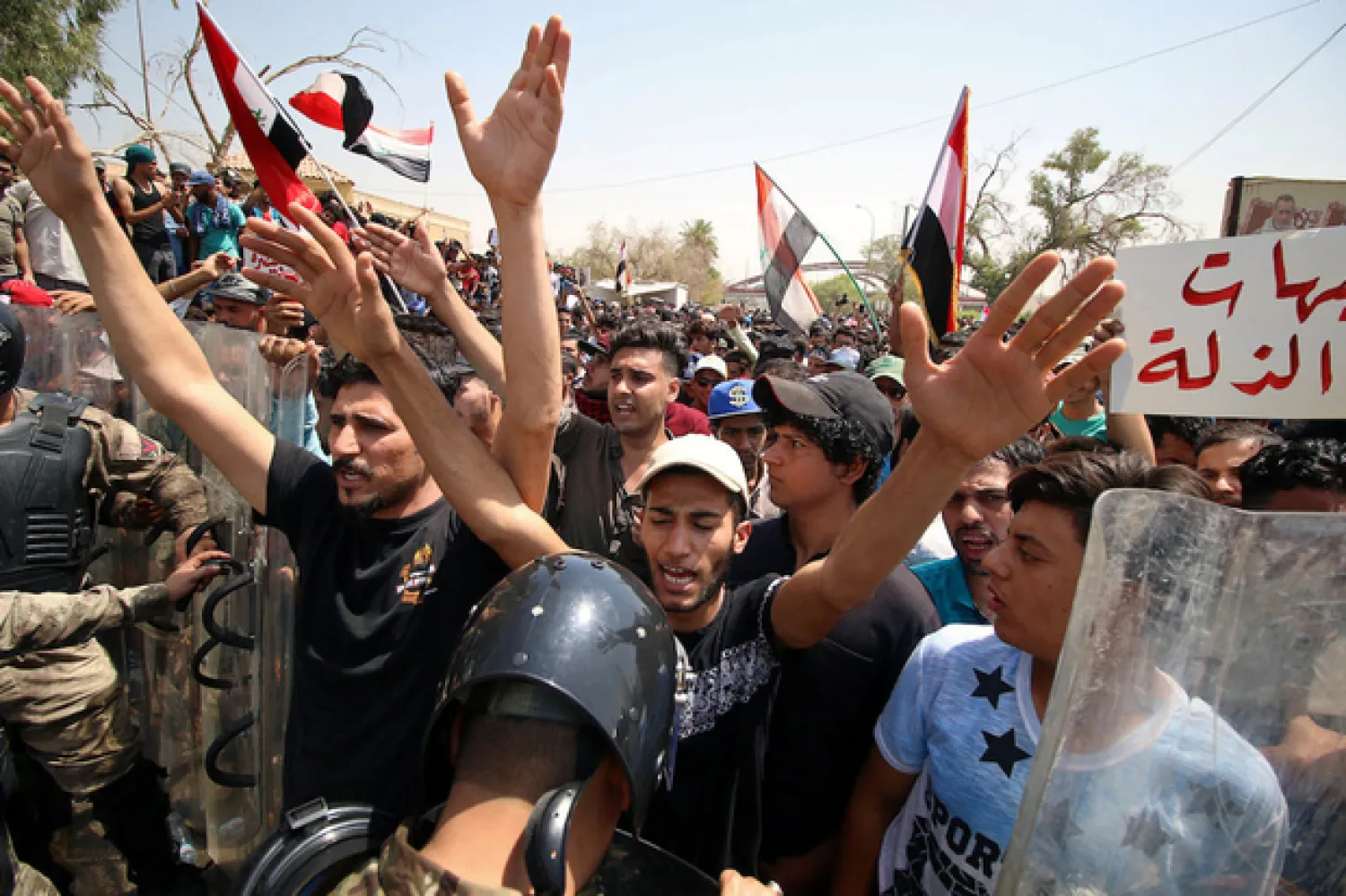
People shout slogans during a protest near the main provincial government building in Basra (Reuters)
TT

Basra Protests Spread... Barzani, Sadr Voice Support

People shout slogans during a protest near the main provincial government building in Basra (Reuters)

Protests over poor public services broke out in the city of Basrah again despite the tight security measures and the curfew imposed by the authorities.

Iraq’s main seaport closed down on Thursday following violent clashes between protestors and security forces in southern Basra.

Port employees said that all operations had ceased on Thursday morning at Umm Qasr port as the entrance was still blocked off and trucks and staff were unable to get in or out of the complex.

Overnight, protesters blocked the entrance to the nearby Umm Qasr port, the main lifeline for grain and other commodity imports that feed the country.

They blocked the highway from Basra to Baghdad and set fire to the main provincial government building where they had been demonstrating for a third night.

Public anger has grown at a time when politicians are struggling to form a new government after an inconclusive parliamentary election in May. Residents of the south complain of decades of neglect in the region that produces the bulk of Iraq’s oil wealth.

Earlier on Wednesday, the third day of clashes, security forces sprayed tear gas and fired into the air to try to disperse demonstrators. According to health sources, the dead protester was struck in the head by a smoke grenade during the clashes.

The deaths of five protesters in clashes with security forces on Tuesday added to the fury.

“The injury toll of the protests in Basra province has increased to 70 individuals,” Iraq’s Ministry of Health said in a statement on Wednesday. Forty-one are civilians, while the other 27 were security members.

But other sources suggest that the number exceeds the 100 injuries, and indicated that about eight persons were killed.

Iraqi PM Haider al-Abadi had ordered on Wednesday the opening of investigations into the killings of protesters.

The Iraqi army on Wednesday blamed “unidentified gunmen” for the death of six demonstrators earlier this week in the southern Basra province.

“The protesters slain yesterday in downtown Basra were killed by unknown gunmen in a car,” army commander Jamil al-Shammari said in a statement a day after the massacre. He did not identify the group by name, indicating they were criminal gangs in Basra to assassinate citizens and create strife in the city.

Shammari denied reports that Iraqi security forces fired on protesters outside provincial headquarters but went on to assert that the demonstrations “were not entirely peaceful in nature”.

“Security forces had prepared water, flowers and Iraqi flags to distribute for protestors. But we were surprised to see some of them throwing grenades, burning military vehicles and the provincial council building, and assaulting citizens,” the Commander told the journalists.

For the first time in years, former President of the Kurdistan Region Masoud Barzani weighed in on the crisis hitting the southern Iraqi province of Basra, saying it is shocking that the people of the country’s richest city suffer from a lack of clean water.

“We consider protesting and these protests to be the right of the people, and at the same time, consider that the people of Basra have the right to live in reasonable conditions, which they deserve,” Barzani argued in a statement released by his press office.

Outgoing Special Representative of the United Nations Secretary-General (SRSG) for Iraq, Jan Kubis, expressed grave concern over the casualties during violent protests in Basra. He offered his condolences to the families of the dead and wishes the injured a speedy recovery.

Kubis called for calm and urged the authorities to avoid using disproportionate force against the demonstrators while asking the government to do its utmost to respond to the people’s rightful demands.

Meanwhile, Muqtada Al-Sadr sided with the protesters, saying they "only want to earn their living with dignity."

"We have to unite efforts to save Basra from corruption, sectarianism and militias," Sadr continued.

"Stop assaulting Basra and its people... Don't test our patience," he warned.

He called the parliament to hold an urgent session to solve the issue while calling his supporters for a peaceful protest.


Oil Tanker Hijacked off Yemen, Diverted Towards Somalia

Oil tanker (file photo – Reuters)
TT

Oil Tanker Hijacked off Yemen, Diverted Towards Somalia

Oil tanker (file photo – Reuters)

An oil tanker was hijacked on Saturday off the coast of Yemen in the Gulf of Aden and taken toward Somalia, the Yemeni coast guard said.

According to the agency, the tanker EUREKA was seized off Shabwa province by unknown individuals who "boarded, took control of it, then steered it... in the direction of the Somali coast".

It also said that the tanker has been located, and efforts are under way to track it and take the necessary measures in an attempt to recover it and ensure the safety of its crew, whose number and nationalities were not specified.


Lebanese Divisions over Approach to US Pressure for Aoun–Netanyahu Meeting

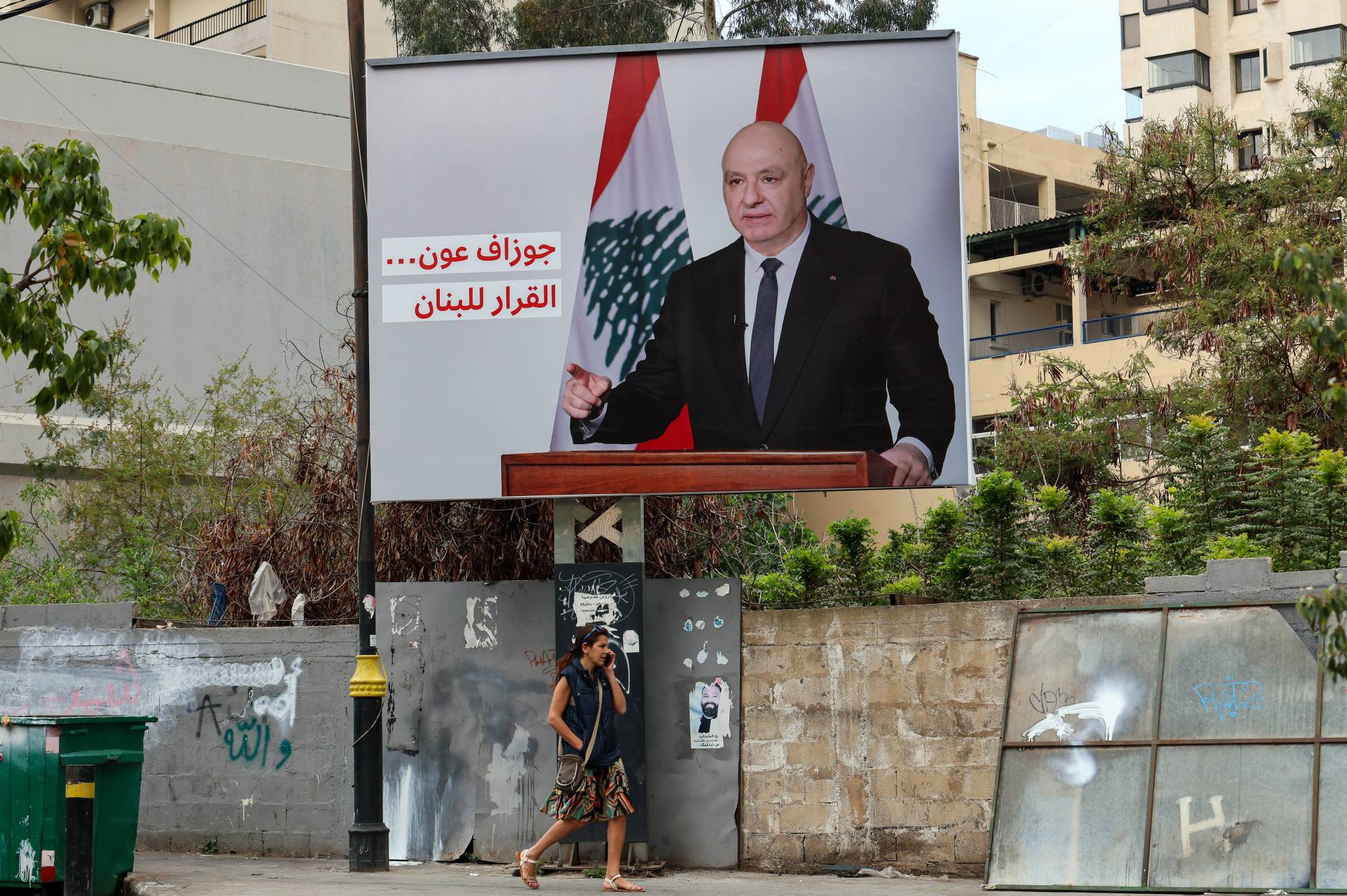
A poster depicting the portrait of Lebanon's President Joseph Aoun that reads "The decision-maker, the protector of Lebanon, Lebanon first...The State always. We are with you" hangs at the entrance of a tunnel on a street in Beirut (Photo by Joseph EID / AFP)
TT

Lebanese Divisions over Approach to US Pressure for Aoun–Netanyahu Meeting

A poster depicting the portrait of Lebanon's President Joseph Aoun that reads "The decision-maker, the protector of Lebanon, Lebanon first...The State always. We are with you" hangs at the entrance of a tunnel on a street in Beirut (Photo by Joseph EID / AFP)

Lebanese political forces are split between those supporting direct negotiations with Israel to end the ongoing war in the south and those opposing them, placing the Lebanese president in a difficult position amid internal divisions that could affect the course of the state. There are warnings that pursuing any option without consensus could have repercussions for unity and internal stability.

In a statement notable for both its timing and content, the US Embassy in Beirut on Thursday called for direct engagement between Lebanon and Israel, saying a direct meeting between Aoun and Netanyahu, mediated by the US president, could give Lebanon an opportunity to obtain tangible guarantees regarding full sovereignty, territorial integrity, secure borders, humanitarian support and reconstruction, and the full restoration of the Lebanese state’s authority over every inch of its territory, guaranteed by the United States.

Hezbollah–Amal alliance

It was not surprising that the “Shiite duo” (Hezbollah and the Amal Movement) fully opposes such a meeting, viewing it as contrary to the path of direct negotiations underway between Lebanon and Israel.

Sources close to the two parties told Asharq Al-Awsat: “There is absolutely no support for this meeting, and a scene like this cannot be accepted. It is true that US pressure is very clear, but there is also Lebanon’s interest and the position of Arab states, which advised the president not to move toward such a meeting and instead to seek, through negotiations, a security arrangement similar to the 1949 armistice agreement, even if with some amendments.”

The sources added that “President Aoun is caught between US pressure on one hand and Arab pressure on the other, and must decide where Lebanon’s interest lies and define its position, role, and future in the region.”

A woman walks past a billboard supporting Lebanese President Joseph Aoun - EPA/WAEL HAMZEH

Progressive Socialist Party

The position of the Progressive Socialist Party, expressed by MP Dr. Bilal Abdallah, is not far from that of the “duo.” Abdallah considers that “the meeting is premature, and there are many stages that must be completed before it can take place, most notably consolidating the ceasefire, halting attacks, Israeli withdrawal, and reaching a security agreement based on international agreements (a revised armistice agreement), after which each step can be addressed in due course.”

He stressed the need to respect “the Arab and international ceiling and avoid preempting developments or skipping stages, as the repercussions would be negative for national interest and internal unity.”

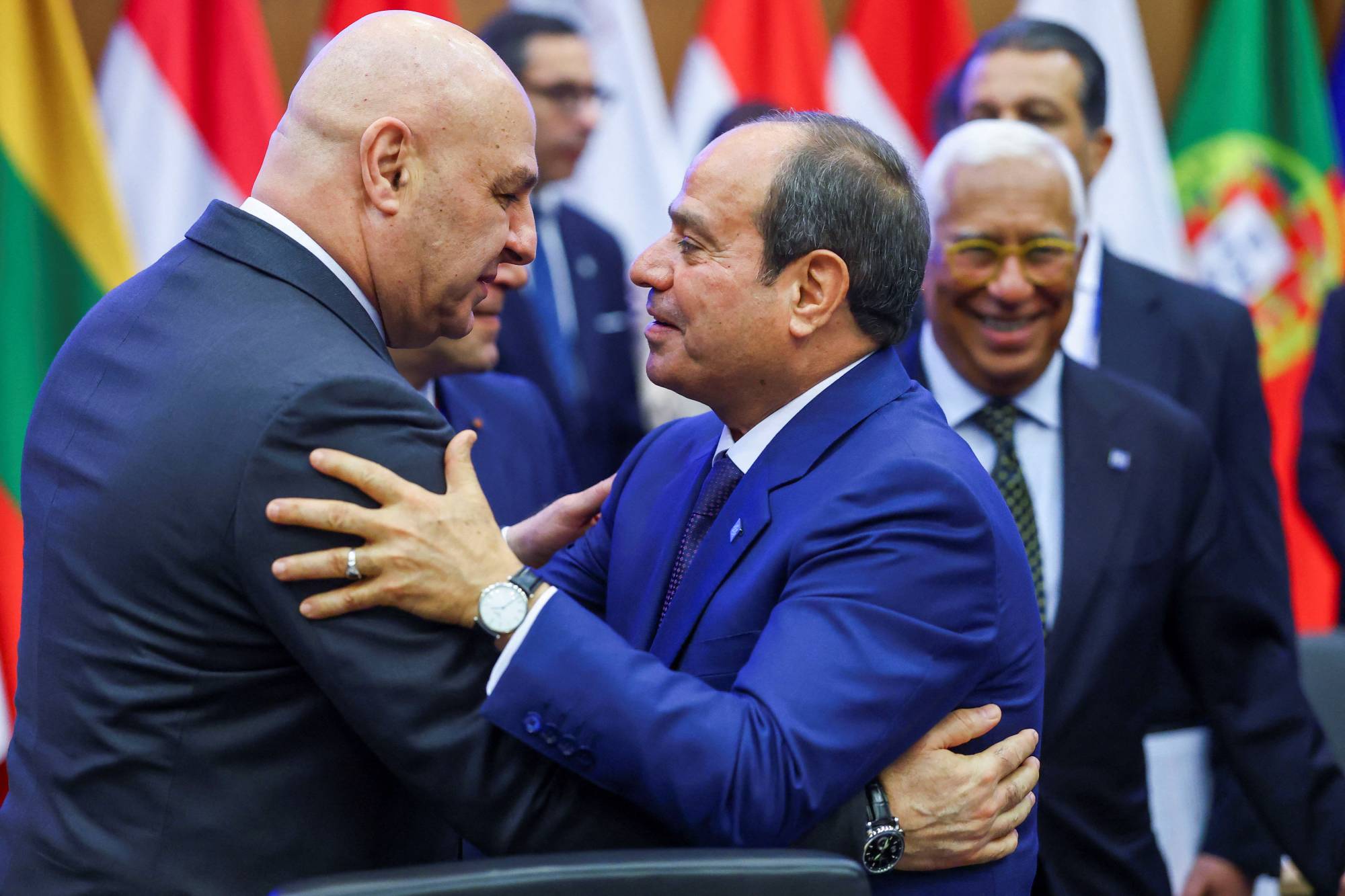
Lebanese President Joseph Aoun speaks with Egypt's President Abdel Fattah el-Sisi on the day of a summit of the European Union and regional partners' leaders in Nicosia (Lefkosia), Cyprus, April 24, 2026. REUTERS/Yves Herman

Lebanese Forces and Kataeb position

By contrast, the Lebanese Forces and Kataeb parties take a different approach. MP Ghada Ayoub of the “Strong Republic” bloc (Lebanese Forces) said her party supports “the negotiating initiative undertaken by Aoun, which falls within the core powers of the president,” leaving it to him to assess its course, including the timing of any meeting or even a potential handshake with Benjamin Netanyahu, whether it should take place now or come as the culmination of negotiations.

She told Asharq Al-Awsat: “We support the president in what he sees as appropriate to save Lebanon and extricate it from this predicament, which has imposed a heavy cost as a result of Hezbollah’s decision to draw Israel into Lebanon. Today it realizes it is unable to remove it, and that the only party capable of doing so is the United States. We saw how President Donald Trump was able to impose a ceasefire on Benjamin Netanyahu despite his team’s insistence on continuing the war.”

Ayoub stressed that “any negotiating track will be tied to clear conditions where the US position intersects with that of the Lebanese government, foremost among them disarmament, preventing Lebanese territory from being used as a launchpad for military operations against Israel, and banning the party’s security and military activities.”

Sources in the Kataeb Party, while confirming significant US pressure to arrange an Aoun–Netanyahu meeting, said such a step requires “historic courage,” adding that “what matters in the end is the outcome, which should be a roadmap for peace.”


Asharq Al-Awsat Reveals Contents of Hamas and Factions’ Response to Mediators’ Amendments and Mladenov

Palestinians take part in a protest against the limited access to medical spare parts and batteries for deaf and hearing-impaired individuals in the Gaza Strip, as they gather in Gaza City, Saturday, May 2, 2026. (AP Photo/Abdel Kareem Hana)
TT

Asharq Al-Awsat Reveals Contents of Hamas and Factions’ Response to Mediators’ Amendments and Mladenov

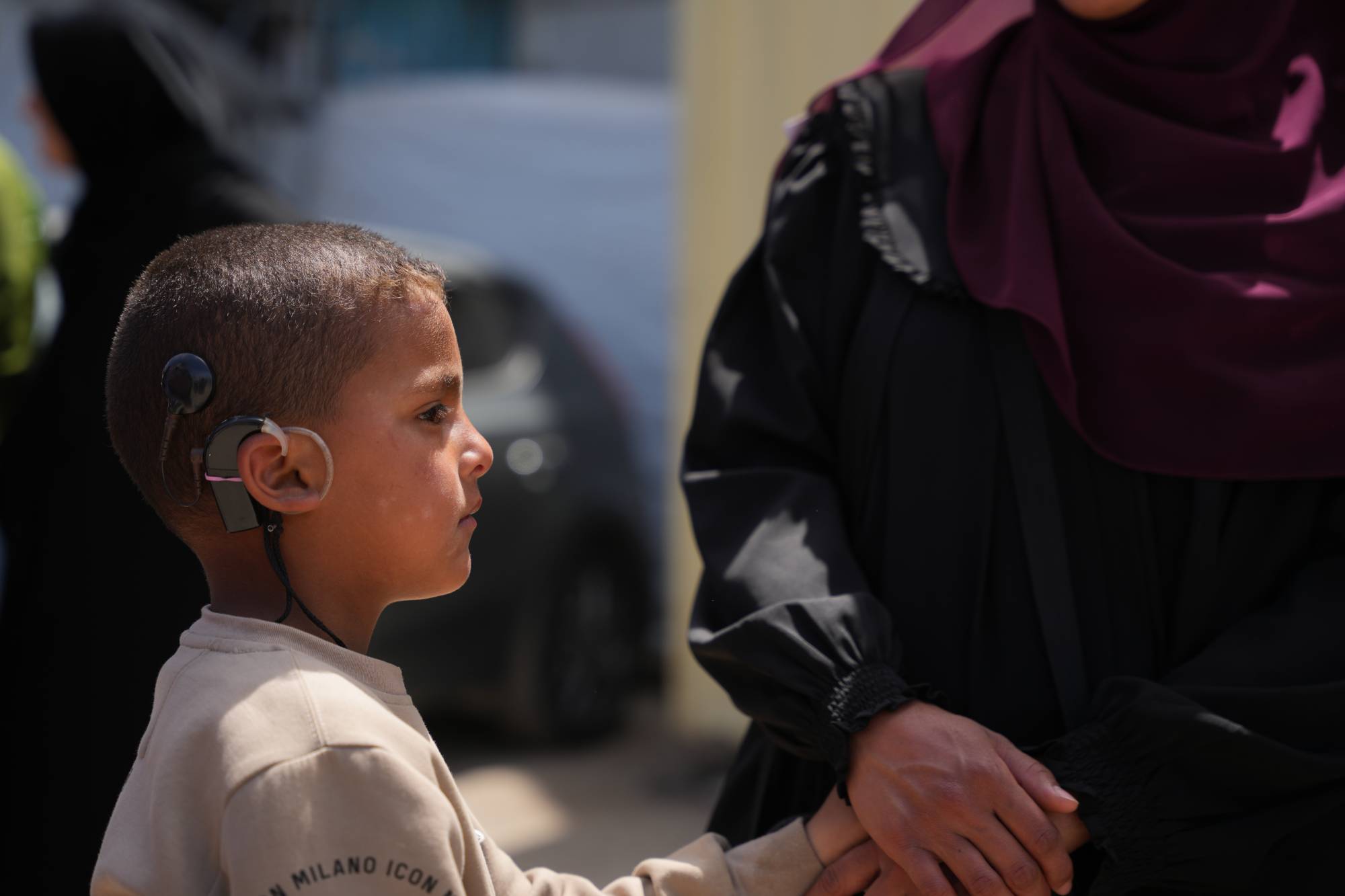
Palestinians take part in a protest against the limited access to medical spare parts and batteries for deaf and hearing-impaired individuals in the Gaza Strip, as they gather in Gaza City, Saturday, May 2, 2026. (AP Photo/Abdel Kareem Hana)

Hamas and Palestinian factions submitted their response at dawn on Saturday to the mediators and the High Representative for Gaza at the Peace Council, Nickolay Mladenov, regarding the amendments paper presented to the factions, which had previously submitted their initial response to the “roadmap” presented on April 19.

The response by Hamas and the Palestinian factions included amendments to some of the points contained in Mladenov’s paper, which Asharq Al-Awsat had disclosed on Friday. These included acceptance by Hamas and the factions of a text acceptable to all parties within the framework of US President Donald Trump’s plan, commitment to what was agreed in Sharm el-Sheikh in full, and acceptance of the recently presented roadmap as a basis for entering negotiations to reach an agreement quickly.

It also stipulated that the issue of weapons be addressed in accordance with Trump’s plan and UN Security Council Resolution 2803, and that both continue to be implemented in a way that ensures Palestinians obtain self-determination and establish a sovereign state.

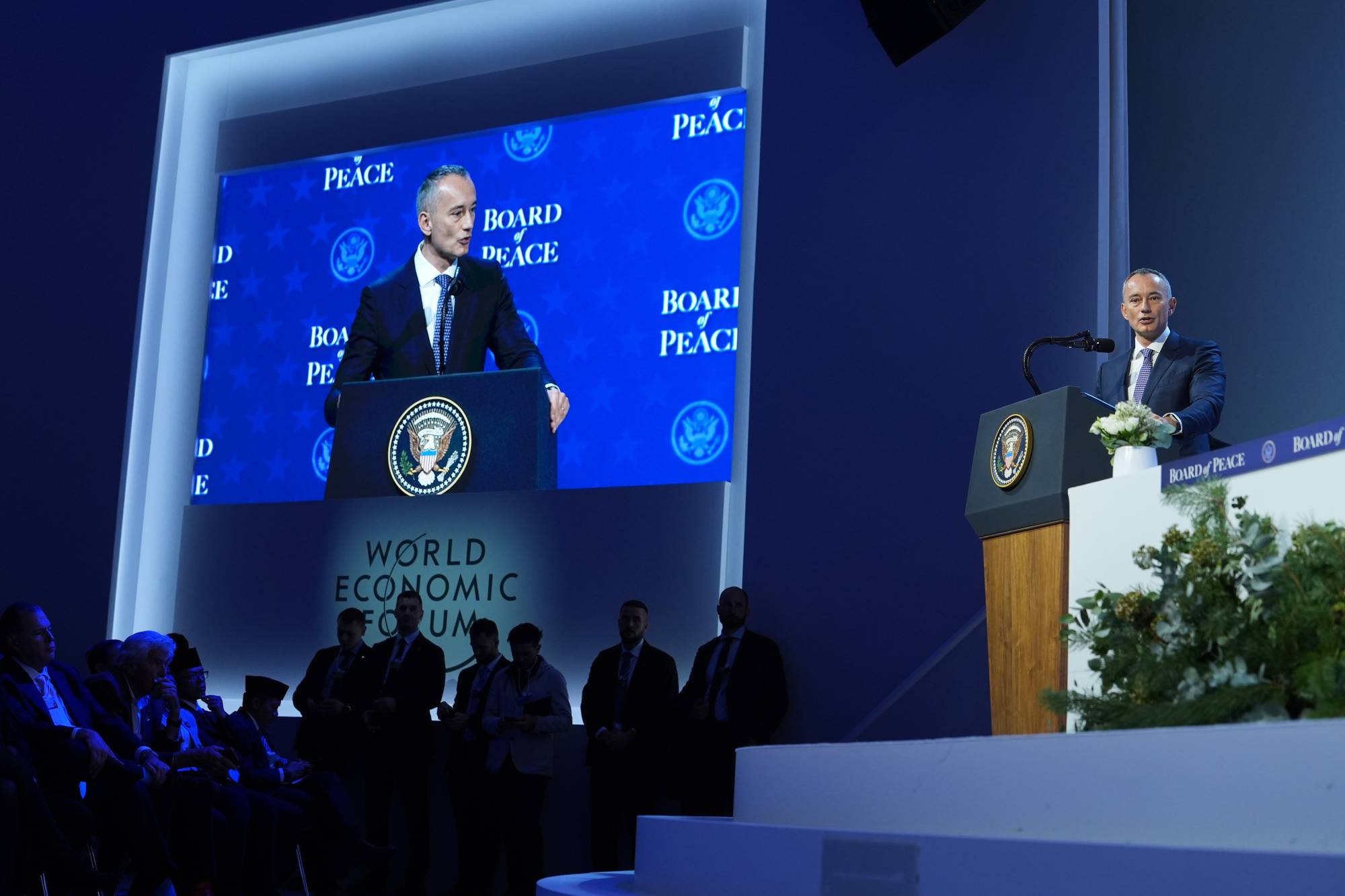
FILE - Board member Nickolay Mladenov speaks after the signing of a Board of Peace charter during the Annual Meeting of the World Economic Forum in Davos, Switzerland, Thursday, Jan. 22, 2026. (AP Photo/Evan Vucci, file)

The response by Hamas and the factions, as revealed by Asharq Al-Awsat, to Mladenov’s amendments expressed appreciation for the mediators’ efforts to reach a text acceptable to all parties within the framework of Trump’s plan, and called for Israel’s full and immediate commitment to the obligations of this text as stipulated in the Sharm el-Sheikh agreement, according to an agreed timetable.

It also included approval of the recently submitted roadmap as a basis for entering serious negotiations on its contents, and its implementation after reaching an acceptable agreement as soon as possible, in a way that ensures a ceasefire between the two sides, an end to the humanitarian crisis in the Gaza Strip, full withdrawal from the Strip, reconstruction, the entry of international forces, addressing the issue of weapons, and transferring governance of the Strip to the national committee with full powers.

It further stressed that the issue of weapons would be handled in connection with the political rights of the Palestinian people, within a national framework, and in the context of establishing the necessary security arrangements as a basis for guaranteeing security for both sides. It added that mediators and all parties should work to achieve the objective stated in Trump’s plan of establishing a sovereign Palestinian state and securing the Palestinian people’s right to self-determination.

A senior Hamas source told Asharq Al-Awsat that the movement submitted this response on behalf of the Palestinian factions after taking into account observations presented by some factions, noting that there are substantive remarks on Mladenov’s amended paper.

The source indicated that Hamas leadership senses a degree of discomfort among the mediators regarding the submitted response after changes were made to it. This was confirmed by another source from a Palestinian faction whose representatives met Egyptian mediators, who expressed surprise at the manner of the response. Two sources from Palestinian factions represented by delegations in Cairo said that Hamas’s response showed divergence from what some factions had proposed.

A Palestinian child participates in a protest against the shortage of medical equipment and hearing aid batteries for deaf and hearing-impaired individuals in Gaza City on Saturday (AP)

According to the sources, some points of contention relate to the factions’ recommendation for immediate and full implementation of the first phase, as set out in the roadmap, paving the way for the administrative committee to assume its role, and establishing a clear timetable to follow up and monitor implementation of the phase’s provisions in a simultaneous and balanced manner between the parties. This was not addressed by Hamas, particularly regarding simultaneity and balance.

The factions’ remarks stressed that the issue of weapons should be addressed within a political horizon for the Palestinian people in the context of ensuring the success of Trump’s plan and the objectives of the roadmap, and that factions should work to complete this track in a way that enables Palestinians to achieve self-determination and establish their independent state in accordance with international legitimacy resolutions.

Asharq Al-Awsat learned that after receiving the Hamas and factions’ response, Mladenov left the Egyptian capital, Cairo. The Hamas delegation may also leave Cairo to participate in completing the election of the head of its political bureau, while contacts and meetings are expected to continue in the coming days.