

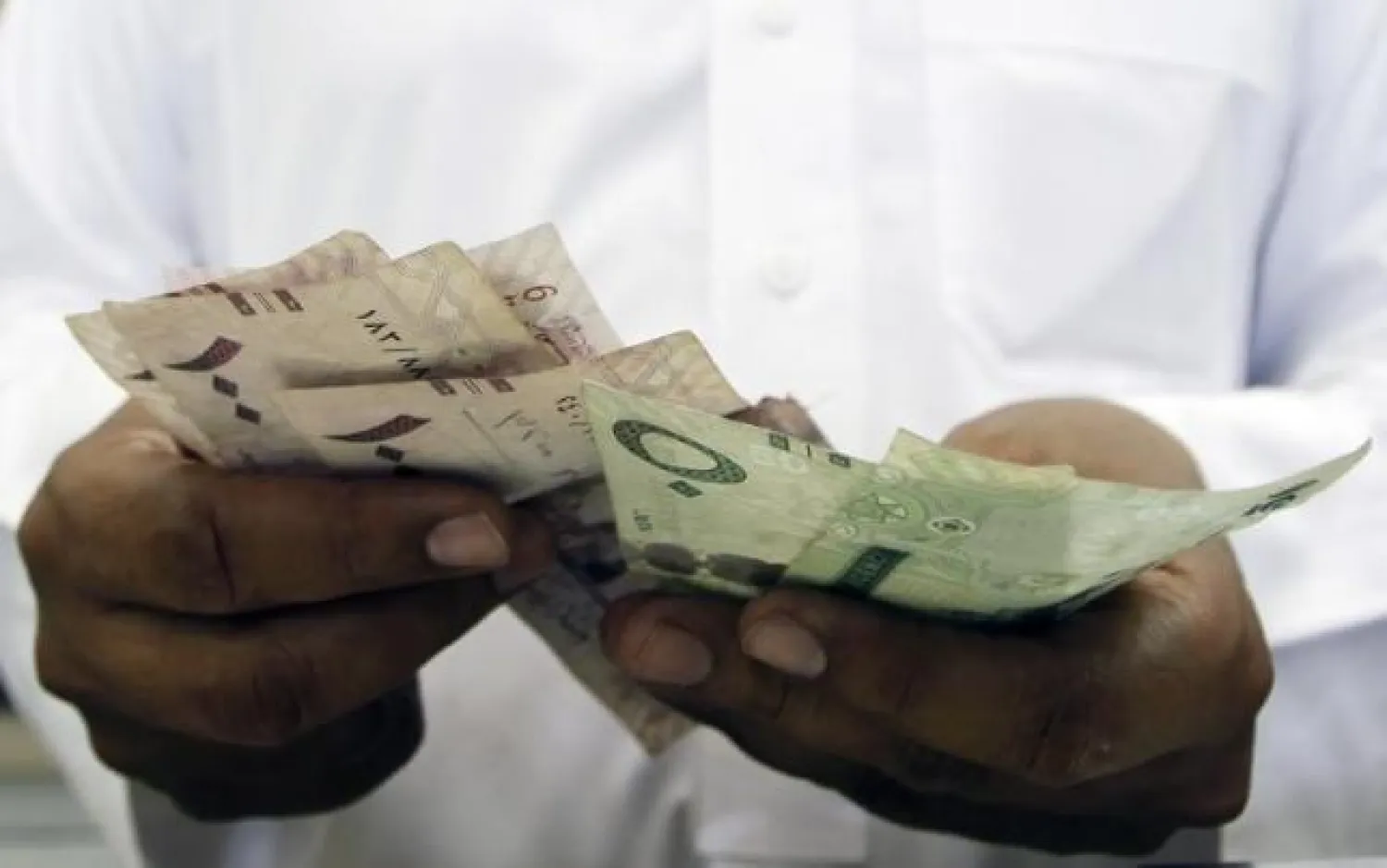

Saudi Banks Capital, Reserves Jump 6.3% in 2017

Saudi Banks Capital, Reserves Jump 6.3% in 2017
TT

Saudi Banks Capital, Reserves Jump 6.3% in 2017

Saudi Banks Capital, Reserves Jump 6.3% in 2017

The 54th SAMA Annual Report has proven the stability of the financial sector in Saudi Arabia, marking a 6.3 percent growth in the local banks' capitals and reserves in 2017. The report reviews the economic and financial developments in the kingdom during the during 2017.

SAMA Governor Dr. Ahmed AlKholifey mentioned that the Saudi economy witnessed a number of positive indicators. Most notably, the non-oil sector GDP recorded a positive growth of 1.05 percent. The current account registered a surplus of SAR57.1 billion in 2017, against a deficit of SAR89.4 billion in 2016.

He added that the banking sector achieved outstanding performance indicators. Total assets of commercial banks grew by 2.2 percent to over SAR2 trillion. Bank capital and reserves went up by 6.3 percent to SAR318 billion.

The average capital adequacy ratio (Basel Standard) stood at 20.4 percent, which would support the resilience of the financial sector and its capability to withstand financial crises, AlKholifey continued.

The Governor mentioned that SAMA continuously seeks to develop the infrastructure of payment systems in Saudi Arabia to enable domestic banks to provide comprehensive payment instruments for individuals as well as commercial and public sectors, such as launching a number of significant projects that aimed at enhancing the e-payment infrastructure in Saudi Arabia and stimulating the engagement of the banking system.

These updates coincide with the time when the Financial Sector Development Program has become a significant step towards developing the local capital market and placing it among the top ten financial markets, globally.

Through its first pillar, the program works on empowering financial institutions to support the growth of the private sector. Through its second pillar, it seeks to develop an advanced financial market. The program encourages through its third pillar reinforcing and enabling the financial planning.



Stocks Slide as Oil Climbs on Mideast Flareup

FILE PHOTO: A maze of crude oil pipes and valves is pictured during a tour by the Department of Energy at the Strategic Petroleum Reserve in Freeport, Texas, US June 9, 2016.  REUTERS/Richard Carson/File Photo
FILE PHOTO: A maze of crude oil pipes and valves is pictured during a tour by the Department of Energy at the Strategic Petroleum Reserve in Freeport, Texas, US June 9, 2016. REUTERS/Richard Carson/File Photo
TT

Stocks Slide as Oil Climbs on Mideast Flareup

FILE PHOTO: A maze of crude oil pipes and valves is pictured during a tour by the Department of Energy at the Strategic Petroleum Reserve in Freeport, Texas, US June 9, 2016.  REUTERS/Richard Carson/File Photo
FILE PHOTO: A maze of crude oil pipes and valves is pictured during a tour by the Department of Energy at the Strategic Petroleum Reserve in Freeport, Texas, US June 9, 2016. REUTERS/Richard Carson/File Photo

Oil prices rose Wednesday on fresh concerns about Middle East supplies following a warning that Iran appeared to be stepping up attacks in the Strait of Hormuz, weighing on stock markets.

Crude futures had steadied Tuesday, helping Wall Street to fresh highs, with a large amount of the support coming from a rush back into the AI trade that saw chip titan Nvidia push towards a $6-trillion market value.

But Wall Street stocks pulled back at the opening bell, with a rise in bond yields on US government bonds to fresh 24-year highs as investors worried about inflation and interest rates.

"Rising Treasury yields and oil prices are creating renewed pressure after stocks received some relief from both fronts to start the week," said analysts at Briefing.com.

"In Europe, where there is a lower representation of AI-related names, investors are taking a more cautious stance," noted Russ Mould, investment director at AJ Bell.

"Oil prices remain above $100 a barrel and the inflation risks are clear to see," he added.

Figures have shown Tehran increasing strikes on tankers in the crucial Strait of Hormuz.

UK Maritime Trade Operations on Tuesday said there had been nine attacks this month, representing half of the September total in the waterway and the Gulf combined.

However US Secretary of State Marco Rubio said Wednesday that Iran has "lost complete control" of the Strait of Hormuz.

"There's almost as much oil flowing out now as there was before this conflict began," he told reporters during a visit to Athens.

Chris Weston, head of research at broker Pepperstone, said "reports of increased flows across the (Mideast) region have offered some downside pressure on crude, but this has been offset by varying reports around the scale of attacks on vessels moving through the Strait".

"For now, the market remains highly sensitive to headlines and geopolitical risk," he added.

Indian stocks slipped and the rupee steadied Wednesday as the Indian central bank hiked interest rates for the first time in more than three years.

The euro fell heavily versus the dollar for a second time this week as worries about France's high debt levels spook bond markets.

Marine Le Pen, frontrunner in the race to be France's next president, said Tuesday she would implement 140 billion euros ($157 billion) in cost savings by 2032 if elected next year, warning that without change France was "heading towards default" on its debt.

The pledge "has helped ease bond yields" in France even if "pushing through that level of cuts... would be a hugely difficult task", said Susannah Streeter, chief investment strategist at Wealth Club.


Saudi Arabia Prepares New Pathways for Its Companies to Enter the Syrian Market

Syrian President Ahmed Al-Sharaa with businesspeople during the Saudi-Syrian Investment Forum in Damascus (SPA)
TT

Saudi Arabia Prepares New Pathways for Its Companies to Enter the Syrian Market

Syrian President Ahmed Al-Sharaa with businesspeople during the Saudi-Syrian Investment Forum in Damascus (SPA)

Asharq Al-Awsat has learned that the Saudi-Syrian Business Council is currently working on around three new pathways that are still being developed as part of an institutional framework aimed at facilitating the entry of Saudi companies into the Syrian market and paving the way for new sector-specific projects in the coming stages.

Saudi-Syrian economic relations have developed since last year, following the arrival in Damascus of a high-level Saudi delegation led by then Investment Minister Khalid Al-Falih. The delegation included more than 130 businesspeople and investors, reflecting the scale of official and economic interest in strengthening trade and investment ties between the two countries.

The visit saw the signing of more than 47 agreements and memorandums of understanding across 11 vital sectors, with total investments exceeding $6.4 billion. They covered real estate, infrastructure, telecommunications and information technology, industry, and other sectors.

Coordination with the “Syrian Sovereign Fund”

According to the information, a mechanism has been established to coordinate with the Syrian Investment Authority to form a joint team to study the development of land and sea logistics corridors. This would include facilitating direct access for exports and temporary admission procedures for equipment used to carry out projects.

In parallel, the Federation of Saudi Chambers has opened a direct channel with the Syrian sovereign fund to follow up on investment opportunities available to the Saudi private sector and support communication with relevant authorities in the Syrian market.

The council was established as Syria prepares for a new phase of reconstruction and development, creating opportunities for the Saudi private sector to participate in investment projects and various economic sectors, drawing on its financing and investment capabilities and its experience in project development.

Since its establishment, the council has begun preparing an action plan for 2025-2030 aimed at strengthening sustainable economic cooperation between Saudi Arabia and Syria, highlighting investment opportunities, supporting strategic partnerships, and facilitating trade and logistics procedures for Saudi companies' exports.

The plan focuses on enabling the Saudi private sector to benefit from reconstruction and development opportunities in Syria by supporting exports, simplifying procedures, and strengthening regulatory frameworks that provide a more favorable environment for investors. It focuses on sectors including infrastructure, trade and export development, real estate development, tourism, industry, and food security.

New Investments

In this context, Mohammed bin Abdullah Abu Nayyan, chairman of the Saudi-Syrian Business Council, said the council includes a number of senior Saudi officials and investors with international business activities, strengthening its ability to support trade and investment relations between the two countries and achieve its objectives.

The Saudi-Syrian Business Council delegation visited the Syrian capital, Damascus, last August, with the participation of 180 Saudi businesspeople. It held joint meetings and more than 15 meetings with government officials, in addition to eight sector-focused meetings and workshops addressing investment opportunities, challenges, and areas of cooperation.

During the visit, the delegation announced the “Sham View” project by Saudi real estate development and investment company Tharaa, with investments exceeding $1 billion. It also launched construction work on the Narcissus Damascus Hotel, owned by Saudi hotel and resort group Boudl.


Iraq Central Bank Devalues Dinar after Mideast War Hurts Oil Exports

An employee arranges stacks of Iraqi dinars at a currency exchange shop in Baghdad on Feb. 14, 2023. (AFP)
TT

Iraq Central Bank Devalues Dinar after Mideast War Hurts Oil Exports

An employee arranges stacks of Iraqi dinars at a currency exchange shop in Baghdad on Feb. 14, 2023. (AFP)

Iraq's central bank devalued the dinar currency against the dollar on Wednesday, with the country facing a deepening crisis brought on by the Middle East war.

Crude oil sales account for nearly 90 percent of Iraq's revenue but its exports have been hurt by the outbreak in February of the conflict between Iran and the United States, which choked off the Strait of Hormuz shipping route.

Consumer prices have also risen, while Iraq's foreign currency reserves have fallen by around $20 billion.

The central bank said in a statement late Tuesday that based on a government decision, "it had decided to adopt... a selling price of the US dollar to the public of 1,520 dinars.”

The rate had been fixed at 1,320 dinars since February 2023.

The bank instructed financial institutions to "stop using the previous rate and adopt the new rate as of the start of the business day on October 7,” AFP reported.

Iraq relies heavily on foreign currency generated by oil sales to finance imports, stabilize the dinar, and pay the salaries of public sector employees and retirees.