


Kick It out at 25: Progress Made but Lots Still to Do in Anti-Racism Fight

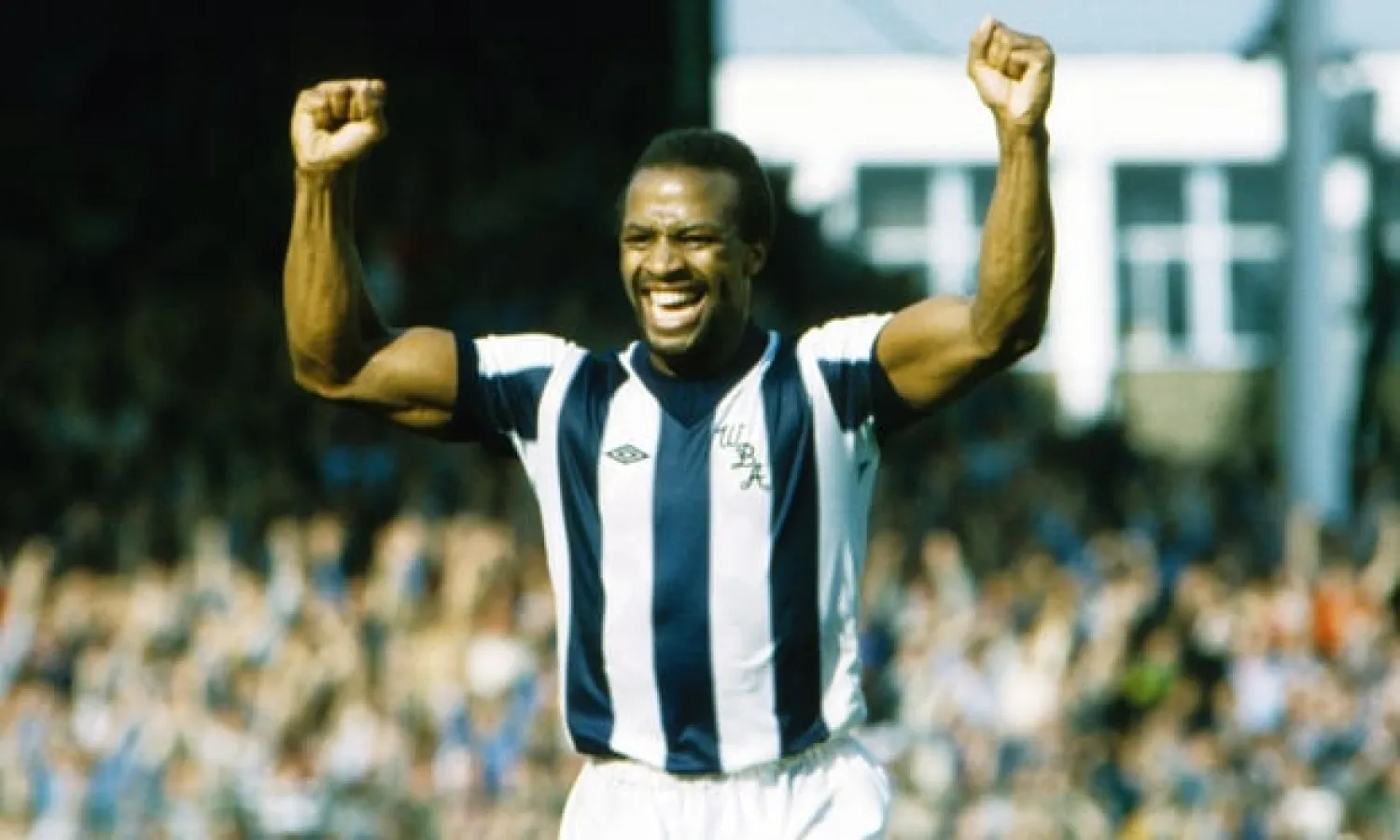
 Lord Ouseley said he was unsure tributes to Cyrille Regis, who died in January, would have been as warm 10 or 15 years ago. Photograph: David Bagnall/Rex/Shutterstock
Lord Ouseley said he was unsure tributes to Cyrille Regis, who died in January, would have been as warm 10 or 15 years ago. Photograph: David Bagnall/Rex/Shutterstock
TT

Kick It out at 25: Progress Made but Lots Still to Do in Anti-Racism Fight

 Lord Ouseley said he was unsure tributes to Cyrille Regis, who died in January, would have been as warm 10 or 15 years ago. Photograph: David Bagnall/Rex/Shutterstock
Lord Ouseley said he was unsure tributes to Cyrille Regis, who died in January, would have been as warm 10 or 15 years ago. Photograph: David Bagnall/Rex/Shutterstock

Football people of a certain vintage will have felt a wince of disbelief that the game’s anti-racism campaign, Kick It Out, is 25 years old this season, marking a generation of struggle and remarkable progress.

Reflecting on how profoundly attitudes have changed over the quarter century, the campaign’s chairman throughout, Lord Herman Ouseley, points to the outpouring of admiration for Cyrille Regis when the former West Bromwich Albion trailblazer died in January at the age of 59.

Regis, his two West Brom teammates Laurie Cunningham and Brendon Batson, and a handful of other black players came through in the 1970s, when racist abuse rained down routinely from terraces and the football authorities never had much to say about it. When Regis died tributes were paid from all areas of the game’s establishment and fans at clubs where black players were once so abused stood for minutes of genuine applause.

Ouseley says: “Even 10 or 15 years ago I am not sure we would have seen the warmth and praise for Cyrille Regis that we saw this year. That tells you something about how the game has changed.” Formerly the chief executive of the London borough of Lambeth, in 1993 Ouseley was chairman of the Commission for Racial Equality when he became the voluntary chairman of the inaugural Let’s Kick Racism Out of Football campaign.

He adds: “The players have had a huge part in it, with their ability, and having the inner resilience to cope and succeed. I don’t want Kick It Out to take the praise; our job is to help football to be better.”

Citing Regis as an example encapsulates Kick It Out’s own course; the campaign was established after he retired, with the worst years of football’s public racism receding, and it has played a great part in encouraging the culture which celebrated him.

In 1991, the Football (Offences) Act made “indecent or racialist chanting” a criminal offence, a landmark step in recognising football’s disgrace and taking serious steps to outlaw it. Keith Alexander, at Lincoln City, was appointed as English football’s first black manager in 1993, the same year Paul Ince became the first black player to captain England.

But there was still widespread racist abuse into the 90s and a climate of fear among the minority ethnic communities in neighbourhoods around many of the grounds, recalls Piara Powar, who was appointed Kick It Out’s national coordinator in 1998. He and Ouseley both recall that despite the campaign being funded by the FA and Premier League as well as the Professional Footballers’ Association from 1997, many senior people in football were not greatly interested.

Powar and Ben Tegg, the campaign’s only members of staff then, wrote to all 92 professional clubs introducing themselves and the aims of the campaign. Only five replied. “There was absolute apathy, the issues were seen as inconsequential,” says Powar, who in 2010 became executive director of the Fans Against Racism in Europe (Fare) network. “In the 1980s if you were part of a minority you expected to get abused in daily life; in football, behaviour which now seems unbelievable was happening freely. The worst was over, but in the 90s it was still there.

“Other than Brendon Batson [then deputy chief executive of the PFA] you didn’t see any black administrators; there were no women visible anywhere – I remember it seemed a huge step when the FA appointed Kelly Simmons.” In 2000 she was appointed head of football development; she is now director of the national game and women’s football.

Ouseley remembers arm-twisting and “shaming” clubs into taking part in the campaign, sometimes by telling chairmen that their closest rivals were signed up. It began with an eight-point plan, with posters at grounds, focusing on eliminating racism from football, and widened after 1997 to address all forms of discrimination.

Many fans were already making strong efforts to oppose racism in the stands; Powar gives credit to wider cultural improvements over the years, and clubs gradually engaged more fully with the campaign. Now, Ouseley is able to promote more optimistic aims: increasing the diversity of coaches, administrators and supporters, and football as a vehicle for social cohesion, from the grassroots up.

Kick It Out came through arguably its most challenging period in 2012, after the high-profile bans for racist abuse handed down by FA disciplinary panels to Luis Suárez and John Terry, the latter having been found not guilty in a criminal prosecution of verbally abusing Anton Ferdinand. A number of black players refused to take part in Kick It Out’s annual day of action, including Regis’s nephew Jason Roberts, then at Reading, who protested at lack of progress, particularly the paucity of black coaches.

Ouseley acknowledges that some people involved with Kick It Out felt hurt, believing the players were targeting the organisation that had worked for years to make a difference, but says he respected Roberts making his case. “He felt we didn’t do enough; we talked, and I accepted; I don’t shy away from criticism. We should engage with people on these matters and see what we can learn. It is positive if players are articulating an issue; Jason Roberts was carrying more influence than us – I tell players they underestimate their power.”

Ouseley welcomes the FA’s newly announced three-year plan to become more diverse, with its aim by 2021 of having 20% of its coaches from black or minority ethnic backgrounds, and 11% in leadership roles at the FA. With racist hate crime and xenophobia on the rise again after the toxic anti-immigration rhetoric which fuelled much of the Leave campaign in the Brexit referendum – “we had a lot of lies,” Ouseley says – he is urging football to be an area of society which brings people together. “We’re looking to the game helping to achieve cohesion, with different groups, black and white, mixing with each other and getting to know each other. Football can give leadership.”

A remarkable 25 years since its formation, English football and the country around it are very different, but there is still a great deal of work for Kick It Out to do.

The Guardian Sport


Hakimi, Salah and Osimhen Head Star-packed AFCON Last-16 Cast

Morocco's Achraf Hakimi gestures during the Africa Cup of Nations group A soccer match between Zambia and Morocco in Rabat, Morocco, Sunday, Dec. 28, 2025. (AP Photo/Themba Hadebe)
TT

Hakimi, Salah and Osimhen Head Star-packed AFCON Last-16 Cast

Morocco's Achraf Hakimi gestures during the Africa Cup of Nations group A soccer match between Zambia and Morocco in Rabat, Morocco, Sunday, Dec. 28, 2025. (AP Photo/Themba Hadebe)

A star-studded cast led by Achraf Hakimi, Mohamed Salah and Victor Osimhen switch to knockout fare from Saturday, when the Africa Cup of Nations resumes in Morocco.

Paris Saint-Germain defender Hakimi was crowned 2025 African player of the year in November. Liverpool attacker Salah and Galatasaray striker Osimhen were the runners-up.

After 36 matches spread across six groups, the 16 survivors from 24 hopefuls clash in eight second-round matches over four days.

Fit-again Hakimi is set to lead title favorites Morocco against Tanzania, Salah will captain Egypt against Benin and Osimhen-inspired Nigeria tackle Mozambique.

AFP Sport looks at the match-ups that will determine which nations advance to the quarter-finals, and move one step closer to a record $10 million (8.5 million euros) first prize.

Senegal v Sudan

Veteran Sadio Mane and Paris Saint-Germain 17-year-old Ibrahim Mbaye, in two appearances off the bench, have been among the stars as 2022 champions Senegal confirmed why they are among the favorites by winning Group D. Sudan, representing a country ravaged by civil war since 2023, reached the second round despite failing to score. Their only Group F win, against Equatorial Guinea, came via an own goal.

Mali v Tunisia

"If we carry on playing like this we will not go much further," warned Belgium-born Mali coach Tom Saintfiet after three Group A draws. Tunisia did well to hold Morocco, but were woeful against Nigeria until they trailed by three goals. The Carthage Eagles then scored twice and came close to equalizing.

Morocco v Tanzania

A mismatch on paper as Morocco, whose only previous title came 50 years ago, are 101 places above Tanzania in the world rankings. The east Africans ended a 45-year wait to get past the first round thanks to two draws. Morocco boast a potent strike force of Brahim Diaz from Real Madrid and Ayoub El Kaabi of Olympiacos. They have scored three goals each to share the Golden Boot lead with Algerian Riyad Mahrez.

South Africa v Cameroon

South Africa debuted in the AFCON 30 years ago by hammering Cameroon 3-0 in Johannesburg. It should be much closer when they meet a second time with only four places separating them in the world rankings. In pursuit of goals, South Africa will look to Oswin Appollis and Lyle Foster while 19-year-old Christian Kofane struck a stunning match-winner for Cameroon against Mozambique.

Egypt v Benin

Struggling to score for Liverpool this season, Salah has regained his appetite for goals in southern Morocco. He claimed match winners against Zimbabwe and South Africa to win Group B. Benin celebrated their first AFCON win 25 years after debuting by edging Botswana. The Cheetahs are a compact, spirited outfit led by veteran striker Steve Mounie, but lack punch up front.

Nigeria v Mozambique

Livewire Osimhen is a huge aerial threat and could have scored hat-tricks against Tanzania and Tunisia in Group C, but managed just one goal. Fellow former African player of the year Ademola Lookman has also impressed. Mozambique lost 3-0 in their previous AFCON meeting with the Super Eagles 16 years ago. It is likely to be tighter this time with striker Geny Catamo posing a threat for the Mambas (snakes).

Algeria v DR Congo

The clash of two former champions is potentially the match of the round. It is the only tie involving two European coaches -- Bosnian Vladimir Petkovic and Frenchman Sebastien Desabre. Algeria and Nigeria were the only teams to win all three group matches. Former Manchester City winger Mahrez has been an inspirational captain while scoring three times.

Ivory Coast v Burkina Faso

This is the only match featuring nations from the same region. Burkina Faso and defending champions Ivory Coast share a border in west Africa. Manchester United winger Amad Diallo was the only winner of two player-of-the-match awards in the group stage. The Ivorian now face impressive Burkinabe defenders Edmond Tapsoba and Issoufou Dayo.


After Waiting 36 Years, French Soccer Fans Finally Have a Capital City Derby again as PSG Faces PFC

Fireworks explode as Paris Saint-Germain's players parade on a bus on the Champs-Elysees avenue in Paris on June 1, 2025, a day after PSG won the 2025 UEFA Champions League final football match against Inter Milan in Munich. (AFP)
TT

After Waiting 36 Years, French Soccer Fans Finally Have a Capital City Derby again as PSG Faces PFC

Fireworks explode as Paris Saint-Germain's players parade on a bus on the Champs-Elysees avenue in Paris on June 1, 2025, a day after PSG won the 2025 UEFA Champions League final football match against Inter Milan in Munich. (AFP)

It's taken quite some time, but the first capital city derby in French men's league soccer since 1990 takes place on Sunday when Paris Saint-Germain hosts Paris FC.

A very local derby, too, with PSG's Parc des Princes stadium literally across the street from PFC's new home ground — 44 meters away according to the Paris City Hall website.

After winning promotion last season, Paris FC changed stadium and now plays at Stade Jean-Bouin, which traditionally held rugby matches.

Sunday's contest pits the defending French and European champion against a side struggling in the top tier. PFC has lost half its games, and was 14th in the 18-team league heading into this weekend's 17th round.

PFC's top scorer this season is skillful midfielder Ilan Kebbal with six goals, more than any PSG player. But he is away with Algeria at the Africa Cup of Nations.

PSG has coped with injuries to star forwards Ousmane Dembélé and Désiré Doué this season. That might have affected results because, for a change, PSG is not top but in second spot behind surprise leader Lens. Heading into Sunday's derby, PSG had already lost two league games, as many defeats as all last season.

While PSG has won a record 13 French league titles and 16 French Cups, PFC's trophy cabinet is bare. The PFC men's team has never won the league or even a cup.

Paris FC's takeover late last year by France's richest family, the Arnaults of luxury empire LVMH, promised to spice up Ligue 1.

Paris FC owner Antoine Arnault is the son of billionaire Bernard Arnault, and the family's cash input will prove crucial to the chances of PFC becoming a serious rival to PSG. Antoine used to be a PSG season-ticket holder and enjoys a cordial relationship with PSG president Nasser Al-Khelaïfi.

Before this season, PSG’s previous city rival was Matra Racing, which became Racing Paris 1 and beat PSG in the last men’s league derby in Paris in 1990. Antoine won't have to wait so long for another derby, because PSG is hosting PFC in the French Cup's last 32 on Jan. 12.

Fleeting rivalries, stadium shares

Parisian soccer history can be a bit confusing.

Paris FC men's team was created in 1969 and merged with Stade Saint-Germain to form Paris Saint-Germain, or PSG, in 1970.

The merger ended abruptly in 1972 with PSG losing its professional status and PFC staying in division 1, and playing at Parc des Princes. PSG kept the name and returned to play at the stadium in 1974 after winning promotion back to the top flight, coinciding with PFC's relegation.

Matra Racing was only briefly on the scene.

Matra spent a few seasons in the French top flight — sharing the Parc des Princes stadium — but the club faded after French media baron Jean-Luc Lagardère withdrew his backing in 1989. Matra was relegated the following year, when it was called Racing Paris 1, despite beating PSG in the derby.

Red Star's ambition

There may be more local derbies in the capital next season, with Red Star chasing promotion from Ligue 2.

Red Star is based in the northern suburbs of Paris and is second in Ligue 2. The team has long been respected for being close to its working-class fans in the Saint-Ouen-sur-Seine suburb.

Home games are played at the 5,600-capacity Stade Bauer, which has stands selling food right outside the entrance gates. Red Star’s down-to-earth image has remained the same for decades, with the club becoming increasingly trendy and attracting a new section of fans appreciating its old-school ways.

Plans are in place to increase capacity to 10,000 next year and the club says it hopes to have 80% of homegrown local players in the first team by 2030.

Founded in 1897, Red Star is among the oldest clubs in France. It has a famous founder in Jules Rimet, the longest-serving president in FIFA history (1921-54), and the World Cup trophy was named after him.

Red Star's period of success was after World War I, with the club winning four French Cups in the 1920s.


Tsitsipas Considered Quitting Tennis during Injury-hit 2025

29 December 2025, Australia, Melbourne: A general view of Rod Laver Arena after crews complete line-marking and painting of the Melbourne sign and court at Rod Laver Arena during preparations for the 2026 Australian Open tennis tournament at Melbourne Park. Photo: James Ross/AAP/dpa
TT

Tsitsipas Considered Quitting Tennis during Injury-hit 2025

29 December 2025, Australia, Melbourne: A general view of Rod Laver Arena after crews complete line-marking and painting of the Melbourne sign and court at Rod Laver Arena during preparations for the 2026 Australian Open tennis tournament at Melbourne Park. Photo: James Ross/AAP/dpa

Stefanos Tsitsipas said on Thursday he seriously considered retiring from tennis in the depths of a struggle with serious back pain during much of the 2025 season.

But the former world number three, now ranked 36th after playing just two Davis Cup matches since a second-round exit at the US Open, said his ongoing medical treatment appeared to be paying dividends.

"I'm most excited to see how my actual training responds with regard to my back," the 27-year-old said as he prepared to open his 2026 campaign for Greece at the mixed-teams United Cup in Perth, Australia.

"My biggest concern was if I could finish a match," added the 2023 Australian Open finalist, who said the injury haunted him "for the last six or eight months".

"I would ask: 'Can I play another match without pain?'"

"I got really scared after the US Open loss (to Germany's Daniel Altmaier). I could not walk for two days. That's when you reconsider the future of your career."

According to AFP, Tsitsipas said that after various medical consultations he was now satisfied with his current care plan.

"My biggest win for 2026 would be to not have to worry about finishing matches," he said, adding that he completed five weeks of off-season training without pain.

"It makes great feedback knowing you had a pre-season without pain -- I hope it stays that way. I want to deliver for 2026 and the United Cup.

"I put in the work. The most important thing is full belief that I can come back to where I was. I will try everything to do that."

Greece have become regulars in the four-year history of the United Cup, played in Perth and Sydney, with fellow comeback hopeful Maria Sakkari, also a former world number three, joining Tsitsipas in the team.

"We are here again, with a good team and great spirit. We are prepared for war -- we are Greek. We're going big," Tsitsipas said.

Greece are grouped with Naomi Osaka's Japan and the Emma Raducanu-led Britain.
