


‘The Next Mohamed Atta’ on Most Wanted Terrorists List

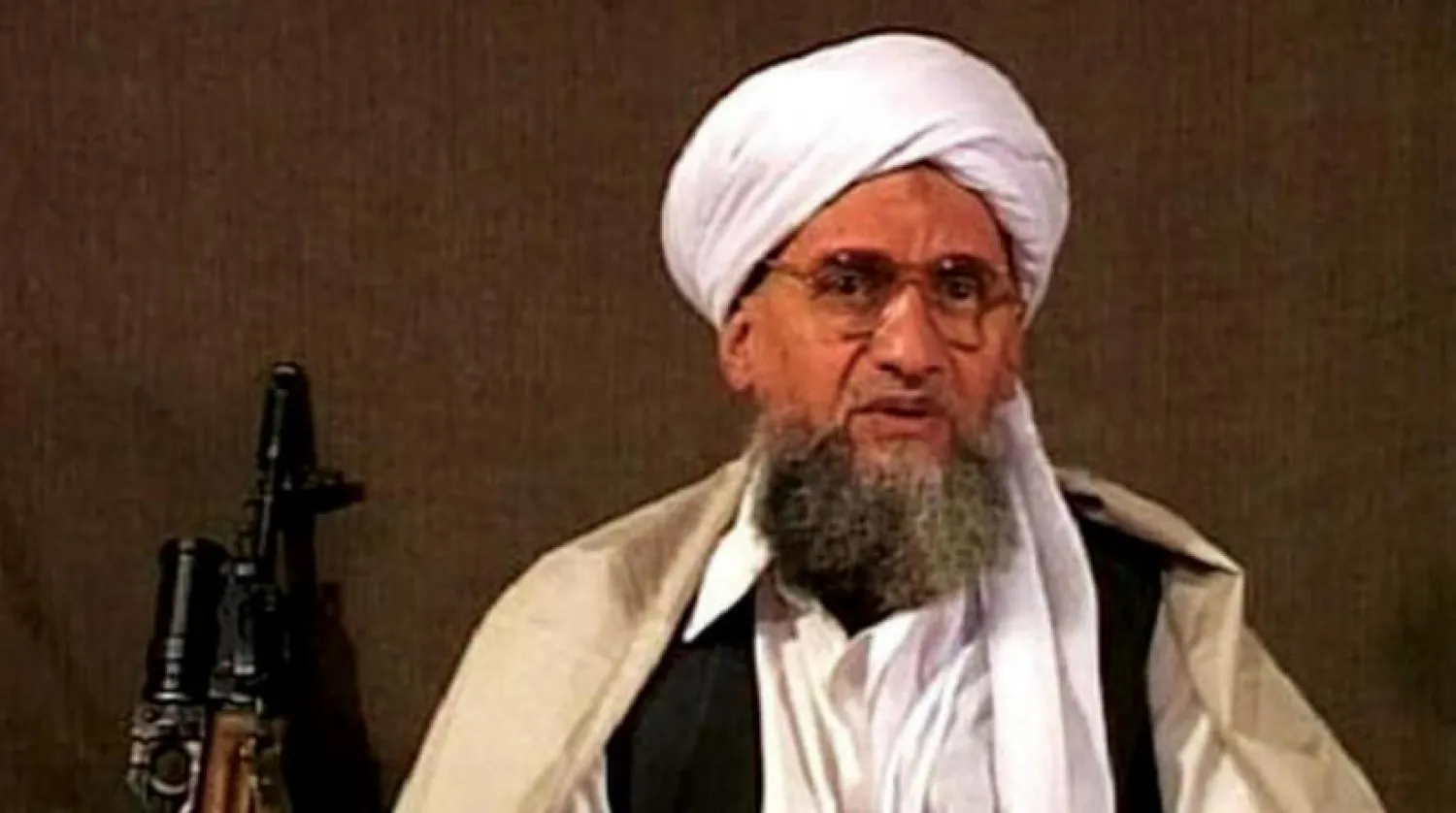
Al-Qaeda chief Ayman al-Zawahiri. Asharq Al-Awsat
TT

‘The Next Mohamed Atta’ on Most Wanted Terrorists List

Al-Qaeda chief Ayman al-Zawahiri. Asharq Al-Awsat

After the September 11 attacks, the FBI warned the public about a number of potential terrorists they believed were being groomed for an encore attack, the New York Post reported.

The FBI described them as “the next Mohamed Atta” and put them on their Most Wanted Terrorists list. Today, these dangerous suspects remain on that same list and are still at large. Yet oddly, the FBI no longer talks about them, said the report.

The only thing that’s changed, besides the descriptions of their appearances, is that the FBI is now offering bigger rewards for them, along with several key al-Qaeda leaders also still on the loose, it said.

Families of 9/11 victims want to know why, after two wars in Iraq and Afghanistan costing trillions of dollars, do we appear no closer to capturing these top terrorists? Did the FBI stop hunting for them? Has it given up hope of finding them?

Terrorism experts are equally troubled by the delay in bringing them to justice, according to the report.

“I’m concerned about these individuals still being at large,” said Philip Haney, former Department of Homeland Security counterterrorism analyst. “It should be the government’s top priority to locate and apprehend them.”

One would-be terrorist who was said to be planning to lead another attack on the US, following in the footsteps of 9/11 ringleader Atta, is the English-speaking Adnan G. El Shukrijumah, who spent time in Florida before fleeing the country in the wake of the attacks.

The suspect, also known as “Jaffar the Pilot,” is still featured prominently on the FBI’s website as a Most Wanted Terrorist. (The bureau has added a “digitally enhanced” photograph of Shukrijumah sporting a full beard.) In 2010, the feds indicted the 43-year-old for his alleged role in a 2009 plot to attack New York’s subway system.

The FBI believes Shukrijumah is helping run al-Qaeda’s operations from Pakistan, while Islamabad claims its military killed him years ago. Considering that Pakistan has lied before about killing al-Qaeda members — and about harboring Osama bin Laden — US officials are dubious of its claim.

FBI headquarters confirmed the Shukrijumah case remains open and that counterterrorism agents are still hunting for the indicted fugitive.

“The cases you mention remain open, active FBI investigations with large rewards continuing to be available to those who provide information about the cases mentioned,” said Michelle Goldschen of the FBI’s Office of Public Affairs in Washington.

Shukrijumah also has New York connections. His late father served as a translator for the “Blind Sheik,” Omar Abdel Rahman, at his mosque in Brooklyn before he was imprisoned for his role in the 1993 World Trade Center bombing and other terrorist plots.

After 9/11, the US government fingered the street-smart Shukrijumah as the ultimate al-Qaeda “sleeper agent,” and potentially more dangerous than even Atta. In fact, he was said to have been handpicked by 9/11 mastermind Khalid Sheikh Mohammed, aka KSM, to carry out an encore plot to detonate nuclear devices in several US cities simultaneously.

Today, his mentor KSM is locked up at Gitmo, where he awaits punishment for his crimes — which frustrates 9/11 survivors to no end.

“When you consider the US government’s absolute ineptitude and abject failure to prosecute those they currently already have in custody in Gitmo — where they’re still in the pretrial phase 17 years after the attacks — you have to wonder whether, perhaps, the US government has just done a cost-benefit analysis and determined that it’s not quite worth their time to bring any al-Qaeda terrorists to justice or provide a modicum of accountability and closure to the innocent victims of terrorism,” said Kristen Breitweiser, who lost her husband, Ronald, in the World Trade Center’s south tower.

Another potentially dangerous suspect still eluding authorities is Abderraouf Jdey. Also known as Faruq al-Tunisi, he is a trained pilot who has a Canadian passport and was said to be slated for a “second wave” of suicide attacks after 9/11. He was identified in videos recovered in Afghanistan.

An FBI poster places a $5 million bounty on Jdey’s head and includes a photo “retouched” to show how the 53-year-old might look today.

Then there are the still-at-large al-Qaeda leaders Saif al-Adel, Abdullah Ahmed Abdullah and Ayman al-Zawahiri.

The trio was listed among the FBI’s Most Wanted Terrorists after 9/11 and the three remain there today — in spite of $10 million rewards for information leading to the capture of both al-Adel and Abdullah and an additional $25 million bounty for Zawahiri. Just last month, the US doubled the reward offers for al-Adel and Abdullah.

Zawahiri took command of al-Qaeda in 2011 after US forces killed kingpin Osama bin Laden, who for years was sheltered in Pakistan.

Zawahiri has declared plans to replace ISIS at the forefront of global terrorism. He recently called on Muslims during a 17-minute videotaped address to attack American interests “everywhere.”


Pope Leo Summons World's Cardinals for Key Assembly to Help him Govern the Church

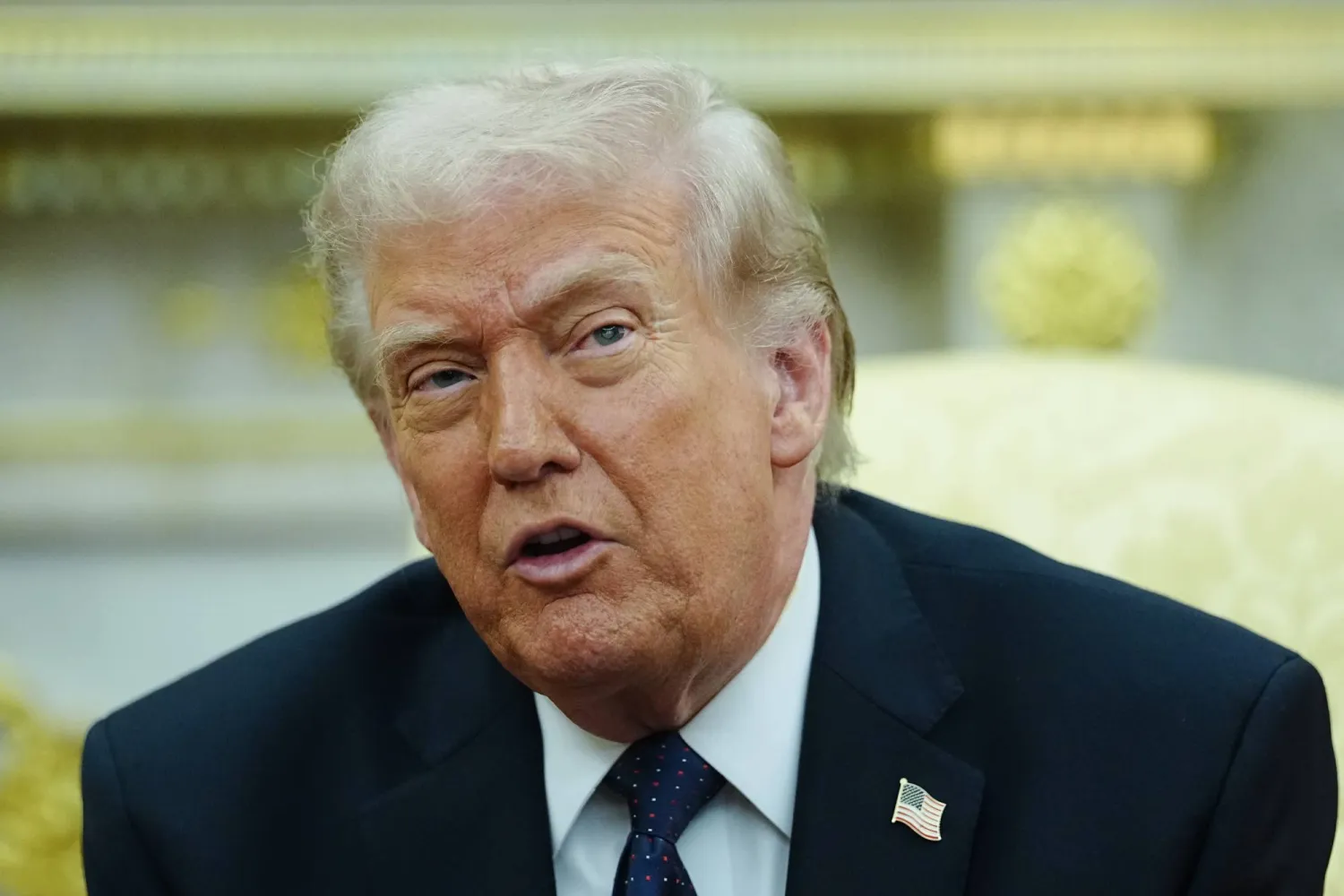
A handout picture provided by the Vatican Media shows Pope Leo XIV presiding over the Jubilee Audience in St. Peter's Square, Vatican City, 20 December 2025.  EPA/VATICAN MEDIA HANDOUT
A handout picture provided by the Vatican Media shows Pope Leo XIV presiding over the Jubilee Audience in St. Peter's Square, Vatican City, 20 December 2025. EPA/VATICAN MEDIA HANDOUT
TT

Pope Leo Summons World's Cardinals for Key Assembly to Help him Govern the Church

A handout picture provided by the Vatican Media shows Pope Leo XIV presiding over the Jubilee Audience in St. Peter's Square, Vatican City, 20 December 2025.  EPA/VATICAN MEDIA HANDOUT
A handout picture provided by the Vatican Media shows Pope Leo XIV presiding over the Jubilee Audience in St. Peter's Square, Vatican City, 20 December 2025. EPA/VATICAN MEDIA HANDOUT

Pope Leo XIV has summoned the world’s cardinals for two days of meetings to help him govern the church, the Vatican said Saturday, in the clearest sign yet that the new year will signal the unofficial start of his pontificate.

The consistory, as such gatherings are called, will be held Jan. 7-8, immediately following the Jan. 6 conclusion of the 2025 Holy Year, a once-every-quarter century celebration of Christianity.

Leo’s first few months as pope have been dominated by fulfilling the weekly Holy Year obligations of meeting with pilgrimage groups and celebrating special Jubilee audiences and Masses. Additionally, much of his time has been spent wrapping up the outstanding matters of Pope Francis' pontificate.

As a result, the January consistory in many ways will mark the first time that Leo can look ahead to his own agenda following his May 8 election as the first American pope. It is significant that he has summoned all the world’s cardinals to Rome, The Associated Press reported.

Francis had largely eschewed the consistory tradition as a means of governance. He had instead relied on a small group of eight or nine hand-picked cardinal advisers to help him govern and make key decisions.

The Vatican said Saturday that Leo’s first consistory “will be oriented toward fostering common discernment and offering support and advice to the Holy Father in the exercise of his high and grave responsibility in the government of the universal Church.”

Other types of consistories include the formal installation of new cardinals. But no new cardinals will be made at this meeting, which is purely consultative.


Iran, UK Foreign Ministers in Rare Direct Contact

Iranian Foreign Minister Abbas Araghchi gestures during a joint news conference with Russian Foreign Minister Sergei Lavrov at Zinaida Morozova's Mansion in Moscow, Wednesday, Dec. 17, 2025. (Ramil Sitdikov/Pool Photo via AP)
TT

Iran, UK Foreign Ministers in Rare Direct Contact

Iranian Foreign Minister Abbas Araghchi gestures during a joint news conference with Russian Foreign Minister Sergei Lavrov at Zinaida Morozova's Mansion in Moscow, Wednesday, Dec. 17, 2025. (Ramil Sitdikov/Pool Photo via AP)

Iran's Foreign Minister Abbas Araghchi has spoken by phone with his British counterpart Yvette Cooper, an Iranian foreign ministry statement said on Saturday, in a rare case of direct contact between the two countries.

The ministry said that in Friday's call the ministers "stressed the need to continue consultations at various levels to strengthen mutual understanding and pursue issues of mutual interest."

According to AFP, a UK government source said Cooper "emphasized the need for a diplomatic solution on Iran's nuclear program and raised a number of other issues."

The source in London said Cooper raised the case of Lindsay and Craig Foreman, a British couple detained in Iran for nearly a year on suspicion of espionage.

The Iranian ministry statement did not mention the case of the two Britons.

It said Araghchi criticized "the irresponsible approach of the three European countries towards the Iranian nuclear issue", referring to Britain, France and Germany.

The three countries at the end of September initiated the reinstatement of UN sanctions against Iran because of its nuclear program.

The Foremans, both in their early fifties, were seized in January as they passed through Kerman, in central Iran, while on a round-the-world motorbike trip.

Iran accuses the couple of entering the country pretending to be tourists so as to gather information for foreign intelligence services, an allegation the couple's family rejects.

Before Friday's call, the last exchange between the two ministers was in October.


Netanyahu Plans to Brief Trump on Possible New Iran Strikes, NBC News Reports

Israeli Prime Minister Benjamin Netanyahu speaks at the plenum of the Knesset, Israel's parliament, in Jerusalem, November 10, 2025. REUTERS/Ronen Zvulun/File Photo
TT

Netanyahu Plans to Brief Trump on Possible New Iran Strikes, NBC News Reports

Israeli Prime Minister Benjamin Netanyahu speaks at the plenum of the Knesset, Israel's parliament, in Jerusalem, November 10, 2025. REUTERS/Ronen Zvulun/File Photo

US President Donald Trump is ​set to be briefed by Israel's Prime Minister Benjamin Netanyahu that any expansion ‌of ‌Iran's ‌ballistic ⁠missile ​program ‌poses a threat that could necessitate swift action, NBC News reported on Saturday.

Israeli ⁠officials are ‌concerned that Iran ‍is ‍reconstituting nuclear enrichment ‍sites the US bombed in June, and ​are preparing to brief Trump for options ⁠on attacking the missile program again, the NBC report added.

Reuters could not verify the report.

New satellite imagery shows recent activity at the Natanz nuclear facility that was damaged during June's 12-day war with Israel, according to the US-based Institute for Science and International Security (ISIS).

During the June conflict, the IAEA confirmed Israeli strikes hit Iran's Natanz underground enrichment plant.

The think tank said the satellite imagery from December 13 show panels placed on top of the remaining anti-drone structure at the Pilot Fuel Enrichment Plant (PFEP), providing cover for the damaged facility.

It suggested the new covering allows Iran to examine or retrieve materials from the rubble while limiting external observation.

The Natanz uranium enrichment facility, located some 250 km south of the Iranian capital Tehran, is one of Iran's most important and most controversial nuclear facilities in the Middle East.
