Eat, Sleep and Respect the Ball: Inside Barcelona’s Modern La Masia

Barcelona youth players take on their Espanyol counterparts in the shadow of La Masia 2.0, the latest incarnation of the club’s famed academy. Photograph: Jasper Juinen/Getty Images
TT

Eat, Sleep and Respect the Ball: Inside Barcelona’s Modern La Masia

Barcelona youth players take on their Espanyol counterparts in the shadow of La Masia 2.0, the latest incarnation of the club’s famed academy. Photograph: Jasper Juinen/Getty Images

The dimly lit, studiously grey lecture room carries the feel of a sixth-form block in a suburban high-school. On the opposite side of the street, about the width of a football pitch away, stands a typical Aldi supermarket, intensifying the acute sense of suburban normality. But this is no conventional school environment.

This is the heart of La Masia 2.0, Barcelona’s modern incarnation of the famous residential farmhouse that helped nurture the finest generation of footballers the club has ever seen. The place where Lionel Messi, Xavi Hernández, Carles Puyol, Andrés Iniesta and the rest of the tiki-taka brigade were schooled in the art of strangling the opposition with relentlessly mesmeric ball-hogging maneuvers.

“It’s not luck but we had a lot of stars at the same time,” explains Marc Carmona, Barcelona’s head of coach education. “The Spain team won three consecutive tournaments between 2008 and 2012 – and it coincided with Barça’s best period in history.”

Sitting in La Masia’s main lecture hall a couple of days after Spain got their chaotic World Cup bid off to a stuttering start with a 3-3 draw against Portugal, Carmona goes on to explain that one of the high points for La Masia, founded in 1979 at the insistence of Johan Cruyff, came in 2010. An astonishing nine La Masia graduates dominated the Spain squad that made history by winning a first World Cup. Two of those players – Xavi and Iniesta – joined another La Masia graduate, a certain diminutive Argentinian, on the Ballon d’Or shortlist the same year.

It was the first and only time all three players on the shortlist have hailed from the same club. Messi won it – his second of five so far – and, remarkably, the club has had at least one player on the final shortlist every year since 2004. “We are working to repeat this period,” says Carmona. “But it’s very difficult.”

This difficulty has become clear in recent years. Just 12 months after La Masia 2.0 opened in 2011, Tito Villanova made history by fielding a starting 11 comprising all La Masia graduates. But since then only Sergio Roberto has established himself in the first team after coming through the ranks.

A little over two years ago, the club introduced La Masia 360, an attempt to widen the net to produce the next wave of superstar players as the game evolves but also with a nod to the legion of players who might not make it to the top. The club now extends the holistic approach to developing its residential players, currently 76 youngsters, to include the 550 or so other players within the academy program across five professional sports: football (male and female), basketball, futsal, handball and roller hockey.

“For about 70 youth players, they live here, sleep here, eat here, study here, train here. They have a lot of attention,” says Carmona. “One day the strategy department decided that if we take care of these 70 young athletes in all ways, why are Barça not giving this same attention to all the youth professional players? So now, we are trying to give the same attention for the non-residents. They don’t live here but we are trying to control their family situation, their study situation too.”

The club’s commitment to its Mes que un club philosophy is clear. The 360 program focuses on the whole child and is upfront about the psycho-social characteristics required to make it at Barça: humility, effort, ambition, respect, teamwork.

“For us behavior is very important. You have to win by respecting the opponent, the referee and the rules of the play,” says Carmona. “But also by respecting our three big treasures in football, the three Ps: possession of the ball, position of the ball and pressing after losing the ball. This is our way to understand football. This is clear from watching any Barcelona game.”

The five-story building – full name La Masia Centre de formacio Oriol Tort – is situated in the heart of the club’s suburban training complex, Ciutat Esportiva Joan Gamper, about three miles east of Camp Nou. It replaced the famous old farmhouse as the central nervous system of the FC Barcelona behemoth.

The rear end of the ground-floor corridor leads to the restaurant before a door paves the way to an outdoor playground that rams home the focus on learning and play: next to a table-football table stands an oversize table-tennis table, which is oval, carries football pitch markings and lends itself to 2v2 games (table tennis and head tennis) between the players. “It’s just like you see in the public parks of Barcelona,” says Carmona.

Real Madrid’s €100m investment in its academy set-up, not to mention its first team’s recent dominance in Europe, raises the difficult question of whether modern football is leaving Barça’s purism behind. Carmona is quick to defend the clear thread of playing style and philosophy that runs through the age groups at La Masia, from the Under-10s right up to the first team.

“During the season, you can see the training session for the U10, then the U16 then Barça B and you will see the same,” he says. “Different exercises because of the age of the players but the idea of the session, and the kind of exercises, are very similar. You can smell it, you can see it in the session; this is our DNA.

“It is about games in a small space, a lot of rondos, a lot of games with possession, a lot of games 4v4, 5v5, so you can see that the ball is very important. To pass the ball, control the ball, to move with the ball … this is the DNA in football. And the coaches are trying to transmit the understanding at all ages.”

The subject of Real’s ruthlessly destructive victory over Liverpool in May’s Champions League final crops up. Can Barça’s goalposts be moved when considering “the way we win”? “I think sometimes, we maybe need our [Sergio] Ramos too,” Carmona concedes. “ Because Barça in the last five seasons, in four of them [we have been] eliminated in the quarter-final in Europe. So we have to think about, maybe, our way to play is a good option to win the Spanish league – Barça won seven of the last 10 leagues. But maybe not enough to compete in Europe, because opponents have very big players.”

Carmona was the hugely successful head coach of Barcelona’s futsal team before he took on the role of ensuring all the club’s youth coaches are tuned into the Barça DNA. The benefits of futsal – the Fifa-sanctioned version of five a side – have been long espoused by Messi, Xavi and Iniesta among many others. It is clear Barcelona is also trying to succeed by nurturing football’s little brother too. “In futsal you touch the ball more, participate a lot, are in contact with the ball a lot,” Carmona says. “Sometimes in football you can touch the ball once every three minutes. It is a very good practice for football to play futsal.”

Jordi Torras, a former Barcelona and Spain futsal star who is now head of youth futsal coaching at the club, explains how the match-realistic scenarios are crucial given the importance of the tournament to come. “At this stage of the championship we will work more on the strategic aspects and a lot of real situations that you can find with the rival and the match,” he says. “The philosophy is the same as the one requested by the club: we have to win by being an example in everything and that is what makes us different.”

As well the residencies at its training ground, Barcelona’s clear commitment to a professional futsal team is another marker of difference between them and Real. The Madrid club flirted with futsal in the mid-80s but has not had a professional team.

“They [Real Madrid] want the best football club in Europe, they have it,” says Carmona. “Here in Barça we have special feeling with all our pro sections but also with our amateur sections too.

It is our identity. Athletics, volleyball [male and female], basketball for females, wheelchair basketball, ice skating, ice hockey rugby, grass hockey. They are all part of our identity.

“The DNA of Madrid is to win. The DNA of Barça is to play well. But the truth is that we have to win too.”

(The Guardian)


IOC Boss Coventry Hails Milano Cortina Games a Success

 20 February 2026, Italy, Milan: President of the International Olympic Committee (IOC) Kirsty Coventry holds a press conference. (dpa)
20 February 2026, Italy, Milan: President of the International Olympic Committee (IOC) Kirsty Coventry holds a press conference. (dpa)
TT

IOC Boss Coventry Hails Milano Cortina Games a Success

 20 February 2026, Italy, Milan: President of the International Olympic Committee (IOC) Kirsty Coventry holds a press conference. (dpa)
20 February 2026, Italy, Milan: President of the International Olympic Committee (IOC) Kirsty Coventry holds a press conference. (dpa)

The Milano Cortina Olympics exceeded expectations despite a shaky build-up, IOC President Kirsty Coventry said on Friday, hailing the first spread-out Winter Games a success.

"These Games are truly ... successful in a new way of doing things, in a sustainable way of doing things, in a way that I think many people thought maybe we couldn't do, or couldn't be done well, and it's been done extremely well, and it's surpassed everyone's expectations," Coventry told a press conference.

It was the International Olympic Committee chief's clearest endorsement yet of a format that split events across several Alpine clusters rather than concentrating them in one host city.

Her assessment came after two weeks in which organizers sought to prove that a geographically dispersed Games could still deliver a consistent athlete experience.

The smooth delivery ‌comes after years ‌of logistical and political challenges, including construction delays at Milan’s Santagiulia Arena ‌and ⁠controversy over building ⁠a new sliding center in Cortina against IOC advice.

Organizers have also faced isolated disruptions during the Games, such as suspected sabotage on rail lines and protests in Milan over housing and environmental issues.

Transport concerns across the dispersed venues have been mitigated by limited cross-regional travel among spectators, though some competitors had to walk to the Cortina Curling Olympic Stadium in heavy snowfall that stopped traffic.

Central to the success of the Games, Coventry argued, was the effort to standardize conditions across multiple athlete villages despite the distances separating venues from Cortina d’Ampezzo to ⁠Livigno and Bormio.

Italian athletes’ performances also helped ticket sales, which amounted to ‌about 1.4 million.

"And the athletes are extremely happy. And they're happy ‌because the experiences that the MiCo (Milano Cortina) team and my team delivered to them have been the same," she ‌said.

Mixed relay silver medalist Tommaso Giacomel did, however, lament the fact there was no Olympic village near ‌the Antholz-Anterselva Biathlon Arena and that competitors were dotted around different hotels near the venue instead of in one place.

TWO OPENING CEREMONIES

Two opening ceremonies were held - the main one at Milan’s San Siro stadium and a more low-key parade on Cortina d’Ampezzo's Corso Italia, where athletes and spectators were within touching distance.

Feedback from competitors suggested the more intimate ‌settings had in some cases enhanced the Olympic atmosphere, Coventry said, taking the Cortina opening ceremony as an example.

The Zimbabwean, presiding over her first Games ⁠as IOC chief after elections in ⁠2025, framed Milano Cortina as proof of concept for future hosts grappling with rising costs and climate constraints, while acknowledging adjustments would follow.

"It allows us to really look at ourselves and look at the things that we have in place and how we're then going to make certain adjustments for the future," she said.

Beyond logistics, Coventry pointed to the broader impact of the Games, highlighting gender balance - with women making up 47% of competitors - and global engagement as marks of progress.

"But it's been an incredible experience and we're all very proud to have gender equity playing a big role in the delivery of the Games," she said, describing a "tremendous Games" in which athletes have "come together and shared in their passion".

With the closing ceremony in Verona approaching, Coventry said the focus would soon shift to a formal evaluation process, but insisted the headline conclusion was already clear.

"So we look forward to doing that and to learning from all the incredible experiences that I think all of the stakeholders have had across these Games, across these past two weeks," she said.


‘A Huge Mistake.’ Kompany Hits Out at Mourinho for Vinícius Júnior Comments

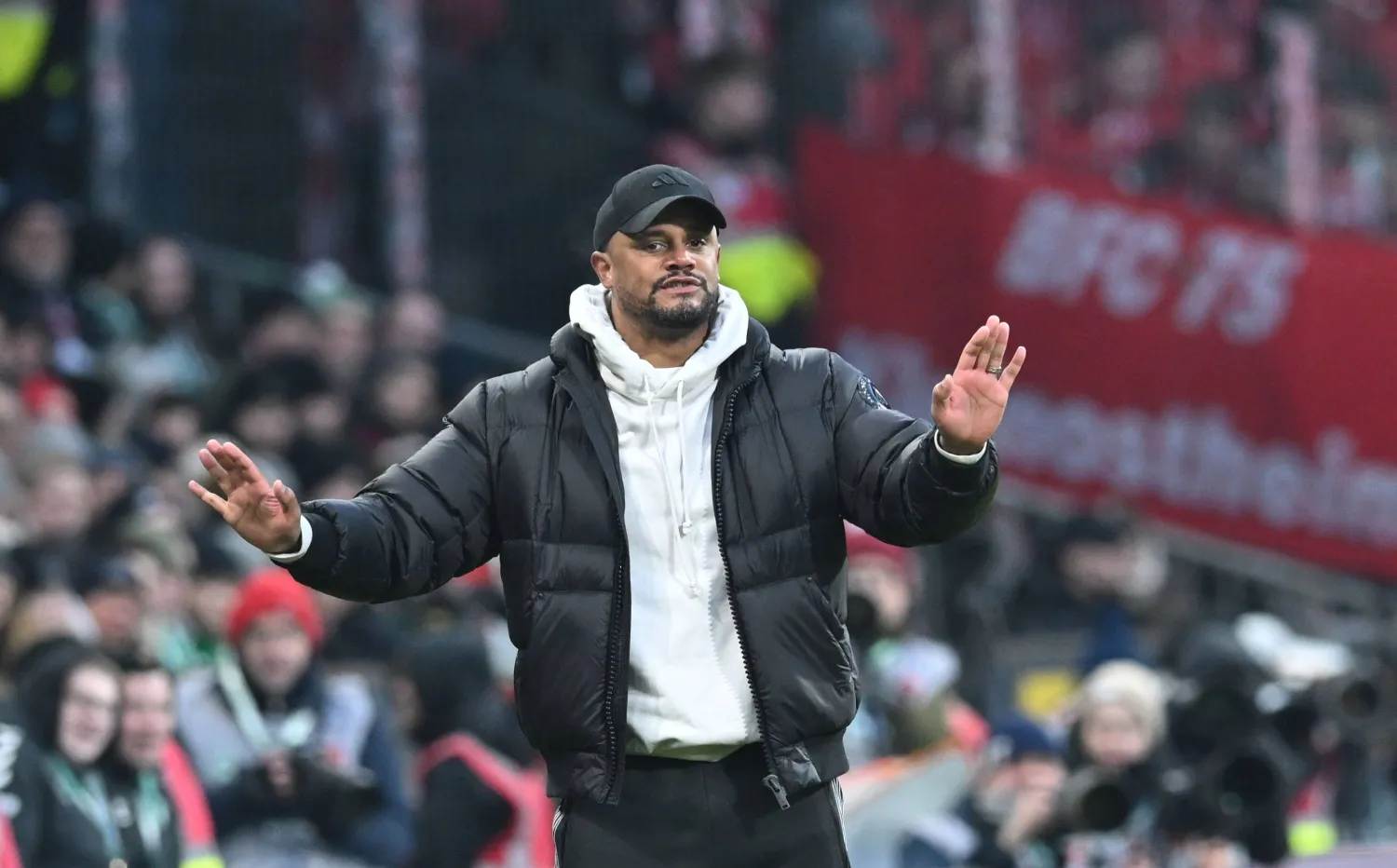
14 February 2026, Bremen: Bayern Munich coach Vincent Kompany gestures during the German Bundesliga soccer match between Werder Bremen and Bayern Munich at Weserstation. (dpa)
TT

‘A Huge Mistake.’ Kompany Hits Out at Mourinho for Vinícius Júnior Comments

14 February 2026, Bremen: Bayern Munich coach Vincent Kompany gestures during the German Bundesliga soccer match between Werder Bremen and Bayern Munich at Weserstation. (dpa)

Bayern Munich coach Vincent Kompany has criticized José Mourinho for attacking the character of Vinícius Júnior after the Real Madrid star accused an opponent of racially insulting him during a Champions League match.

Benfica coach Mourinho suggested that Brazil forward Vinícius had incited Benfica's players with his celebrations after scoring the only goal in Tuesday's playoff match.

Vinícius accused Benfica's Gianluca Prestianni of calling him "monkey" during a confrontation after his goal.

Mourinho also questioned why Vinícius, who is Black and has been subjected to repeated racist insults in Spain, was so frequently targeted.

"There is something wrong because it happens in every stadium," Mourinho said. "The stadium where Vinícius played something happened. Always."

Speaking on Friday, Kompany condemned Mourinho's comments.

"So after the game you have the leader of an organization, José Mourinho, who attacks the character of Vinícius Júnior by bringing in the type of celebration to discredit what Vinícius is doing in this moment," Kompany said. "And for me in terms of leadership, it’s a huge mistake and it’s something that we should not accept."

Mourinho’s celebrations

UEFA appointed a special investigator on Wednesday to gather evidence about what happened in Lisbon in Madrid’s 1-0 win in the first leg of the Champions League playoffs. Madrid said it had sent "all available evidence" of the alleged incident to European soccer's governing body.

Referring to Vinícius' celebrations after curling a shot into the top corner, Mourinho said he should "celebrate in a respectful way."

Kompany pointed out Mourinho's own history of exuberant celebrations — such as when he ran down the sideline to cheer when his Porto team beat Manchester United in the Champions League.

Kompany said Mourinho's former players "love him" and added "I know he’s a good person."

"I don’t need to judge him as a person, but I know what I’ve heard. I understand maybe what he’s done, but he’s made a mistake and it’s something that hopefully in the future won’t happen like this again," he said.

Prestianni denied racially insulting Vinícius. Benfica said the Argentine player was the victim of a "defamation campaign."

‘Right thing to do’

Kompany said Vinícius' reaction "cannot be faked."

"You can see it — his reaction is an emotional reaction. I don’t see any benefit for him to go to the referee and put all this misery on his shoulders," he said. "There is absolutely no reason for Vini Junior to go and do this.

"I think in his mind he’s doing it more because it’s the right thing to do in that moment."

Kompany added: "You have a player who’s complaining. You have a player who says he didn’t do it. And I think unless the player himself comes forward, it’s difficult. It’s a difficult case."


FIFA to Lead $75m Palestinian Soccer Rebuilding Fund

President of FIFA Gianni Infantino attended the inaugural meeting of US President Donald Trump's 'Board of Peace'. CHIP SOMODEVILLA / GETTY IMAGES NORTH AMERICA/AFP
TT

FIFA to Lead $75m Palestinian Soccer Rebuilding Fund

President of FIFA Gianni Infantino attended the inaugural meeting of US President Donald Trump's 'Board of Peace'. CHIP SOMODEVILLA / GETTY IMAGES NORTH AMERICA/AFP

FIFA will spearhead a $75 million fund to rebuild soccer facilities in Gaza that were destroyed by the war between Israel and Hamas, President Donald Trump and the sport's governing body said Thursday.

Trump made the announcement in Washington at the first meeting of his "Board of Peace," an amorphous institution that features two dozen of the US president's close allies and is initially focused on rebuilding the Gaza strip, said AFP.

"I'm also pleased to announce that FIFA will be helping to raise a total of $75 million for projects in Gaza," said Trump.

"And I think they're soccer related, where you're doing fields and you're getting the greatest stars in the world to go there -- people that are bigger stars than you and I, Gianni," he added, referring to FIFA president Gianni Infantino, who was present at the event.

"So it's really something. We'll soon be detailing the announcement, and if I can do I'll get over there with you," Trump said.

Later Thursday, FIFA issued a statement providing more details, including plans to construct a football academy, a new 20,000-seat national stadium and dozens of pitches.

The FIFA communique did not mention Trump's $75 million figure, and said funds would be raised "from international leaders and institutions."

Infantino has fostered close ties with Trump, awarding him an inaugural FIFA "Peace Prize" at the World Cup draw in December.

At Thursday's meeting, the FIFA president donned a red baseball cap emblazoned with "USA" and "45-47," the latter a reference to Trump's two terms in the White House.

In FIFA's statement, Infantino hailed "a landmark partnership agreement that will foster investment into football for the purpose of helping the recovery process in post conflict areas."

The "Board of Peace" came together after the Trump administration, teaming up with Qatar and Egypt, negotiated a ceasefire in October to halt two years of devastating war in Gaza.

The United States says it is now focused on disarming Hamas -- the Palestinian group whose unprecedented October 7, 2023, attack on Israel triggered the massive offensive.