



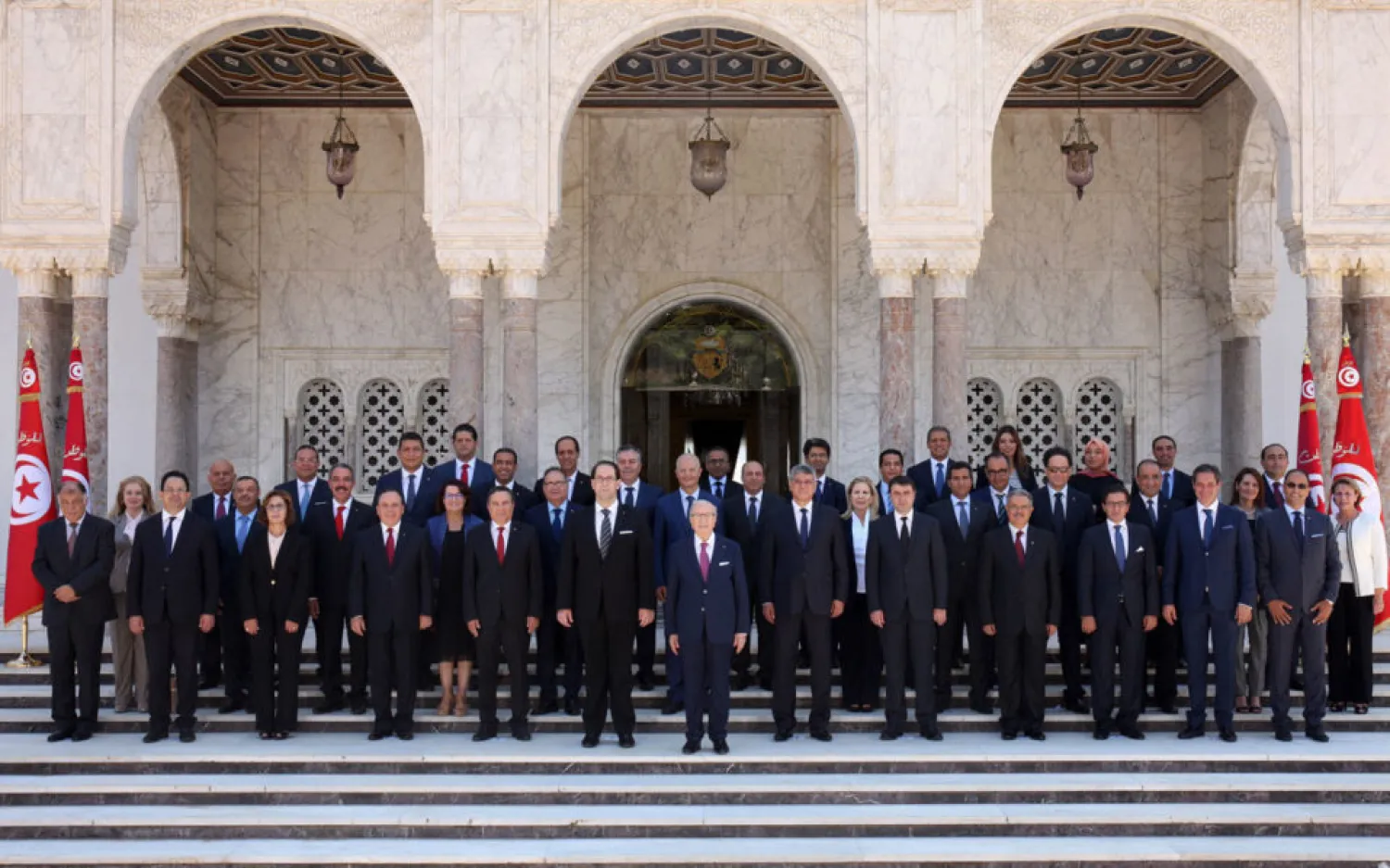

Tunisian Prime Minister Youssef Chahed is preparing to propose a comprehensive reshuffle to his government to vote on the parliament, in a move to contain the pressure posed by parties and Tunisian General Labor Union (UGTT), sources in parliament said on Wednesday.
MP Leila Shtawi of the National Coalition bloc said that a cabinet reshuffle will take place soon, highlighting that deputies are in the process of preparing and coordinating this change over the voting process.
The dispute has been going on for months on the fate of the current government, led by the Nidaa Tounes Movement.
Nidaa Tounes has been calling for its ouster, while Ennahda Movement refuses an in-depth reshuffle.
UGGT, for its part, demands the dismissal of the government after it failed to contain social tension and reform the economy.
Nidaa Tounes spokesperson Munji Herbawi said Wednesday that the party has not yet defined its position on this step, adding that "the reshuffle has not been officially announced.”
However, President Beji Caid Essebsi has called for holding a second vote of confidence and put an end to the political crisis in the country.
Government spokesman Iyad Dahmani said earlier that one of the formulas to be submitted to the parliament is a reshuffle before the end of this year.
In a separate development, Amnesty International criticized the travel restrictions imposed by Tunisian authorities on the pretext of maintaining security and stability.
"They are often imposed in an arbitrary and discriminatory manner that violates basic human rights," Amnesty International said.
Since 2013, Tunisia’s Ministry of Interior has restricted the movement of nearly 30,000 people under secretive border control measures known as “S17 measures”.
These measures are not accessible to the public and lack complete judicial oversight, the organization said.
At least 60 people have been unlawfully prevented from traveling abroad or had their movement within Tunisia blocked between 2014 and 2018.
The report details the devastating impact such measures have had on the everyday lives of those affected, many of whom have been unable to work, study or lead a normal family life.


