Jordan-Lebanon Naseeb Border Crossing Revives Trade in Southern Syria
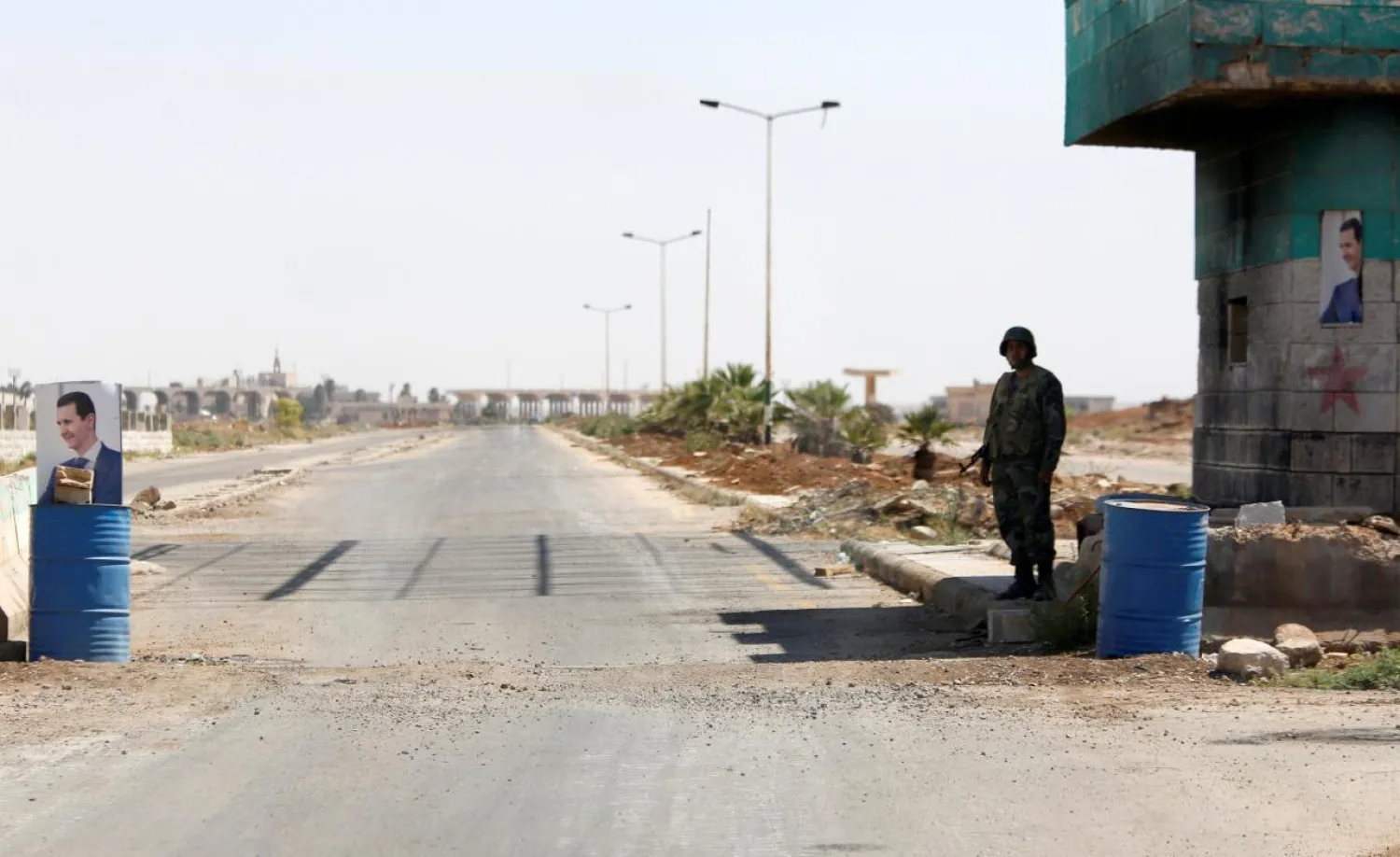
A Syrian soldier stands guard at the Nasib border crossing with Jordan in Deraa, Syria July 7, 2018, Reuters
Daraa, South Syria – Riyad Azzain
TT
TT
Jordan-Lebanon Naseeb Border Crossing Revives Trade in Southern Syria
A Syrian soldier stands guard at the Nasib border crossing with Jordan in Deraa, Syria July 7, 2018, Reuters
Jordanian tourism companies were ecstatic over news of the reopening the Naseeb crossing with Syria, rushing to advertise the organization roadtrips to Damascus, which resumed on October 22, logging two departure and return drives per day.
As Pullmans hit the road from Jordan en route to Syria, currency exchange shops announced the selling of Syrian currency, and Jordanians expressed across social media platforms their “joy and longing to visit Syria”.
Jordanian citizens posted pictures and video logs from within Syria, especially in southern territories.
Soon enough, joy transformed into shock as one of the Jordanian visitors was left speechless at the extent of destruction and rubble found in the city of Daraa al-Balad, south of Syria.
Most reports said the city’s markets and neighborhoods are damaged beyond recognition.
Since the Damascus and Amman arranged for reopening the Naseeb crossing, dozens of Jordanians steered their wheels towards for Syria in a heartbeat. Most of are making daily trips to Damascus and the southern Daraa governorate.
Freight vehicles resumed their transport of Syrian goods and agriculture produce to Jordan.
A Daraa trade owner said the city’s markets were reinvigorated by Jordanian tourists and demands for agricultural produce and goods, especially olive oil, fruits, vegetables, meat, flour, clothing and gas. These items are available at half price in Syria compared to Jordan.
“Olive oil is sold at 28,000 Syrian pounds, equivalent to 46 Jordanian dinars, while in Jordan it is sold at 100 dinars,” the trader said.
The Syrian pound, driven to the ground against the dollar, trades at 625 pounds for one Jordanian dinar. Consumer rates for tourists are substantially cheaper when compared to Jordan.
A Jordanian citizen can buy a month’s worth of commodities from Syria for the simple price of 150 dinars. The same amount of money wouldn’t last a week of average food purchases in Jordan.
In Daraa, a number of Syrian regime security checkpoints and roadblocks located on the Damascus-Daraa highway were removed to facilitate the passage of trucks and cars.
The reopening of the Naseeb crossing would bring major relief to Bashar Assad's regime by restoring a much-needed gateway for selling Syrian commodities.
More so, regime forces saw to the reopening of malls and connecting infrastructure for tourists to cement their claims of the war having “ended in Syria.”
An Israeli soldier takes position during a raid in the West Bank city of Nablus, 01 June 2026. (EPA)
TT
TT
Israeli Forces Kill Palestinian Man in West Bank
An Israeli soldier takes position during a raid in the West Bank city of Nablus, 01 June 2026. (EPA)
Israeli forces shot dead an 18-year-old Palestinian man in the occupied West Bank, the Palestinian health ministry said Friday, while the military said it had killed someone who threw firebombs at vehicles.
In the early hours of Friday, the health ministry said it had been informed of "the martyrdom of the young man Haitham Ezzedine Omar Hmeida, 18, by occupation gunfire in the village of Beitin," northeast of Ramallah.
It added that the man's body was being withheld.
In a statement, the Israeli military said its forces had "identified several terrorists throwing Molotov cocktails at Israeli vehicles traveling on a major roadway" near the village of Beitin.
"The soldiers opened fire at the terrorists and eliminated one of them," the military said, adding that its forces were "currently pursuing the remaining suspects."
Since the war in Gaza broke out in October 2023 with Hamas's attack on Israel, near-daily violence has rocked the West Bank, which Israel has occupied since 1967.
Israeli soldiers or settlers have killed at least 1,078 Palestinians since then, including many gunmen, according to an AFP tally based on Palestinian health ministry data.
Official Israeli figures show at least 46 Israelis have been killed in Palestinian attacks or during Israeli military operations in the same period.
Sadr Hands over Saraya al-Salam to Iraqi Govt as PMF to Be ‘Restructured’https://english.aawsat.com/arab-world/5280651-sadr-hands-over-saraya-al-salam-iraqi-govt-pmf-be-%E2%80%98restructured%E2%80%99
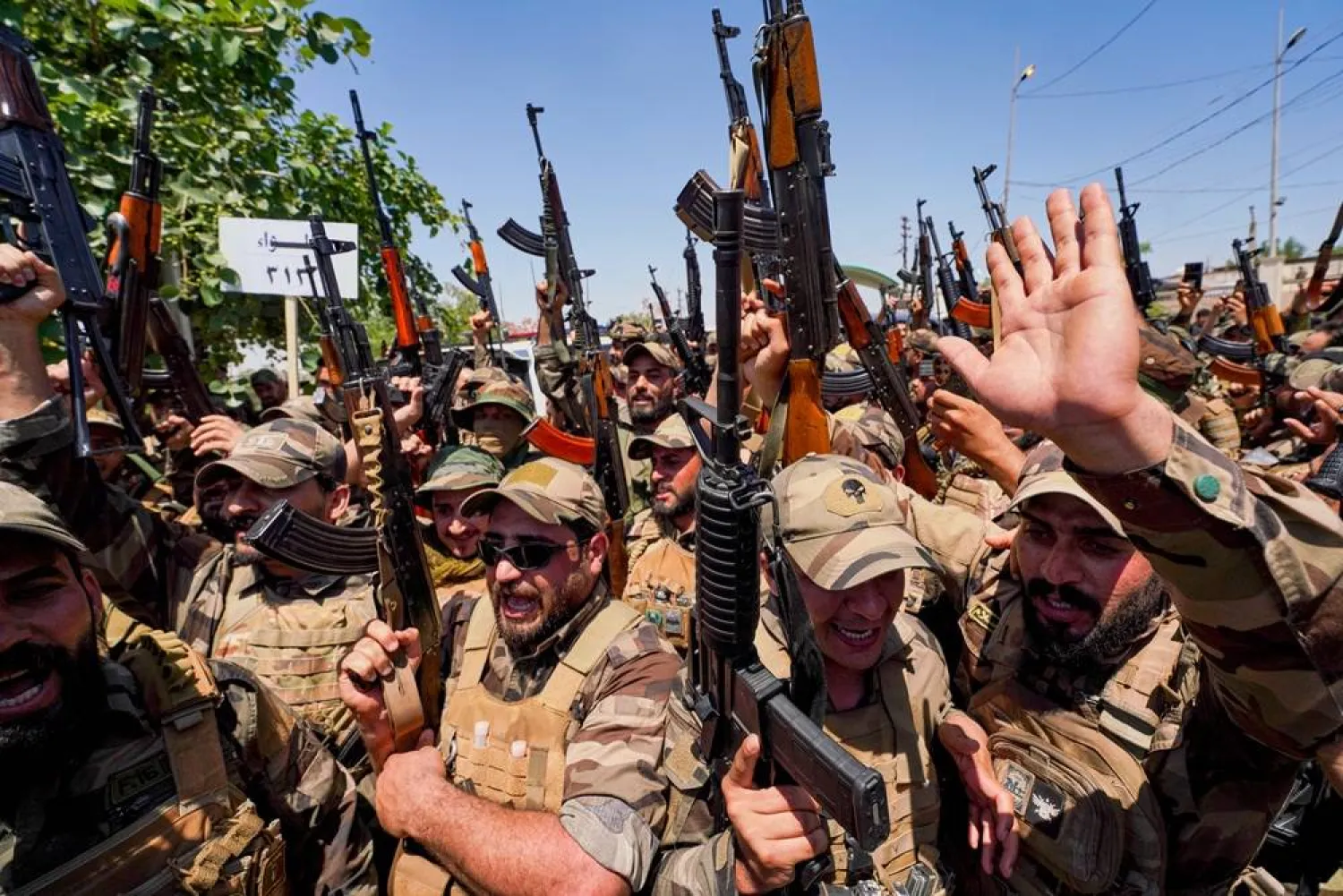
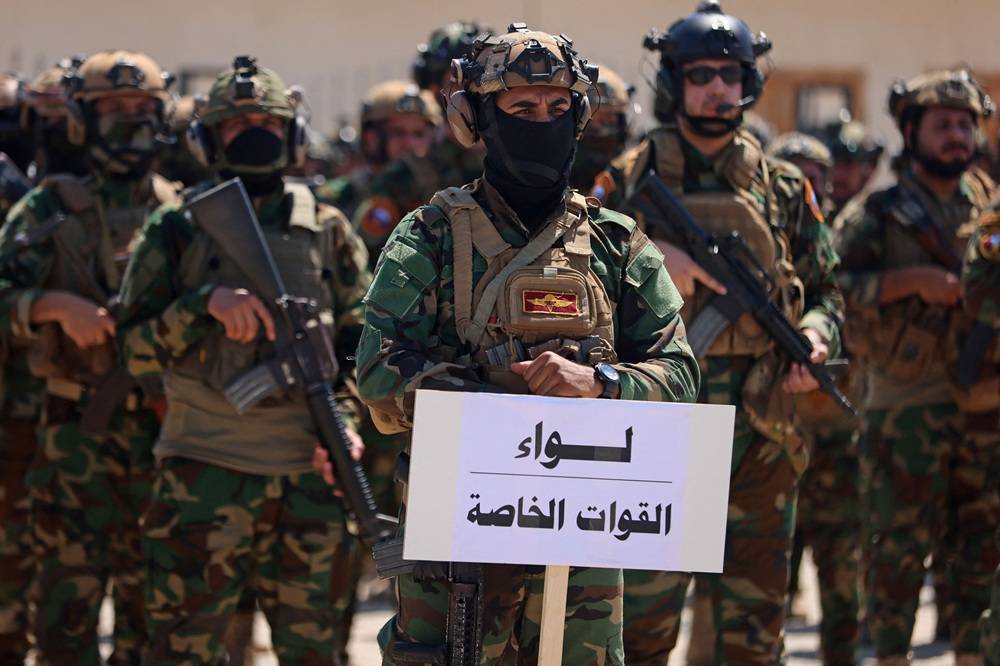
Members of Saraya al-Salam react during a ceremony in the city of Samarra on June 4, 2026, marking their separation from the Sadrist movement and their integration into the Iraqi security forces. (AP)
Sadr Hands over Saraya al-Salam to Iraqi Govt as PMF to Be ‘Restructured’
Members of Saraya al-Salam react during a ceremony in the city of Samarra on June 4, 2026, marking their separation from the Sadrist movement and their integration into the Iraqi security forces. (AP)
The armed wing of influential cleric Moqtada al-Sadr's movement handed over on Thursday its security responsibilities to the Iraqi army in Samarra city.
The Saraya al-Salam are part of the pro-Iran Popular Mobilization Forces and hold security responsibilities in several regions, notably Samarra.
Sadr had announced on May 27 that he was merging the Saraya al-Salam with the state, calling on other PMF factions to follow suit.
Within a week, the Imam Ali Brigades and Asaib Ahl al-Haq factions said they were disengaging with the PMF. Other staunchly pro-Iran factions, the Kataib Hezbollah and Nujaba movement, have refused to disarm and dismantle their armed wings.
Head of Iraq's Security Media Cell Lieutenant General Saad Maan said all Saraya al-Salam fighters are now working under the orders of the prime minister, who is also commander-in-chief of the armed forces.
State media aired footage of the Saraya al-Salam members lowering their faction’s flag at their operations command center at a ceremony attended by a military delegation dispatched by PM Ali al-Zaidi.
Washington has long wanted to curtail Iran's influence in Iraq, but the start of its war with Tehran on February 28 has given it new momentum.
Iran-backed groups in Iraq have launched numerous strikes against US installations in Iraq since the start of the Middle East war at the end of February.
The strikes have been blamed on pro-Iran groups, against whom the US has retaliated, killing dozens of their fighters.
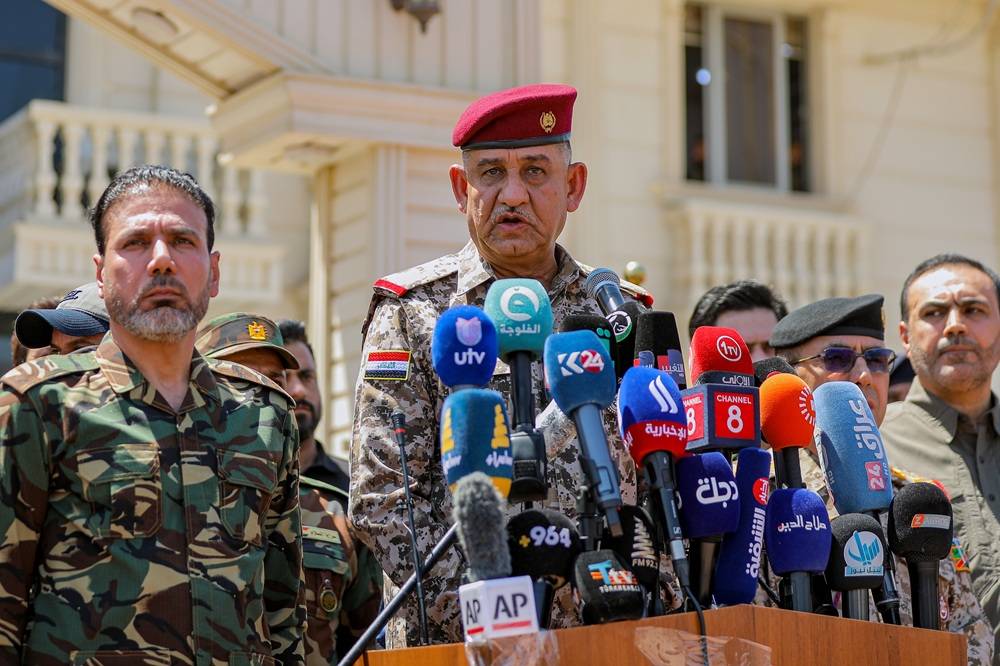
Qais al-Muhammadawi, Deputy Commander of Iraq's Joint Operations Command, speaks during a ceremony marking the start of the process of the Saraya al-Salam handing over its weapons to Iraqi state forces in Samarra, north of Baghdad, Iraq, Thursday, June 4, 2026. (AP)
Washington has in turn put pressure on Baghdad to rein in the groups by suspending security assistance and cash transfers of Iraqi oil revenues.
Qais al-Muhammadawi, Deputy Commander of Iraq's Joint Operations Command, told a press conference that the Saraya al-Salam will now be merged with the armed forces.
The faction has been deployed in Samarra since the 2007 al-Askari shrine bombing. It remains to be seen whether they will quit the city for the first time in 19 years.
A military source told Asharq Al-Awsat that the group handed over all of its headquarters to the army and its fighters are now at the command of the armed forces.
Despite these developments, the details of the dismantling of the groups and their disarmament remain vague, said observers. Questions remain over the size of their arsenal and whether they will really turn them over to the government and completely abandon them.
An Iraqi security official said the mechanism for disarmament remains “unclear”, reported AFP.
Local media said an initiative has been proposed for discussion before the ruling pro-Iran Coordination Framework. It includes securing tens of thousands of government jobs in official security institutions for members of the dismantled armed factions.
Members of Saraya al-Salam gather during a ceremony in the city of Samarra on June 4, 2026, marking their separation from the Sadrist movement and their integration into the Iraqi security forces. (AFP)
PMF ‘structuring’
Meanwhile, spokesperson for the Commander-in-Chief of the Armed Forces Sabah al-Numan announced that the committee tasked with imposing state monopoly over arms has kicked off its operations.
He said that “faction disengagement from the PMF calls for the restructuring of formations and ensuring the rights of members.”
This was the first time that the issue of structuring of the formations has been brought up since the PMF’s establishment in 2014. The group was initially set up to fight the ISIS extremist group.
Numan explained that “disengagement” entails “administrative frameworks and the restructuring of these formations within the security agencies, guaranteeing the rights of fighters and merging them with military formations.”
The committee will set up mechanisms for merges and the handover of weapons and military equipment to the official security agencies, he added.
The committee is comprised of officials from the defense and interior ministries, Joint Operations Command and PMF.
What’s next?
Qais al-Khazali's Asaib Ahl al-Haq is expected to follow in Sadr’s footsteps and handover its weapons.
The group, which the US designates a terrorist organization, also forms an important parliamentary bloc with 27 seats. Having refocused on politics, it has distanced itself from Iran and has not taken part in the current war.
A source close to the group said “being part of the government is more important that fighting. So we want to offer the US reassurances.”
The Imam Ali Brigades said it will form a committee to follow up on the disarmament and handover of weapons under the PM’s supervision.
The group has effectively put its administrative control in Zaidi’s hands, said a source close to the factions.
Washington's special envoy for Iraq and Syria, Tom Barrack, has called the disarmament efforts a "significant step forward, which represents the nascent foundation for a renewed Iraqi self-governance". He welcomed the "principled decision" of those groups that are choosing to integrate.
OPCW Analyzing 34 Sealed Boxes of Documents Handed Over from Syriahttps://english.aawsat.com/arab-world/5280643-opcw-analyzing-34-sealed-boxes-documents-handed-over-syria
OPCW Analyzing 34 Sealed Boxes of Documents Handed Over from Syria
Under-Secretary-General and High Representative for Disarmament Affairs Izumi Nakamitsu (File photo)
The Organization for the Prohibition of Chemical Weapons (OPCW) said the Syrian authorities handed over to the Secretariat team in Damascus 34 sealed cardboard boxes of documents that are being processed and further analyzed.
Briefing the UN Security Council on the implementation of Resolution 2118 on the elimination of Syria’s chemical weapons program, UN Under-Secretary-General and High Representative for Disarmament Affairs Izumi Nakamitsu welcomed on Thursday the Syrian government’s continued cooperation with OPCW, which has led to significant progress.
In early May, a team from the Organization went to Syria.
Nakamitsu stressed that the Syrian government has done courageous work to facilitate the OPCW’s work, and “we commend its continued cooperation.”
She said, the team is now ready to report that a “significant amount” of undeclared chemical weapons, related materials, and documentation – including evidence of previously undeclared chemical munitions –were already discovered.
Rockets were also found, of the same type as those that were used in the chemical weapons attack in the Syrian city of Ghouta in August 2013.
“These findings are a momentous discovery – not just for Syria, but for international security and the global disarmament regime,” Nakamitsu said, attributing their discovery to the OPCW’s unflagging efforts, the new Syrian government’s compliance with international law and the Council’s continued advocacy.
“This cooperation will remain critical going forward, as the newly discovered elements now need to be declared and destroyed, under the OPCW Technical Secretariat’s verification,” she said.
For her part, Deputy US Representative to the UN, Ambassador Tammy Bruce, welcomed the return of OPCW teams to Syria and the significant progress made by the Syrian government and the OPCW, including the discovery of previously undeclared chemical materials.
Bruce said affirmed that Syria has showed flexibility and determination to close this file and turn the page on the past, and we call for continued assistance in this step.
Several Council members also praised the progress.
Jennifer MacNaughtan, UK Minister Counsellor at the Security Council said Syria’s significant operational support to the Organization’s deployment in early May allowed access to priority sites, enabling the identification of dozens of chemical munitions such as aerial bombs and rockets.
She said the Assad regime claimed repeatedly that it had no active chemical weapons program after 2014, while this discovery demonstrates unequivocally that this claim was false.
Syria’s Permanent Representative to the UN, Ibrahim Olabi said the achievements of the Syrian teams constituted a decisive turning point in the efforts to uncover the Assad’s chemical weapons program and a major step forward in the path to accountability, thus providing an invaluable service to the region and the world by addressing the risks of proliferation and enhancing its security and stability.
While that work is critical and praiseworthy, Olabi nevertheless said the recent progress is bittersweet as it brings back terrible memories of the previous government. “Syria suffered from chemical weapons for more than 12 years,” he said, adding: “Today, it is committed to rid itself of its legacy.”
Also, China’s Deputy Permanent Representative to the UN affirmed that the chemical weapons file in Syria must be closed in order to direct resources towards reconstruction and development.
France’s Permanent Representative to the UN, Jerome Bonnafont, said that the Assad regime has used chemical weapons against its own people in at least nine confirmed cases, and hoped that the remaining chemical stockpiles will be secured and destroyed as quickly as possible.
“We welcome the Syrian government’s cooperation with the Organization for the Prohibition of Chemical Weapons, and this cooperation opens a new chapter in the country’s history,” Bonnafont added.
Greece’s Permanent Representative to the UN, Ioannis Ghikas, said that his country reiterates its full support for the sovereignty, unity, and territorial integrity of Syria. The Syrian people deserve to turn the page on chemical weapons in their modern history, he added.
In a separate development, Syria's permanent delegation to the UN participated on Wednesday in the election of five non-permanent members of the UN Security Council for the 2027–2028 term.
“We extend our warm congratulations to Kyrgyzstan, Austria, Portugal, Zimbabwe and Trinidad and Tobago on their election,” the delegation said in a post on its X account.
“We look forward to working with you in the coming period in support of international peace and security and in furtherance of multilateral cooperation,” it added.
لم تشترك بعد
انشئ حساباً خاصاً بك لتحصل على أخبار مخصصة لك ولتتمتع بخاصية حفظ المقالات وتتلقى نشراتنا البريدية المتنوعة