


Turkey’s Central Bank Raises Inflation Forecasts in 2019-20

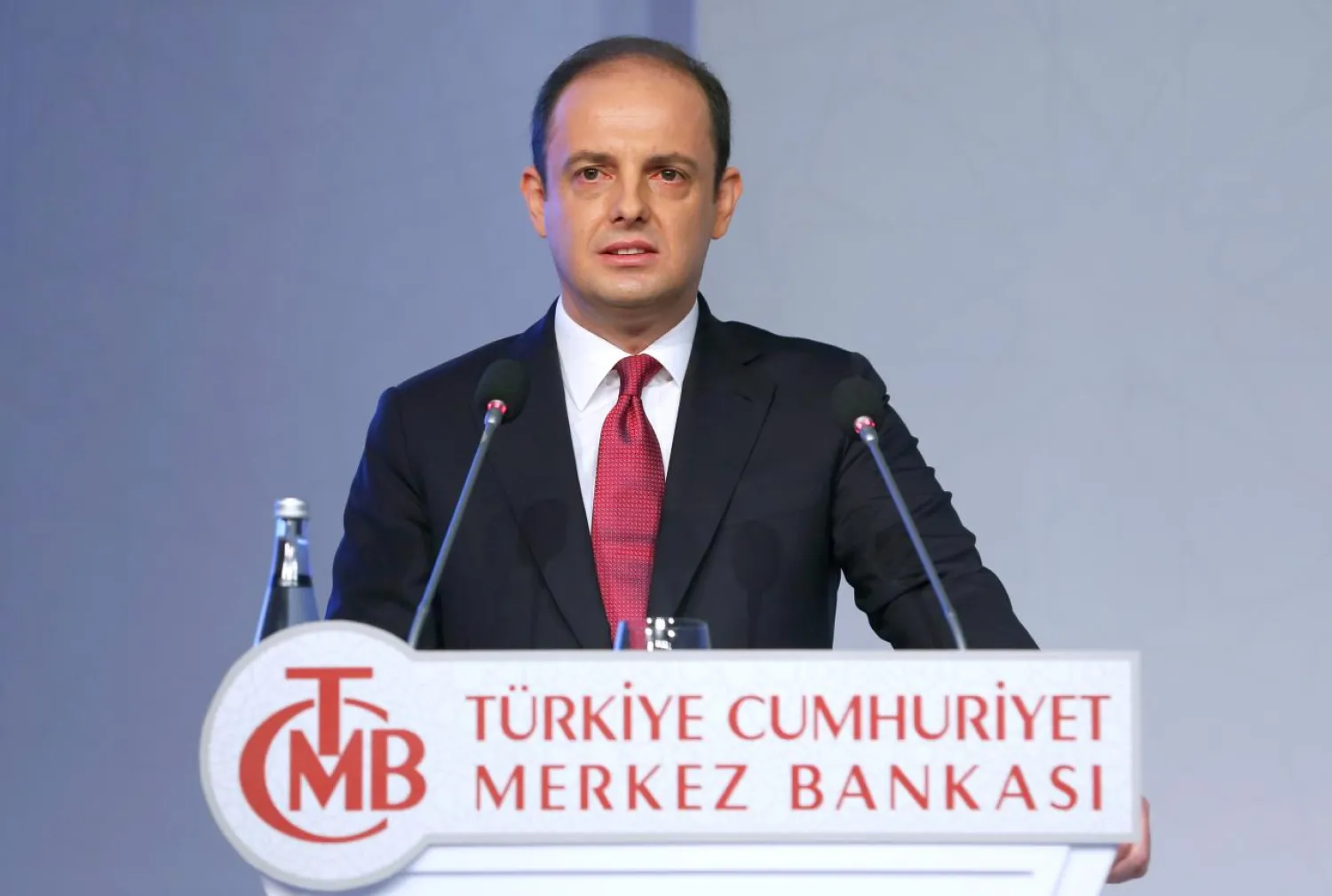
Turkey's Central Bank Governor Murat Cetinkaya speaks during a news conference in Istanbul, Turkey October 31, 2018. (Reuters)
TT

Turkey’s Central Bank Raises Inflation Forecasts in 2019-20

Turkey's Central Bank Governor Murat Cetinkaya speaks during a news conference in Istanbul, Turkey October 31, 2018. (Reuters)

Turkey’s Central Bank on Wednesday sharply raised its inflation forecasts for this year and next.

The bank, which previously expected 2018 inflation of 13.4 percent, also raised the forecast for the end of 2019 to 15.2 percent from 9.3 percent, Governor Murat Cetinkaya said on Wednesday.

According to the latest figures published in Turkey, the inflation rate was 24.52 percent in September.

Cetinkaya said the inflation rate is expected to stabilize at the bank's medium-term target of five percent in the medium term after it drops to 9.3 percent by the end of 2020.

"We projected the inflation rate to converge gradually to the target under the assumption of a tight monetary policy stance and enhanced policy coordination focused on bringing inflation down," he commented in a news conference in Istanbul ahead of the release of the bank's quarterly inflation report.

Growth of the world economy, fiscal policies in developed countries and oil and food prices play an important role in determining inflation rates, he stressed, adding that the central bank will take all the measures possible to maintain the stability of prices and inflation rates.

The sharp rise in the exchange rate of the dollar against the Turkish lira, which has lost more than 40 percent of its value this year, and high food prices have kept the inflation rate rising despite the government’s attempts to try to control it.

On the other hand, Turkey’s exports went up 22.4 percent year-on-year to $14.45 billion while imports decreased by 18.3 percent to $16.3 billion.

Turkey’s foreign trade deficit saw an annual fall of 77.1 percent in September, the Turkish Statistics Institute announced on Wednesday.

In the nine-month period, exports totaled $123.04 billion with an annual hike of seven percent and imports were $174.16 billion, up 3.1 percent over the same period.

Meanwhile, Iranian Foreign Minister Mohammad Javad Zarif said Wednesday that his country, as well as Turkey and Azerbaijan, have agreed to use local currencies in commercial transactions.

“Cooperation between Turkey, Azerbaijan and Iran is important for the region, and we agreed to trade in our domestic currencies,” Zarif said during the sixth trilateral meeting of Iran, Turkey and Azerbaijan foreign ministers in Istanbul.

According to the minister, the decision would protect the economic relations of the three countries against external interventions, adding that the three countries share history, culture and religion.

A technical body was established and will meet to develop a plan for the next three years, with the next meeting being held in Iran, Zarif noted.



Saudi E-Commerce Hits Record Monthly Sales over SAR30.7 Billion in October

A view of Riyadh, Saudi Arabia. (SPA file)
TT

Saudi E-Commerce Hits Record Monthly Sales over SAR30.7 Billion in October

A view of Riyadh, Saudi Arabia. (SPA file)

E-commerce sales in Saudi Arabia via "mada" cards soared to an all-time monthly high in October 2025, surpassing SAR30.7 billion.

The surge in sales represents a 68% year-on-year increase, totaling about SAR12.4 billion more than the SAR18.3 billion recorded in October 2024, according to the Saudi Central Bank (SAMA) statistical bulletin on Wednesday.

E-commerce sales for the third quarter (Q3) of 2025 hit SAR88.3 billion, up 15.2% from the previous quarter, representing an increase of about SAR11.6 billion over the SAR76.6 billion recorded in Q2.

On a monthly basis, e-commerce sales in October rose 6%, gaining approximately SAR1.6 billion over September’s total of SAR29.1 billion.

From January to October, "mada" data showed e-commerce sales grew 47.3%, rising by around SAR9.9 billion over the SAR20.9 billion recorded in January.

These figures cover transactions made via "mada" cards on e-commerce websites, apps, and digital wallets, and do not include credit-card payments.


Jeddah's King Abdulaziz Airport Launches First Direct Flight to Moscow

The expansion supports Jeddah Airports Company’s goal of broadening travel options and increasing air traffic revenue, leveraging the Kingdom's strategic location. (SPA)
TT

Jeddah's King Abdulaziz Airport Launches First Direct Flight to Moscow

The expansion supports Jeddah Airports Company’s goal of broadening travel options and increasing air traffic revenue, leveraging the Kingdom's strategic location. (SPA)

Jeddah's King Abdulaziz International Airport (KAIA) celebrated the launch of its first direct flynas flight to Moscow, operating three weekly flights between Jeddah and Vnukovo International Airport.

This initiative, in partnership with the Saudi Tourism Authority and the Air Connectivity Program, boosts air links between Saudi Arabia and Russia.

It marks KAIA's third direct Russian destination, following Makhachkala and Mineralnye Vody, which were inaugurated earlier this month by Azimuth Airlines.

The expansion supports Jeddah Airports Company’s goal of broadening travel options and increasing air traffic revenue, leveraging the Kingdom's strategic location.


China Widens Foreign Investment Incentive List to Stem Falling Inflows

People visit a shopping center in Beijing on December 20, 2025. (AFP)
TT

China Widens Foreign Investment Incentive List to Stem Falling Inflows

People visit a shopping center in Beijing on December 20, 2025. (AFP)

China on Wednesday listed more sectors eligible for foreign investment incentives, from tax breaks to preferential ​land use, in its latest effort to stem a prolonged decline in overseas capital inflows.

Under the 2025 edition of the catalogue of industries for encouraging foreign investment, China added more than 200 and revised about 300, with a ‌focus on ‌advanced manufacturing, modern services and ‌green ⁠and ​high-tech ‌sectors, the list jointly issued by the National Development and Reform Commission and the commerce ministry showed.

The new catalogue, which takes effect on February 1, 2026, replaces the 2022 version and continues a policy framework ⁠that offers foreign-invested enterprises tariff exemptions on imported equipment, preferential ‌land pricing, reduced corporate income ‍tax rates in ‍designated regions and tax credits for reinvestment ‍of profits.

The catalogue also extends incentives to central and western regions, as well as the northeast and Hainan, as Beijing seeks to attract ​more foreign investment into less developed areas.

China has in recent months ⁠taken a raft of measures to boost foreign investment, including pilot programs in Beijing, Shanghai and other regions to expand market access in services such as telecoms, healthcare and education, amid trade tensions with the United States.

Foreign direct investment in China totaled 693.2 billion yuan ($98.84 billion) from January to November this year, down 7.5% from the ‌same period last year, data from the commerce ministry showed.