The northeastern Moroccan mining town of Jerada saw unprecedented protests in spring after four people died in mining accidents | AFP
A teenager died Wednesday in Morocco when an abandoned coal mine collapsed in the impoverished former mining town of Jerada which saw protests earlier this year following similar accidents.
Local newspapers and an activist in the northeastern town said the 18-year-old had gone into the mine to collect coal.
His death triggered a demonstration by hundreds of residents, they said.
Several videos of Moroccans condemning the death of the young man have gone viral on social media.
One video shows people carrying the miner’s body.
Last December, the accidental deaths of two brothers trapped in a mine shaft, followed by two other deaths under similar circumstances, sparked months of unrest and protests in the town.
Hundreds of illegal miners in the town risk their lives in abandoned mine shafts to extract coal, the sale of which is legal thanks to operating permits issued by Moroccan authorities.
Moroccan authorities have vowed to close all the abandoned mines.
The mines, deemed uneconomical, were closed at the end of the 1990s at the cost of some 9,000 jobs in a region whose economy depended heavily on coal.
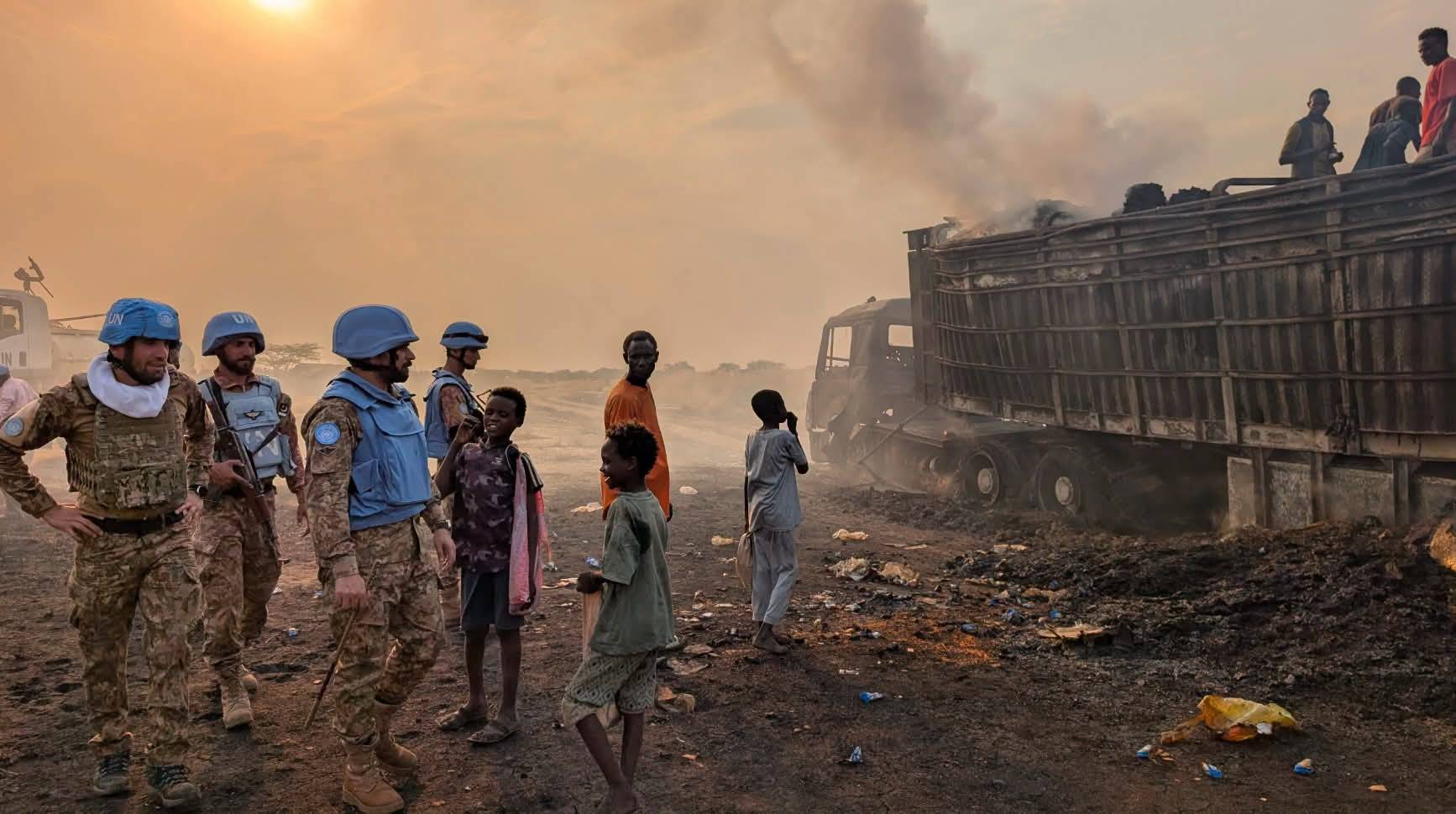
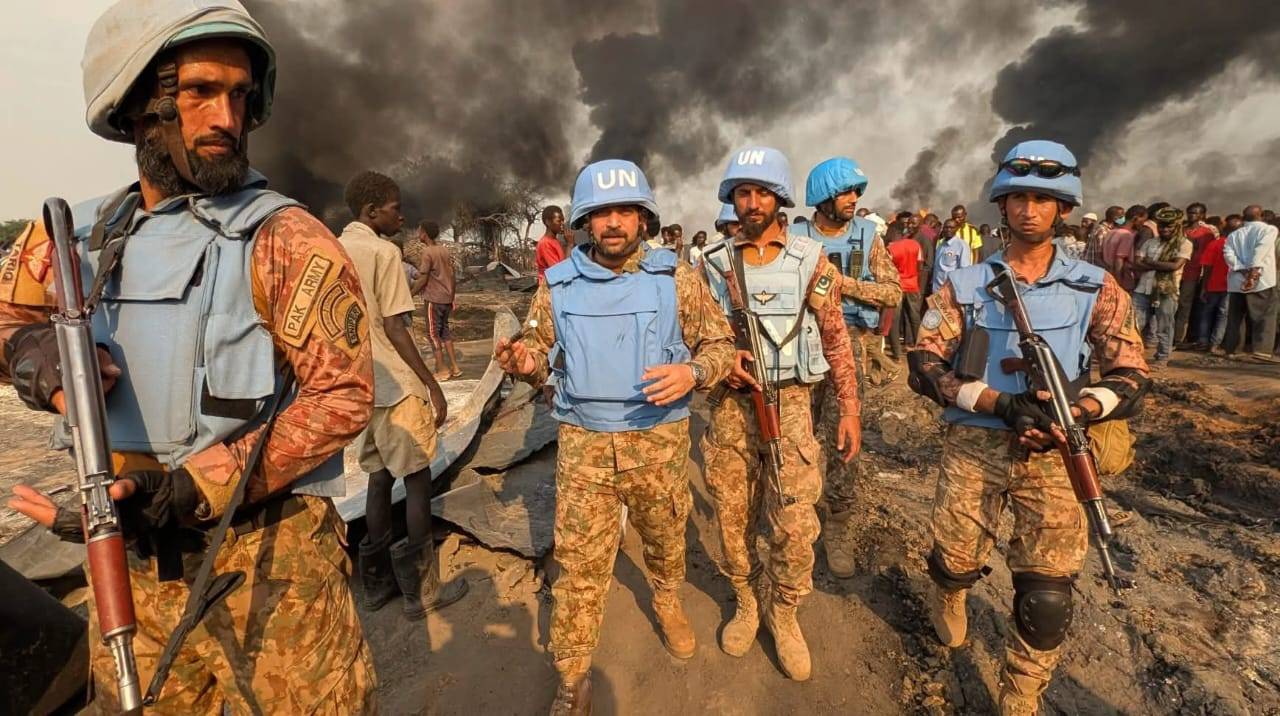
UN peacekeeping forces (UNISFA) attempting to extinguish fires in Al-Na'am market in the Abyei area (United Nations - Facebook)
Sudan’s government denied army involvement in a drone strike that killed more than 150 people at a market in the disputed Abyei region bordering South Sudan, according to local reports, as drone warfare intensified across Darfur and Kordofan.
The army, meanwhile, said it had recaptured military positions in Blue Nile state near the Ethiopian border and shot down a drone that crossed into Sudan from Ethiopia.
In a statement issued late Thursday, Sudan’s Foreign Ministry expressed deep regret over the civilian deaths, categorically denying “any connection between the Sudanese Armed Forces and this unfortunate incident.”
Aftermath of the fire that targeted a civilian truck in Abyei market (United Nations - Facebook)
The ministry said the attack bore similarities to atrocities blamed on the paramilitary Rapid Support Forces (RSF), citing a December 2025 strike on a United Nations peacekeeping headquarters in Kadugli, South Kordofan, that killed peacekeepers, as well as attacks on humanitarian aid convoys.
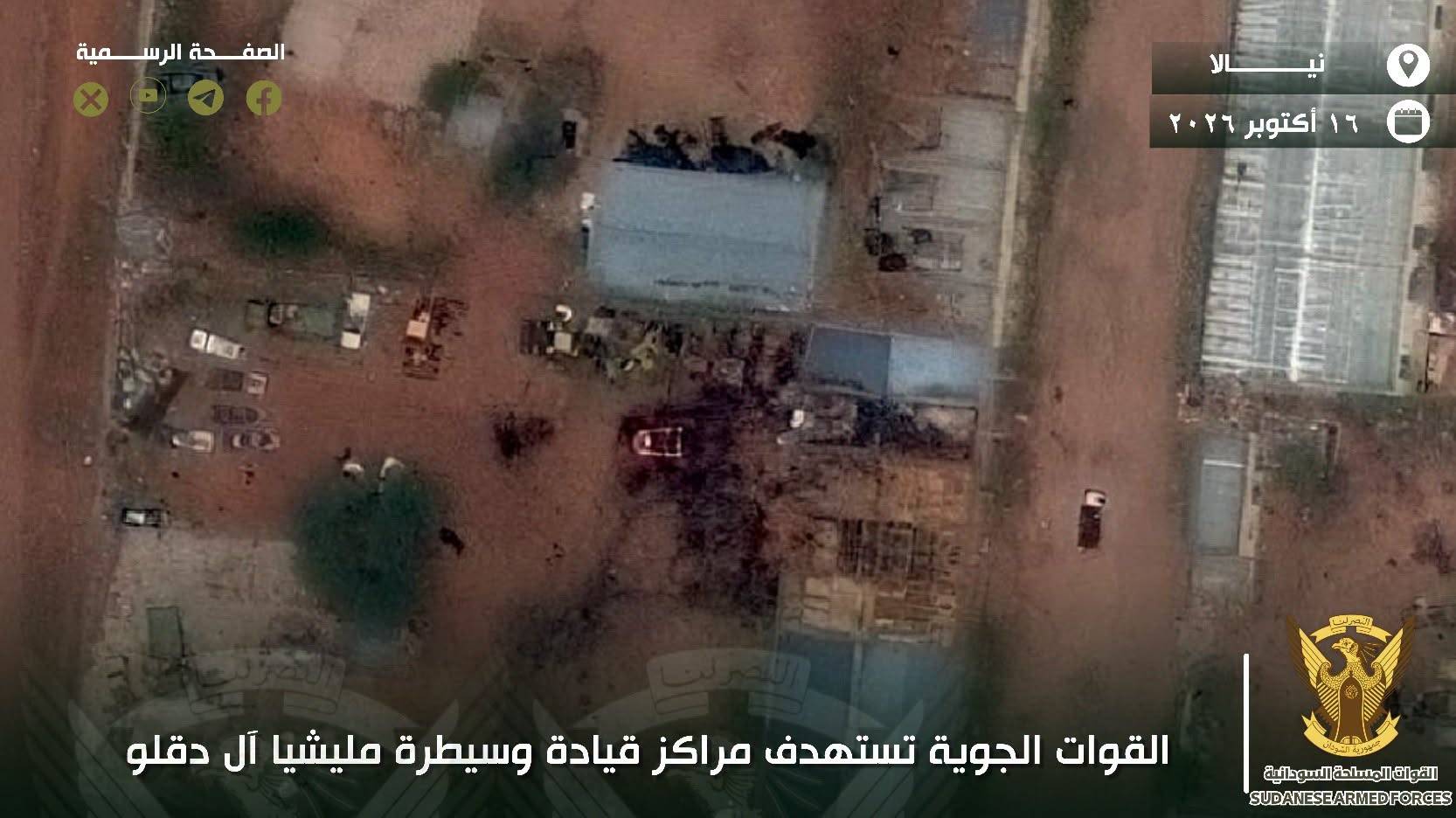
The denial followed the army’s publication of images on Facebook in recent days indicating it had struck RSF command centers in the area.
An army officer also told the Associated Press that the strikes targeted fuel trucks heading to the RSF, denying that civilians had been targeted. The army leadership has made no official admission of responsibility.
South Sudan’s Foreign Ministry summoned Sudan’s ambassador in Juba to protest the attack, amid growing fears that the war’s fallout could spill across the border.
Peacekeeping forces in Abyei (UNISFA) participating in rescuing victims from Al-Na'am market (United Nations - Facebook)
UN, African Union Condemn Strikes
Oil-rich Abyei remains a flashpoint between Sudan and South Sudan, with sovereignty over the territory disputed since South Sudan’s independence in 2011. A UN peacekeeping force is deployed in the area.
UN Secretary-General Antonio Guterres strongly condemned Monday’s drone attacks on Abyei, which killed dozens of civilians, including women and children, urging Khartoum and Juba to prevent further strikes and uphold the region’s demilitarized status.
African Union Commission Chairperson Mahmoud Ali Youssouf also condemned the attacks, citing local and medical reports of more than 150 deaths.
He urged the warring sides to avoid actions that could inflame the conflict or threaten neighboring countries and reaffirmed support for mediation efforts to secure an immediate humanitarian ceasefire.
Elsewhere, the RSF-led parallel government, known as Tasis, accused the Sudanese army of striking a hospital in El Daein, the capital of East Darfur, with a drone on Thursday, killing three people and wounding dozens, according to its account.
In a statement Friday, Tasis said further airstrikes hit the government secretariat in Nyala, the capital of South Darfur, where the RSF runs its administration of territories under its control.
Pro-army social media platforms reported heavy airstrikes on RSF positions in Nyala, El Daein, El Fasher and parts of West Kordofan.
Local reports said the strikes hit fuel depots and military vehicles in the oil-producing Abu Jabra area of East Darfur, as well as positions in Babanusa, West Kordofan.
A military source cited in the reports said the raids aimed to cripple RSF logistics ahead of possible ground operations.
Image published by the Sudanese Army of a command post belonging to the Rapid Support Forces (RSF) in Abyei (its Facebook page)
Army Reports Gains in Blue Nile
On another front, Sudan’s army said Thursday evening it had retaken Bakori and Aklili in southeastern Blue Nile state near the Ethiopian border after clashes with an alliance of the RSF and the Sudan People’s Liberation Movement-North (SPLM-N), led by Abdelaziz al-Hilu.
The army’s 4th Infantry Division, based in Damazin, said on Facebook that its troops had “liberated” both areas, inflicting heavy losses on opposing forces.
Bakori holds strategic military importance as the site of a 13th Brigade base along a route to Damazin, the state capital. RSF-allied forces had seized the area in August.
The army also said it had downed a drone it described as “strategic” over Bakori, claiming it had tracked the aircraft from the moment it crossed the Ethiopian border. It said the drone targeted fuel trucks believed to be heading to the RSF.
Sudan has accused Ethiopia of allowing the RSF to use its territory to launch drone strikes and ground operations inside Sudan, allegations Addis Ababa denies.
Egyptian Foreign Ministry to Asharq Al-Awsat: No Obstacles Hindering Dutch Embassy Operationshttps://english.aawsat.com/arab-world/5332999-egyptian-foreign-ministry-asharq-al-awsat-no-obstacles-hindering-dutch-embassy
Egyptian Foreign Minister Badr Abdelatty meets his Dutch counterpart, Tom Berendsen, on the sidelines of the UN General Assembly last September (Egyptian Foreign Ministry)
Egyptian Foreign Ministry to Asharq Al-Awsat: No Obstacles Hindering Dutch Embassy Operations
Egyptian Foreign Minister Badr Abdelatty meets his Dutch counterpart, Tom Berendsen, on the sidelines of the UN General Assembly last September (Egyptian Foreign Ministry)
Egypt has seen no obstacles to the Dutch embassy's operations in Cairo, a Foreign Ministry spokesperson said on Friday, after the mission closed to the public until further notice.
“Temporary measures by diplomatic missions to suspend public access are routine and do not signal any disruption to embassy operations,” ministry spokesperson Ambassador Nader Zaki told Asharq Al-Awsat.
“We have seen nothing hindering the Dutch embassy's work,” he said.
Zaki said Egypt was fully committed to protecting foreign embassies and diplomatic missions on its territory in line with international agreements governing diplomatic relations.
He pointed to a phone call about a week earlier between Egyptian Foreign Minister Badr Abdelatty and his Dutch counterpart, Tom Berendsen, in which the two discussed embassy security following incidents involving Egypt's mission in the Netherlands.
Zaki said diplomatic missions in Cairo enjoyed greater security and protection than those in many other capitals and were free to operate without interference, “unlike the treatment of some of our embassies.”
The Dutch embassy announced on Thursday that its Cairo premises would remain closed to the public until further notice as a precautionary measure.
In a Facebook statement, the embassy said the Dutch Foreign Ministry had ordered the closure “in light of demonstrations taking place in front of the (embassy) building.”
People with scheduled appointments would be contacted or notified as soon as possible about rescheduling, it said, adding that the “temporary closure would not affect the services provided by VFS Global in Cairo.”
The move followed diplomatic exchanges over the protection of Egypt's embassy in The Hague.
On Oct. 13, Egypt's Foreign Ministry said Abdelatty had discussed with Berendsen the need to safeguard the Egyptian mission under the 1961 Vienna Convention on Diplomatic Relations and the principle of reciprocity.
The call came days after videos circulated on social media showing an opponent of the Egyptian authorities displaying offensive placards targeting them in the presence of Dutch police officers.
The ministers also discussed the detention of an Egyptian citizen in the Netherlands. Abdelatty sought details of the incident and called for his swift release, the ministry said.
About a week ago, dozens of Egyptians protested outside the Dutch embassy in Cairo, demanding the release of Ahmed Nasser, deputy chairman of the unofficial Union of Egyptian Youth Abroad, following his detention in the Netherlands.
Nasser is a prominent opponent of displaying offensive placards outside Egyptian embassies abroad.
Yemeni, Int’l Efforts Underway to Open Route into Besieged Taiz Within Dayshttps://english.aawsat.com/arab-world/5332995-yemeni-int%E2%80%99l-efforts-underway-open-route-besieged-taiz-within-days
Yemeni, Int’l Efforts Underway to Open Route into Besieged Taiz Within Days
Government efforts to open a route for humanitarian aid deliveries in Taiz (local media)
Yemeni government officials are working with local authorities and humanitarian organizations to open a road through one of the main entrances to the city of Taiz to deliver urgently needed relief supplies to the province, which is under siege by Houthi militias.
The operation is expected to take place in the coming days.
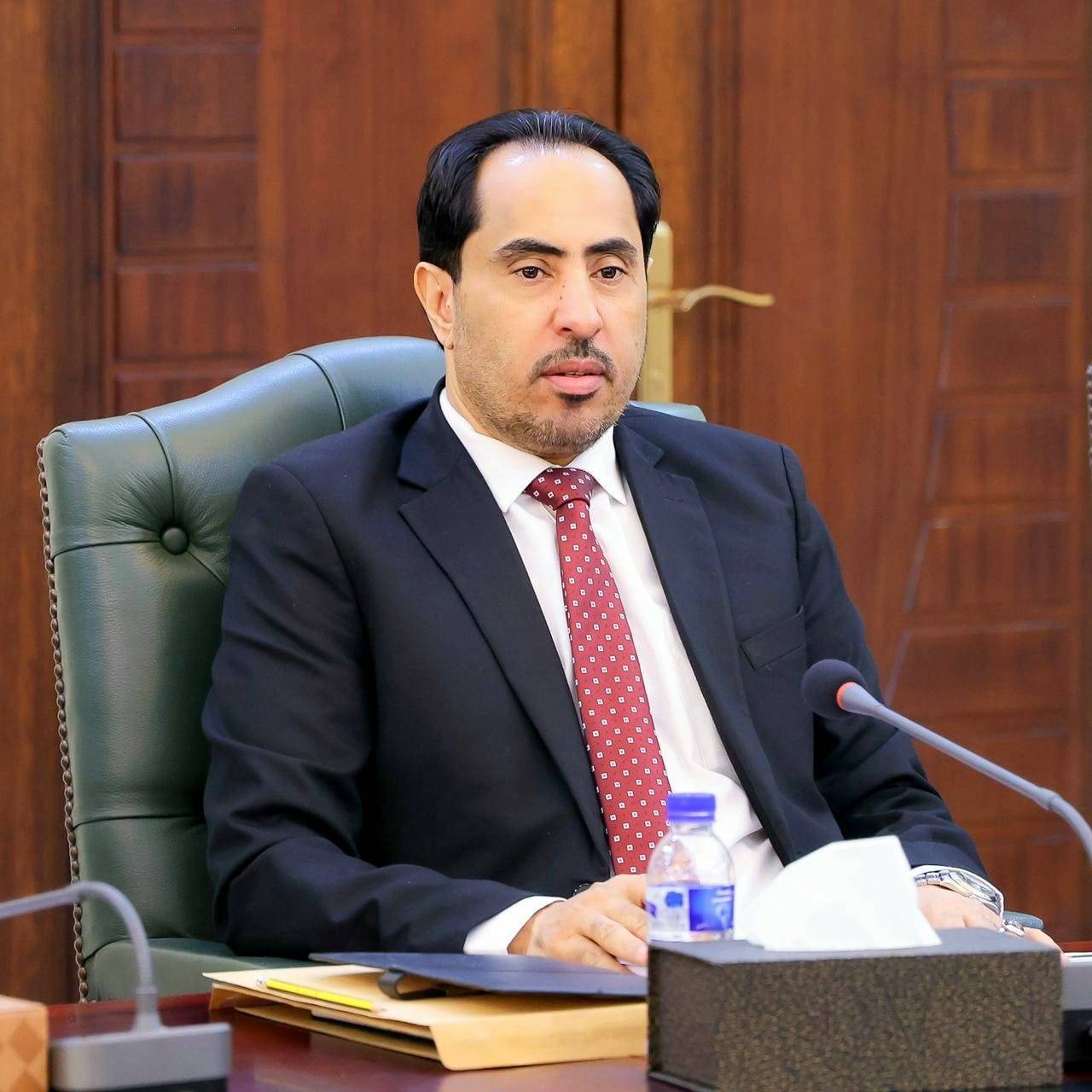
Nayef al-Bakri, Yemen's Minister of Youth and Sports and head of the Committee for Popular Mobilization and Government Support for the Armed Forces, told Asharq Al-Awsat in a telephone interview that the committee was making every effort, in coordination with international partners, to assist residents trapped in Taiz.
He said a relief convoy being prepared would carry fuel, medicines and other essential supplies, while additional convoys would be dispatched to provinces and areas affected by Houthi attacks.
Bakri said what troubled the militias most was the exceptional resilience and loyalty to their country demonstrated by the people of Taiz.
He praised the city's men, young people and women for their sacrifices in the face of the siege and Houthi attacks, saying the world had witnessed powerful images of women in Taiz, including one carrying the body of her son killed in the fighting and another purchasing weapons for the resistance.
He said these images reflected the city's unwavering loyalty and determination to defend religion and country.
Asked how the aid would reach Taiz, Bakri said the committee was in constant contact with the provincial governor and was exploring routes and access points to deliver available supplies, including fuel, medicines and other humanitarian necessities.
He said discussions were also underway with the International Committee of the Red Cross (ICRC) about its potential role in facilitating the delivery of aid, adding that efforts to secure access were continuing.
Bakri said Hadramout province would send aid donated by its residents to Taiz. The committee had also sent letters to the King Salman Humanitarian Aid and Relief Center (KSrelief), requesting additional assistance for the province.
He noted that the center was already providing extensive programs and continued support across Yemen's provinces.
Bakri said Yemen was witnessing a broad community mobilization to support people affected by the war, particularly as more than 200,000 families had been displaced.
He praised the solidarity shown among Yemenis across different provinces in sheltering displaced families and meeting their needs.
He said the government and local authorities were fulfilling their responsibilities toward displaced families alongside community-led initiatives and humanitarian efforts undertaken by the committee.
Nayef al-Bakri, Yemen's Minister of Youth and Sports and head of the Committee for Popular Mobilization and Government Support for the Armed Forces
On assistance to other provinces, Bakri said the committee, in cooperation with local authorities in Aden, had carried out a relief campaign for residents of Al-Subaiha, Al-Mudaraba and Ras al-Ara, particularly families whose areas had come under missile fire and Houthi attacks.
He said a relief convoy had been dispatched two days earlier, while preparations were underway for additional convoys in coordination with the governor of Lahj to support people affected in Al-Mudaraba district and surrounding areas.
Bakri said relief efforts also extended to Al-Dhale province, where the committee was coordinating with the governor to provide assistance to families affected by the fighting in Murais, Qataba and frontline areas.
He said the committee's work had both community and humanitarian dimensions, focusing on supporting families and provinces suffering from the consequences of the war and Houthi attacks.
"The committee is expanding its relief operations in the coming days to include districts along the western coast, particularly Mawza, Al-Waziya and Mokha, which are experiencing large waves of displacement as a result of military operations and Houthi attacks," Bakri said.
He added that the assistance would also reach displaced people's camps in Aden and Lahj provinces, in coordination with international organizations and government agencies responsible for displaced populations.
"In Shabwa province, the committee is arranging relief convoys to support districts witnessing military confrontations," Bakri said.
He said preparations were also underway to organize and dispatch a convoy from Al-Mahra province to Al-Jawf, while several provinces continued providing support to the battlefronts in Marib.
Bakri stressed that Yemenis from all walks of life, including displaced people, were participating in the “Dawn of Yemen” battle and joining various battlefronts.
Turning to Saudi support, Bakri said the Kingdom played an important role in assisting Yemen as a whole.
He praised the efforts of the joint forces and KSrelief in delivering aid to people affected by the conflict.
He also emphasized the importance of assistance delivered to Aden with the support of the joint forces and KSrelief, saying it had helped families affected by the fighting and eased the consequences of the war.
لم تشترك بعد
انشئ حساباً خاصاً بك لتحصل على أخبار مخصصة لك ولتتمتع بخاصية حفظ المقالات وتتلقى نشراتنا البريدية المتنوعة