


Jordan’s Parliament Approves Amendments to Income Tax Law

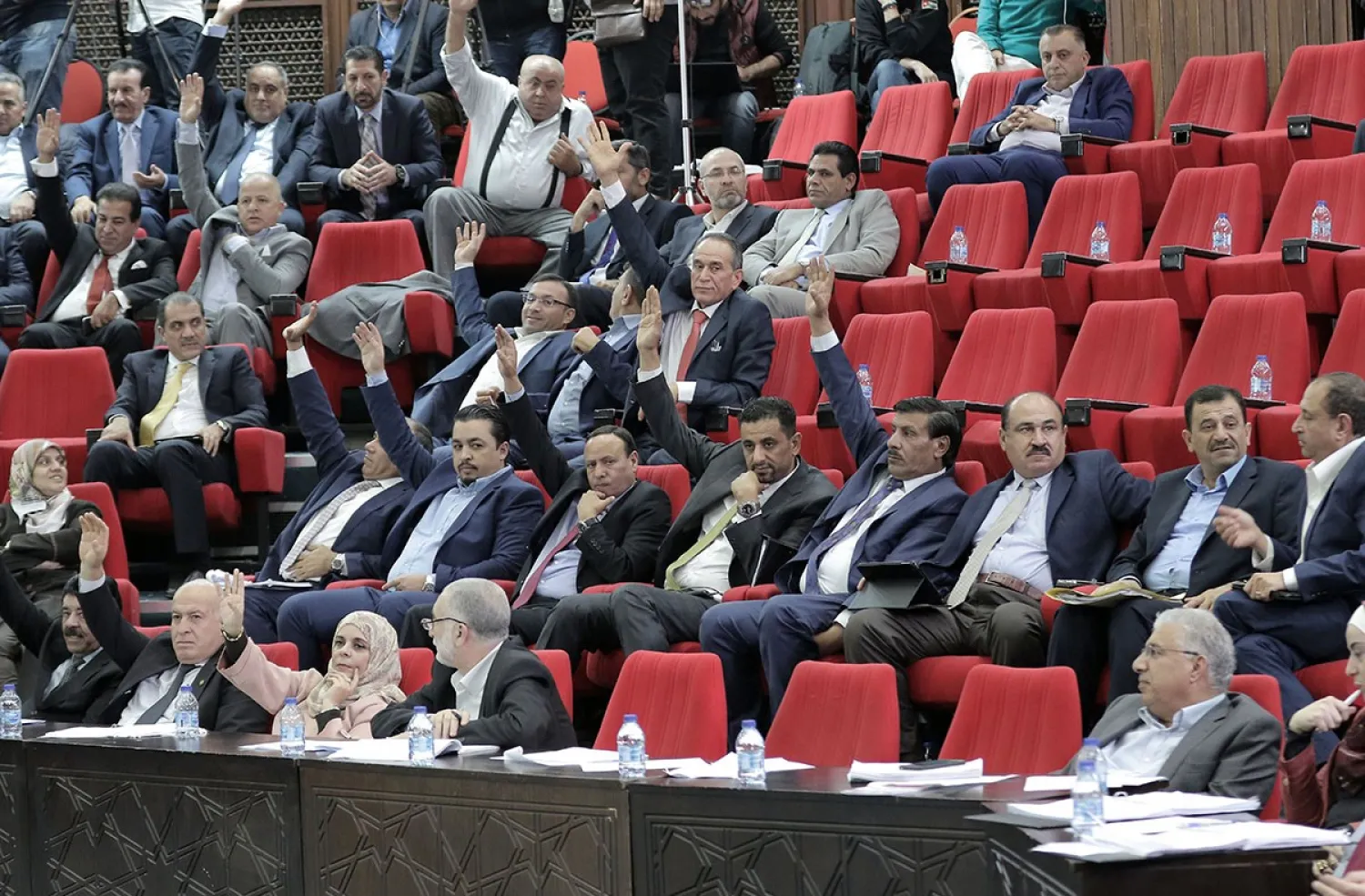
Members of the Jordanian parliament voting on the new tax law (Petra)
TT

Jordan’s Parliament Approves Amendments to Income Tax Law

Members of the Jordanian parliament voting on the new tax law (Petra)

Jordan’s lower house of parliament approved a new IMF-backed tax law on Sunday after Prime Minister Omar Razzaz warned that the country would pay a heavy price if the bill was not passed.

The parliament introduced some changes in a move to help the economy move ahead as Jordan seeks to lower its huge debts through a combination of austerity measures and an IMF bail-out.

Prior to the vote, the Prime Minister warned deputies Jordan would pay a heavy price if parliament failed to approve the legislation, meaning the country would have to pay even higher interest rates on its substantial foreign debt.

He said the law promotes social justice by targeting the wealthy and combats long-time corporate tax evaders, but opposition deputies argue it will hurt the already stagnant economy and diminish middle-class incomes.

"The individuals who will be affected are the top 12 percent income earners, it won't affect middle and low-income earners," Razzaz responded.

The parliament approved the amendments to the income threshold raising it from an annual JD18,000 as in the government's version of the law to JD20,000 for families and from JD9,000 to JD10,000 for individuals.

Under the existing law, the figure is JD24,000 for households with JD4,000 in exemptions on VAT medical and educational receipts and invoices and JD12,000 for individuals.

Members of the parliament also approved raising the VAT exemption to reach JD2,000 instead of JD1,000 in the government’s proposed bill for families, and to JD1,000 for individuals, provided that such expenses are covered by bills for health, education, loan interests or an Islamic finance and investment instrument.

Income tax on banks will remain at 35 percent as in the original law and not 37 percent as proposed by the government.

The income tax for the industrial sector was set at 14 percent; 35 percent for the banking sector and 24 percent for telecom, electricity, mining, insurance, reinsurance and financial brokerage firms as well as legal persons practicing lease business.

In addition, the parliament determined that those whose income annual income exceeds JD1 million are subject to a 35-percent income tax.

Speaking to German News Agency (DPA), Minister of Finance Ezzedin Kanakriyeh said that the amendments will reduce the expected proceeds of the law to JD100 million instead of JD290 million. He pointed out that these amendments will affect the law in general.

The bill needs to be approved by the upper house of the Senate to enter into effect and then a royal decree will be issued before it is published in the Official Gazette.

The bill sparked controversy in Jordan last June after the government resigned following protests in the country before Omar al-Razzaz was appointed as prime minister and the law was withdrawn from Parliament for amendments.


Oil Gains, Stocks Slip on Uncertain Mideast Peace Prospects

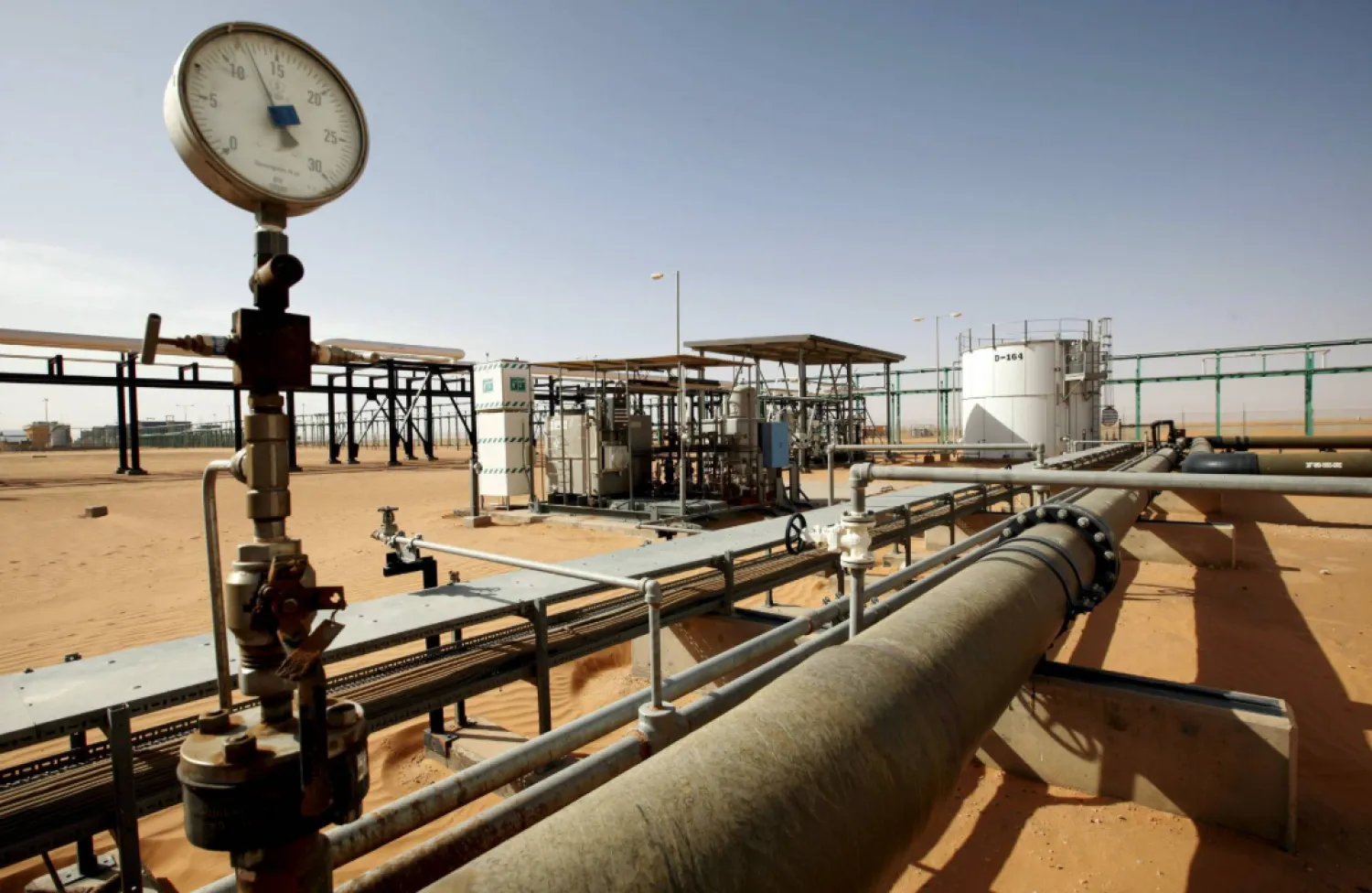
A fuel storage facility at Russia's main oil export hub in the Black Sea port of Novorossiysk (Reuters)
TT

Oil Gains, Stocks Slip on Uncertain Mideast Peace Prospects

A fuel storage facility at Russia's main oil export hub in the Black Sea port of Novorossiysk (Reuters)

Oil prices jumped while stock markets mostly retreated and the dollar firmed Thursday as hopes of a Middle East peace accord faded on conflicting headlines on the state of talks.

US President Donald Trump has described the latest discussions as being on the "borderline" between a deal and renewed strikes.

Pakistan's army chief was due in Iran on Thursday, Iranian media reported, with Islamabad mediating as Tehran examines a new US proposal to end the war, AFP reported.

"Markets pulled back across Europe as the waiting game to end the Iran war rumbled on," said Dan Coatsworth, head of markets at AJ Bell.

Wall Street's main indices also dipped at the open.

There were earlier big gains for technology stocks in Asia after chip giant Nvidia posted record quarterly revenue of $81.6 billion, blowing past analyst forecasts on the voracious demand for artificial intelligence hardware.

Sentiment was also boosted by Elon Musk's filing for a public sale of SpaceX shares, which could be the largest initial public offering in history as the rocket and satellite company seeks to raise up to $75 billion.

"This could be a blockbuster summer for IPOs with OpenAI also expected to list in the coming weeks," said Kathleen Brooks, research director at XTB.

"How the market absorbs these new listings will be crucial for the future of the AI trade, as both companies are at the heart of the AI revolution," she said.

South Korea's benchmark Kospi index surged 8.4 percent, helped by Samsung Electronics shares after unions paused a 18-day strike.

Japan's Nikkei index ended with a gain of 3.1 percent.

But despite the group's profit growth, Nvidia shares failed to get a boost as they have in previous quarters, gaining 0.2 percent after trading got underway in New York.

With tech shares, whose staggering rises helped drive markets to record highs in recent months, now considered by many investors to be overvalued, investment analyst Bret Kenwell at eToro said there were worries that a pullback was in store.

"While geopolitical risks could still flare up, the more pressing issue appears to be macro-related," he said, pointing to the recent rise in sovereign bond yields and the prospect of central banks raising interest rates.

The yields demanded by investors to lend to governments by buying their bonds have peaked in recent days, indicating weakening confidence in their economies and inflation fears.

After tech gains in Asia, attention turned to US-Iran war developments and the potential fallout for economies on the continent, sending European stocks lower.

The EU warned Thursday that eurozone growth would be less than expected this year and inflation significantly higher than forecast, as the Mideast war and subsequent energy shock take their toll.

It came as a key survey revealed that business activity in the eurozone contracted further in May, weighed down by weak demand caused by a conflict.

British private-sector activity also unexpectedly contracted this month, marking the first decline in output in over a year, S&P Global added.

"The UK economy is facing a perfect storm, as rising political uncertainty adds to the growing impact from the war in the Middle East," said Chris Williamson, chief business economist at S&P Global Market Intelligence.

In other corporate news, French video game giant Ubisoft saw its shares plunge around 11 percent after it reported disappointing annual results and forecast further pain in the coming year.

The "Assassin's Creed" and "Rayman" developer had warned in January of the likely impact, with seven games cancelled and six delayed.


flynas Says Direct Flights Between Riyadh, Milan Start Thursday

The Saudi capital, Riyadh (SPA)
TT

flynas Says Direct Flights Between Riyadh, Milan Start Thursday

The Saudi capital, Riyadh (SPA)

flynas has announced the launch of direct flights connecting Riyadh with Milan, SPA reported.

Starting Thursday, the airline will operate three weekly direct flights between King Khalid International Airport and Milan Malpensa Airport.


SpaceX Reveals Plans for What Could be Biggest-ever Initial Public Offering

FILE PHOTO: Elon Musk walks to attend the trial in his lawsuit over OpenAI for-profit conversion at a federal courthouse, in Oakland, California, US, April 29, 2026. REUTERS/Manuel Orbegozo/File Photo
TT

SpaceX Reveals Plans for What Could be Biggest-ever Initial Public Offering

FILE PHOTO: Elon Musk walks to attend the trial in his lawsuit over OpenAI for-profit conversion at a federal courthouse, in Oakland, California, US, April 29, 2026. REUTERS/Manuel Orbegozo/File Photo

Elon Musk announced plans Wednesday for one of the biggest stock sales ever by taking public a space company that is currently losing billions of dollars a year.

A filing shows that his SpaceX lost $2.6 billion from operations last year on $18.7 billion in revenue, and the losses kept piling up at the start of this year, too.

The prospectus did not put a dollar figure on the amount Musk hopes to raise, but various reports have put it at $75 billion or so.

SpaceX, formally known as Space Exploration Technologies Corp., has said the money will help finance projects to put people on the moon and Mars in its quest to make humans an intergalactic species as they face existential threats that could wipe out civilization.

“We do not want humans to have the same fate as dinosaurs,” the filing states.

The prospectus reads in part like a Hollywood fantasy version of the future, detailing in one section how part of Musk’s compensation will be granted only if he maintains “a permanent human colony on Mars with at least one million inhabitants.”

Short of that, the stock sale alone could make Musk, a major owner who founded SpaceX in 2002, the world’s first trillionaire. Forbes currently puts his net worth at $839 billion.

In addition to making reusable rockets to hurl astronauts into orbit, SpaceX has other businesses, some successful, some struggling — and with plenty of questions marks.

The document shows that Starlink, the world’s largest satellite communications company, is a big source of cash for the company, generating $4.4 billion in operating income last year. The business uses 10,000 satellites in low orbit to provide internet service to 10 million people in 150 countries and territories.

Among the struggling businesses are two Musk units that were recently acquired by SpaceX — his social media platform X, formerly Twitter, and his artificial intelligence business, xAI.

Those purchases were blasted by some SpaceX investors as bailouts because they are big money losers.

The prospectus said its AI business lost $6.4 billion in operations last year.

The original SpaceX business, making rockets and staging launches, has been helped by massive government contracts, which raises questions that could come back to haunt the company. Given Musk’s close relation to the Trump administration, government ethics lawyers and watchdogs have asked if he has gotten special treatment to win taxpayer money and whether that good luck will run out once President Donald Trump is out office.

SpaceX has won contracts worth $6 billion from NASA and the Defense Department and other government agencies in the past five years, according to USAspending.gov. The company noted in its filing that a fifth of its revenue last year was from the federal government, The Associated Press reported.

Musk was the biggest donor to Trump’s presidential campaign and is still a big backer despite their sometimes rocky relationship after his stewardship of the government cost-cutting effort called DOGE early last year.

Like many corporate CEOs, Musk’s compensation will go far beyond his annual salary, which was $54,080 in 2025 and has remained unchanged since 2019, according to the filing.

The prospectus says stock grants for him would be sliced into 15 nearly equal amounts — 67 million shares each — and would vest only as the company achieves preset market cap goals. In addition to the Martian colony, SpaceX’s stock market value would have to reach $7.5 trillion for him to receive the full award.

He would get even more stock awards if SpaceX manages to get giant data centers the size of football fields in space.

The document shows Musk will be able to exert big control over the business.

It says he and certain other shareholders will receive shares in a special class of stock that gives them 10 votes for each share they hold. Those shareholders will be able, among other things, to elect a majority of the company’s board of directors.

“This will limit or preclude your ability to influence corporate matters and the election of our directors,” SpaceX said in a warning to prospective investors.

SpaceX will be able to pitch the offering to investors — in what’s known in Wall Street parlance as a “road show” — 15 days after making its prospectus public. In this case, that works out to June 4.