


Syria’s Manbij: Town Caught in Crosshairs of Political, Military Interests

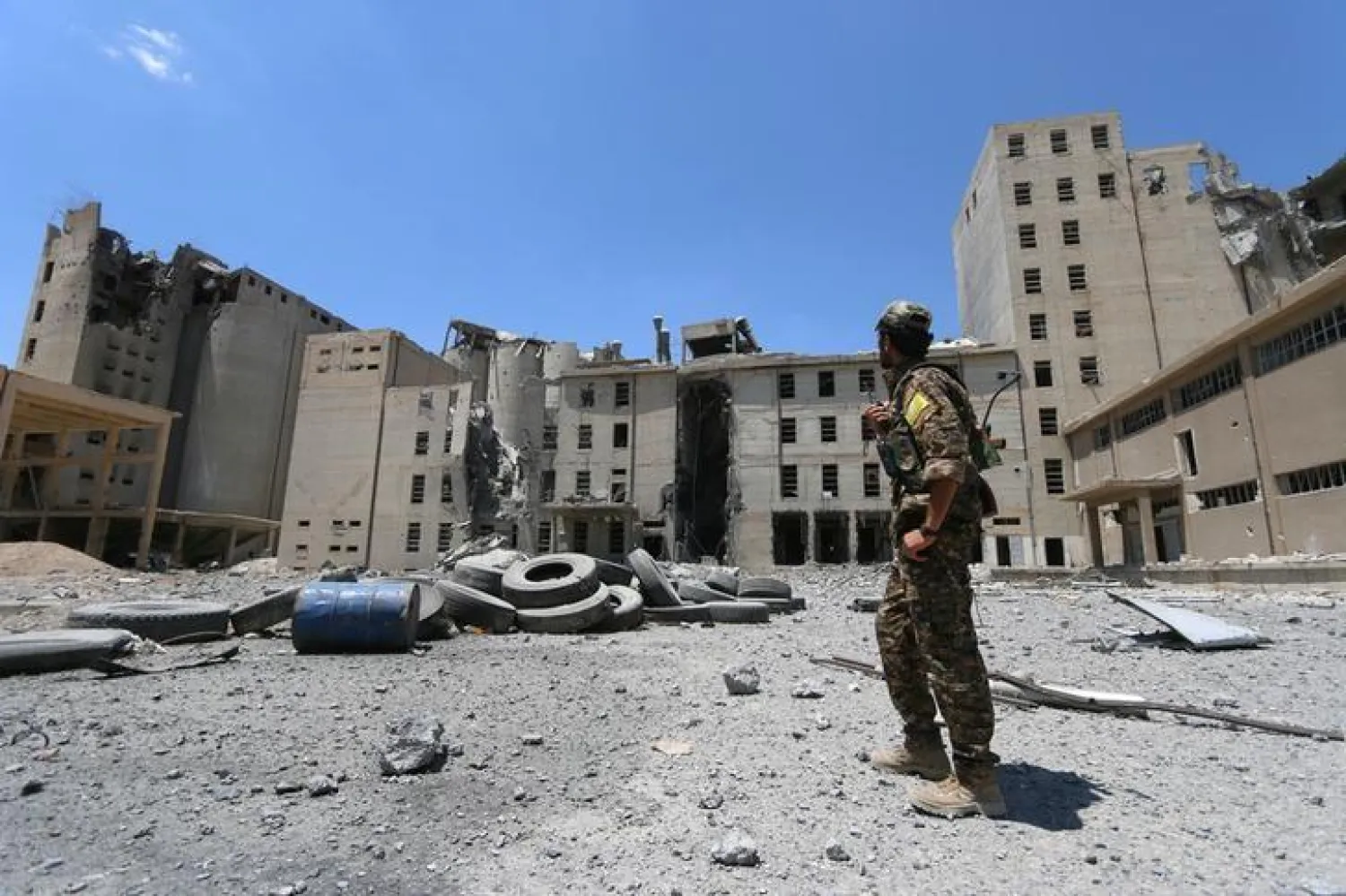
A Syria Democratic Forces (SDF) fighter walks in the silos and mills of Manbij after the SDF took control of it, in Aleppo Governorate, Syria, July 1, 2016. REUTERS/Rodi Said
TT

Syria’s Manbij: Town Caught in Crosshairs of Political, Military Interests

A Syria Democratic Forces (SDF) fighter walks in the silos and mills of Manbij after the SDF took control of it, in Aleppo Governorate, Syria, July 1, 2016. REUTERS/Rodi Said

Perched on the curb of Al Amal Hospital in the north Syrian town of Manbij with his head hung low, a man in his 40s weeps for the loss of his wife and daughter killed in an ISIS suicide bombing.

Sahar, Hussein’s 13-year-old daughter, and her mother’s frayed remains were placed in a casket, leaving behind nothing but a few photos and memories with the people they once loved.

Hussein lost his family in Wednesday’s blast, a terrorist attack which claimed the lives of 15 victims, four of which were Americans.

Speaking through a husked voice, Hussein recalls how Sahar’s mother had gone to pick her up from school not knowing that it would be the last time she does—ironically the mother had intended to pick their daughter from the nearby school fearing a deteriorating security situation in the town.

“I wish I had perished with them at the time of the explosion, I would be relieved at this torment,” said Hussein, adding that “what remains are cherished memories” -- memories and a few pictures that will serve as a reminder of the agony of parting for the remainder of his life.

The attack, which struck the heart of the city of Manbaj, caused the largest one-hit casualty for US troops operating in Syria since their deployment in 2015.

The Kurdish People's Protection Units (YPG), fighting with the US-backed Syrian Democratic Forces alliance, captured Manbij from ISIS.

“Americans have ramped up patrols for local security checks after Turkish threats were escalated months ago,” said Abdeljil, a taxi driver who was near the blast site at the time of the attack.

“They (Americans) are used to stop by for buying local foods and drinks. When they entered the restaurant, the suicide bomber blew himself up,” he said remembering the attack.

The attack comes about a month after US President Donald Trump on December 19 announced his decision to pull out all 2,000 troops from Syria, declaring ISIS’ defeat there. More so, Manbij has emerged as a focal point of tensions after Trump’s decision which will remove American presence that has effectively deterred Turkey from attacking Kurdish forces in Syria.

Trump's announcement of a potential withdrawal of US troops was followed by other powers rushing to fill the coming void, including Turkey, Russia and the government of Iranian-backed Syrian regime head Bashar al-Assad. As various interests squabbled in recent months over political and military control of the town, lying near the Turkish border, ISIS seemed to be the sole actor that appeared to have been eliminated from the scene.

A medic, working at the Al Amal Hospital, said the death toll of the ISIS attack was 15, including four Americans, two of which were soldiers, a civilian interpreter and a contractor, as well as two members of the local Manbij military council accompanying them.

“Windows of the hospital and the doors were almost removed by the bomb blast (both the hospital and the site targeted are located in central Manbij). After a few moments, bodies and those wounded were being rushed in for medical attention. The entire team hurled to the emergency room,” one of the attending physicians told Asharq Al-Awsat.

Manbij and its surroundings include bases and military headquarters for the US-led international coalition and have rarely come under attack after combatting and expelling ISIS in 2015.

Abdul-Jabbar, 30, who owns a dairy products market, said the suicide bombing drove demand to the ground, causing him to temporarily close shop. “Market movement is weak and there is almost no selling and buying.”

This comes after Turkey stepped up threats to carry out a long-threatened offensive to take Manbij from Kurdish control. Ankara has amassed some 8,000 fighters belonging to Turkish-allied Syrian extremist factions along the line of the nearby Sajur River, threatening to enter Manbij in a few days.

Ibrahim, 57, who owns a gold shop and a money exchange shop, said that most of the city's residents are against the Turkish army taking over the town.

“Areas controlled by Turkish-backed factions are notorious for pillaging, violence, and disorder, Manbij now is run effectively by its own people and its local security council,” Ibrahim explained.



Palestinians Say Israeli Forces Kill Man in Jenin Refugee Camp

 Israeli soldiers keep watch during a weekly settlers' tour in Hebron, in the Israeli-occupied West Bank, May 23, 2026. (Reuters)
Israeli soldiers keep watch during a weekly settlers' tour in Hebron, in the Israeli-occupied West Bank, May 23, 2026. (Reuters)
TT

Palestinians Say Israeli Forces Kill Man in Jenin Refugee Camp

 Israeli soldiers keep watch during a weekly settlers' tour in Hebron, in the Israeli-occupied West Bank, May 23, 2026. (Reuters)
Israeli soldiers keep watch during a weekly settlers' tour in Hebron, in the Israeli-occupied West Bank, May 23, 2026. (Reuters)

Israeli forces killed a Palestinian man inside the Jenin refugee camp in the northern West Bank, the Palestinian health ministry said on Tuesday.

"A citizen... was killed by Israeli fire in the Jenin camp, and ambulance crews transported his body to Jenin Government Hospital," the Ramallah-based ministry said in a statement, without specifying when he was killed.

Contacted by AFP, Israel's military said it was "checking" reports of the man's killing.

The director of Jenin's Government Hospital, Wissam Baker, identified the victim as Nasser al-Saadi, noting that "he arrived dead at the hospital after being shot in the thigh".

"It appears he bled heavily after being injured before an ambulance was called to transport him to the hospital," Baker told AFP.

The Palestinian Red Crescent had earlier announced that Israeli forces handed over the body of a 30-year-old from inside the Jenin refugee camp, which is adjacent to the city of Jenin.

Israeli forces have occupied and barred access to the Jenin refugee camp since January 2025, when they launched a wide-ranging operation aimed at uprooting Palestinian armed groups from the West Bank's densely populated refugee camps.

The operation has caused the displacement of nearly 40,000 people from the camps, according to the UN agency for Palestinian refugees, UNRWA.

At least 1,073 Palestinians, including several armed fighters, have been killed by Israeli soldiers or settlers since the outbreak of the Gaza war following Hamas's attack on 7 October 2023, according to an AFP tally based on Palestinian Authority data.

On the other hand, official Israeli data shows at least 46 Israelis -- civilians and soldiers -- have been killed in Palestinian attacks or during Israeli military operations in the same period.


Israel Issues Expropriation Order for West Bank Religious Site

 Israeli soldiers keep watch during a weekly settlers' tour in Hebron, in the Israeli-occupied West Bank, May 23, 2026. (Reuters)
Israeli soldiers keep watch during a weekly settlers' tour in Hebron, in the Israeli-occupied West Bank, May 23, 2026. (Reuters)
TT

Israel Issues Expropriation Order for West Bank Religious Site

 Israeli soldiers keep watch during a weekly settlers' tour in Hebron, in the Israeli-occupied West Bank, May 23, 2026. (Reuters)
Israeli soldiers keep watch during a weekly settlers' tour in Hebron, in the Israeli-occupied West Bank, May 23, 2026. (Reuters)

Israel has issued an expropriation order for land in the occupied West Bank near the site of a Biblical prophet's grave north of Jerusalem, an Israeli NGO reported Tuesday.

The site, known as Nabi Samuel, is believed in Christian, Jewish, and Muslim tradition to include the grave of the Biblical figure of prophet Samuel, and includes a mosque owned by Palestinian religious authorities, the Waqf.

"This marks the first time that the (Israeli) Civil Administration has expropriated a holy site owned by the Muslim Waqf in the occupied West Bank," Israeli settlement watchdog Peace Now said in a statement.

According to the Israeli order, dated May 9 but published this week, the area for expropriation will include 109.79 dunams (roughly 11 hectares), including access roads, agricultural land, and a mosque.

The order says the decision was made "for the development and preservation of the archaeological site of the Tomb of the Prophet Samuel".

A source in COGAT, the Israel defense ministry body in charge of civilian matters in the Palestinian territories, said the decision was made "following the refusal of Waqf officials to cooperate with the procedures required for the renovation of the tomb compound".

The Palestinian Authority's Ministry of Waqf and Religious Affairs issued a "strong condemnation" of the expropriation order for Nabi Samuel.

"This confiscation is part of a policy aimed at suffocating the mosque and completely isolating it from its Palestinian surroundings, turning it into a Jewish archaeological site by force of arms," the ministry said in a statement.

Peace Now's Yonatan Mizrahi pointed out that Israeli authorities had already taken over administration of much of the land by converting it into an Israeli national park in the 1990s, decades after demolishing a Palestinian village on the site.

"There was no need to decide about the expropriation of the land," Mizrahi told AFP, while Peace Now denounced "the messianic agenda of the Israeli government".

Israel has occupied the West Bank since 1967.

In 2025, Israel expropriated an area in the center of the Tomb of the Patriarchs in the southern West Bank city of Hebron, arguing the order concerned an open area intended for roofing works and not a religious structure.


Remnants of Assad's Chemical Weapons Program Recovered, Syrian Official Says

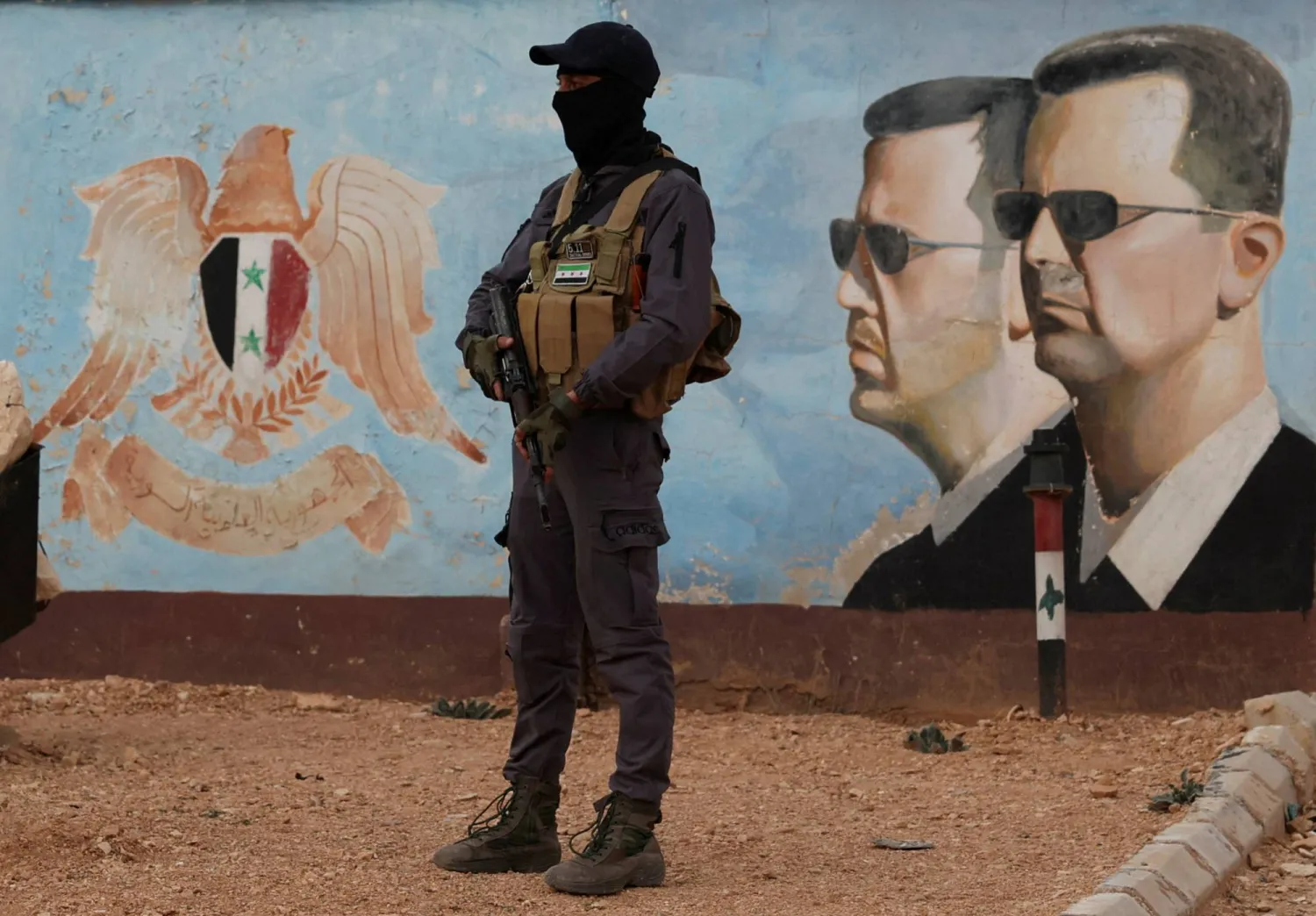
FILE PHOTO: A member of the former rebel group Hayat Tahrir al-Sham stands guard near an image of Syria's Bashar al-Assad at the fourth division headquarters in Damascus, Syria, January 23, 2025 REUTERS/Yamam Al Shaar/File Photo
TT

Remnants of Assad's Chemical Weapons Program Recovered, Syrian Official Says

FILE PHOTO: A member of the former rebel group Hayat Tahrir al-Sham stands guard near an image of Syria's Bashar al-Assad at the fourth division headquarters in Damascus, Syria, January 23, 2025 REUTERS/Yamam Al Shaar/File Photo

Syria's transitional leadership has located remnants of former Syrian president Bashar al-Assad's clandestine chemical weapons program, including raw materials and munitions similar to those used to carry out deadly gas attacks during the country's long-running civil war, a Syrian official told Reuters on Tuesday.

Syrian authorities have also taken into custody 18 suspects for alleged involvement in Assad's chemical weapons program, including high-level military, political and technical officials, said Mohamad Katoub, Syria's permanent representative to the Organization for the Prohibition of Chemical Weapons (OPCW) in The Hague, in an interview.