


Long Lines to Buy Meat Illustrate Iran's Economic Woes

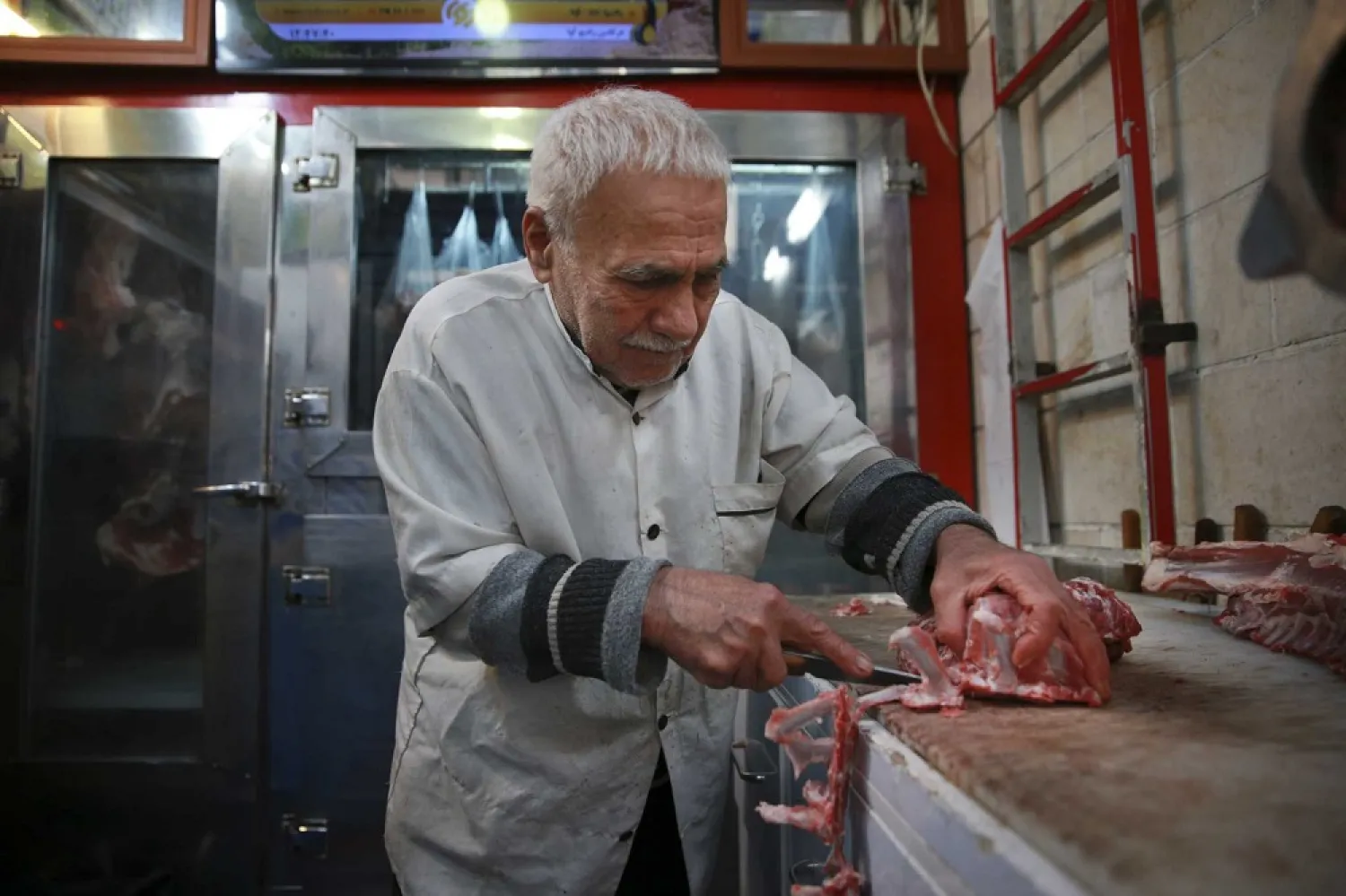
In this Thursday, February 7, 2019 photo, butcher Ghasem Olfatian works at his shop in Tehran, Iran. (AP)
TT

Long Lines to Buy Meat Illustrate Iran's Economic Woes

In this Thursday, February 7, 2019 photo, butcher Ghasem Olfatian works at his shop in Tehran, Iran. (AP)

In the frigid air of a Tehran winter, a mother of two stands in a long line of shoppers waiting for the chance to buy discounted meat at a store supported by Iran's government.

"Yesterday, after nearly two hours in the line, the shopkeeper said: 'It is finished, try another day,'" Zahra Akrami said recently. "And now I am here again."

Her struggle represents the economic paradox that faces Iran as it marks the 40th anniversary of its revolution, said an Associated Press report Friday.

Despite holding some of the world's largest proven deposits of oil and natural gas, Iran has seen a return to long lines for food — a sight once seen during the 1980s, when it was at war with Iraq. Inflation continues to rise as its currency, the rial, depreciates. University graduates are unable to find jobs.

Part of the economic challenges stem from the re-imposition of US sanctions that had been lifted under the nuclear deal Iran struck with world powers. Those sanctions have returned after President Donald Trump decided to pull America out of the accord.

But other problems persist, some dating back to policies instituted after the revolution in 1979.

That revolt wouldn't have been possible without impoverished Iranians rising up against Shah Mohammad Reza Pahlavi. His land reforms saw poorer rural residents move to the cities and become fresh recruits for the revolution. Khomeini's calls for supporting the poor struck a populist tone among the struggling masses, as well as with the leftists who helped overthrow a regime that spent billions on US weapons, said the AP.

Immediately after the revolution, Iran nationalized its oil industry, its main source of hard currency. Its new leaders also seized industries tied to the shah or companies of those who fled the country. Shiite charitable trusts, known as bonyads, also amassed vast holdings, as has Iran's paramilitary Revolutionary Guard.

Today, economists consider Iran's a "transition" economy, meaning it is shifting from state control to being driven by a free market. However, some firms that moved into private ownership have seen the businesses collapse, leaving workers without pensions and fueling some sporadic protests.

"No week comes to an end without the closure of 10 to 50 companies," said Masoud Khansari, the head of Tehran's Chamber of Commerce. "Last year, 800 out of 1,500 contractor companies in the oil sector collapsed."

Iran's oil industry never fully recovered from a strike that paralyzed it before the shah's departure. Prior to the revolution, Iran pumped about 6 million barrels of oil a day. In January, it pumped 2.7 million.

There are bright spots. Iran's per capita income has more than doubled since the revolution to $4,838 in 2018. Iran has more than 100,000 locally trained doctors and 18,000 medical centers, and it produces 95 percent of its own medicine, according to government statistics. Life expectancy is around 75, as opposed to about 57 before the revolution. Nearly every Iranian can read.

But for the average person, the only numbers they really care about are those at the cash register at neighborhood grocery stores.

"Unfortunately, high prices have become crippling for people," lawmaker Mohammad Reza Sabaghian said according to the AP. "Some goods have seen up to a 200 percent increase in prices."

Staples like meat have grown more expensive. Lamb has reached to nearly $5 a pound, up from $3. Chicken is 70 cents a pound, up from 40 cents.

Analysts suspect part of the problem may be the US sanctions. As the rial falls, livestock breeders likely want the hard currency they can get selling the meat in neighboring countries. Iran produces nearly 90 percent of its domestic demand for meat, but it imports related items like medicine and corn.

The meat crisis has become a cudgel for government hard-liners who are eager to weaken the administration of President Hassan Rouhani, a relatively moderate cleric within the theocracy. State television repeatedly broadcasts stories about long lines at government-subsidized grocery stores, with those waiting criticizing Rouhani's administration.

"The bones of the people are shattering under pressure of poverty," said Kazem Sedighi, an adviser to Supreme Leader Ali Khamenei.

In a dig at Rouhani, Sedighi added: "Economic problems exist, but some officials are careless about the problems."

Part of Rouhani's problem is Washington and the sanctions it restored in November. Germany, France and Britain, which have worked to preserve the nuclear deal, announced earlier this month that they have established a new system so their companies can continue trading with Iran without incurring US penalties for doing so.

However, that system has yet to come into effect, and the strains on Iran are clear. Efforts to import government-subsidized meat from abroad through the military saw a cargo plane crash in January, killing 15 people.

Yet the lines at stores continue daily.

"Every day, the radio and TV are reporting about the trial of those officials who took public funds for themselves, but there's no change in our life," said Assad Azari, a 63-year-old retired teacher and father of three waiting in line. "We poor people shouldn't have to wait hours for two kilos (4.4 pounds) of budget meat."

Undoing the ‘Tangled Nest’ of Iran Sanctions Won’t Be Easy or Quick

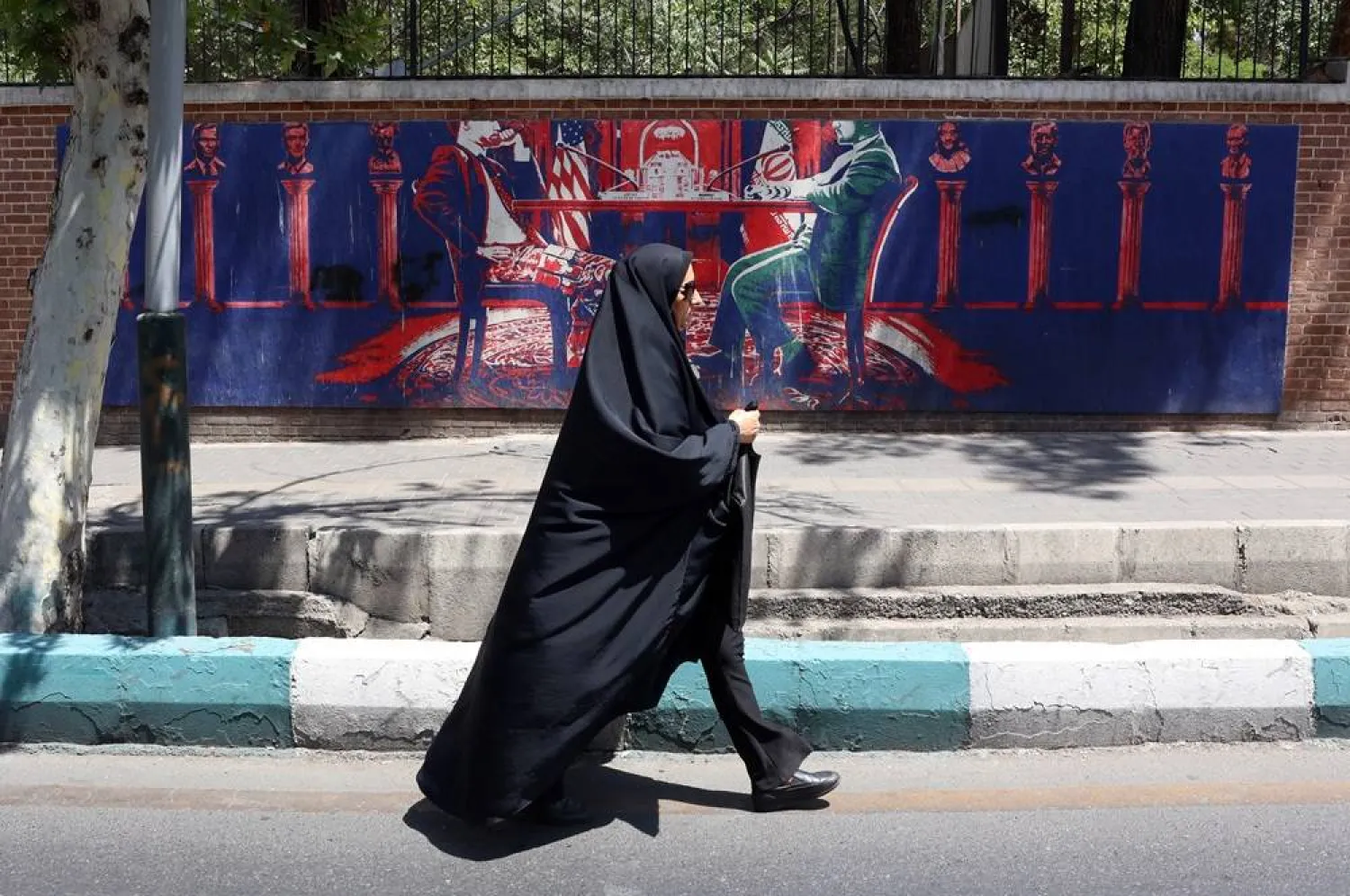
A veiled Iranian woman walks past an anti-US mural, depicting an Iranian and US negotiation table, next to the former US embassy in Tehran, Iran, 22 June 2026. (EPA)
TT

Undoing the ‘Tangled Nest’ of Iran Sanctions Won’t Be Easy or Quick

A veiled Iranian woman walks past an anti-US mural, depicting an Iranian and US negotiation table, next to the former US embassy in Tehran, Iran, 22 June 2026. (EPA)

Tehran stands to gain billions of dollars from a 60-day reprieve from US sanctions announced on Monday, but unwinding more than four decades of restrictions poses legal, political and commercial challenges that could take years.

At issue is whether an interim US deal with Iran can translate into lasting economic relief, given the complexity of dismantling a sanctions regime that spans US law, international measures and private-sector risk concerns.

The United Nations, the US and the European Union have imposed sanctions and trade embargoes and have frozen assets since the late 1970s over Iran's nuclear program, human rights violations and support for armed groups around the region.

Under a 14-point memorandum of understanding signed by the US and Iran last week, Washington is to start abolishing all types of sanctions using a schedule to be forged in a final deal within 60 days, a period that can be extended.

On Monday, the US Treasury issued a temporary general license allowing the production, delivery and sale of crude oil and petrochemical and petroleum products of Iranian origin through August 21.

Removing the remaining sanctions - if it happens - would represent a stark change in US policy toward the Middle East, which has long focused on curbing ‌Iran's influence and ‌using financial pressure to weaken its theocratic government.

It would also be difficult, requiring executive action for some measures, approval ‌by ⁠Congress for others ⁠and close coordination with the UN and other countries that have imposed their own sanctions. Companies, wary after decades of restrictions, could also blunt the impact.

"You have this tangled nest of sanctions, and it's not just executive orders, it's congressional sanctions," said Juan Zarate, deputy national security adviser for combating terrorism under former President George W. Bush.

CONGRESS IS SKEPTICAL

Washington first sanctioned Iran in 1979, after revolutionary students seized the US embassy in Tehran, holding diplomats hostage.

Since then, Congress has passed half a dozen sanctions laws and presidents have issued executive orders over Iran's nuclear program and its support for groups the US deems terrorist organizations including Hamas, Hezbollah and Yemen's Houthis.

Since early 2025, the Treasury's Office of Foreign Assets Control (OFAC) has imposed sanctions on more than 1,000 people, vessels and aircraft, according to Treasury data.

Delisting thousands of entities designated for ⁠sanctions would take OFAC at least a year, said Jeremy Paner, a partner at law firm Hughes Hubbard & Reed ‌and a former US sanctions official.

President Donald Trump can rescind executive orders issued on Iran, but some ‌measures - including sanctions on Hamas and Hezbollah - are mandated by law and will have to be removed or amended by Congress, where the interim deal has already sparked sharp ‌public criticism from his fellow Republican lawmakers.

Undoing 40 years of sanctions would be difficult, added Matt Zweig, managing director of policy at FDD ‌Action, the lobbying arm of the Foundation for Defense of Democracies.

"Any attempt to comprehensively remove layer upon layer of sanctions will be like peeling back an onion - exposing the administration - not just to legal complexities but political risks," said Zweig, a former aide on the House Foreign Affairs Committee.

The license issued on Monday could be worth up to $3 billion for Iran over two months, by some estimates.

That could swell to "at least tens of billions of dollars" if made permanent, erasing a discount on Iranian oil, allowing Tehran to ‌sell to additional buyers beyond China, and increasing exports, said Edward Fishman, senior fellow at the Council on Foreign Relations. China now buys about 90% of Iranian oil, despite the sanctions.

The new license is broader than ⁠the one issued in March, calling for ⁠inclusion of not just oil and petroleum products, but also banking, insurance and transportation related to the oil trade, giving Tehran quicker access to its revenues.

"There are a number of thorny issues involved," said Stephanie Connor, a former OFAC official now a partner with law firm Holland & Knight, adding that lifting sanctions could mean funds flowing to groups the US considers a threat.

"Are we really going to let money start flowing to Iran's Revolutionary Guard Corps?" she asked, referring to the powerful paramilitary force that the US has designated a foreign terrorist organization.

WARY COMPANIES

Banks, oil firms and insurers will face evolving regulations, tougher due diligence and exposure to sanctions-evasion risks tied to Iran links with countries such as China, North Korea and Russia. They also remain subject to separate sanctions from Britain, the UN, the EU and others.

"We've kind of beaten the markets up with the risk of doing business with or through Iran, so you can't just flip a switch and say, 'Oh, now it's okay to do business with Iran,'" Zarate said.

Companies that deal with Iran would still face lawsuits from victims of attacks, who can sue investors and companies for aiding designated groups under the 2016 Justice Against Sponsors of Terrorism Act, which aides say is unlikely to be repealed.

Given such risks, companies may steer clear of working with Iran to escape legal and reputational risk as long as the Iranian government remains in power, said Brett Erickson, principal with Obsidian Risk Advisors.

"We're not going to see massive multi-billion-dollar commitments until things are far more cemented and politically stable," he said. "There's just a long way to go."


Trump Allies Defend Him to Israelis Anxious Over Iran Deal

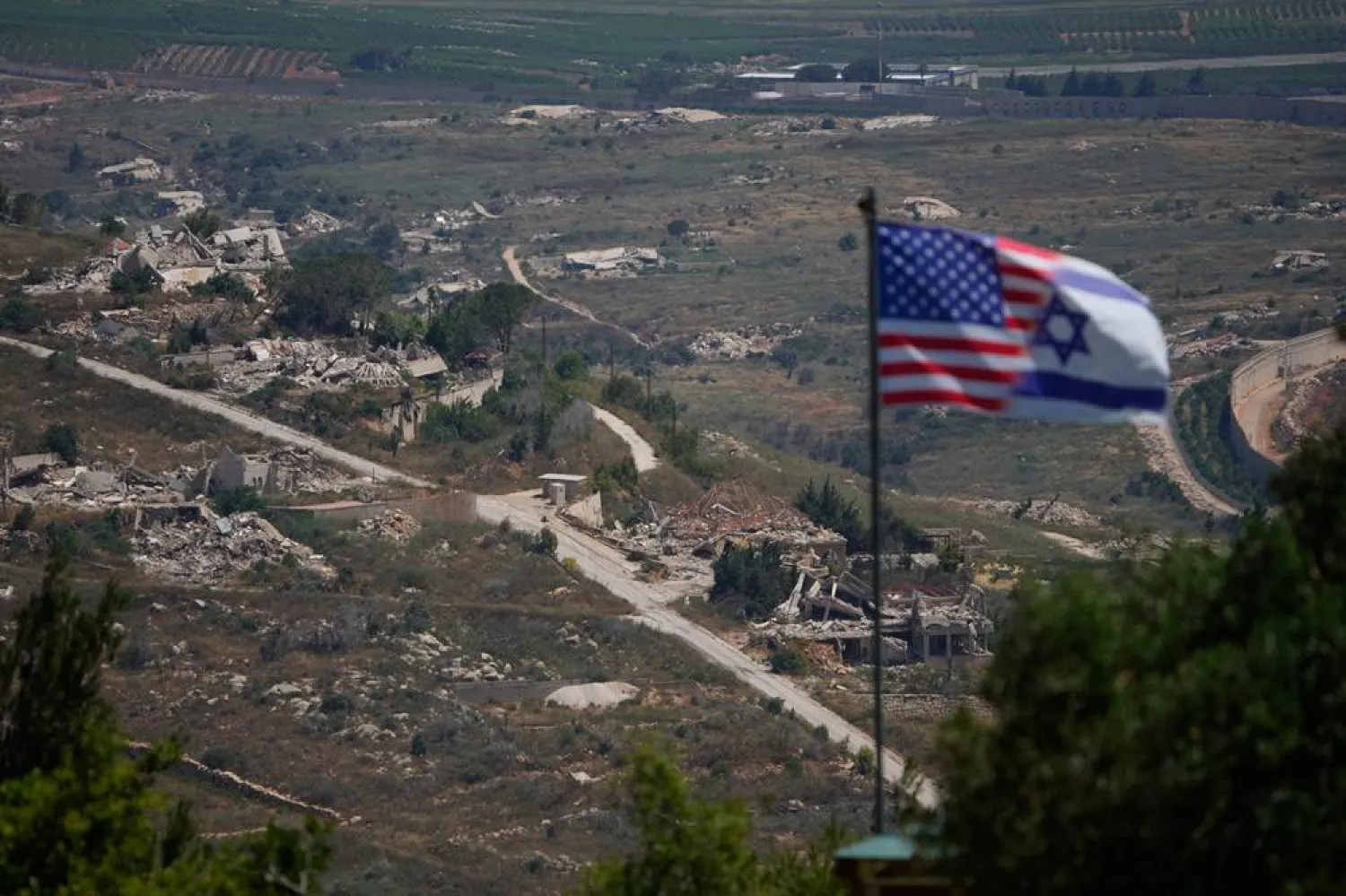
Israeli and US flags stand against a backdrop of destroyed buildings in southern Lebanon, as seen from northern Israel, Sunday, June 21, 2026. (AP)
TT

Trump Allies Defend Him to Israelis Anxious Over Iran Deal

Israeli and US flags stand against a backdrop of destroyed buildings in southern Lebanon, as seen from northern Israel, Sunday, June 21, 2026. (AP)

American allies of President Donald Trump this week defended him to an Israeli public anxious about a US interim deal with Iran and White House criticism that together appeared to signal fissures in Israel's decades-old alliance with Washington.

The US-Israeli relationship has been on a roller coaster, from the early confidence they shared after their joint attack on Iran to public disagreements between Trump and Prime Minister Benjamin Netanyahu over how to end the four-month-old war.

Netanyahu and many other Israelis see a risk that Trump's memorandum of understanding with Iran will empower a state they regard as their deadliest enemy and constrict their ability to respond to threats from Iran-backed Hezbollah in Lebanon.

They sense the US alliance - long the bedrock of Israel's strategic approach - is under strain as opinion polls show Americans increasingly unhappy with Israel and their strongest champion in Washington appears to be turning away.

"The United States and Israel have an unbreakable bond," Mike Huckabee, the US ambassador to Israel, said on Sunday after acknowledging there was an "enormous level of anxiety about the relationship."

He spoke at the JNS International Policy Summit in Jerusalem where concerns about ‌the state of ‌the US-Israel alliance dominated many of the discussions.

Mark Levin, a conservative Fox News commentator and longtime Trump supporter ‌who has ⁠broken with the ⁠president over the Iran deal, told the audience that while he did not like the agreement and believed that the "Iranian regime" had to be destroyed, he nevertheless praised Trump for what he said was the president's support for liberty and religious freedom.

ISRAELIS WORRY OVER CRITICISM FROM REPUBLICANS

Alongside their concerns about the wording of the Iran deal, Israelis worry about Trump's insistence on Israel agreeing a ceasefire with Hezbollah in Lebanon and his language responding to Netanyahu's resistance to those agreements.

In recent weeks Trump has called Netanyahu "[expletive] crazy," lectured Israel that "you don't have to knock an apartment down every time you're looking for somebody" and publicly pondered asking Syria to replace Israeli troops in Lebanon.

Vice President JD Vance also struck a more critical tone, saying "Trump is the only head of state in the entire world who is sympathetic to ⁠the nation of Israel at this moment in time," adding later that not all criticism of Israel ‌should be dismissed as antisemitism.

The fact such sharp views are emanating from Trump's Republican Party is especially ‌worrying for many Israelis, with US Democrats far more vocally critical of Israel than in previous years.

Sid Rosenberg, a prominent conservative New York radio host, told Israelis that for ‌all their concerns about Trump, he was the best option for them. "You could have JD Vance. Good luck with that," he said, after acknowledging that "a ‌lot of people in Israel are very, very upset" with the president.

While large majorities of Republicans 50 and older view Israel positively, younger conservative Americans have grown more critical, a Pew Research Center poll from late March showed. Some 57% of Republicans aged 18-49 have an unfavorable opinion of Israel, up from 50% a year previously.

Many Americans, including prominent Democratic politicians, were outraged by the scale of death and devastation in Israel's military campaign in Gaza after the deadly Hamas attack of October 7, 2023, on Israeli communities ‌and the taking of hostages.

Israel has also faced criticism over the joint decision to launch the war on Iran, a conflict that is deeply unpopular in the United States, including among Trump's conservative base.

Victoria Coates, ⁠vice president at the conservative Heritage Foundation ⁠think tank and Trump's deputy national security adviser during his first term, suggested on Monday that the US-Israeli relationship was strained but expressed confidence that the leaders of both countries would bring it "back on track".

A day earlier, speaking at the conference, she had said that recent days had been "challenging for all of us, to put it mildly," but that there had been plenty of "great and good things" in Trump's second term "for which we can and should be grateful."

NETANYAHU NOT CONCERNED BY TRUMP COMMENTS, OFFICIALS SAY

Until recently, Trump had been seen in Israel as its strongest-ever White House ally after his decision in his first term to recognize Jerusalem as Israel's capital and Israeli sovereignty over Syria's occupied Golan Heights and his leading diplomatic role securing the release of hostages last year.

Two Israeli officials familiar with Netanyahu's thinking said the prime minister was not concerned that comments by Trump and Vance indicated any meaningful US policy changes such as slower arms deliveries.

Netanyahu believed the comments might be partly geared towards assuaging voters ahead of US midterm elections in November amid growing frustration over Israel and the war, said the officials who spoke on condition of anonymity.

The anxiety in Israel has led some prominent figures to say it is time for the country to envisage a future without strong US support and to further build up its own military and technological capabilities.

Ohad Tal, chair of the US-Israel caucus in Israel's parliament the Knesset, said Israelis needed to prepare for the day when there is a less supportive US president "and this is why we have to be much more independent and we have to forge new alliances."


A Decade of Chaos: Britain Prepares for Seventh Prime Minister

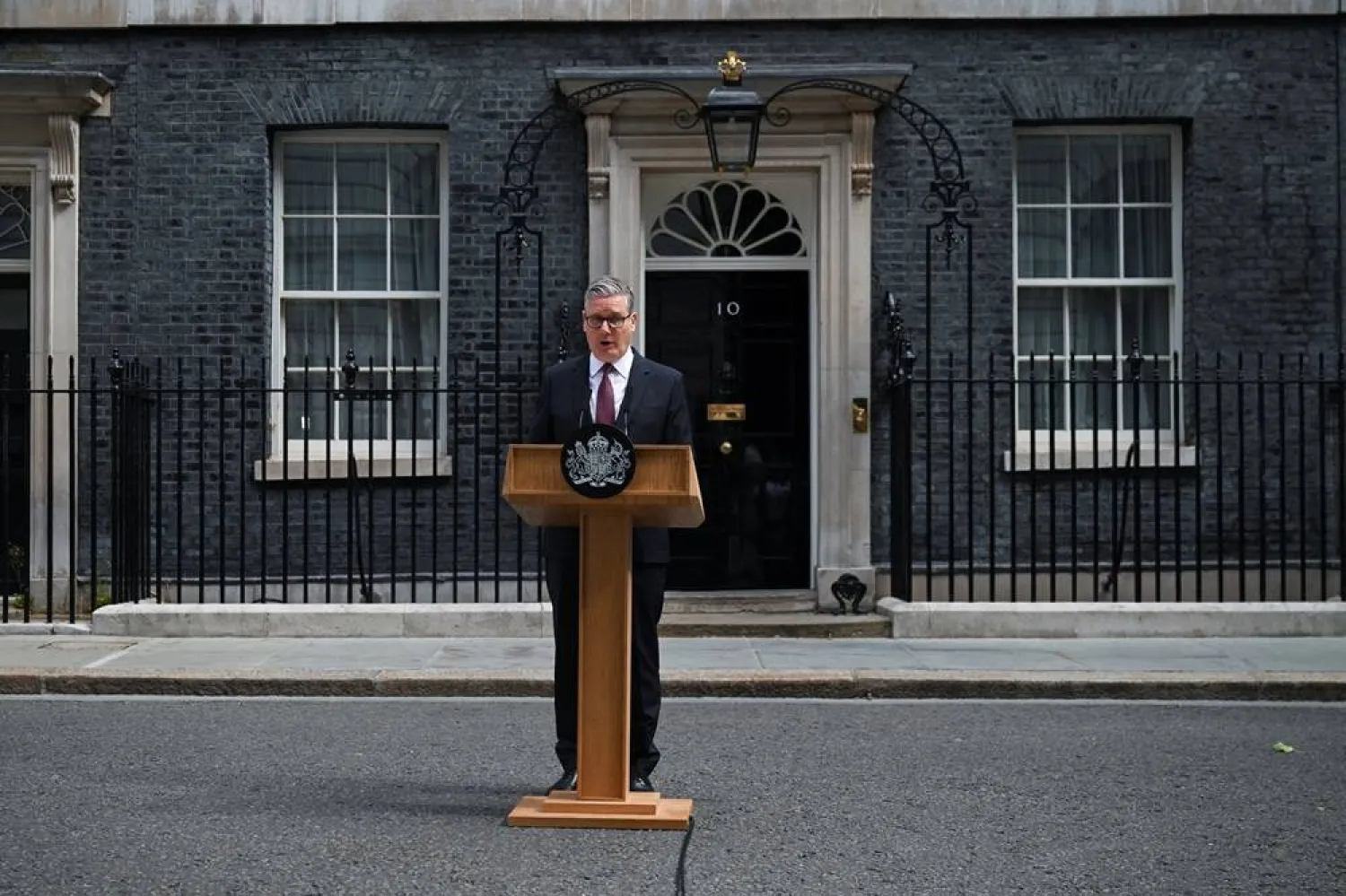
 British Prime Minister Keir Starmer speaks as he announces the timeline for his resignation, outside 10 Downing Street, in London, Britain, June 22, 2026. (Reuters)
British Prime Minister Keir Starmer speaks as he announces the timeline for his resignation, outside 10 Downing Street, in London, Britain, June 22, 2026. (Reuters)
TT

A Decade of Chaos: Britain Prepares for Seventh Prime Minister

 British Prime Minister Keir Starmer speaks as he announces the timeline for his resignation, outside 10 Downing Street, in London, Britain, June 22, 2026. (Reuters)
British Prime Minister Keir Starmer speaks as he announces the timeline for his resignation, outside 10 Downing Street, in London, Britain, June 22, 2026. (Reuters)

British Prime Minister Keir Starmer said he would quit on Monday, paving the way for ‌the country to have its seventh leader in 10 years. The chaos dates back to the Brexit referendum, 10 years ago to the day on Tuesday.

In the years since the vote, Britain has tried to forge its own path but struggled to boost its low-growth economy, hamstrung by high debts and a growing welfare bill, at a time of growing geopolitical volatility.

JUNE 2016: UK VOTES FOR BREXIT, PM CAMERON QUITS

Britons cause a global shock by voting 52%-48% to leave the European Union, ending a more than 40-year union and plunging the country into its biggest political crisis since World War Two. Conservative Prime Minister David Cameron resigns and the party chooses Theresa May to succeed him.

JUNE 2017: SNAP ELECTION GAMBLE BACKFIRES

Riding high in opinion polls and seeking a bigger majority in parliament to push Brexit legislation through, May calls a snap election. The Conservatives lose their majority and form a government by striking a deal with Northern Ireland's pro-UK Democratic Unionist Party.

MAY 2019: BREXIT PARALYSIS, MAY RESIGNS, JOHNSON TAKES OVER

May quits after failing to break a parliamentary deadlock over how Britain should leave the EU. Boris Johnson, one of the main faces of the pro-Brexit campaign, wins the internal Conservative Party contest to ‌succeed her.

DECEMBER 2019: JOHNSON ‌LEADS CONSERVATIVES TO SWEEPING WIN

With parliament paralyzed over Brexit, Johnson calls a snap election. Campaigning under ‌the ⁠slogan "Get Brexit Done" ⁠he steers the Conservatives to their biggest election win since Margaret Thatcher's landslide victory in 1987.

JANUARY 2020: BREXIT GETS DONE

Johnson uses his mandate to drive a Brexit deal through parliament and Brussels, and Britain exits the EU on January 31, 2020, becoming the first state to withdraw from the bloc.

JULY 2022: JOHNSON OUSTED Johnson leads Britain during the COVID-19 pandemic - at one point being hospitalized himself with the disease - but a long list of scandals and missteps proves too much and he steps down after a ministerial revolt.

SEPTEMBER 2022: TRUSS' CHAOTIC PREMIERSHIP

Liz Truss beats Rishi Sunak in a contest to succeed Johnson. Her "mini-budget" containing unfunded tax cuts spooks financial markets, pushing up borrowing costs sharply and further tarnishing Britain's reputation for political and fiscal stability. She lasts only 44 days before ⁠announcing her resignation.

OCTOBER 2022: SUNAK BECOMES PRIME MINISTER

Sunak takes over as Britain's third prime minister in as many ‌months, pledging to restore stability to government. He makes five key pledges focused on the ‌economy, stopping illegal immigration and improving the health system. In February 2023, Sunak strikes a deal with the EU on trade rules for Northern Ireland, improving ties with ‌the bloc.

MAY 2024: SUNAK CALLS ELECTION

Trailing the Labour Party by around 20 points in the polls, Sunak calls an election for July ‌4.

JULY 2024: STARMER BECOMES PRIME MINISTER "We said we would end the chaos and we will," Keir Starmer, leader of the Labour Party, told supporters on July 5, 2024, after winning a landslide election but with the smallest share of the electoral vote of any majority government in modern history.

AUGUST 2024: STARMER WARNS 'THINGS WILL GET WORSE'

Starmer warns over the state of the public finances, saying the Labour Party has inherited "an economic black hole" and tells voters "things will get worse before they get ‌better".

OCTOBER 2024: LABOUR'S FIRST BUDGET

Finance minister Rachel Reeves announces tax rises worth £40 billion ($52.76 billion) a year, primarily by raising employers' social security contributions, bringing the tax burden to its highest level on record in ⁠peacetime and prompting an outcry from ⁠businesses.

FEBRUARY 2025: NIGEL FARAGE'S REFORM UK PARTY SURGES

Right-wing anti-immigration party Reform UK overtakes Labour in a national opinion poll for the first time. Reform UK, led by Brexit campaigner Nigel Farage, has topped polls ever since.

JUNE 2025: REBELLION FORCES STARMER U-TURN ON WELFARE

Starmer is forced to reverse plans to cut Britain's welfare bill after his own lawmakers threatened to defeat the government.

SEPTEMBER-APRIL 2025: MANDELSON SCANDAL

Pressure on Starmer ramps up over his appointment of Peter Mandelson as Britain's ambassador to Washington. Mandelson was later sacked over his ties to the late sex offender Jeffrey Epstein, as questions emerge over Starmer's judgment and the vetting process involved.

MAY 2026: LOCAL ELECTION DISASTER

The Labour Party suffers heavy losses in English local elections and votes for the Scottish and Welsh assemblies, deepening questions over Starmer's ability to govern, with Reform UK the main beneficiary.

MAY 2026: WES STREETING RESIGNS AS HEALTH MINISTER

Health Minister Wes Streeting quits saying he had lost confidence in Starmer's leadership and calls for a leadership contest, in which he said he would hope to compete.

JUNE 2026: DEFENCE MINISTER JOHN HEALEY QUITS

British Defense Minister John Healey quits over a months-long dispute over defense spending, accusing Starmer of failing to commit the money needed to keep the country safe from mounting threats.

JUNE 2026: ANDY BURNHAM SHOWS HE CAN BEAT REFORM UK

Greater Manchester Mayor Andy Burnham wins an election in the north of England, trouncing Reform UK in the process, and allowing him to return to Westminster, removing a key obstacle to any leadership challenge against Starmer.