


As Solskjær Soars, How Many Extra Points Does a Manager Really Add?

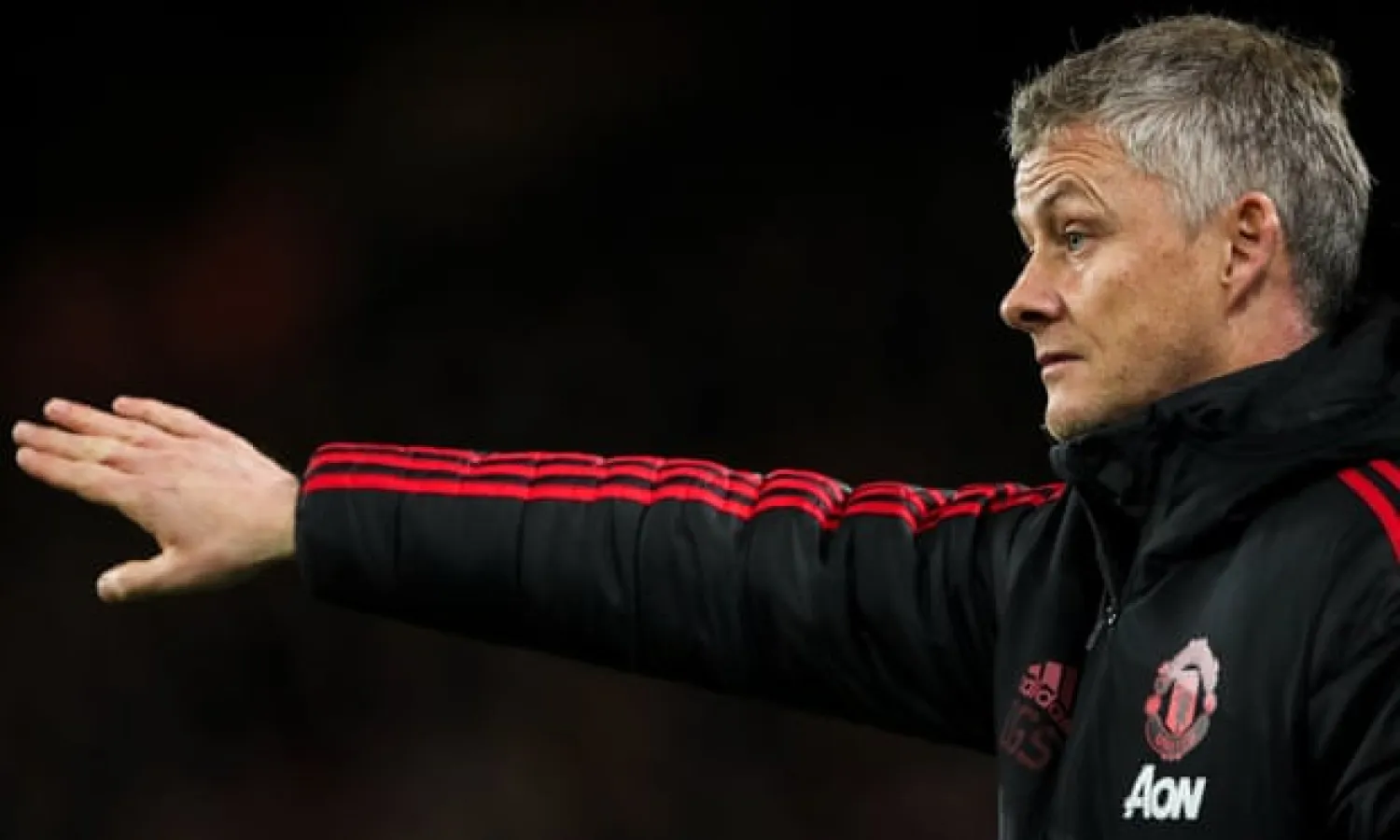
 Disentangling the skill of Ole Gunnar Solskjær from the quality of players at his disposal is tricky. Photograph: Matthew Ashton - AMA/Getty Images
Disentangling the skill of Ole Gunnar Solskjær from the quality of players at his disposal is tricky. Photograph: Matthew Ashton - AMA/Getty Images
TT

As Solskjær Soars, How Many Extra Points Does a Manager Really Add?

 Disentangling the skill of Ole Gunnar Solskjær from the quality of players at his disposal is tricky. Photograph: Matthew Ashton - AMA/Getty Images
Disentangling the skill of Ole Gunnar Solskjær from the quality of players at his disposal is tricky. Photograph: Matthew Ashton - AMA/Getty Images

Just how exceptional a manager is Ole Gunnar Solskjær? For all the praise lavished on the likeable Norwegian, I remain glued to the fence. Don’t get me wrong. He’s clearly doing well. It’s just that it is fiendishly tricky to separate the upturn in Manchester United’s mood and form since he took over – as reflected by that spectacular feat of alchemy in Paris – with the obvious fact that any club with that much money and world-class players should be winning most of their matches.

Throw into the mix the astringency of José Mourinho’s last few months at Old Trafford, the effect of the new manager bounce and Solskjær’s previous record at Cardiff, and we are all playing guessing games about how good the Norwegian might be. Disentangling the skill of a manager – his special sauce, so to speak – from the quality of the players at his disposal and the club’s budget isn’t easy. After all, no one believes Roberto Di Matteo is a great coach, even though he led Chelsea to the 2012 Champions League after riding the sort of luck rarely seen outside a Euromillions jackpot winner. Avram Grant was also just a fluffed John Terry spot-kick away from conquering Europe in 2008.

However, a team of German academics believe they have found a way to separate the impact of a manager from the team effect after forensically examining every coach’s reign in Bundesliga from 1993-1994 to 2013-14. Their paper, published in the Journal of Sports Economics last August, looked at 6,426 matches, every club’s budget per season and even every coach’s playing career, and some of their findings were unsurprising. Representing the national team as a player, for instance, did not make someone a better manager. Similarly, there was no evidence that playing in any one position as a player made them a better coach later in life. But by paying particular attention to how the same managers performed at different clubs – and by applying similar statistical wizardry used to assess how much difference bosses make to productivity in the US – they made two intriguing findings.

First, that the top 20% of managers over the 21-year period – which included Jürgen Klopp and Lucien Favre – improved a team by around 0.3 points a game on average over someone ranked in the bottom 20%, even after taking team strength and budget into account. That is 10.2 points on average over a 34-game Bundesliga season. Second, that measure of ability had a substantial predictive power for future performance of the teams employing the respective manager.

Advertisement

The research, incidentally, appears to back up what I and others have written before about managerial talent. In essence it is like a U-curve, with the best and worst coaches having a bigger impact on results – and those in the middle tier relying on the quality of their players, their club’s recruitment strategy and luck to succeed or fail. And, of course, relative success is only one measure a club should look at when bringing in a new manager. Their personality, how they develop and improve young players, and their style of play are all essential too.

Incidentally, the academics found something else that teams might bear in mind. Bundesliga sides whose managers were former professional players who had played in the top two tiers of German football tended to perform worse, on average, than managers who had either not played professionally at all or played no higher than the third tier. One explanation, according to Dr Gerd Muehlheusser of the University of Hamburg, is that managers who have not been former star players themselves need to be substantially better coaches in order to secure a job as a head coach in the top leagues. “In other words, they must start their managerial career in low divisions and hence have already proven to possess some managerial quality beforehand,” he says.

Maybe that shouldn’t surprise us. After all, Arrigo Sacchi was an amateur player and shoe salesman before revolutionising football at Milan, while Mourinho, Gérard Houllier and Brendan Rodgers are among many successful coaches who never played the game professionally. Still, as Omar Chaudhuri, the head of football intelligence at football consultancy 21st Club, points out it might mean that football undervalues coaches who have not played the game professionally.

“It’s not possible to know, unfortunately, if there was the same number of non and ex-pros, whether the non-ex-pros would be better on average,” says Chaudhuri, who works with several top clubs. “Still, the main thing it suggests is that potentially non-ex-pros are less of a risk than perceived by the market. The question is whether a club can use that – if non-ex-pros still have to ‘prove’ themselves, you potentially don’t know if they’re any good until they’ve proved themselves.”

Interestingly, it is a different story in the NBA, where top players tend to do better as coaches than non-players. That is probably because those players do not usually get head coach positions right away. Instead they have to prove their talent first. Maybe there is a lesson there for football clubs as well as former players.

In the meantime, 36 managers have now left their jobs in English football this season. Incredibly, 20 of those appointments lasted less than a year, including Solskjær’s old teammate Paul Scholes at Oldham, and it suggests that large parts of the game still have a problem evaluating what a good manager looks like.

The Guardian Sport


Shakhtar Boss Pays Ukrainian Racer $200,000 After Games Disqualification

Ukrainian President Volodymyr Zelenskiy holds helmet as he meets with a Ukrainian skeleton racer Vladyslav Heraskevych , who was disqualified from the Olympic skeleton competition over his "helmet of remembrance" depicting athletes killed since Russia's invasion and his father and coach, Mykhailo Heraskevych, amid Russia's attack on Ukraine, in Munich, Germany February 13, 2026. (Ukrainian Presidential Press Service/Handout via Reuters)
TT

Shakhtar Boss Pays Ukrainian Racer $200,000 After Games Disqualification

Ukrainian President Volodymyr Zelenskiy holds helmet as he meets with a Ukrainian skeleton racer Vladyslav Heraskevych , who was disqualified from the Olympic skeleton competition over his "helmet of remembrance" depicting athletes killed since Russia's invasion and his father and coach, Mykhailo Heraskevych, amid Russia's attack on Ukraine, in Munich, Germany February 13, 2026. (Ukrainian Presidential Press Service/Handout via Reuters)

The owner of ‌Ukrainian football club Shakhtar Donetsk has donated more than $200,000 to skeleton racer Vladyslav Heraskevych after the athlete was disqualified from the Milano Cortina Winter Games before competing over the use of a helmet depicting Ukrainian athletes killed in the war with Russia, the club said on Tuesday.

The 27-year-old Heraskevych was disqualified last week when the International Bobsleigh and Skeleton Federation jury ruled that imagery on the helmet — depicting athletes killed since Russia invaded Ukraine in 2022 — breached rules on athletes' expression at ‌the Games.

He ‌then lost an appeal at the Court ‌of ⁠Arbitration for Sport hours ⁠before the final two runs of his competition, having missed the first two runs due to his disqualification.

Heraskevych had been allowed to train with the helmet that displayed the faces of 24 dead Ukrainian athletes for several days in Cortina d'Ampezzo where the sliding center is, but the International Olympic Committee then ⁠warned him a day before his competition ‌started that he could not wear ‌it there.

“Vlad Heraskevych was denied the opportunity to compete for victory ‌at the Olympic Games, yet he returns to Ukraine a ‌true winner," Shakhtar President Rinat Akhmetov said in a club statement.

"The respect and pride he has earned among Ukrainians through his actions are the highest reward. At the same time, I want him to ‌have enough energy and resources to continue his sporting career, as well as to fight ⁠for truth, freedom ⁠and the remembrance of those who gave their lives for Ukraine," he said.

The amount is equal to the prize money Ukraine pays athletes who win a gold medal at the Games.

The case dominated headlines early on at the Olympics, with IOC President Kirsty Coventry meeting Heraskevych on Thursday morning at the sliding venue in a failed last-minute attempt to broker a compromise.

The IOC suggested he wear a black armband and display the helmet before and after the race, but said using it in competition breached rules on keeping politics off fields of play. Heraskevych also earned praise from Ukraine President Volodymyr Zelenskiy.


Speed Skating-Italy Clinch Shock Men’s Team Pursuit Gold, Canada Successfully Defend Women’s Title

 Team Italy with Davide Ghiotto, Andrea Giovannini, Michele Malfatti, celebrate winning the gold medal on the podium of the men's team pursuit speed skating race at the 2026 Winter Olympics, in Milan, Italy, Tuesday, Feb. 17, 2026. (AP)
Team Italy with Davide Ghiotto, Andrea Giovannini, Michele Malfatti, celebrate winning the gold medal on the podium of the men's team pursuit speed skating race at the 2026 Winter Olympics, in Milan, Italy, Tuesday, Feb. 17, 2026. (AP)
TT

Speed Skating-Italy Clinch Shock Men’s Team Pursuit Gold, Canada Successfully Defend Women’s Title

 Team Italy with Davide Ghiotto, Andrea Giovannini, Michele Malfatti, celebrate winning the gold medal on the podium of the men's team pursuit speed skating race at the 2026 Winter Olympics, in Milan, Italy, Tuesday, Feb. 17, 2026. (AP)
Team Italy with Davide Ghiotto, Andrea Giovannini, Michele Malfatti, celebrate winning the gold medal on the podium of the men's team pursuit speed skating race at the 2026 Winter Olympics, in Milan, Italy, Tuesday, Feb. 17, 2026. (AP)

An inspired Italy delighted the home crowd with a stunning victory in the Olympic men's team pursuit final as

Canada's Ivanie Blondin, Valerie Maltais and Isabelle Weidemann delivered another seamless performance to beat the Netherlands in the women's event and retain their title ‌on Tuesday.

Italy's ‌men upset the US who ‌arrived ⁠at the Games ⁠as world champions and gold medal favorites.

Spurred on by double Olympic champion Francesca Lollobrigida, the Italian team of Davide Ghiotto, Andrea Giovannini and Michele Malfatti electrified a frenzied arena as they stormed ⁠to a time of three ‌minutes 39.20 seconds - ‌a commanding 4.51 seconds clear of the ‌Americans with China taking bronze.

The roar inside ‌the venue as Italy powered home was thunderous as the crowd rose to their feet, cheering the host nation to one ‌of their most special golds of a highly successful Games.

Canada's women ⁠crossed ⁠the line 0.96 seconds ahead of the Netherlands, stopping the clock at two minutes 55.81 seconds, and

Japan rounded out the women's podium by beating the US in the Final B.

It was only Canada's third gold medal of the Games, following Mikael Kingsbury's win in men's dual moguls and Megan Oldham's victory in women's freeski big air.


Lindsey Vonn Back in US Following Crash in Olympic Downhill 

Milano Cortina 2026 Olympics - Alpine Skiing - Women's Downhill 3rd Official Training - Tofane Alpine Skiing Centre, Belluno, Italy - February 07, 2026. Lindsey Vonn of United States in action during training. (Reuters)
TT

Lindsey Vonn Back in US Following Crash in Olympic Downhill 

Milano Cortina 2026 Olympics - Alpine Skiing - Women's Downhill 3rd Official Training - Tofane Alpine Skiing Centre, Belluno, Italy - February 07, 2026. Lindsey Vonn of United States in action during training. (Reuters)

Lindsey Vonn is back home in the US following a week of treatment at a hospital in Italy after breaking her left leg in the Olympic downhill at the Milan Cortina Games.

“Haven’t stood on my feet in over a week... been in a hospital bed immobile since my race. And although I’m not yet able to stand, being back on home soil feels amazing,” Vonn posted on X with an American flag emoji. “Huge thank you to everyone in Italy for taking good care of me.”

The 41-year-old Vonn suffered a complex tibia fracture that has already been operated on multiple times following her Feb. 8 crash. She has said she'll need more surgery in the US.

Nine days before her fall in Cortina d'Ampezzo, Italy, Vonn ruptured the ACL in her left knee in another crash in Switzerland.

Even before then, all eyes had been on her as the feel-good story heading into the Olympics for her comeback after nearly six years of retirement.
