



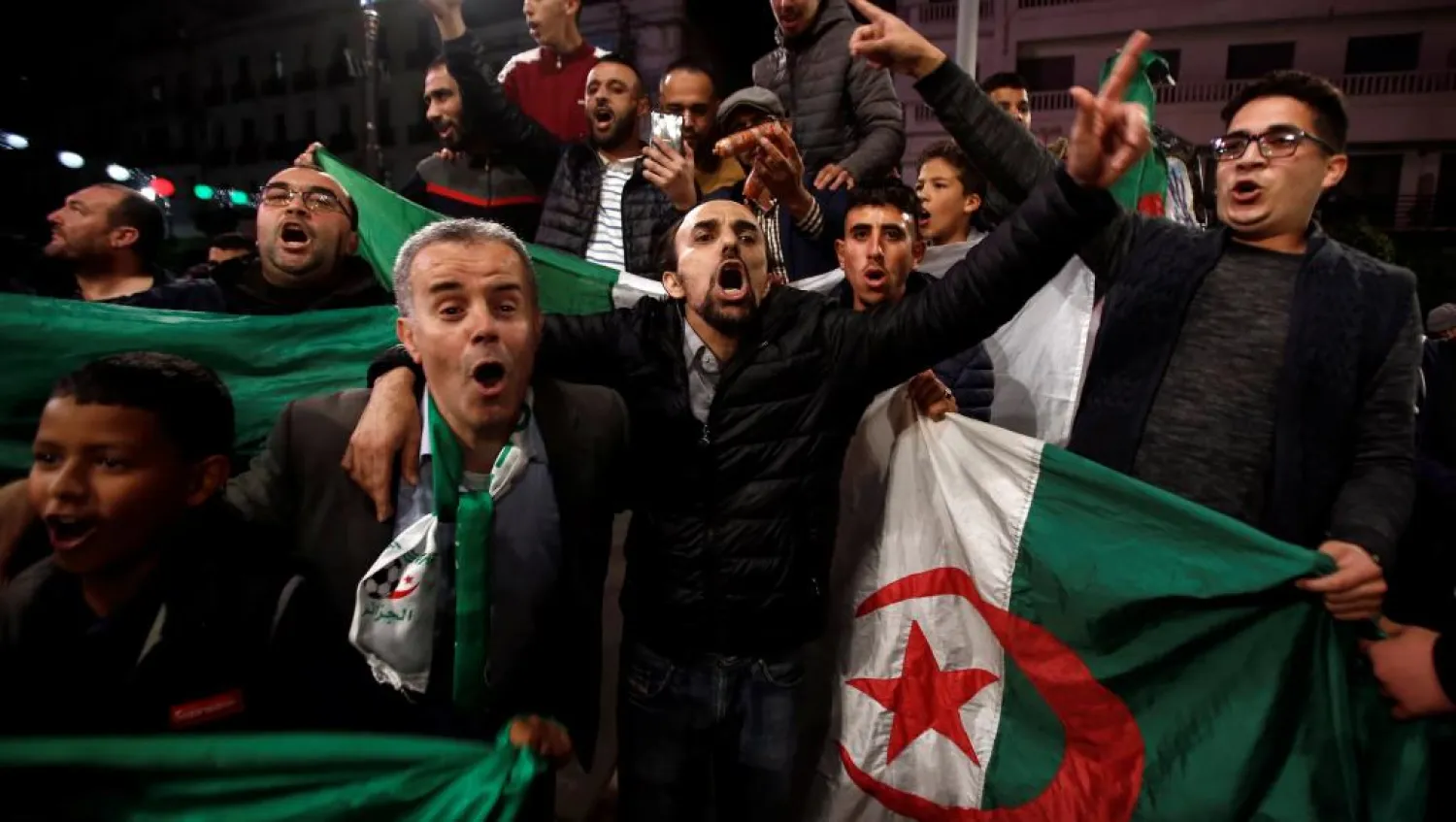

Algerians cheered on Wednesday as ailing President Abdelziz Bouteflika resigned, but still kept their demands for sweeping changes in the country’s political system.
The departure of Bouteflika, 82, announced on state media late Tuesday, followed weeks of massive demonstrations that have shaken the North African nation.
Car horns sounded on the streets before jubilant crowds converged in the center of the capital Algiers to cheer his departure.
Many Algerians have never known any president other than Bouteflika, who held power for two decades but was rarely seen in public since suffering a stroke in 2013.
Protesters in Algiers welcomed his departure but said they were determined to continue demonstrating, rejecting any transition that leaves power in the hands of the "system".
"I want my daughter to remember this historic day. Bouteflika's gone, but it's far from over," said 35-year-old Amal, who wore a T-shirt with the slogan "I am against the system" and vowed to march again on Friday.
For 44-year-old engineer Hamid Boumaza, Bouteflika's resignation was "too little, too late".
"Bouteflika's departure is no longer enough. We want them all to go. We want full freedom and we will march for as long as necessary."
Others paid tribute to the longtime leader, but regretted that he had clung to power for so long.
"Bouteflika worked. I voted for him at first, but he didn't know how to leave with his head held high," said Bilan Brahim, 40.
Algeria's Constitutional Council said Wednesday it had accepted Bouteflika's resignation and informed parliament that his post was officially vacant.
Algeria's constitution says that once the president officially resigns, the speaker of the upper house of parliament, currently 77-year-old Abdelkader Bensalah, acts as interim leader for up to 90 days during which a presidential election must be organized.
As pressure mounted, state television announced late Tuesday that Bouteflika had submitted his resignation to the Constitutional Council.
The decision aimed "to contribute to the appeasement of the hearts and minds of my compatriots, to allow them to take Algeria towards a better future to which they legitimately aspire," his resignation letter read.
Footage showed Bouteflika, dressed in a beige North African tunic and sitting in his wheelchair, handing the letter to the council's head, Tayeb Belaiz.
Although credited with helping foster peace after Algeria's decade-long civil war, Bouteflika has faced criticism for alleged authoritarianism.
His former prime minister-turned-rival Ali Benflis said his departure was the "woeful epilogue" to two decades of "immense mess" and praised the protest movement as "a peaceful people's revolution that has restored our national pride and the admiration of the world".
The UN said Secretary-General Antonio Guterres "takes note" of the resignation of Bouteflika and "salutes the mature and calm nature in which the Algerian people have been expressing their desire for change."
UN spokesman Stephane Dujarric said Wednesday the secretary-general "looks forward to a peaceful and democratic transition process that reflects the wishes of the Algerian people."
Dujarric said Guterres "reiterates the United Nations' continued commitment to supporting Algeria in its process of democratic transition."
Kremlin spokesman Dmitry Peskov warned against foreign interference in Algerian politics and said that "we hope the internal processes in that country ... will by no means affect the friendly nature of our relations."
Algeria's foreign minister recently visited Moscow and the countries have been economic and geopolitical allies since the Soviet era.
French Foreign Minister Jean-Yves Le Drian expressed hope that Algerians would "pursue this democratic transition in the same spirit of calm and responsibility" that has marked the protests that drove Bouteflika from office.
France, Algeria's former colonial ruler and a key trading partner, had come under fire for seeming to support Bouteflika earlier in the movement.
The US State Department said it's up to Algerians to decide next steps. The US government has expressed support in recent weeks for the peaceful protests.
The organizers behind months of anti-government demonstrations in Sudan are welcoming the resignation of Bouteflika and are expressing hope that Sudan's Omar al-Bashir will do the same.
Sarah Abdel-Jaleel, a spokeswoman for the Sudanese Professionals Association, told The Associated Press that Bouteflika's resignation is "a very positive achievement," showing the "success of peaceful resistance within Africa."


