


Foreigners Boost England’s Potential – but our Youngsters May Beg to Differ

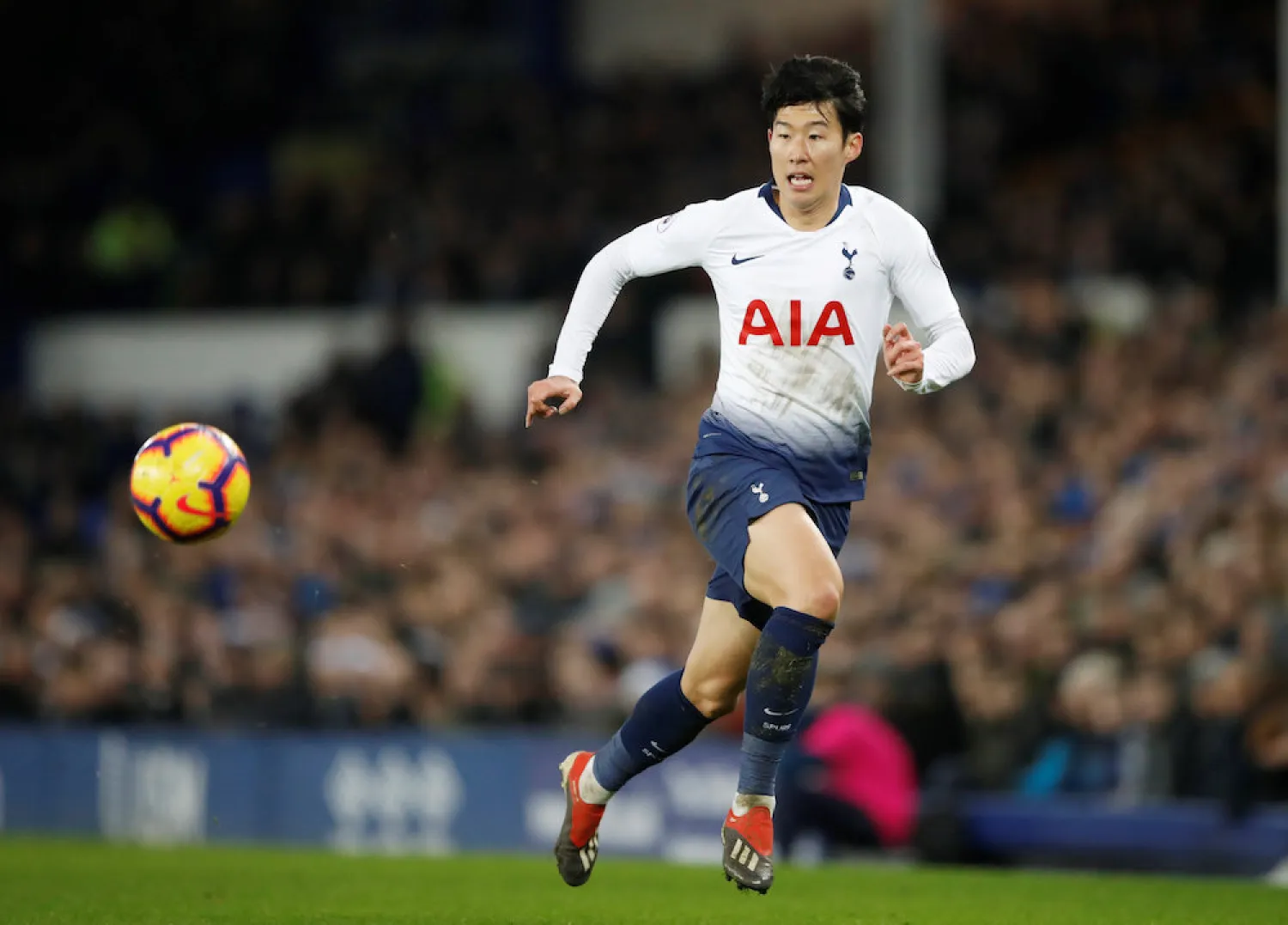
Tottenham’s Son Heung-min in action during the Premier League match against Everton in Liverpool December 23, 2018. (Reuters)
TT

Foreigners Boost England’s Potential – but our Youngsters May Beg to Differ

Tottenham’s Son Heung-min in action during the Premier League match against Everton in Liverpool December 23, 2018. (Reuters)

It sounds like the start of a bad joke. What do Boris Johnson and Silvio Berlusconi have in common? Yes, apart from that. And that. Oh, and that too. Well, both have also warned of the dangers of too many foreign footballers. Johnson, of course, blamed England’s Euro 2016 humiliation on huge numbers of international players “soaking up space on our top teams” while Berlusconi has spoken about how he craves an all-Italian Milan side.

Johnson may have been trying to tap into the nation’s worst instincts, singing his siren song when the country was vulnerable after the Brexit referendum. Yet more sober heads, such as Paul Scholes, have also warned that too many foreign players could damage the England team as youngsters are unable to break through. The Football Association agrees. As things stand, Premier League teams can register up to 17 non-home grown players in a 25-man squad, a figure the FA wants reduced to 13 after Brexit.

Yet, while watching Gareth Southgate’s new England buzz through the Czech Republic defense last month, it was impossible not to wonder whether such fears are overblown. And digging a bit deeper, across wider sport and industry as well as football, that feeling only grows. Because all the evidence suggests foreigners do not damage national teams. If anything, they improve them.

One of the largest studies into the factors behind a country’s success in international football found – unsurprisingly – that, all else being equal, countries with larger populations and higher GDP per capita performed better in Fifa’s rankings. Yet, tellingly, the researchers Michael and Marikova Leeds noted that bringing more foreign players into a domestic league tended to lead to an improvement in an international team.

As they noted in their conclusion: “When countries contemplate how best to advance in international soccer rankings, they should not be afraid to import players for their domestic league. Because the stronger the structure and performance of the domestic league, the greater the country’s international success.”

Why might more foreign players be an advantage? One explanation is down to what academics call the spillover hypothesis. As David Forrest, an economist at the University of Liverpool, explains: “If you bring in a foreign star, then home-grown talent benefits in two ways. First, because they have a more talented colleague to learn from. And, second, because foreigners may bring in different ways of doing things, thus broadening ways of solving problems.”

Examples abound in English football. The Class of 92 have spoken about how Eric Cantona’s professionalism and ability at Manchester United lifted them to another level. Arsène Wenger revolutionized Arsenal after the bumpy reign of Bruce Rioch. And who knows what is happening in an alternate universe where Mauricio Pochettino did not take over from Tim Sherwood at Spurs?

It is perhaps also notable that nine of England’s starters at last year’s World Cup played for either Pep Guardiola, Jürgen Klopp, José Mourinho or Pochettino. It was a youthful and inexperienced team, with far fewer starts historically than most England squads, yet their performance was one of the best in a generation. Absorbing from the best at club level surely helped them with that accelerated learning.

Forrest, incidentally, was part of a massive study that examined the effects of foreign players in 47 European basketball leagues on their national teams between 1986 and 2008. Again the results were clear. An increase in the number of foreigners in a domestic league tended to generate a subsequent improvement in the performance of the national team when it came to qualifying for, or competing at, the European and world championships and Olympics.

The authors assessed the supposedly negative effects of foreign talent – including a delay in local players securing a first-team place and therefore vital experience – before dismissing them. As they put it: “Empirically, we have shown for the case of European basketball that any negatives appear to be dominated by the positive influence of foreign players.”

There was, though, a subsidiary finding from the basketball study that may be more soothing to traditional England supporters: winning youth titles in the preceding years is a very strong predictor of success at senior international level. As Forrest puts it: “If football is like basketball, then good times are indeed coming for England.”

Academics have also found that when players play abroad it improves the performance of the national team.

All this is not to suggest that there should not be some limits. Southgate needs his best youngsters to be playing regularly in the top leagues. No one disputes that such players need minutes to develop – something that is impossible to do when there is an established international ahead of them.

Just ask Jadon Sancho, who left for Borussia Dortmund, or another of Manchester City’s wunderkinder, Phil Foden, who has played only 96 minutes in the Premier League this season.

It is understandable why some in the game are worried about this issue. After all, when the Premier League began in 1992 there were only 13 foreign players. Now almost every top club has more than that. However this has long been a debate too often hijacked by scaremongering or populist posturing.

The fact is when countries are looking for a bogeyman for the woes of their national team they should look within – not without.

The Guardian Sport


Shakhtar Boss Pays Ukrainian Racer $200,000 After Games Disqualification

Ukrainian President Volodymyr Zelenskiy holds helmet as he meets with a Ukrainian skeleton racer Vladyslav Heraskevych , who was disqualified from the Olympic skeleton competition over his "helmet of remembrance" depicting athletes killed since Russia's invasion and his father and coach, Mykhailo Heraskevych, amid Russia's attack on Ukraine, in Munich, Germany February 13, 2026. (Ukrainian Presidential Press Service/Handout via Reuters)
TT

Shakhtar Boss Pays Ukrainian Racer $200,000 After Games Disqualification

Ukrainian President Volodymyr Zelenskiy holds helmet as he meets with a Ukrainian skeleton racer Vladyslav Heraskevych , who was disqualified from the Olympic skeleton competition over his "helmet of remembrance" depicting athletes killed since Russia's invasion and his father and coach, Mykhailo Heraskevych, amid Russia's attack on Ukraine, in Munich, Germany February 13, 2026. (Ukrainian Presidential Press Service/Handout via Reuters)

The owner of ‌Ukrainian football club Shakhtar Donetsk has donated more than $200,000 to skeleton racer Vladyslav Heraskevych after the athlete was disqualified from the Milano Cortina Winter Games before competing over the use of a helmet depicting Ukrainian athletes killed in the war with Russia, the club said on Tuesday.

The 27-year-old Heraskevych was disqualified last week when the International Bobsleigh and Skeleton Federation jury ruled that imagery on the helmet — depicting athletes killed since Russia invaded Ukraine in 2022 — breached rules on athletes' expression at ‌the Games.

He ‌then lost an appeal at the Court ‌of ⁠Arbitration for Sport hours ⁠before the final two runs of his competition, having missed the first two runs due to his disqualification.

Heraskevych had been allowed to train with the helmet that displayed the faces of 24 dead Ukrainian athletes for several days in Cortina d'Ampezzo where the sliding center is, but the International Olympic Committee then ⁠warned him a day before his competition ‌started that he could not wear ‌it there.

“Vlad Heraskevych was denied the opportunity to compete for victory ‌at the Olympic Games, yet he returns to Ukraine a ‌true winner," Shakhtar President Rinat Akhmetov said in a club statement.

"The respect and pride he has earned among Ukrainians through his actions are the highest reward. At the same time, I want him to ‌have enough energy and resources to continue his sporting career, as well as to fight ⁠for truth, freedom ⁠and the remembrance of those who gave their lives for Ukraine," he said.

The amount is equal to the prize money Ukraine pays athletes who win a gold medal at the Games.

The case dominated headlines early on at the Olympics, with IOC President Kirsty Coventry meeting Heraskevych on Thursday morning at the sliding venue in a failed last-minute attempt to broker a compromise.

The IOC suggested he wear a black armband and display the helmet before and after the race, but said using it in competition breached rules on keeping politics off fields of play. Heraskevych also earned praise from Ukraine President Volodymyr Zelenskiy.


Speed Skating-Italy Clinch Shock Men’s Team Pursuit Gold, Canada Successfully Defend Women’s Title

 Team Italy with Davide Ghiotto, Andrea Giovannini, Michele Malfatti, celebrate winning the gold medal on the podium of the men's team pursuit speed skating race at the 2026 Winter Olympics, in Milan, Italy, Tuesday, Feb. 17, 2026. (AP)
Team Italy with Davide Ghiotto, Andrea Giovannini, Michele Malfatti, celebrate winning the gold medal on the podium of the men's team pursuit speed skating race at the 2026 Winter Olympics, in Milan, Italy, Tuesday, Feb. 17, 2026. (AP)
TT

Speed Skating-Italy Clinch Shock Men’s Team Pursuit Gold, Canada Successfully Defend Women’s Title

 Team Italy with Davide Ghiotto, Andrea Giovannini, Michele Malfatti, celebrate winning the gold medal on the podium of the men's team pursuit speed skating race at the 2026 Winter Olympics, in Milan, Italy, Tuesday, Feb. 17, 2026. (AP)
Team Italy with Davide Ghiotto, Andrea Giovannini, Michele Malfatti, celebrate winning the gold medal on the podium of the men's team pursuit speed skating race at the 2026 Winter Olympics, in Milan, Italy, Tuesday, Feb. 17, 2026. (AP)

An inspired Italy delighted the home crowd with a stunning victory in the Olympic men's team pursuit final as

Canada's Ivanie Blondin, Valerie Maltais and Isabelle Weidemann delivered another seamless performance to beat the Netherlands in the women's event and retain their title ‌on Tuesday.

Italy's ‌men upset the US who ‌arrived ⁠at the Games ⁠as world champions and gold medal favorites.

Spurred on by double Olympic champion Francesca Lollobrigida, the Italian team of Davide Ghiotto, Andrea Giovannini and Michele Malfatti electrified a frenzied arena as they stormed ⁠to a time of three ‌minutes 39.20 seconds - ‌a commanding 4.51 seconds clear of the ‌Americans with China taking bronze.

The roar inside ‌the venue as Italy powered home was thunderous as the crowd rose to their feet, cheering the host nation to one ‌of their most special golds of a highly successful Games.

Canada's women ⁠crossed ⁠the line 0.96 seconds ahead of the Netherlands, stopping the clock at two minutes 55.81 seconds, and

Japan rounded out the women's podium by beating the US in the Final B.

It was only Canada's third gold medal of the Games, following Mikael Kingsbury's win in men's dual moguls and Megan Oldham's victory in women's freeski big air.


Lindsey Vonn Back in US Following Crash in Olympic Downhill 

Milano Cortina 2026 Olympics - Alpine Skiing - Women's Downhill 3rd Official Training - Tofane Alpine Skiing Centre, Belluno, Italy - February 07, 2026. Lindsey Vonn of United States in action during training. (Reuters)
TT

Lindsey Vonn Back in US Following Crash in Olympic Downhill 

Milano Cortina 2026 Olympics - Alpine Skiing - Women's Downhill 3rd Official Training - Tofane Alpine Skiing Centre, Belluno, Italy - February 07, 2026. Lindsey Vonn of United States in action during training. (Reuters)

Lindsey Vonn is back home in the US following a week of treatment at a hospital in Italy after breaking her left leg in the Olympic downhill at the Milan Cortina Games.

“Haven’t stood on my feet in over a week... been in a hospital bed immobile since my race. And although I’m not yet able to stand, being back on home soil feels amazing,” Vonn posted on X with an American flag emoji. “Huge thank you to everyone in Italy for taking good care of me.”

The 41-year-old Vonn suffered a complex tibia fracture that has already been operated on multiple times following her Feb. 8 crash. She has said she'll need more surgery in the US.

Nine days before her fall in Cortina d'Ampezzo, Italy, Vonn ruptured the ACL in her left knee in another crash in Switzerland.

Even before then, all eyes had been on her as the feel-good story heading into the Olympics for her comeback after nearly six years of retirement.
