


Egypt's Economy Seen Growing 5.5 Percent in Year to End of June

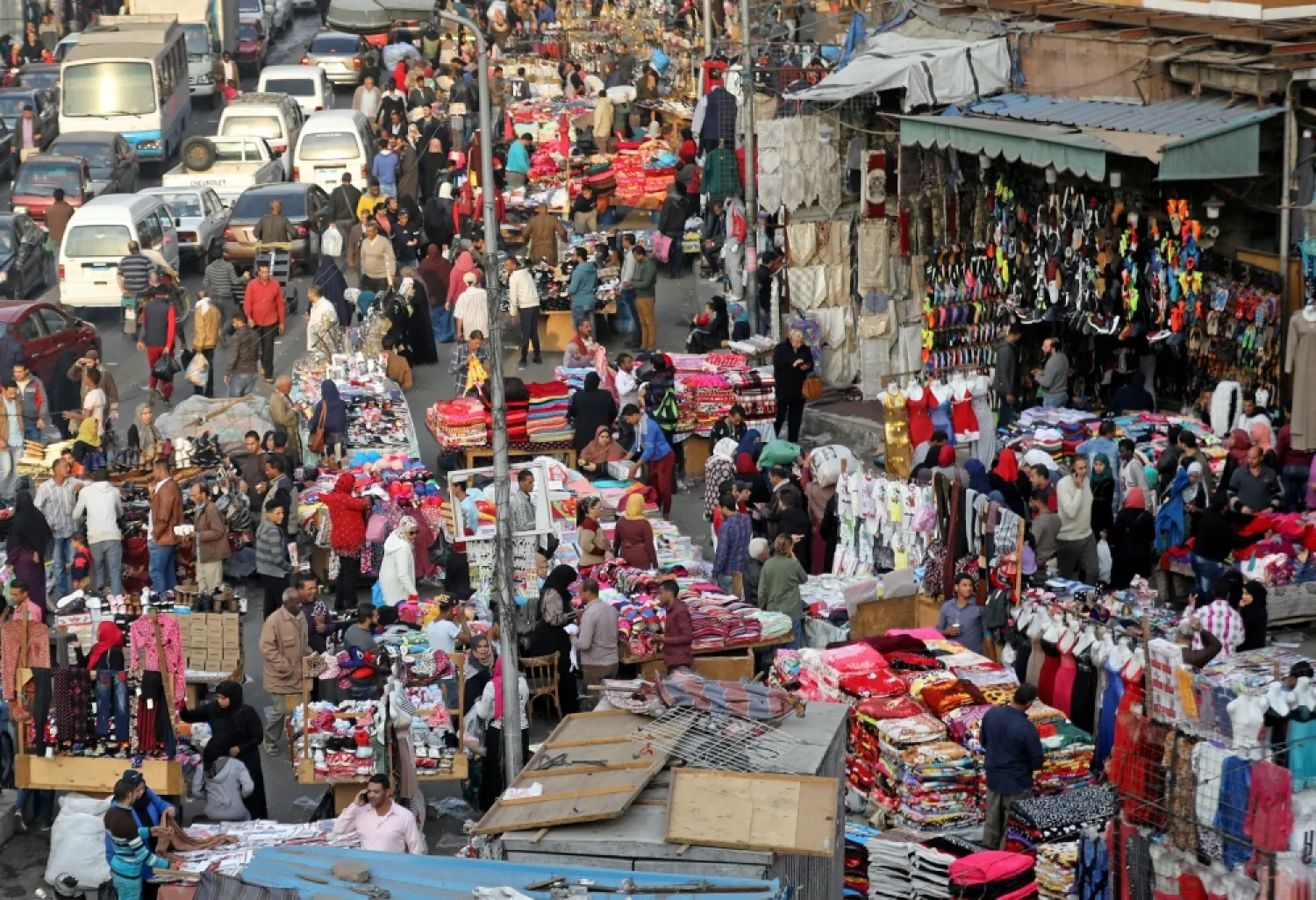
Egypt's economy is expected to grow 5.5 percent in the fiscal year that ends in June. (Reuters)
TT

Egypt's Economy Seen Growing 5.5 Percent in Year to End of June

Egypt's economy is expected to grow 5.5 percent in the fiscal year that ends in June. (Reuters)

Egypt's economy is expected to grow 5.5 percent in the fiscal year that ends in June, according to economists polled by Reuters, a forecast slightly higher than the one offered by a survey three months ago but lower than the government's target.

The economy, with the exception of the oil industry, has struggled to attract foreign investors since the 2011 uprising that unseated President Hosni Mubarak.

Egypt's non-oil private-sector activity contracted for the seventh consecutive month in March, according to the Emirates NBD Egypt Purchasing Managers' Index (PMI). Private-sector activity has expanded in only five months over the last three years.

"Medium-term economic growth is underpinned by improving fiscal finances, reforms to strengthen the business environment and rising investment in key sectors," said Nadene Johnson, an economist at NKC African Economics. "But structural constraints are keeping the growth forecast slightly subdued."

On Tuesday, Egypt's election commission said nearly 90 percent of voters in a referendum had approved constitutional changes, a move that could allow President Abdel Fattah al-Sisi to stay in power until 2030.

Sisi's supporters say he has stabilized Egypt and needs more time to reform and develop the economy.

Aiming to shore up investor confidence, Egypt has been implementing economic reforms as part of a three-year, $12 billion agreement with the International Monetary Fund in November 2016. The reforms included a value-added tax, cuts to energy subsidies and a steep currency devaluation.

The median forecast from 20 economists polled April 8-22, before the referendum result, put growth at 5.5 percent in the current 2018/2019 fiscal year, lower than the government's target. Three months ago, the median of 14 economists predicted 5.3 percent GDP growth.

Medians projected 5.6 percent GDP growth in the fiscal year ending in June 2020 and 5.7 percent in the 2020/2021 fiscal year.

Egypt is targeting growth at 5.6 percent in the 2018/2019 fiscal year, Finance Minister Mohamed Maait said in February, compared with its previous target of 5.8 percent. It targets 6.1 percent growth in 2019/2020.

Economic growth will be "fueled mostly by government spending on national projects and infrastructure," said Yara Elkahky, an economist at Naeem Brokerage. "Household consumption growth, however, is expected to remain muted as purchasing power still remains tight."

The new consensus put Egypt's urban consumer inflation at 14.2 percent, down from the 15.5 percent projected three months ago.

Annual urban consumer price inflation slowed to 14.2 percent in March from 14.4 percent in February. It is expected to decelerate to 12.0 percent in the 2019/2020 fiscal year and 9.6 percent in the 2020/2021 fiscal year.

Core inflation, which strips out volatile items such as food, fell to 8.9 percent in March from 9.2 percent in February.

Elkahky expects inflation "to continue declining amid normalized supply levels and seasonality impacts," adding that inflation could drop further as the Egyptian pound appreciates against the dollar.

"Risks to fiscal sustainability are still substantial," said Maya Senussi, senior economist for the Middle East at Oxford Economics. She added that "could weigh on the general thrust of the (government's economic reform) policy."


Saudi Airports Serve as Safety Valve for Regional Air Traffic as ‘Hormuz Fallout’ Hits Global Aviation

King Khalid International Airport in Riyadh (SPA)
TT

Saudi Airports Serve as Safety Valve for Regional Air Traffic as ‘Hormuz Fallout’ Hits Global Aviation

King Khalid International Airport in Riyadh (SPA)

Conflicts in the region are no longer confined to the geography of battlefields; their fallout has reached one of the world’s most vital and sensitive industries: aviation. Today, travelers and airlines alike face a harsh reality driven by record surges in jet fuel prices and a steep spike in insurance costs, pressures that have pushed ticket prices higher, threatening a severe economic squeeze that could derail global tourism plans and reshape travel patterns long taken for granted.

The surge in aviation costs cannot be separated from the turmoil in global energy markets. The link between crude oil and jet fuel prices peaked in early April 2026. As market confidence wavered amid US military threats, crude prices jumped to record levels due to the direct risk to supplies through the Strait of Hormuz, setting off an immediate spike in jet fuel prices. Given that jet fuel is among the most valuable refined products from a barrel of oil, these unprecedented crude levels pushed aviation fuel to nearly double its 2025 levels.

Compound pressures and a tourism slowdown

In remarks to Asharq Al-Awsat, aviation and airport management expert AlMotaz Al-Mirah said the current tensions, in an industry already operating on thin margins, are quickly reflected in both pricing and demand across the tourism sector.

“The rise in ticket prices today is not driven by a single factor,” he said, “but by a combination of pressures: higher fuel consumption, longer routes, elevated insurance costs, and reduced operational efficiency.”

The World Travel & Tourism Council confirmed that “the escalating conflict in Iran is already impacting travel and tourism across the Middle East by no less than $600 million per day in international visitor spending, as disruptions to air travel, traveler confidence, and regional connectivity weigh on demand.”

According to council data released in March, the Middle East plays a critical role in global travel, accounting for 5 percent of international arrivals and 14 percent of global transit traffic. Any disruption reverberates worldwide, affecting airports, airlines, hotels, car rental firms, and cruise lines.

The family travel bill

On leisure travel, Al-Mirah said fare increases have ranged from 15 percent to 70 percent across many routes- higher still on long-haul flights.

“A ticket that used to cost $500 now ranges between $800 and $1,000,” he noted, “meaning an increase of up to $2,000 for a family of four.” This is forcing many travelers to delay trips or opt for closer destinations, reshaping demand across regional markets.

He detailed the price surge since the crisis began in late February: jet fuel rose from around $85–90 per barrel to between $150 and $200. This has driven the cost per flight hour for long-haul aircraft from an average of $10,000 to more than $18,000 in some cases. A flight carrying 180 passengers could see total additional costs of about $15,000, forcing airlines to add roughly $80 per ticket just to break even.

Globally, Brazil’s Petrobras raised jet fuel prices by about 55 percent in early April, while the Philippines warned that some aircraft could be grounded due to fuel shortages, and Taiwanese carriers are preparing to increase international fuel surcharges by 157 percent.

Longer routes, heavier maintenance burdens

Al-Mirah explained that longer flight times to avoid unstable airspace carry steep financial costs, with each additional hour adding between $5,000 and $7,500. Route changes extending flight durations by one to two hours have increased fuel consumption by up to 30 percent. More time in the air also accelerates engine wear.

The strain goes beyond fuel. Increased flight hours speed up the deterioration of engines and components, bringing forward maintenance schedules and raising annual servicing costs- ultimately reducing fleet efficiency.

Airlines are also grappling with sharply higher war-risk insurance premiums. While such costs typically account for no more than 1 percent of total operating expenses, they have surged by between 50 percent and 500 percent in the current crisis, according to a March 2026 report by Lockton.

This buildup of fuel and insurance costs threatens to turn profitable routes into loss-making ones, potentially forcing cash-strapped or low-cost carriers to suspend some routes temporarily to preserve financial stability.

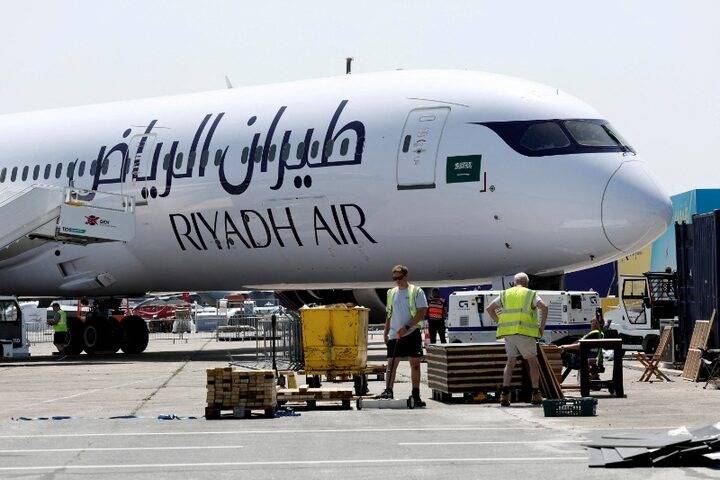
An aircraft from Riyadh Air at Le Bourget Airport (Reuters)

Saudi airports support regional air traffic

Amid these complexities, Saudi Arabia’s General Authority of Civil Aviation has deployed its capabilities to activate regional support protocols. Gulf airlines have shifted logistical operations to Saudi airports to keep regional air traffic safe and moving.

The authority announced that the Kingdom received more than 120 flights from neighboring countries’ carriers between February 28 and March 16, including Qatar Airways, Iraqi Airways, Kuwait Airways, Jazeera Airways, and Gulf Air.


OPEC+ Agrees in Principle on Theoretical Oil Output Hike amid Iran War Paralysis

FILE PHOTO: A model of an oil pump is seen in front of the OPEC logo in this illustration taken January 9, 2026. REUTERS/Dado Ruvic/Illustration/File Photo
TT

OPEC+ Agrees in Principle on Theoretical Oil Output Hike amid Iran War Paralysis

FILE PHOTO: A model of an oil pump is seen in front of the OPEC logo in this illustration taken January 9, 2026. REUTERS/Dado Ruvic/Illustration/File Photo

OPEC+ has agreed in principle to raise its oil output quotas by 206,000 barrels per day for May, three sources with knowledge of the group's talks said ahead of its meeting later on Sunday, a rise that will largely exist on paper as its key members are unable to raise production due to the US-Israeli war with Iran.

The war has effectively shut the Strait of Hormuz - the world's most important oil route - since the end of February and cut exports from OPEC+ members.
Some group members such as Russia are unable to increase output due to Western sanctions and damage to infrastructure inflicted during the war with Ukraine.

Inside the Gulf, damage to infrastructure from missile and drone attacks has also been severe. Several Gulf officials have said it would take months to resume normal operations and reach production targets even if the war stopped and Hormuz reopened immediately, according to Reuters.
Iran on Saturday said Iraq was exempt from any restrictions to transit the vital route, and shipping data on Sunday showed a tanker loaded with Iraqi crude passing through the strait. Still, it remains to be seen if more vessels will take the risk involved, a source close to the issue said.

Sunday's OPEC+ talks are set to start at around 1300 GMT with a gathering of ministers called the Joint Ministerial Monitoring Committee, which does not decide on output policy.

After this, eight members of OPEC+ hold separate talks having agreed in principle to raise output quotas by 206,000 bpd for May, the three sources said. This would be the same as the increase decided for April at their last meeting held on March 1, just as the war began to disrupt oil flows. A month later, the largest oil supply disruption on record is estimated to have removed as many as 12 to 15 million bpd or up to 15% of global supply. Crude prices have soared to a four-year high close to $120 a barrel. Oil prices could spike above $150 - an all-time high - if flows via Hormuz remain disrupted into mid-May, JPMorgan said on Thursday. A quota increase will have little immediate impact on supply but would signal readiness to raise output once Hormuz reopens, OPEC+ sources have said. Consultancy Energy Aspects called the increase "academic" as long as disruptions in the strait persist.


War Weighs on Egypt’s Private Sector as PMI Hits Near Two-Year Low in March

People walk past a closed cinema as shops close early under a government-ordered curfew aimed at reducing energy costs in downtown Cairo on April 2, 2026. (AFP)
TT

War Weighs on Egypt’s Private Sector as PMI Hits Near Two-Year Low in March

People walk past a closed cinema as shops close early under a government-ordered curfew aimed at reducing energy costs in downtown Cairo on April 2, 2026. (AFP)

Egypt's non-oil private ‌sector deteriorated at its sharpest pace in almost two years in March, as the Middle East war drove up costs and dampened client demand, a closely watched business survey showed on Sunday.

The headline S&P Global Egypt Purchasing Managers' Index fell for a fourth consecutive month, dropping to 48.0 in March from 48.9 in February — its lowest reading since April 2024.

The ‌figure remained below ‌the 50.0 threshold that ‌separates growth ⁠from contraction, though ⁠it was broadly in line with the survey's long-run average of 48.2.

Output and new orders were the chief drags on the index, with both measures also hitting their lowest levels for nearly two years. Firms frequently blamed ⁠the Middle East conflict for dampening client ‌demand, partly through ‌intensifying price pressures.

In a first, business expectations for the ‌coming 12 months slipped into negative territory, with ‌companies citing uncertainty over the war as a key reason for pessimism, though the degree of gloom was described as mild.

David Owen, senior economist at ‌S&P Global Market Intelligence, nevertheless noted that "the latest figure of 48.0 still relates ⁠to ⁠annual GDP growth of around 4.3%," adding that "recent data suggests the domestic non-oil sector is on a solid underlying growth path."

Cost pressures remained a serious concern, however. Input prices surged at their joint-sharpest pace in one-and-a-half years, as firms cited fuel costs and other war-related commodity price increases, compounded by a stronger US dollar.

In response, companies raised their selling prices at the fastest rate in 10 months, though the increase remained modest overall.
