
Sprint, T-Mobile Merger Approval, Said to Be Near, Could Undercut Challenge by States

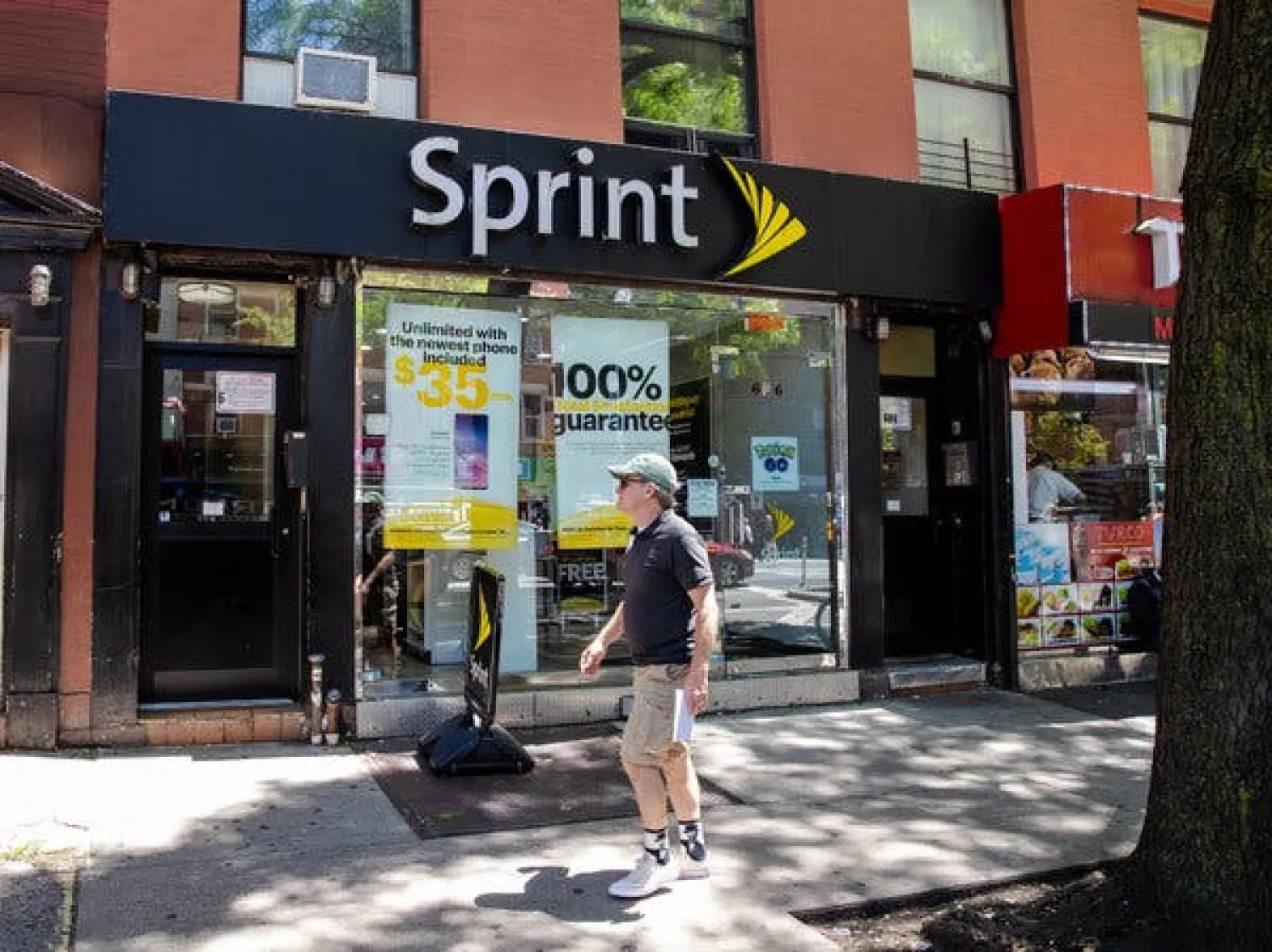
The Justice Department is pushing Sprint and T-Mobile to sell Boost Mobile and wireless frequencies, people familiar with a potential agreement said.CreditCreditBrittainy Newman/The New York Times
TT

Sprint, T-Mobile Merger Approval, Said to Be Near, Could Undercut Challenge by States

The Justice Department is pushing Sprint and T-Mobile to sell Boost Mobile and wireless frequencies, people familiar with a potential agreement said.CreditCreditBrittainy Newman/The New York Times

The Justice Department is moving closer to approving T-Mobile’s $26 billion merger with Sprint, but only if the companies sell multiple assets to create a new wireless competitor, according to three people familiar with the plan.

If such an arrangement is approved, it could weaken an effort by attorneys general from nine states and the District of Columbia to halt the blockbuster deal with a suit that they filed this week.

The department is pushing T-Mobile and Sprint to sell a prepaid mobile service and valuable radio frequencies that carry data to wireless devices, the people said. The companies have approached three internet and television providers — Dish Network, Charter and Altice — about buying Boost Mobile, a prepaid service owned by Sprint, and airwaves owned by Sprint, one of the people said.

A settlement between the companies and federal regulators could be completed in the next week, the three people said.

Executives at Sprint and T-Mobile argue that the companies need to merge to compete with their bigger rivals, and to afford investments in the next generation of wireless technology, known as 5G.

The companies have tried to merge three times in the last five years. Two years ago, they failed to agree on terms. A deal announced in 2014 was abandoned when federal regulators voiced concerns that it could hurt consumers. T-Mobile, in particular, has pushed the entire industry to offer lower prices, shorter contracts terms and fewer restrictions.

The deal requires approval by both the Justice Department, which enforces antitrust law, and the Federal Communications Commission, which oversees the telecommunications industry.

Ajit Pai, the chairman of the F.C.C., signaled his support last month. He said the support was based on the companies’ commitment to invest in rural broadband service and 5G technology. The companies also committed to selling off Boost Mobile.

The states, which argued in their complaint that the merger would cost Sprint and T-Mobile subscribers at least $4.5 billion a year, intend to seek a preliminary injunction, said Xavier Becerra, the attorney general of California. If that happened, Sprint and T-Mobile would first have to resolve the lawsuit from the states, even if the Justice Department approved the deal.

But the case could run into trouble because it doesn’t take into account the selling of both Boost and the wireless frequencies to another company, analysts said.

“The states would have to evaluate whether they believe in light of that divestiture their arguments about harm are still valid,” said Blair Levin, an analyst at New Street Research. “We are in uncharted territory.”

Letitia James, the attorney general of New York, said on Friday, “The D.O.J.’s investigation remains ongoing, so we cannot speculate about what they will do, but no matter their decision, we will do everything in our power to protect the residents of our states.”

Mr. Becerra’s office declined to comment. Colorado, Connecticut, the District of Columbia, Maryland, Michigan, Mississippi, Virginia and Wisconsin joined California and New York in filing the lawsuit.

The Trump administration has declared the development of 5G a matter of national security. The technology will provide much faster wireless speeds, aiding in the development of robotics, driverless cars and other emerging industries. The president has argued that if China leads in the development of 5G, the competitiveness of the United States economy will be hurt.

Makan Delrahim, whom Mr. Trump appointed as the Justice Department’s top antitrust regulator, has reviewed numerous deals in the media and telecommunications industries in the last couple of years. He sued to block a deal between AT&T and Time Warner, but lost the case in court. He quickly approved the purchase of 21st Century Fox by the Walt Disney Company.

Before Mr. Delrahim took office, his comments were largely in line with more free-market-oriented Republican views, and he was widely expected to be more lenient on mergers than predecessors in the Obama administration.

But as in the case with the AT&T-Time Warner deal, he has pushed for structural remedies, like forcing a company to sell assets before approving a merger. He is skeptical of so-called behavioral remedies, which restrict the new company’s behavior or operations.

“In telecommunications, as in other industries, we strongly favor structural remedies. If a structural remedy isn’t available, then, except in the rarest of circumstances, we will seek to block an illegal merger,” Mr. Delrahim said in a speech in November.

The New York Times


Dammam Airport Launches Saudi Arabia’s First Category III Automatic Landing System  

Prince Saud bin Naif bin Abdulaziz, Governor of the Eastern Region, inaugurates the General Aviation Terminal and the upgraded automatic landing system at King Fahd International Airport in Dammam. (SPA)
TT

Dammam Airport Launches Saudi Arabia’s First Category III Automatic Landing System  

Prince Saud bin Naif bin Abdulaziz, Governor of the Eastern Region, inaugurates the General Aviation Terminal and the upgraded automatic landing system at King Fahd International Airport in Dammam. (SPA)

Prince Saud bin Naif bin Abdulaziz, Governor of Saudi Arabia’s Eastern Region, inaugurated on Monday two major aviation projects at King Fahd International Airport in Dammam: a dedicated General Aviation Terminal for private flights and the Kingdom’s first Category III Instrument Landing System (ILS), which enables fully automatic aircraft landings in low-visibility conditions.

The ceremony was attended by Minister of Transport and Logistics Services and Chairman of the General Authority of Civil Aviation (GACA) Saleh bin Nasser Al-Jasser and President of GACA and Chairman of the Saudi Airports Holding Company Abdulaziz bin Abdullah Al-Duailej.

Prince Saud said the projects represent a qualitative leap in strengthening the aviation ecosystem in the Eastern Region, boosting the airport’s operational readiness and its regional and international competitiveness.

The introduction of a Category III automatic landing system for the first time in Saudi Arabia reflects the advanced technological progress achieved by the national aviation sector and its commitment to the highest international standards, he stressed.

The General Aviation Terminal marks a significant upgrade to airport infrastructure. Spanning more than 23,000 square meters, the facility is designed to ensure efficient operations and fast passenger processing.

The main terminal covers 3,935 square meters, while aircraft parking areas extend over 12,415 square meters with capacity to accommodate four aircraft simultaneously. An additional 6,665 square meters are allocated to support services and car parking, improving traffic flow and delivering a premium travel experience for private aviation users.

The upgraded Category III ILS, considered among the world’s most advanced air navigation systems, allows aircraft to land automatically during poor visibility, ensuring flight continuity while enhancing safety and operational efficiency.

The project includes rehabilitation of the western runway, extending 4,000 meters, along with a further 4,000 meters of aircraft service roads. More than 3,200 lighting units have been installed under an integrated advanced system to meet modern operational requirements and support all aircraft types.

Al-Jasser said the inauguration of the two projects translates the objectives of the Aviation Program under the National Transport and Logistics Strategy into concrete achievements.

The developments bolster airport capacity and efficiency, support the sustainability of the aviation sector, and strengthen the competitiveness of Saudi airports, he added.

Al-Duailej, for his part, said the initiatives align with Saudi Vision 2030 by positioning the Kingdom as a global logistics hub and a leading aviation center in the Middle East.

The new terminal reflects high standards of privacy and efficiency for general aviation users, he remarked, noting the selection of Universal Aviation as operator of the general aviation terminals in Dammam and Jeddah.

Dammam Airports Company operates three airports in the Eastern Region: King Fahd International Airport, Al-Ahsa International Airport, and Qaisumah International Airport.


Saudi Arabia to Launch Real Estate Indicators, Expand ‘Market Balance’ Program Nationwide

The Minister of Municipalities and Housing addresses attendees during the government press conference (Asharq Al-Awsat). 
TT

Saudi Arabia to Launch Real Estate Indicators, Expand ‘Market Balance’ Program Nationwide

The Minister of Municipalities and Housing addresses attendees during the government press conference (Asharq Al-Awsat). 

Saudi Arabia will roll out real estate market indicators in the first quarter of this year and expand the Real Estate Market Balance program to all regions of the Kingdom, following its initial implementation in Riyadh, Minister of Municipalities and Housing Majed Al-Hogail announced on Monday.

Al-Hogail, who also chairs the General Real Estate Authority, made the remarks during a government press conference in Riyadh attended by Minister of Media Salman Al-Dossary, President of the Saudi Data and Artificial Intelligence Authority (SDAIA) Abdullah Alghamdi, and other senior officials.

Al-Hogail said the housing and social ecosystem now includes more than 313 non-profit organizations supported by over 345,000 volunteers working alongside the public and private sectors.

He highlighted tangible outcomes, including housing assistance for 106,000 social security beneficiaries and the prevention of housing loss in 200,000 cases.

Development Initiatives

He noted that the non-profit sector is driving impact through more than 300 development initiatives and over 1,000 services, while empowering 100 non-profit entities and activating supervisory units across 17 municipalities.

Among key programs, Al-Hogail highlighted the Rental Support Program, which assisted more than 6,600 families last year, expanding the reach of housing aid.

He also traced the growth of the “Jood Eskan” initiative, which began by supporting 100 families and has since evolved into a nationwide program that has provided homes to more than 50,000 families across the Kingdom.

Since its launch, the initiative has attracted more than 4.5 million donors, with total contributions exceeding SAR 5 billion ($1.3 billion) since 2021.

Al-Hogail added that the introduction of electronic signatures has reduced the homeownership process from 14 days to just two.

In 2025 alone, more than 150,000 digital transactions were completed, and the needs of over 400,000 beneficiary families were assessed through integrated national databases. A mobile application for “Jood Eskan” is currently being deployed to further streamline services.

International Support and Economic Growth

Minister of Media Salman Al-Dossary said the Saudi Program for the Development and Reconstruction of Yemen launched 28 new development projects and initiatives worth SAR 1.9 billion ($506.6 million), including fuel grants for power generation and support for health, energy, education, and transport sectors across Yemeni governorates.

He also reported strong growth in the communications and information technology sector, which created more than 406,000 jobs by the end of 2025, up from 250,000 in 2018, an 80 percent cumulative increase. The sector’s market size reached nearly SAR 190 billion ($50.6 billion) in 2025.

Industry, Localization, and Philanthropy

In the industrial sector, investments exceeded SAR 9 billion ($2.4 billion), alongside five new renewable energy projects signed under the sixth phase of the National Renewable Energy Program.

Industrial and logistics investments worth more than SAR 8.8 billion ($2.34 billion) were also signed by the Saudi Authority for Industrial Cities and Technology Zones.

Al-Dossary said the Kingdom now hosts nearly 30,000 operating industrial facilities with total investments of about SAR 1.2 trillion ($320 billion), while the Saudi Export-Import Bank has provided SAR 115 billion ($30.6 billion) in credit facilities since its establishment.

On workforce development, nearly 100,000 social security beneficiaries were empowered through employment, training, and productive projects by late 2025, with localization rates in several specialized professions reaching as high as 70 percent.

Alghamdi said total donations through the “Ehsan” platform have reached SAR 14 billion ($3.7 billion) across 330 million transactions, reflecting the rapid growth of digital philanthropy in the Kingdom.


China's Russian Oil Imports to Hit New Record in February as India Cuts Back

Oil tankers are seen at a terminal of Sinopec Yaogang oil depot in Nantong, Jiangsu province, China (Reuters) 
TT

China's Russian Oil Imports to Hit New Record in February as India Cuts Back

Oil tankers are seen at a terminal of Sinopec Yaogang oil depot in Nantong, Jiangsu province, China (Reuters) 

China's Russian oil imports are set to climb for a third straight month to a new record high in February as independent refiners snapped up deeply discounted cargoes after India slashed purchases, according to traders and ship-tracking data.

Russian crude shipments are estimated to amount to 2.07 million barrels per day for February deliveries into China, surpassing January's estimated rate of 1.7 million bpd, an early assessment by Vortexa Analytics shows.

Kpler's provisional data showed February imports at 2.083 million bpd, up from 1.718 million bpd in January, according to Reuters.

China has since November replaced India as Moscow's top client for seaborne shipments as Western sanctions over the war in Ukraine and pressure to clinch a trade deal with the US forced New Delhi to scale back Russian oil imports to a two-year low in December.

India's Russian crude imports are estimated to fall further to 1.159 million bpd in February, Kpler data showed.

Independent Chinese refiners, known as teapots, are the world's largest consumers of US sanctioned oil from Russia, Iran and Venezuela.

“For the quality you get from processing Russian oil versus Iranian, Russian supplies have become relatively more competitive,” said a senior Chinese trader who regularly deals with teapots.

ESPO blend last traded at $8 to $9 a barrel discounts to ICE Brent for March deliveries, while Iranian Light, a grade of similar quality, was last assessed at $10 to $11 below ICE Brent, the trader added.

Uncertainty since January over whether the US would launch military strikes on Iran if negotiations for a nuclear deal failed to yield Washington's desired results curbed buying from Chinese teapots and traders, said Emma Li, Vortexa's China analyst.

“For teapots, Russian oil looks more reliable now as people are worried about loadings of Iranian oil in case of a military confrontation,” Li said.

Part of the elevated Russian oil purchases came from larger independent refiners outside the teapot hub of Shandong, Li added.

Vortexa estimated Iranian oil deliveries into China – often banded by traders as Malaysian to circumvent US sanctions - eased to 1.03 million bpd this month, down from January's 1.25 million bpd.