


Syrian FM’s China, North Korea Visits Aim to Circumvent US Sanctions

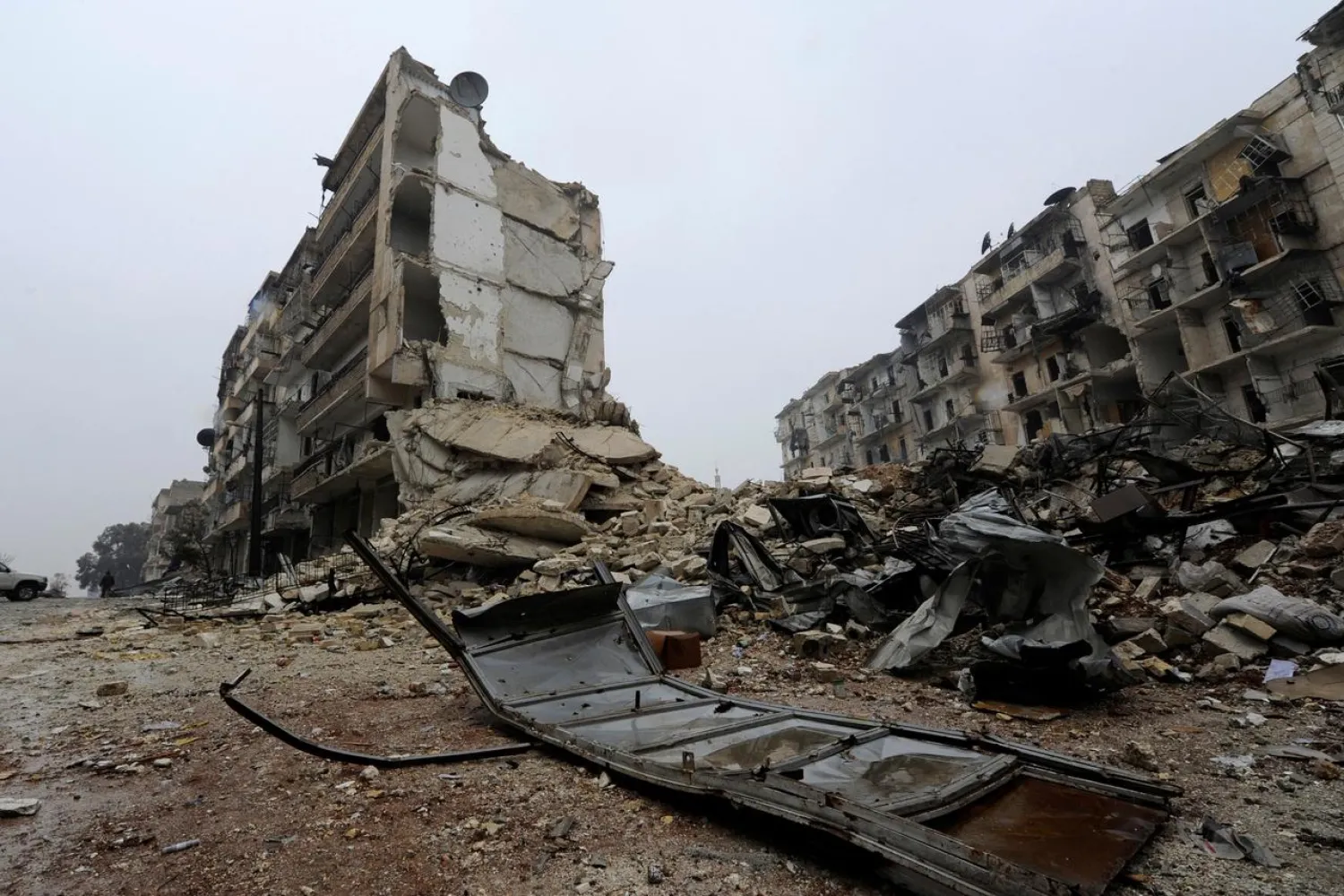
A general view shows the damage in the regime-held al-Shaar neighborhood of Aleppo, during a media tour, Syria December 13, 2016. (Reuters)
TT

Syrian FM’s China, North Korea Visits Aim to Circumvent US Sanctions

A general view shows the damage in the regime-held al-Shaar neighborhood of Aleppo, during a media tour, Syria December 13, 2016. (Reuters)

The Syrian regime is exerting efforts to bolster its ties with East Asia as the US administration continues to impose more economic sanctions on Damascus’ main supporters, Iran, Russia and North Korea.

Sources told Asharq Al-Awsat on Sunday that last week’s visit by regime Deputy Prime Minister and Foreign Minister Walid al-Moalem to both China and North Korea reveal goals “to reach a breakthrough in circumventing the sanctions through China.”

China is suspected of playing a role in securing a channel to circumvent sanctions, which has allowed North Korea to continue to send military support to the Damascus regime.

Damascus and Tehran have set their sights on the Belt and Road Initiative, dubbed by Chinese President Xi Jinping as “the Project of the Century”, through which they believe they can reap a share that can help them confront US sanctions, said the sources.

China has, however, linked this issue to finding a political solution to the Syrian crisis.

Launched in 2013, Jinping said the program would restore the ancient Silk Road trading route that connected Asia and Europe.

Media leaks from Moalem’s visit to China revealed that Beijing expressed its readiness to take part in the reconstruction of Syria.

In the past two years, China has sent economic delegations to Syria to study opportunities for investment in the country, however, it never took tangible steps on the ground.

Chinese businessmen are also cautious about working in Syria after US sanctions targeted the Huawei Company and the Chinese telecom firm ZTE.

Moreover, Chinese companies withdrew their investment in the Marota City project in the Mazzeh district of Damascus after Washington imposed sanctions on shareholders, mainly Iranian and local companies.

The sources explained that the Chinese initiative overlaps with the Iranian project to construct railroads linking Tehran, Baghdad, Damascus and the port of Latakia on the Mediterranean Sea, where Beijing also hopes to reach Syrian ports, which should provide it with a portal to Europe and North Africa.

However, the sources said that China is not eager for new problems with Washington, which is why it is “trying to stand at an equal distance from all parties, to reach a political solution in the Middle East.”

As for North Korea, an agreement was signed between North Korean Minister of Foreign Affairs Ri Yong-ho and his Syrian counterpart to boost economic cooperation to counter the effects of international sanctions on both of their countries.

A memorandum of understanding (MoU) was also signed on establishing a committee for political consultation to bolster communication and coordination on all issues of mutual interest.

Over the past eight years, Western media reports have accused Pyongyang of providing Bashar Assad with arms and military equipment despite several sanctions imposed on his regime.



Palestinians Say Israeli Forces Kill Man in Jenin Refugee Camp

 Israeli soldiers keep watch during a weekly settlers' tour in Hebron, in the Israeli-occupied West Bank, May 23, 2026. (Reuters)
Israeli soldiers keep watch during a weekly settlers' tour in Hebron, in the Israeli-occupied West Bank, May 23, 2026. (Reuters)
TT

Palestinians Say Israeli Forces Kill Man in Jenin Refugee Camp

 Israeli soldiers keep watch during a weekly settlers' tour in Hebron, in the Israeli-occupied West Bank, May 23, 2026. (Reuters)
Israeli soldiers keep watch during a weekly settlers' tour in Hebron, in the Israeli-occupied West Bank, May 23, 2026. (Reuters)

Israeli forces killed a Palestinian man inside the Jenin refugee camp in the northern West Bank, the Palestinian health ministry said on Tuesday.

"A citizen... was killed by Israeli fire in the Jenin camp, and ambulance crews transported his body to Jenin Government Hospital," the Ramallah-based ministry said in a statement, without specifying when he was killed.

Contacted by AFP, Israel's military said it was "checking" reports of the man's killing.

The director of Jenin's Government Hospital, Wissam Baker, identified the victim as Nasser al-Saadi, noting that "he arrived dead at the hospital after being shot in the thigh".

"It appears he bled heavily after being injured before an ambulance was called to transport him to the hospital," Baker told AFP.

The Palestinian Red Crescent had earlier announced that Israeli forces handed over the body of a 30-year-old from inside the Jenin refugee camp, which is adjacent to the city of Jenin.

Israeli forces have occupied and barred access to the Jenin refugee camp since January 2025, when they launched a wide-ranging operation aimed at uprooting Palestinian armed groups from the West Bank's densely populated refugee camps.

The operation has caused the displacement of nearly 40,000 people from the camps, according to the UN agency for Palestinian refugees, UNRWA.

At least 1,073 Palestinians, including several armed fighters, have been killed by Israeli soldiers or settlers since the outbreak of the Gaza war following Hamas's attack on 7 October 2023, according to an AFP tally based on Palestinian Authority data.

On the other hand, official Israeli data shows at least 46 Israelis -- civilians and soldiers -- have been killed in Palestinian attacks or during Israeli military operations in the same period.


Israel Issues Expropriation Order for West Bank Religious Site

 Israeli soldiers keep watch during a weekly settlers' tour in Hebron, in the Israeli-occupied West Bank, May 23, 2026. (Reuters)
Israeli soldiers keep watch during a weekly settlers' tour in Hebron, in the Israeli-occupied West Bank, May 23, 2026. (Reuters)
TT

Israel Issues Expropriation Order for West Bank Religious Site

 Israeli soldiers keep watch during a weekly settlers' tour in Hebron, in the Israeli-occupied West Bank, May 23, 2026. (Reuters)
Israeli soldiers keep watch during a weekly settlers' tour in Hebron, in the Israeli-occupied West Bank, May 23, 2026. (Reuters)

Israel has issued an expropriation order for land in the occupied West Bank near the site of a Biblical prophet's grave north of Jerusalem, an Israeli NGO reported Tuesday.

The site, known as Nabi Samuel, is believed in Christian, Jewish, and Muslim tradition to include the grave of the Biblical figure of prophet Samuel, and includes a mosque owned by Palestinian religious authorities, the Waqf.

"This marks the first time that the (Israeli) Civil Administration has expropriated a holy site owned by the Muslim Waqf in the occupied West Bank," Israeli settlement watchdog Peace Now said in a statement.

According to the Israeli order, dated May 9 but published this week, the area for expropriation will include 109.79 dunams (roughly 11 hectares), including access roads, agricultural land, and a mosque.

The order says the decision was made "for the development and preservation of the archaeological site of the Tomb of the Prophet Samuel".

A source in COGAT, the Israel defense ministry body in charge of civilian matters in the Palestinian territories, said the decision was made "following the refusal of Waqf officials to cooperate with the procedures required for the renovation of the tomb compound".

The Palestinian Authority's Ministry of Waqf and Religious Affairs issued a "strong condemnation" of the expropriation order for Nabi Samuel.

"This confiscation is part of a policy aimed at suffocating the mosque and completely isolating it from its Palestinian surroundings, turning it into a Jewish archaeological site by force of arms," the ministry said in a statement.

Peace Now's Yonatan Mizrahi pointed out that Israeli authorities had already taken over administration of much of the land by converting it into an Israeli national park in the 1990s, decades after demolishing a Palestinian village on the site.

"There was no need to decide about the expropriation of the land," Mizrahi told AFP, while Peace Now denounced "the messianic agenda of the Israeli government".

Israel has occupied the West Bank since 1967.

In 2025, Israel expropriated an area in the center of the Tomb of the Patriarchs in the southern West Bank city of Hebron, arguing the order concerned an open area intended for roofing works and not a religious structure.


Remnants of Assad's Chemical Weapons Program Recovered, Syrian Official Says

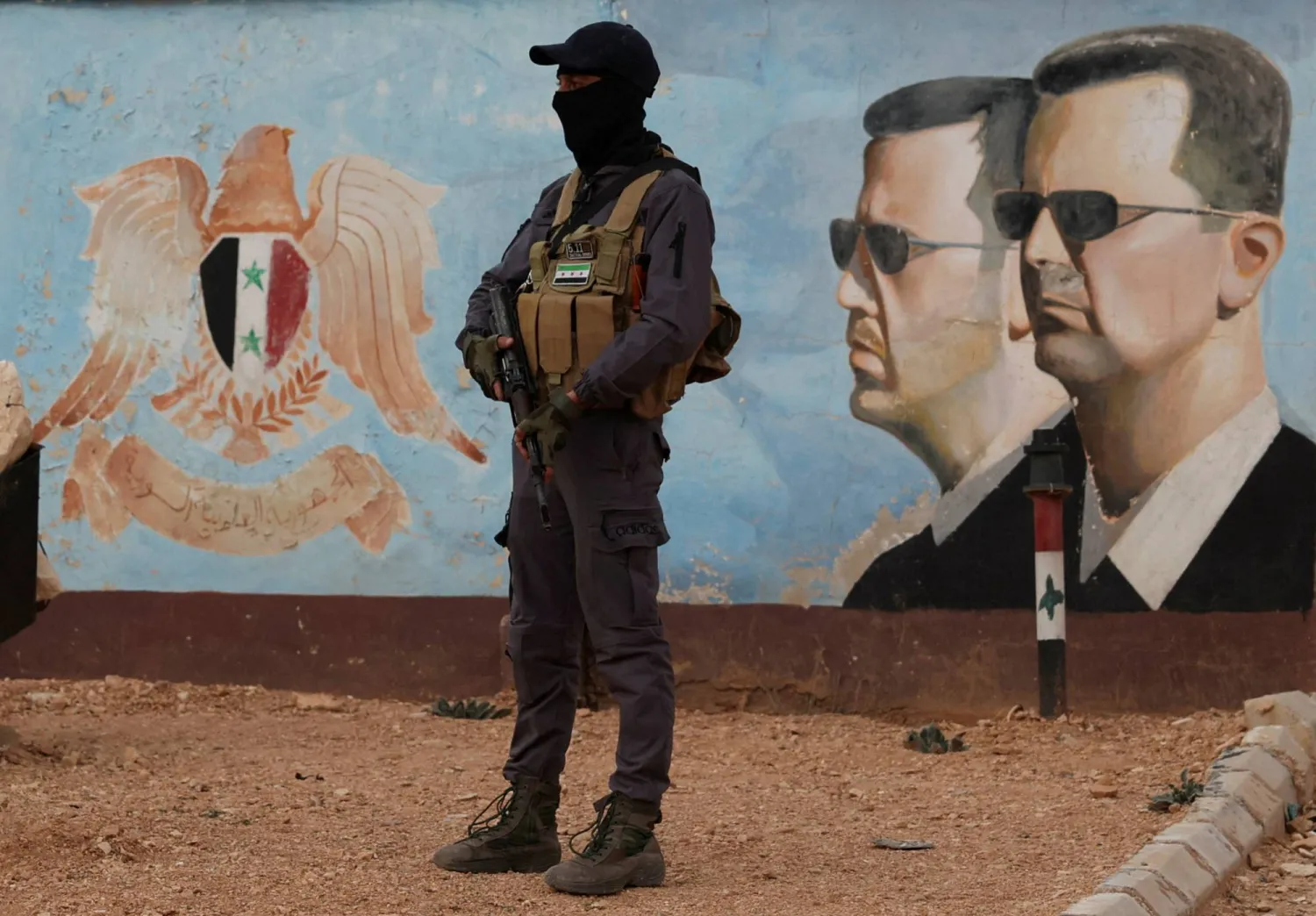
FILE PHOTO: A member of the former rebel group Hayat Tahrir al-Sham stands guard near an image of Syria's Bashar al-Assad at the fourth division headquarters in Damascus, Syria, January 23, 2025 REUTERS/Yamam Al Shaar/File Photo
TT

Remnants of Assad's Chemical Weapons Program Recovered, Syrian Official Says

FILE PHOTO: A member of the former rebel group Hayat Tahrir al-Sham stands guard near an image of Syria's Bashar al-Assad at the fourth division headquarters in Damascus, Syria, January 23, 2025 REUTERS/Yamam Al Shaar/File Photo

Syria's transitional leadership has located remnants of former Syrian president Bashar al-Assad's clandestine chemical weapons program, including raw materials and munitions similar to those used to carry out deadly gas attacks during the country's long-running civil war, a Syrian official told Reuters on Tuesday.

Syrian authorities have also taken into custody 18 suspects for alleged involvement in Assad's chemical weapons program, including high-level military, political and technical officials, said Mohamad Katoub, Syria's permanent representative to the Organization for the Prohibition of Chemical Weapons (OPCW) in The Hague, in an interview.