


Erdogan Claims Lira Plunge a ‘Foreign Plot’ Against Turkey

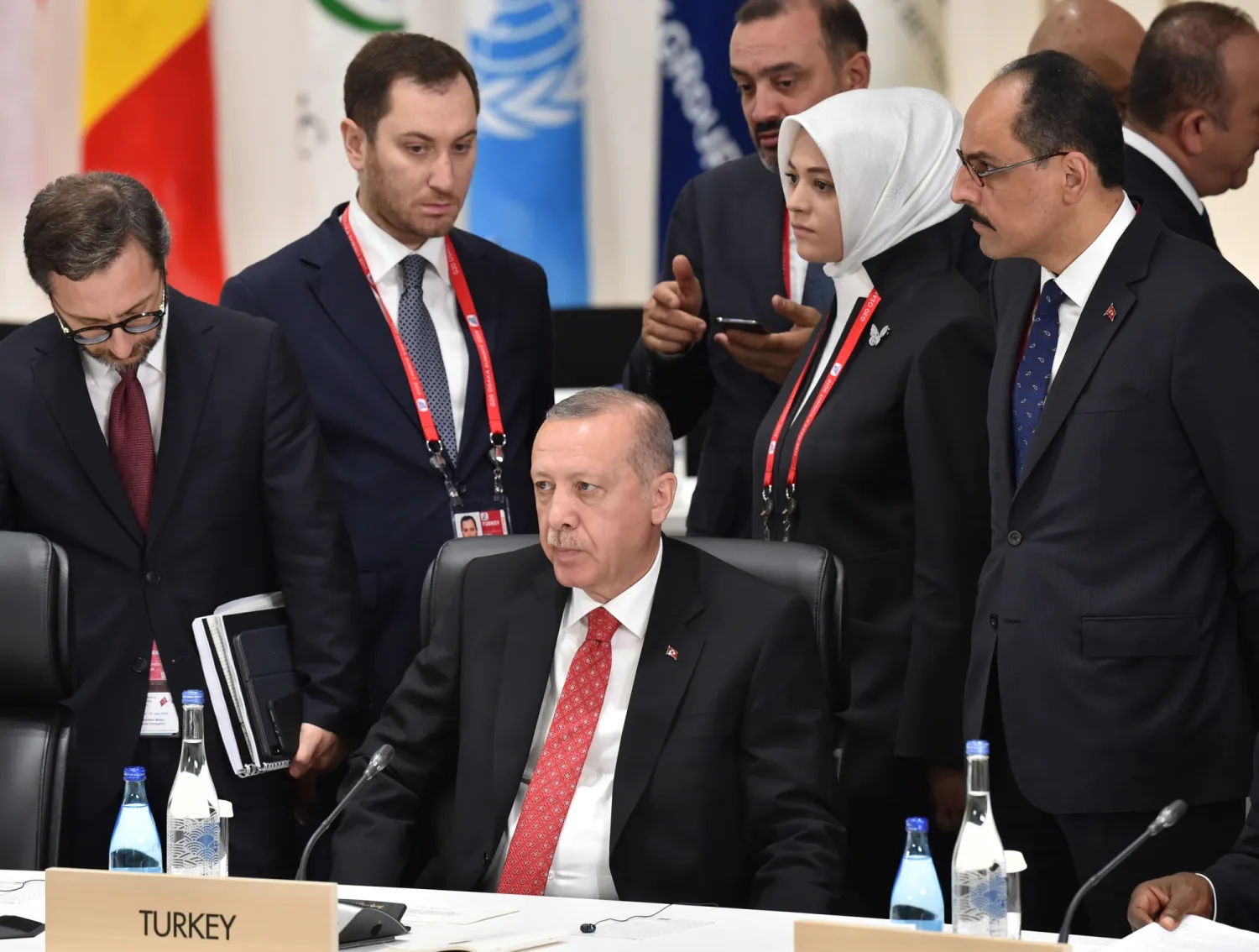
Turkish President Recep Tayyip Erdogan, center, attends a session at the G-20 summit in Osaka. Kazuhiro Nogi/AFP
TT

Erdogan Claims Lira Plunge a ‘Foreign Plot’ Against Turkey

Turkish President Recep Tayyip Erdogan, center, attends a session at the G-20 summit in Osaka. Kazuhiro Nogi/AFP

President Recep Tayyip Erdogan has claimed that the plunging value of the lira amounted to a "foreign plot" against Turkey.

He told a gathering of his Justice and Development Party (AKP) in Ankara on Friday that the alleged plot’s aim is to raise interest rates and paralyze the Turkish economy’s growth.

Turkey's central bank surprised markets on Thursday by cutting its main interest rate by 4.25 percentage points, less than a month after its governor was sacked.

The bank said the one-week repo rate was lowered to 19.75 percent from 24 percent, a bigger cut than the two or three percentage points the markets had been expecting. 

Governor Murat Cetinkaya was fired on July 6, having reportedly clashed with Erdogan who opposes high interest rates, and replaced with his deputy, Murat Uysal.

In his statement to members of his ruling party, Erdogan hailed the central bank’s decision, calling for lowering interests to acceptable rates.

On Thursday, Turkey’s new central banker delivered the biggest interest-rate cut in at least 17 years, putting Erdogan’s unconventional policy goals into practice less than three weeks after getting the job.

It was the first cut since 2016 and the biggest since a shift to inflation targeting in 2002, Bloomberg reported.

“They’re rolling the dice,” said Paul McNamara, a London-based money manager at GAM UK, who helps oversee $9.4 billion in assets. “A very, very risky strategy. The worst-case scenario.”

The lira plunged just over 1 percent against the dollar after the decision before erasing losses. It traded 0.7 percent stronger.

The sharp pivot toward monetary easing runs the risk of spooking inflation-wary investors in pursuit of Erdogan’s unorthodox theory that high interest rates cause rather than curb price growth, Bloomberg said.

“The much bigger than anticipated cut marks the new era for a central bank whose independence has been severely undermined,” said Piotr Matys, a London-based strategist at Rabobank.

“While the lira has quickly recovered from the initial knee-jerk reaction,” the central bank’s decision “is a very clear signal that the interest-rate differentials will narrow markedly in the coming months, leaving the currency far more exposed when the external backdrop deteriorates,” Matys said.

“The central bank is walking a tightrope between an interventionist president who wants lower rates and financial markets likely to penalize excessive easing. Easier global monetary policy will encourage the bank to continue cutting until markets turn against the currency,” Ziad Daoud, a Mideast economist, said.

Uysal had plenty of reasons to start an easing cycle this month. The economy continues a slow slog after recession and lending is on the decline again. A dovish turn in monetary policy globally and a downswing in price growth have left Turkey with the world’s highest real rate before the decision.

According to Bloomberg, powerful base effects will likely continue to choke off inflation, which is already down almost 5 percentage points so far this year. The central bank on Thursday said recent forecast revisions indicate that inflation will probably end the year below the 14.6 percent projected in its April report.

In an interview last week, Uysal saw “room for maneuver in monetary policy” but vowed to preserve “a reasonable rate of real return” for investors.

If inflation falls to about 10 percent by September or October, “cuts will likely continue unless there is a negative development in the global outlook,” said Erkin Isik, senior economist at QNB Finansbank. Price growth cooled more than forecast in June to the slowest in a year, reaching an annual 15.7 percent.

“It seems like the central bank decided to deliver a front-loaded rate cut,” Isik said.


Saudi Arabia, Kazakhstan Agree to Establish Coordination Council

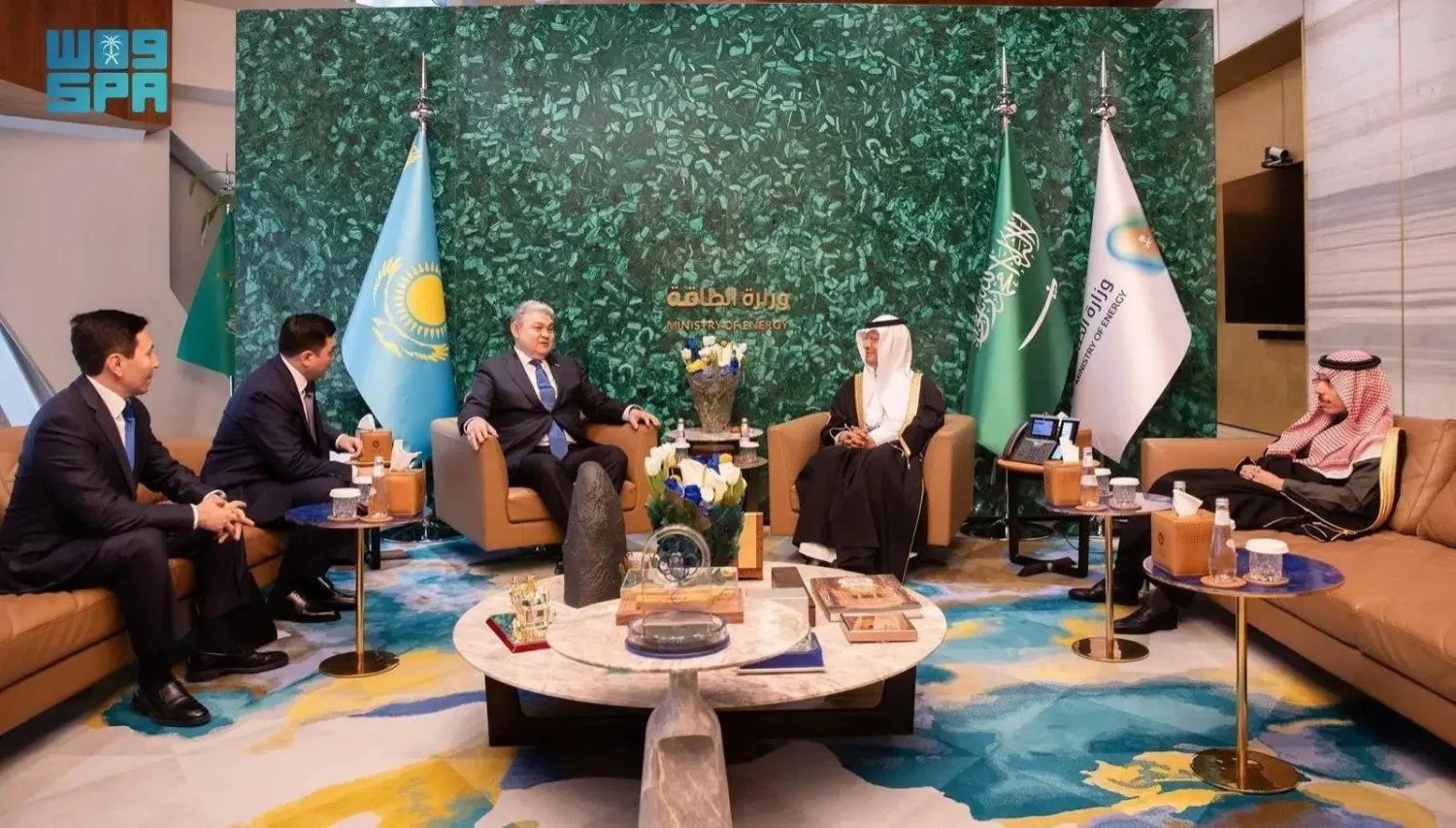
Saudi Minister of Energy Prince Abdulaziz bin Salman bin Abdulaziz receives Kazakhstan’s Foreign Minister Yermek Kosherbayev in Riyadh. (SPA)
TT

Saudi Arabia, Kazakhstan Agree to Establish Coordination Council

Saudi Minister of Energy Prince Abdulaziz bin Salman bin Abdulaziz receives Kazakhstan’s Foreign Minister Yermek Kosherbayev in Riyadh. (SPA)

Saudi Arabia and Kazakhstan agreed to establish a Saudi-Kazakh Coordination Council, reported the Saudi Press Agency on Tuesday.

Saudi Minister of Energy Prince Abdulaziz bin Salman bin Abdulaziz received in Riyadh Kazakhstan’s Foreign Minister Yermek Kosherbayev. Saudi FM Prince Faisal bin Farhan bin Abdullah and Minister of Energy of Kazakhstan Yerlan Akkenzhenov also attended the meeting.

The talks tackled the establishment of the coordination council, which will be chaired by the Saudi minister of energy and Kazakhstan’s foreign minister. The council reflects the two countries’ commitment to strengthening cooperation and expanding their bilateral partnership.

Prince Abdulaziz and Kosherbayev signed an agreement on the establishment of the council, which aims to boost coordination and consultation between the two countries and develop frameworks for cooperation across various sectors of mutual interest, elevating bilateral relations to broader levels.

Prince Abdulaziz and Kosherbayev discussed relations between their countries and ways to develop them further, especially in the energy field. They tackled opportunities for cooperation and investment in renewable energy and energy storage systems and discussed oil market developments.


Saudi-Qatari Partnership Paves Way for Logistics Corridors to Boost Regional Trade Efficiency 

The MoU was signed by Mawani President Eng. Suliman Almazroua and CEO of Qatar Ports Management Company Captain Abdullah Mohammed Al-Khanji. (QNA)
TT

Saudi-Qatari Partnership Paves Way for Logistics Corridors to Boost Regional Trade Efficiency 

The MoU was signed by Mawani President Eng. Suliman Almazroua and CEO of Qatar Ports Management Company Captain Abdullah Mohammed Al-Khanji. (QNA)

The Saudi Ports Authority (Mawani) and Qatar Ports Management Company signed on Tuesday a memorandum of understanding (MoU) aimed at boosting maritime and logistics cooperation between the two sides.

The agreement will contribute to the development of the ports sector, raising operational efficiency, and supporting regional and international trade flows.

The MoU was signed by Mawani President Eng. Suliman Almazroua and CEO of Qatar Ports Management Company Captain Abdullah Mohammed Al-Khanji. Qatari Ambassador to Saudi Arabia Bandar bin Mohammed Al Attiyah attended the signing ceremony.

The agreement reflects Saudi Arabia and Qatar’s commitment to building effective partnerships, exchanging expertise, establishing an organized framework for cooperation management, and developing joint investment opportunities in line with Saudi Vision 2030 and Qatar National Vision 2030.

The MoU outlines eight key areas of cooperation, including the exchange of best practices in port management and operations, and the study of opportunities for direct maritime and land connectivity between the ports of both countries to enhance trade flow efficiency.

It includes collaboration in logistics services, exploring the establishment of joint maritime corridors serving bilateral and regional trade, and assessing the feasibility of creating shared regional distribution centers.

In the fields of digital transformation and artificial intelligence, the two sides agreed to deepen cooperation on developing smart systems, data governance, and the unified maritime window, thereby boosting operational efficiency and keeping pace with technological advancements in the maritime sector.

The MoU places strong emphasis on maritime safety and environmental protection, including exchanging expertise in combating marine pollution and emergency response; developing joint maritime emergency plans; establishing an emergency communication line between the two countries; and cooperating to ensure compliance with international conventions, conduct joint exercises, and develop risk monitoring systems.

The cooperation also covers human capital development through joint training programs and field-exchange of expertise, as well as academic and research collaboration in maritime transport and logistics.

In terms of joint investment, both sides will study local and global investment opportunities in ports and related services and coordinate with the private sector to support these initiatives.

The MoU further includes cooperation in cruise tourism through enhanced maritime connectivity and joint promotion of Gulf cruise routes, as well as international and regional representation by coordinating positions in international maritime organizations and supporting joint initiatives, notably “Green Ports” and “Safe Sea Corridors.”

The agreement reflects the commitment of Mawani and Qatar Ports Management Company to advancing the ports sector and boosting its role as a key driver of trade and economic growth, contributing to Gulf integration and enhancing regional competitiveness in maritime and marine services.


Golden Halal Logo Launched at Makkah Halal Forum  

The Makkah Halal Forum 2026 was held from February 14 to 16. (SPA)
TT

Golden Halal Logo Launched at Makkah Halal Forum  

The Makkah Halal Forum 2026 was held from February 14 to 16. (SPA)

The Makkah Halal Forum 2026, which concluded on Monday, marked a pivotal milestone in the development of Saudi Arabia's halal industry, ushering in a new phase of structured institutional action.

This shift moves the sector beyond theoretical discourse toward a fully integrated implementation framework. It cements the Kingdom’s global leadership in halal and boosts the credibility of Saudi products in international markets.

The forum that began on February 14 witnessed the launch of a package of strategic enablers reflecting the maturity of the Saudi experience in the sector. Chief among them was the introduction of the Halal Academy as a specialized knowledge and training arm dedicated to building professional expertise and raising standards across the entire value chain.

The event also saw the unveiling of the Golden Halal logo, a high-level accreditation mark designed to provide global markets with a unified benchmark of trust, underscoring the Kingdom’s commitment to the highest standards of quality and compliance.

These initiatives signal a strategic shift that goes beyond the traditional concept of religious oversight. Instead, they frame halal as a comprehensive industrial and economic system that integrates Sharia compliance with high quality standards, advanced governance, and digital traceability. The approach is expected to boost the competitiveness of Saudi exports and facilitate their entry into global markets.

National success stories highlight the tangible impact of this transformation. CEO and founder of Roya Factory for Food Products Rasha Al Sanea noted that Saudi accreditation has evolved into a comprehensive quality certification that provides companies with a clear competitive edge abroad.

She noted that obtaining certification involves a rigorous process, including assessments of facility safety, manufacturing quality, and compliance with global standards ahead of final audits. These measures strengthen product reliability and boost readiness for international expansion.

The presence of international delegations and trade missions in Makkah on the sidelines of the forum helped accelerate expansion opportunities and open direct export channels to several markets, she added.

Pairing the Saudi Made logo with accredited halal marks, foremost among them the Golden Halal logo, enhances global consumer confidence and gives Saudi products a strong presence across diverse cultures and markets, she stressed.
