


PwC: Middle East Family Businesses Face 4 Challenges

The logo of PricewaterhouseCoopers is seen on the local offices building of the company in Luxembourg (File Photo: Reuters)
TT

PwC: Middle East Family Businesses Face 4 Challenges

The logo of PricewaterhouseCoopers is seen on the local offices building of the company in Luxembourg (File Photo: Reuters)

Majority of family businesses in the Middle East are targeting growth over the next two years, however, they should consider a new concept amid growing challenges, according to PricewaterhouseCoopers’ (PwC) 2019 Middle East Family Business Survey.

The survey indicated that family businesses in the region have always demonstrated a successful track record of growth thanks to an entrepreneurial founding generation and a vision for the future in mind.

Though leaders of such companies are still optimistic, this year’s survey finds that growth has been more modest: 53 percent of respondents reported growth last year compared to 74 percent two years ago.

PwC Middle East Territory senior partner Hani Ashkar commented on the report saying family businesses in the Middle East have long spearheaded economic growth with significant GDP and employment contributions. However, they are now expected to operate in an environment that is changing more rapidly than ever.

“Family businesses are called to enlist their values, loyalty and their commitment to find new ways of operating in a constantly evolving environment.”

PwC noted that the economic environment is reported as the key challenge by 78 percent of the respondents.

At the same time, traditional challenges that are “pertinent to family businesses around governance, continuity planning, development of the next generation, capability building and the overall professionalization of the business have always been high on the agenda.”

When asked to determine top five challenges facing family businesses over the next two years, responders to the survey first named the economic environment, followed by the need to access the right skills with 66 percent, the need to innovate representing 63 percent, the impact of regulations of 63 percent and succession planning of 53 percent.

The PwC survey also shows that family businesses are recognizing the need for action to remain competitive and secure their legacy in a digital age.

“Forty-seven percent of Middle East family business leaders said they felt vulnerable to cyber-attack – a higher percentage than the 40% globally.”

In terms of future planning, 66 percent of respondents are taking significant steps to improve their digital capabilities and 34 percent expect to change their business model, over the next two years.

PwC Partner and Middle East Entrepreneurial and Private Business leader Adnan Zaidi noted that the publication aims to be a comprehensive analysis of all current factors impacting the growth of family businesses in the Middle East. It also wants to shed light on the areas PwC believes family business leaders need to address to ensure a sustainable future for their businesses.

Interpreting the survey’s results, Zaidi indicated that family business leaders need to address four key areas: First, they need to professionalize their business, establish better corporate governance and organize a succession plan to ensure a smooth generational transition.

Secondly, they need to examine with objectivity and efficiency the profitability of their business segments. Mastering both bottom-line profitability and top-line growth is what will distinguish the family business of the future.

The third factor is the impact of innovation and digitalization which are undeniable competitive tools – a digital mindset and embracing innovation is more important than ever for business leaders.

Finally, a collaborative mindset is essential: Embracing peer-to-peer and public-private collaboration as well as policies that support growth and ensure accountability and transparency on governance can enable sustainability for family businesses.

Zaidi concluded that we are in times of rapid transformation and family business leaders cannot afford to remain static and wait for an economic upturn. At the same time, if family businesses prepare adequately to rise to the new challenges and face the future, there are enormous opportunities.

“The time to act is now.”

PwC’s Family Business senior advisor Amin Nasser indicated that business challenges come on top of traditional family-centric challenges, so family businesses need to tackle all fronts simultaneously.

Nasser added that leaders need to also ensure the development of a strong and motivated next generation which is key to a successful transition.

“One distinguishing competitive advantage is the values of family businesses. Common ideals that cultivate a sense of duty, belonging, responsibility and a purpose can build a family business DNA that transcends time.”

The PwC survey reports that the vast majority, 88 percent, of Middle East family businesses have a clear sense of agreed values and purpose.



Oil Prices Extend Gains on Concerns of Potential US-Iran Conflict

FILE PHOTO: The Phillips 66 Lake Charles Refinery is pictured in West Lake, Louisiana, US, June 12, 2018. REUTERS/Jonathan Bachman/File Photo
TT

Oil Prices Extend Gains on Concerns of Potential US-Iran Conflict

FILE PHOTO: The Phillips 66 Lake Charles Refinery is pictured in West Lake, Louisiana, US, June 12, 2018. REUTERS/Jonathan Bachman/File Photo

Oil prices rose on Thursday as the US and Iran attempted to ease a standoff in talks over Tehran's nuclear program while both sides heightened military activity in the key oil-producing region.

Brent futures climbed 23 cents, or 0.3% to $70.58 a barrel by 0735 GMT, while US West Texas Intermediate (WTI) crude gained 25 cents, or 0.4%, to trade at $65.44 a barrel.

Both benchmarks settled more than 4% higher on Wednesday, posting their highest settlements since January 30, as traders priced in the risk of supply disruptions in the event of ‌a conflict.

"Oil prices are ‌rallying as the market becomes increasingly concerned over the potential ‌for ⁠imminent US action ⁠against Iran," said ING analysts in a Thursday note.

Iranian state media reported the country had shut down the Strait of Hormuz for a few hours on Tuesday, without making clear whether the waterway had fully reopened. About 20% ⁠of the world's oil supply passes through the waterway.

"Tensions between Washington ‌and Tehran remain high, but the prevailing view ‌is that full-scale armed conflict is unlikely, prompting a wait-and-see approach," said Hiroyuki Kikukawa, chief strategist of ‌Nissan Securities Investment, a unit of Nissan Securities.

"US President Donald Trump does not ‌want a sharp rise in crude prices, and even if military action occurs, it would likely be limited to short-term air strikes," Kikukawa added.

A degree of progress was made during Iran talks in Geneva this week but distance remained on some issues, the White House said on Wednesday, ‌adding that it expected Tehran to come back with more details in a couple of weeks.

Iran issued a notice to ⁠airmen (NOTAM) that ⁠it plans rocket launches in areas across its south on Thursday from 0330 GMT to 1330 GMT, according to the US Federal Aviation Administration website.

At the same time, the US has deployed warships near Iran, with US Vice President JD Vance saying Washington was weighing whether to continue diplomatic engagement with Tehran or pursue "another option".

Meanwhile, two days of peace talks in Geneva between Ukraine and Russia ended on Wednesday without a breakthrough, with Ukrainian President Volodymyr Zelenskiy accusing Moscow of stalling US-mediated efforts to end the four-year-old war.

US crude and gasoline and distillate inventories fell last week, market sources said, citing American Petroleum Institute figures on Wednesday, contrary to expectations in a Reuters poll that crude stocks would rise by 2.1 million barrels in the week to February 13.

Official US oil inventory reports from the Energy Information Administration are due on Thursday.


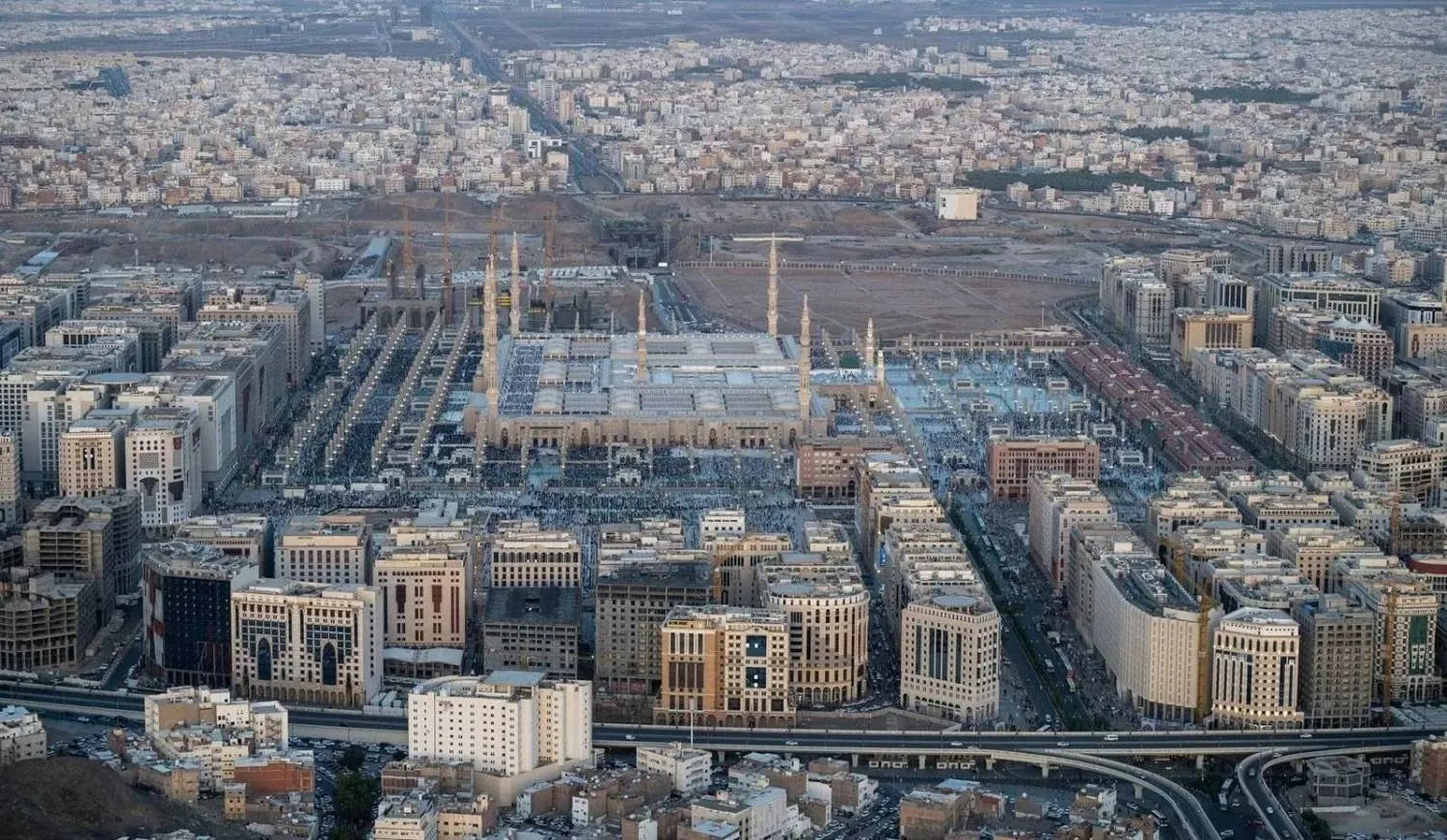
Madinah Sees Tourism Surge Ahead of Ramadan, Spending Tops $13.9 Billion

A cluster of buildings and hotels surrounding the Prophet’s Mosque (SPA). 
TT

Madinah Sees Tourism Surge Ahead of Ramadan, Spending Tops $13.9 Billion

A cluster of buildings and hotels surrounding the Prophet’s Mosque (SPA). 

Saudi Arabia’s Minister of Tourism, Ahmed Al-Khateeb, has toured hospitality facilities and visitor services in Madinah as part of the “Spirit of Ramadan” inspection tour, which also included Jeddah and Makkah.

New data show visitor numbers exceeded 21 million over the past year, a 12 percent increase from 2024, while total tourism spending reached SAR 52 billion (about $13.9 billion), up 22 percent.

The visit focused on assessing the sector’s readiness for the Ramadan season, evaluating service quality, and supporting ongoing and upcoming tourism projects.

Madinah posted strong tourism performance in 2025, driven by higher visitor inflows and expanded hospitality capacity, reinforcing its position as a leading religious destination within Saudi Arabia’s tourism landscape.

Demand growth has been matched by a sharp rise in supply. Licensed hospitality facilities increased to 610, up 35 percent, while the number of licensed rooms surpassed 76,000, a 24 percent gain, strengthening the city’s ability to accommodate during peak seasons such as Ramadan and Hajj.

Travel and tourism offices also grew to more than 240, reflecting a 29 percent expansion in supporting services.

Al-Khateeb said the entry of international hospitality brands and new projects over the past five years underscores both sectoral growth and rising investor confidence in the Kingdom’s tourism ecosystem.

“The landscape today is different. The sector is growing steadily, supported by a system that empowers investors and facilitates their journey, with a promising future ahead,” he said.

To expand hotel capacity, the minister inaugurated the Radisson Hotel Madinah, a project worth more than SAR 39 million (around $10 million) and financed by the Tourism Development Fund.

The 2025 performance signals a shift from traditional seasonal growth toward more sustainable expansion built on diversified offerings, improved service quality, and a stronger contribution to the local economy.


Airbus Planning Record Commercial Aircraft Deliveries in 2026

An Airbus A350-1000 at the Singapore Airshow on February 4. The company said Thursday it aims to deliver a record number of aircraft this year. Roslan RAHMAN / AFP/File
TT

Airbus Planning Record Commercial Aircraft Deliveries in 2026

An Airbus A350-1000 at the Singapore Airshow on February 4. The company said Thursday it aims to deliver a record number of aircraft this year. Roslan RAHMAN / AFP/File

Plane maker Airbus aims to deliver a record number of commercial aircraft this year, the company said Thursday, capitalizing on "strong demand" and a jump in profit in 2025.

"2025 was a landmark year, characterized by very strong demand for our products and services across all businesses," CEO Guillaume Faury said in a press release announcing annual results.

The European manufacturer said it received 1,000 orders for commercial planes in 2025, with net orders of 889 after taking cancellations into account, and 793 delivered.

Last year, its overall profit jumped 23 percent to 5.2 billion euros ($6.1 billion).

The company said it is targeting "around 870 commercial aircraft deliveries" this year.

"As the basis for its 2026 guidance, the Company assumes no additional disruptions to global trade or the world economy, air traffic, the supply chain, its internal operations, and its ability to deliver products and services," it said in its outlook.

Both Airbus and its rival Boeing have struggled to return to pre-pandemic production levels after their entire network of suppliers was disrupted, even as airlines are eager to modernize their fleets with more fuel-efficient aircraft and expand to meet an expected increase in passenger numbers over the coming decades.