
An Art Museum in Your Hotel Lobby

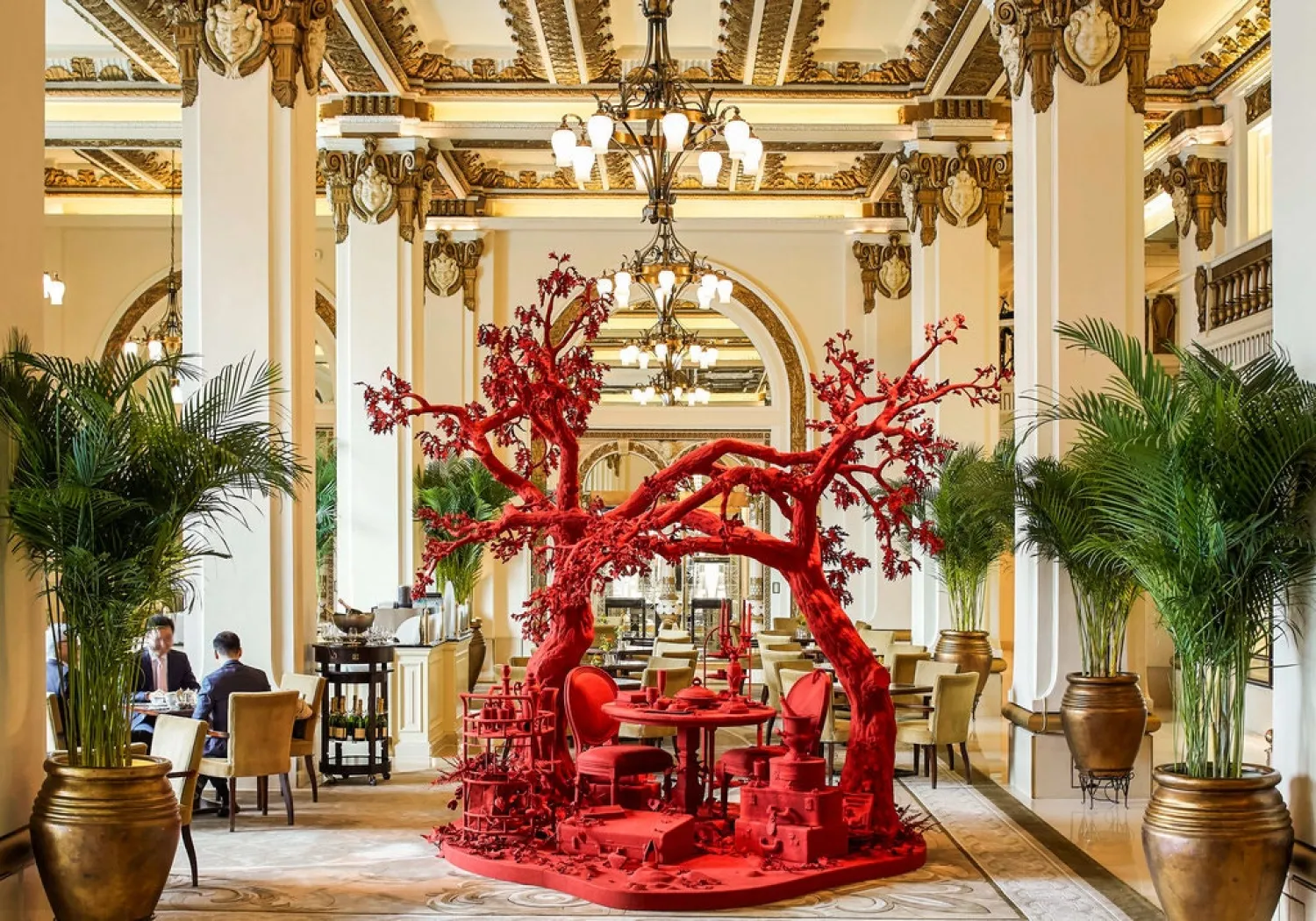
Timothy Paul Myers’s “Alizarin” was on display in the lobby of The Peninsula Hong Kong. It will be displayed at the Tokyo location next spring. | Simon J. Nicol for The Peninsula Hotels
TT

An Art Museum in Your Hotel Lobby

Timothy Paul Myers’s “Alizarin” was on display in the lobby of The Peninsula Hong Kong. It will be displayed at the Tokyo location next spring. | Simon J. Nicol for The Peninsula Hotels

Procuring and exhibiting art in all forms has been synonymous with the hotel experience for several decades now, with both luxury and midlevel brands highlighting local artwork and museum-quality pieces rather than predictable poster reprints.

Guests like it: In a 2018 survey conducted by the nonprofit organization, Americans for the Arts, 72 percent of respondents said they enjoyed the arts in “non-arts” venues including hotels.

Art-centric hotels are popping up in many cities, including the ART in Denver and the upcoming Hall Arts Hotel in Dallas, hoping to attract a new breed of clients who want to be surrounded by sculptures, video installations, paintings and mixed media.

But of late, some properties have begun to push the boundaries of what it means to be a hotel with great art.

Actively Supporting Artists
Artists once depended only on galleries to showcase their work and be “discovered,” but more hotels now actively seek and support new talent in that role.

“We didn’t want to commission art merely for the purposes of decoration,” said Carson Glover, vice president of brand marketing at The Peninsula Hotels. The company created the “Art in Resonance” program, highlighting midcareer artists whose works were unveiled at the Hong Kong property in March.

“Nurturing the artist is an aspect that is so often lost in the business,” he added.

For the first installment of “Art in Resonance,” the American sculptor Janet Echelman created a netlike sculpture whose shape constantly changes with the wind. The Australian-born artist Timothy Paul Myers hand-wrapped everyday items like cups, saucers, and chairs in red felt, creating a site-specific sculpture called “Alizarin” that stood out in the neutral tones of the lobby. And Shanghai-based MINAX architects created a modern version of the traditional Chinese teahouse using 999 pine and bamboo wooden pieces.

“For over twenty years I found myself making these large environmental installations that I can’t afford to build on my own,” says Mr. Paul Myers. His work and that of the other artists will travel to other Peninsula locations over the next few years, much like a museum exhibit.

Rotating Exhibits
Two contemporary art collectors, Laura Lee Brown and Steve Wilson, opened The 21c Museum Hotels in 2006 in Louisville, Ky., with a vision to save the downtown.

The hotel has amassed more than 3,000 works, now spread over public areas, lounges, and rooms, and exhibits are open to the public 24 hours a day, seven days a week. In this aspect, this group of museum hotels — opening its ninth location this year — operates differently than a traditional gallery, which typically has more restricted exhibit hours.

The brand also co-curates exhibitions with museums like the North Carolina Museum of Art with the mind-set that hotel art does not necessarily need to take the place of gallery art.

After the film and video artist Christina Zeidler took over the Gladstone Hotel in Toronto, Canada, the 37-room boutique hotel began holding rotating exhibits annually as well as live events. Artists also helped with the interior design of the rooms.

“Artists are given free rein to think about the design of the furniture, window coverings, wallpaper or wall treatment,” said the exhibitions director Lee Petrie, who explains that apart from the permanent room art, the hotel shies away from commissioning anything. They believe continuously changing exhibits are draws for repeat visits.

Murals
Installing murals has become an increasingly popular way for hotels to spice up room design.

In Philadelphia, the artist King Saladeen grew up as a “super inner-city, super low-income kid,” and became the first artist-in-residence at the new Fitler Club, a “work/stay/play” destination. His gym mural is hard to miss; he used house paint, acrylics and spray paint to create “a burst of energy to stay motivated,” he said.

Rates at the Fitler Club start at $450 for a King-size room; there is a monthly membership to use the club and workspaces from $225.

Philanthropic Efforts
As funding for the arts is always a struggle, some properties have taken to raising contributions in more creative ways.

Saint Kate, the Arts Hotel that opened in Milwaukee, Wis., in July, invited local artists to each design and decorate its “Canvas” rooms. Each Canvas room stay has a percentage of proceeds donated to organizations including The Milwaukee Repertory Theater, Artists Working in Education and even a local radio station.

Large-Scale Installations
Suzi Cordish, who runs more than 70 properties under the Live! Casino & Hotel brand, proudly displays her personal art collection in her hotels. Of late, she’s put her energies into more large-scale installations and supporting emerging and mid-career artists.

She commissioned the Brooklyn-based Chris Doyle to create an animated moving image called “Games of Skill and Chance” on a 9-foot-tall, 40 feet-wide screen at the Maryland Live! property.

Mr. Doyle said that rather than focusing his energies on trying to raise capital, he had peace of mind and free rein working with the hotel. In this instance “the cost of making the video wall was far more expensive than the artist fee,” he said.

The Mexican artist Bosco Sodi created a 16-foot-tall, eight-feet-wide “Blue Pangaea” painting that hangs in the library of Hotel Matilda in San Miguel del Allende.

“If the hotel is a good hotel and you (as an artist) are in a position of putting your conditions with this kind of installation, that helps because a lot of people will see the work,” Mr. Sodi said.

Room rates for Hotel Matilda from $340 per night based on double occupancy, including taxes and fees.

(The New York Times)



Skydiver Left Dangling When Parachute Snags on Stadium Video Board

In this image from video, personnel on a lift work to secure a skydiver that crashed into the Lane Stadium scoreboard before Virginia Tech’s spring NCAA college football game, Saturday, April 18, 2026, in Blacksburg, Va. (Ben Walls/WRIC8 via AP)
TT

Skydiver Left Dangling When Parachute Snags on Stadium Video Board

In this image from video, personnel on a lift work to secure a skydiver that crashed into the Lane Stadium scoreboard before Virginia Tech’s spring NCAA college football game, Saturday, April 18, 2026, in Blacksburg, Va. (Ben Walls/WRIC8 via AP)

A skydiver ‌trailing a large American flag drifted off course and became tangled in the video board at a US college football game on Saturday, leaving him suspended above the field by his parachute until he was rescued.

Viral videos from inside ‌Virginia Tech's ‌Lane Stadium, confirmed ‌by ⁠Reuters, showed two ⁠skydivers descending into the arena before the school's spring game, when one of them missed the designated landing area, hit the electronic scoreboard and ⁠became entangled.

Fans watched in ‌distress as ‌the skydiver, whose name was not ‌immediately released, was left hanging ‌for 15 to 20 minutes before emergency crews using an aerial ladder brought him to safety.

"We ‌are grateful to report that the skydiver was safely ⁠secured ⁠and is currently stable. Our primary focus remains on their well-being," Virginia Tech officials posted on X.

"We extend our sincere appreciation to the first responders, event staff, and medical personnel for their swift, coordinated and professional response."

No injuries were reported during the incident.


Chernobyl’s Radioactive Landscape Is Testament to Nature’s Resilience and Survival Spirit

Wild Przewalski horses graze in a forest inside the Chernobyl exclusion zone, Ukraine, Wednesday, April 8, 2026. (AP)
TT

Chernobyl’s Radioactive Landscape Is Testament to Nature’s Resilience and Survival Spirit

Wild Przewalski horses graze in a forest inside the Chernobyl exclusion zone, Ukraine, Wednesday, April 8, 2026. (AP)

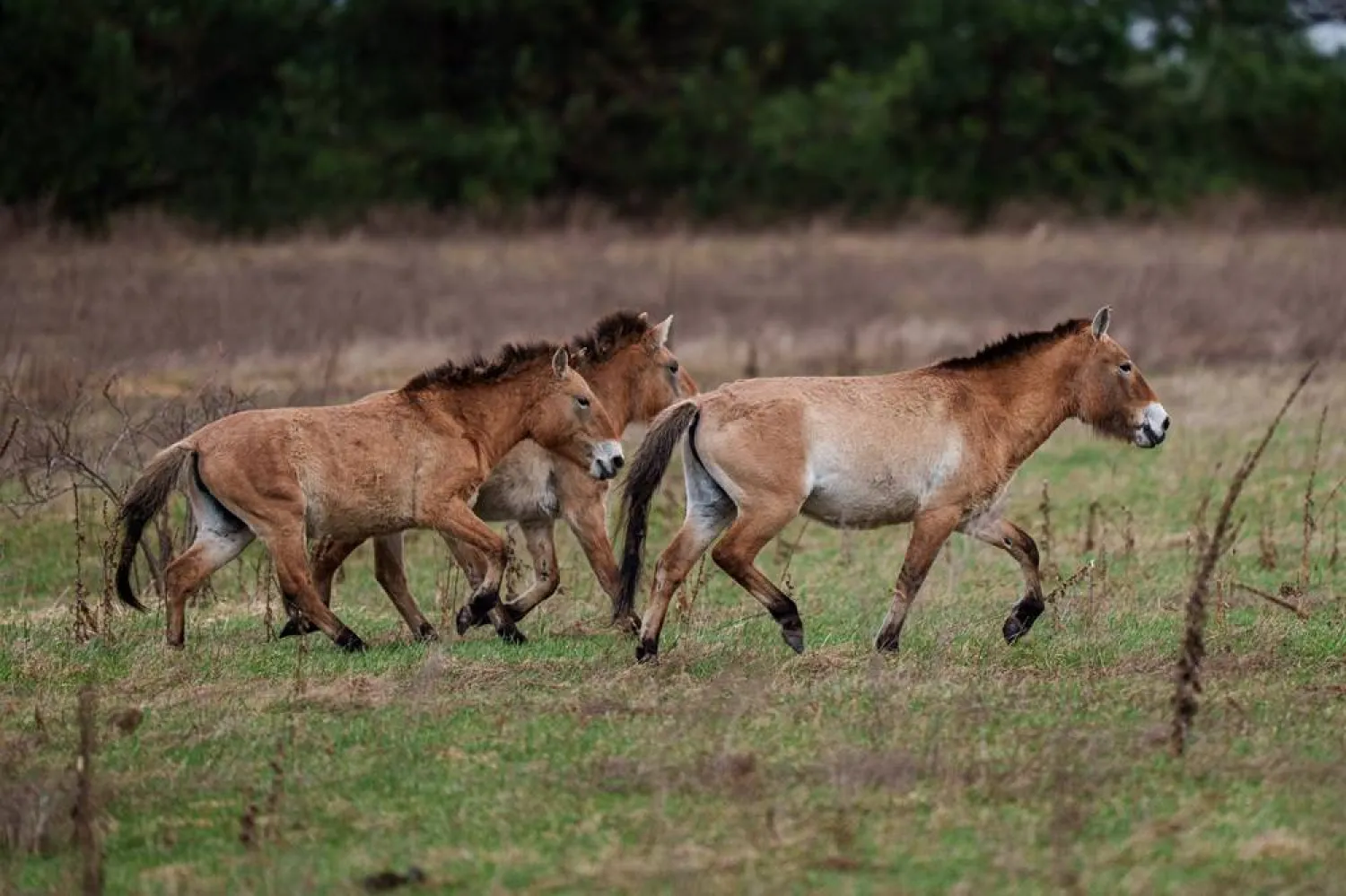
On contaminated land that is too dangerous for human life, the world’s wildest horses roam free.

Across the Chernobyl exclusion zone, Przewalski’s horses — stocky, sand-colored and almost toy-like in appearance — graze in a radioactive landscape larger than Luxembourg.

On April 26, 1986, an explosion at the nuclear power plant in Ukraine sent radiation across Europe and forced the evacuation of entire towns, displacing tens of thousands. It was the worst nuclear disaster in history.

Four decades on, Chernobyl — which is transliterated as “Chornobyl” in Ukraine — remains too dangerous for humans. But the wildlife has moved back in.

Wolves now prowl the vast no-man’s-land spanning Ukraine and Belarus, and brown bears have returned after more than a century. Populations of lynx, moose, red deer and even free-roaming packs of dogs have rebounded.

Przewalski’s horses, native to Mongolia and once on the brink of extinction, were introduced here in 1998 as an experiment.

Known as “takhi” in Mongolia (“spirit”), the horses are distinct from domestic breeds, with 33 pairs of chromosomes compared with 32 in domesticated horses. The modern name comes from the Russian explorer who first formally identified them.

“The fact that Ukraine now has a free-ranging population is something of a small miracle,” said Denys Vyshnevskyi, the zone’s lead nature scientist.

With human pressure gone, parts of the exclusion zone now resemble European landscapes from centuries past, he said, adding: “Nature recovers relatively quickly and effectively.”

The transformation is visible everywhere. Trees pierce abandoned buildings, roads dissolve into forest, and weathered Soviet-era signs stand beside leaning wooden crosses in overgrown cemeteries.

Hidden cameras show the horses adapting in unexpected ways. They seek shelter in crumbling barns and deserted homes, using them to escape harsh weather and insects — even bedding down inside.

The animals live in small social groups — typically one stallion with several mares and their young — alongside separate bands of younger males. Many died after their introduction, but others adapted.

Tracking them takes time. Vyshnevskyi often drives alone for hours, setting motion-sensitive camera traps in camouflaged casings attached to trees.

Despite persistent radiation, scientists have not recorded widespread die-offs, though subtler effects are evident. Some frogs have developed darker skin, and birds in higher-radiation areas are more likely to develop cataracts.

However, new threats have emerged.

Russia’s 2022 invasion brought fighting through the exclusion zone as troops advanced toward Kyiv, digging defenses into contaminated soil. Fires linked to military activity swept through forests.

Harsh wartime winters have also taken a toll. Damage to the power grid left surrounding managed areas without resources, and scientists report increases in fallen trees and dead animals — casualties of both extreme conditions and hastily built fortifications.

“Most forest fires are caused by downed drones,” said Oleksandr Polischuk, who leads a firefighting unit in the zone. “Sometimes we have to travel dozens of kilometers to reach them.”

Fires can send radioactive particles back into the air.

Today, the zone is no longer just an accidental refuge for wildlife. It has become a heavily monitored military corridor, marked by concrete barriers, barbed wire and minefields — a landscape of what some describe as grim beauty.

Personnel rotate in and out to limit radiation exposure. Chernobyl is likely to remain off-limits for generations — too dangerous for people, yet full of life.

“For those of us in conservation and ecology, it’s kind of a wonder,” Vyshnevskyi said. “This land was once heavily used — agriculture, cities, infrastructure. But nature has effectively performed a factory reset.”


British Royals Choose Historian to Write Queen Biography

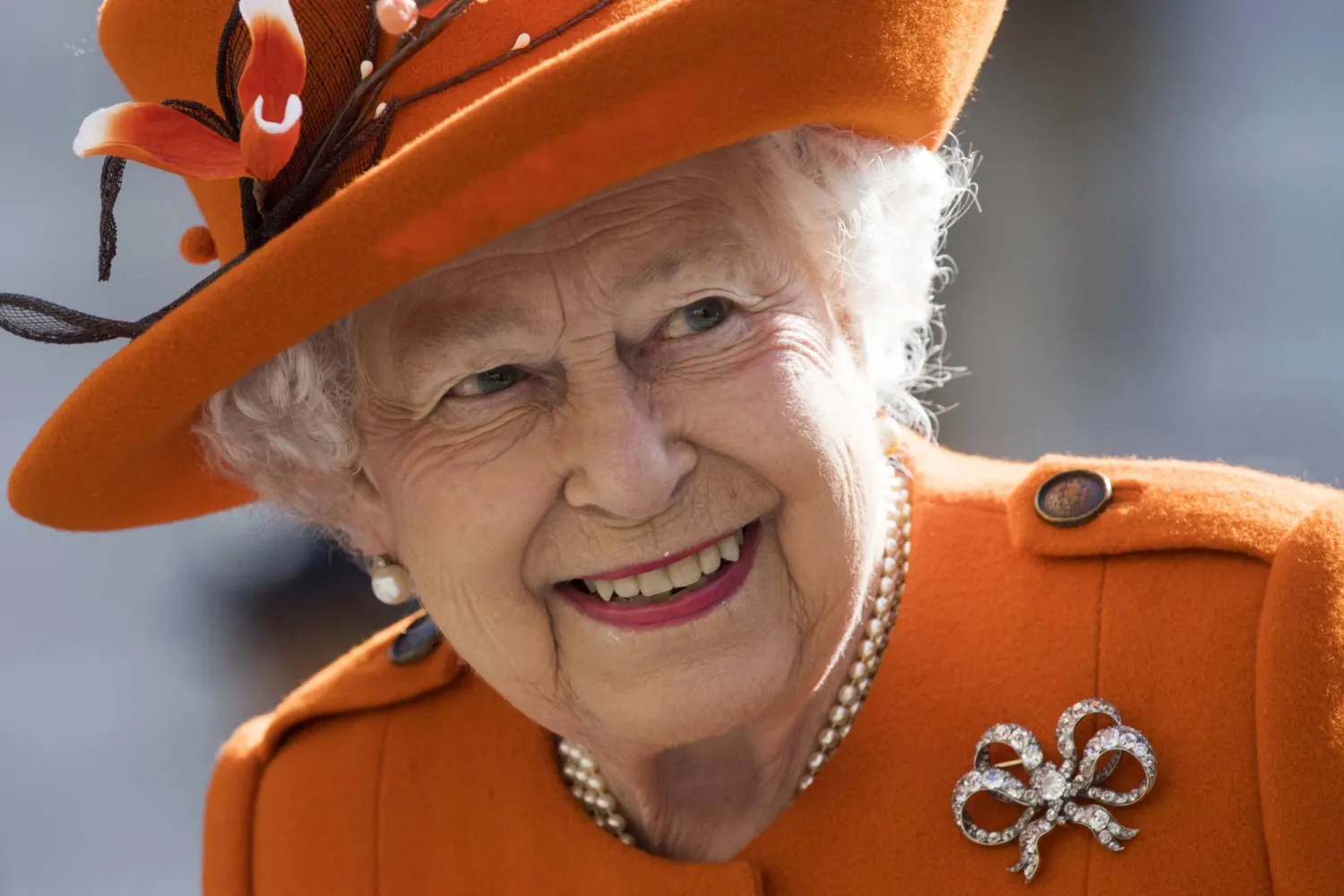
Britain's Queen Elizabeth II arrives for a visit to the Royal Academy of Arts in Central London, Britain, 20 March 2018. (EPA)
TT

British Royals Choose Historian to Write Queen Biography

Britain's Queen Elizabeth II arrives for a visit to the Royal Academy of Arts in Central London, Britain, 20 March 2018. (EPA)

Britain's royal family said Sunday that historian Anna Keay would write an official biography of queen Elizabeth II, who died in September 2022 after over 70 years on the throne.

King Charles III had wanted a woman to write the definitive account of his mother's life, according to British media.

Keay, best known for her work chronicling Britain's Republican period between 1649 and 1660, said receiving the job was a "profound honor".

She will have access to Elizabeth's personal and official papers held in the Royal Archives, Buckingham Palace said in a statement.

She will also be able to talk to members of the royal family and the queen's friends and household staff, the palace added.

Keay described Elizabeth as "an extraordinary woman, whose life spanned a century of great change".

"I am deeply grateful to His Majesty The King for entrusting me with this responsibility and for granting me access to her papers, and will do all I can to do justice to her life and work," she said.

Official royal biographies can sometimes reveal unexpected details about the subject's life.

William Shawcross's official biography of Elizabeth's mother, the wife of George VI, revealed how she suffered from bowel cancer in her 60s but was successfully treated.