


Alhurra TV Angers Iraqi Parliament, Sunni and Shiite Endowments

Alhurra TV Angers Iraqi Parliament, Sunni and Shiite Endowments
TT

Alhurra TV Angers Iraqi Parliament, Sunni and Shiite Endowments

Alhurra TV Angers Iraqi Parliament, Sunni and Shiite Endowments

A television program, broadcast on Saturday by US-based Alhurra Iraq, sparked outrage in Iraq over its allegations about corruption at the Shiite and Sunni endowment institutions in the country. The program also raised questions about the huge funds managed by figures and institutions at shrines in Karbala.

Some figures said the campaign against Alhurra is part of the escalating conflict between Washington and Baghdad, explaining that some allies of Iran have exploited the dispute to stir incitement against the United States.

The US Embassy in Iraq distanced itself from the program in an attempt to contain the expected anger against it and the television’s office in Baghdad.

In a statement, the embassy affirmed that the US State Department and US embassies around the world have no supervising authority over the content of programs at Alhurra. It added that the channel tackles major issues in the region and US policies transparently and with impartiality out of keenness to present all points of views.

The Iraqi government has the right to respond and hold the channel accountable for any report that contains inaccurate information or that contradicts US policies, added the statement.

The parliamentary communication and media committee decried on Sunday the Alhurra report, which it said “targeted the religious institutions in Iraq in order to defame them.” It voiced its rejection of these “fabricated” claims, saying it will take the channel to court.

MP Wajih Abbas demanded that the committee shut down the channel for its “flagrant assault” against religious endowments. He noted that Alhurra does not act independently, but is officially funded by the State Department and therefore, follows its policies.

Press sources in the channel informed Asharq Al-Awsat that they are facing unprecedented pressure and are beginning to panic from the amount of incitement caused by some parties, even though the report was prepared in the Washington office.

Editor in chief of Al Alam Al Jadeed website Mounthadar Nasser told Asharq Al-Awsat that the report “contains many facts, but this does not deny that they were pointed at a certain direction and were selectively chosen. This harms the professionalism of the report and yet, does not justify the reaction by some politicians, deputies and bloggers, who all share the same affiliations.”



Libya’s Ramadan Celebrations Tempered by Economic Woes

A family walks on their way to shop for Ramadan decorations ahead of the holy month of Ramadan in Benghazi, Libya, February 16, 2026. (Reuters)
TT

Libya’s Ramadan Celebrations Tempered by Economic Woes

A family walks on their way to shop for Ramadan decorations ahead of the holy month of Ramadan in Benghazi, Libya, February 16, 2026. (Reuters)

Libyans have been enjoying Ramadan with feasts and fireworks -- but soaring prices, a devalued currency and political divisions have left many with little to celebrate.

Fifteen years on from the fall of longtime leader Moammar al-Gaddafi, the country remains split between east and west, while shortages of goods, including fuel, disrupt daily life, despite Libya sitting atop vast oil and gas reserves.

During the holy month of Ramadan, shoppers stock up on treats, as families gather for lavish meals before and after the daytime fast that stretches from sunrise to sunset.

But this year supermarkets have been rationing their goods, while many petrol stations are short of gas. In the capital Tripoli, most ATMs were out of cash this week.

Firas Zreeg, 37, told AFP while weaving through a crowded supermarket that the economy was deteriorating, blaming currency speculators for the fall in the dinar, "which has negative repercussions on our daily lives".

The price of cooking oil has doubled in recent weeks, while meat and poultry prices rose by half.

Refills of gas cylinders, officially priced at 1.5 dinars ($0.24) but often unavailable through state-run distributors, now sell for 75 dinars ($11.85) on the black market and at times more.

- 'Burden on citizens' -

Libya has struggled to recover from the chaos that erupted following the 2011 uprising that toppled Gaddafi.

It remains divided between the Government of National Unity (GNU) based in Tripoli and an eastern administration backed by Libyan National Army (LNA) commander Khalifa Haftar.

The country has largely been stable in recent years although there have been bouts of deadly violence, including the killing of Gaddafi's son and heir apparent Seif al-Islam this month.

With security holding, many Libyans are more focused on their livelihoods.

Last month, the central bank in the western territory devalued the dinar -- the second time in less than a year -- by nearly 15 percent, "aimed at preserving financial and monetary stability and ensuring the sustainability of public resources".

In an address this week, GNU leader Abdulhamid Dbeibah acknowledged that the devaluation had once again "put the burden on citizens".

Hanna Tetteh, head of the United Nations Support Mission in Libya, warned on Wednesday that "poverty and pressure on society [are] increasing".

"The situation, in addition to the fragile security landscape, should be a matter for concern as such conditions can lead to unexpected political and security challenges," she told the UN Security Council.

Libya's other economic problems included the absence of a unified national budget, in light of its political divide, as well as uncoordinated public spending due to parallel state institutions, Tetteh said.

Revenues from the oil industry were also declining, she added, while the central bank has said public spending is growing at an unsustainable pace.

On Tuesday, Libya marked 15 years since the start of the uprising, with fireworks lighting up the sky in Tripoli, but for many Libyans life remains a struggle.

"Minor improvements in security were made over the past three years," Zreeg told AFP, but Libyans are still faced with huge economic challenges.


Libya PM Undergoes 'Successful' Treatment at Heart Hospital

Head of Libya's Government of National Unity (GNU) Abdulhamid Dbeibah. (GNU)
TT

Libya PM Undergoes 'Successful' Treatment at Heart Hospital

Head of Libya's Government of National Unity (GNU) Abdulhamid Dbeibah. (GNU)

Libya's Prime Minister Abdulhamid Dbeibah has undergone "successful" treatment at a heart hospital, his office said Saturday, but his specific ailment was not disclosed.

"I assure you that I am fine, by God's grace," said a statement posted on social media overnight.

The treatment was carried out at a facility in the northwestern Libyan city of Misrata on an undisclosed date, said AFP.

Dbeibah said he later travelled abroad for "additional medical checkups for reassurance", though this was not the primary reason for his trip.

Italian media outlets previously reported he had been admitted to a leading cardiac facility in Milan on Thursday for a general check-up.

"The matter is simply that I underwent some additional medical checkups for reassurance while I was abroad due to a prior external commitment," he said.

"The results confirmed the success of the treatment I received in Libya, praise be to God."

The prime minister leads a UN-recognized government based in Tripoli that controls western Libya, while the country's east is run by another administration backed by military strongman Khalifa Haftar.

Libya has remained divided since chaos erupted following the 2011 Arab Spring uprising that toppled longtime leader Muammar Gaddafi.


Eight Hezbollah Members Killed in Israel’s Friday Strikes on Lebanon

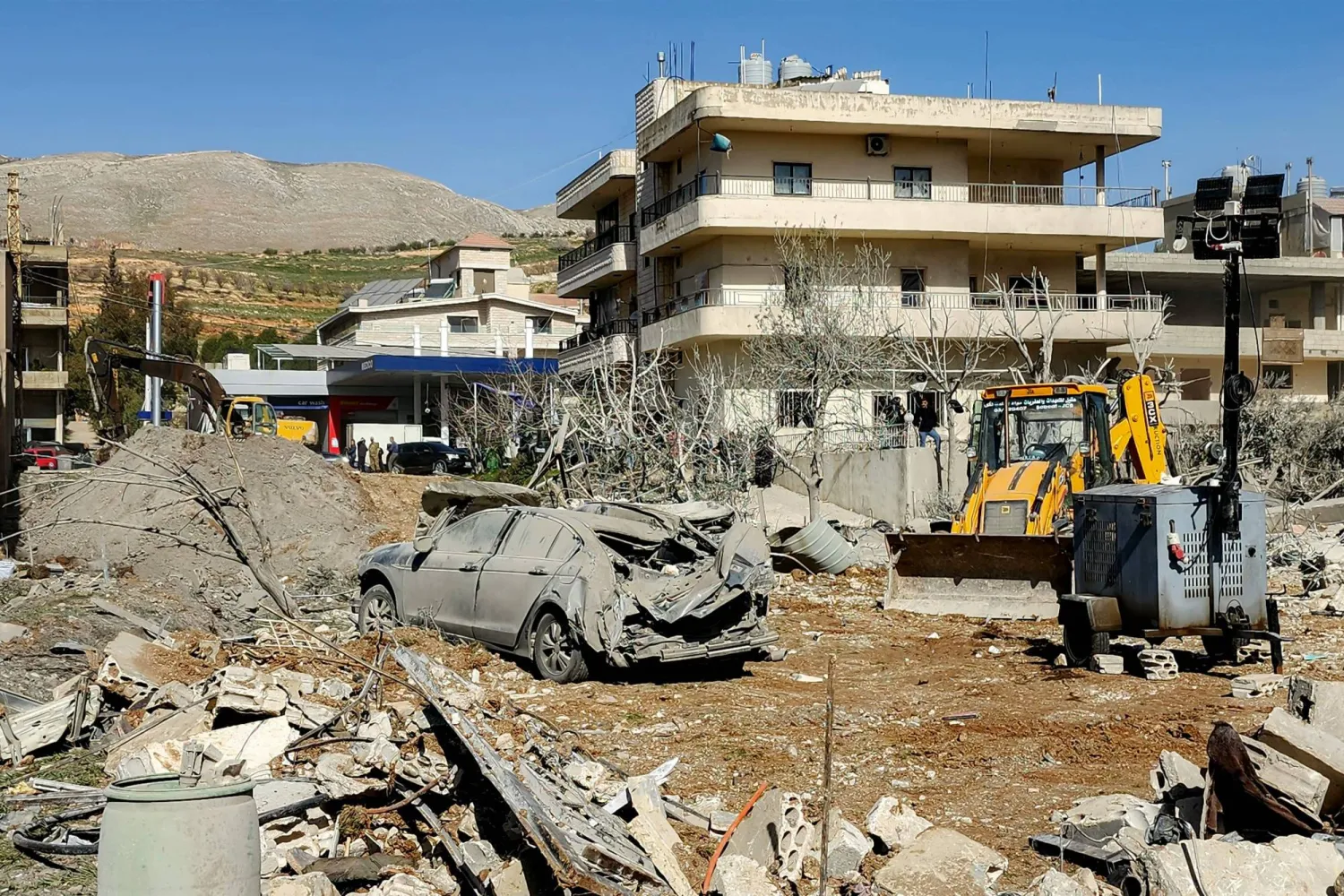
A bulldozer clears debris near heavily-damaged buildings in the village of Bednayel in Lebanon's eastern Bekaa Valley region on February 21, 2026, following Israeli strikes. (AFP)
TT

Eight Hezbollah Members Killed in Israel’s Friday Strikes on Lebanon

A bulldozer clears debris near heavily-damaged buildings in the village of Bednayel in Lebanon's eastern Bekaa Valley region on February 21, 2026, following Israeli strikes. (AFP)

Attacks carried out by Israel on Friday in eastern Lebanon killed eight members of Hezbollah, an official from the group told AFP on Saturday.

Lebanon's health ministry said Friday that a total of 10 people were killed in strikes that hit the eastern Bekaa region.

The Israeli military said it targeted "several terrorists of Hezbollah's missile array in three different command centers in the Baalbek area".

Lebanon's president on Saturday condemned the attacks, the latest despite a ceasefire with Hezbollah.

In a statement, Joseph Aoun called the attacks "a blatant act of aggression aimed at thwarting diplomatic efforts" by the United States and other nations to establish stability.

A lawmaker from Hezbollah called on Beirut to suspend meetings of a multinational committee tasked with monitoring the truce.

Washington is one of five members on the committee overseeing the ceasefire implemented in November 2024, with the body scheduled to meet again next week.

Israel has repeatedly bombed Lebanon despite the ceasefire, usually saying it is targeting Hezbollah but occasionally also the group's Palestinian ally Hamas.

The Friday attacks on southern and eastern Lebanon killed 12 people, according to the health ministry, 10 of them in the east of the country.

Israel's military said it struck "several terrorists of Hezbollah's missile array in three different command centers in the Baalbek area".

Hezbollah said a commander was killed in the raids. Its lawmaker Rami Abu Hamdan said on Saturday the group "will not accept the authorities acting as mere political analysts, dismissing these as Israeli strikes we have grown accustomed to before every meeting of the committee".

He called on Beirut to "suspend the committee's meetings until the enemy ceases its attacks".

Hezbollah, while weakened following war with Israel, remains a strong political force in Lebanon represented in parliament.

Lebanon's government last year committed to disarming the Iran-backed group, with the army saying last month it had completed the first phase of the plan covering the area near the Israeli border.

Israel, which accuses Hezbollah of rearming since the war, has called the Lebanese army's progress on disarming the group insufficient.